

Potatoes, baked, flesh and skin, without salt
Whole food · Vegetables and Vegetable Products
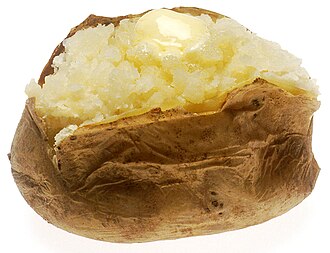
Photo: Wikipedia
A simple baked potato, skin-on, offers a fluffy, starchy interior with a slightly earthy, subtly sweet flavor and a tender, edible skin. Nutritionally, it's a low-fat, high-carb energy source, providing a good dose of fiber and potassium, especially when the skin is eaten.
Calorie split: 10% protein · 88% carbs · 1% fat
↓ Full nutrition💚 Why it's loved
People adore its comforting, neutral canvas that absorbs flavors beautifully, making it a perfect base for countless toppings. Its satisfying texture and role as a humble, filling staple in home cooking and global cuisines make it universally beloved.
⚠️ Watch-outs & how to enjoy it better
Its high glycemic index can cause rapid blood-sugar spikes if eaten alone, which is a concern for diabetics. To counteract this, pair it with protein (like beans or yogurt) or healthy fat (like avocado or olive oil) to slow digestion. Also, the skin can trap dirt, so a thorough scrub is essential.
Key benefits
- Excellent source of potassium for heart and muscle function
- Provides sustained energy from complex carbohydrates
- Skin adds dietary fiber for digestive health
- Naturally low in fat and sodium (when unseasoned)
- Contains vitamin C and B6, especially in the skin
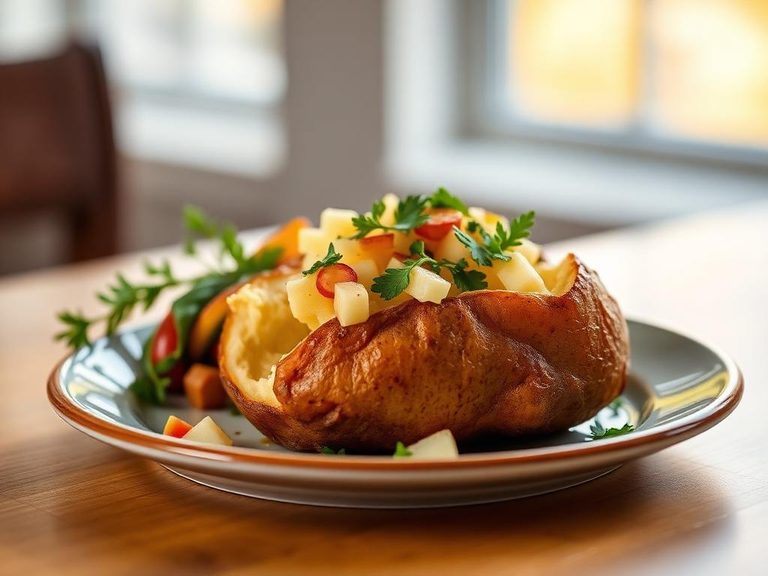
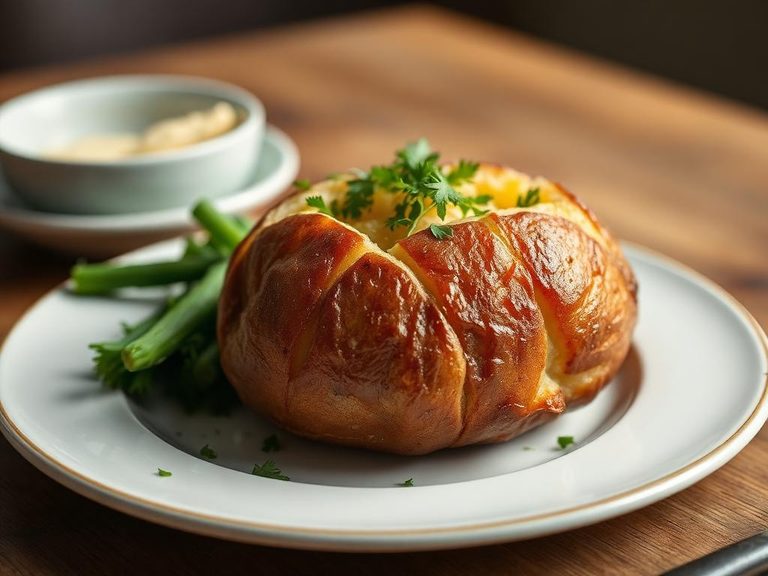
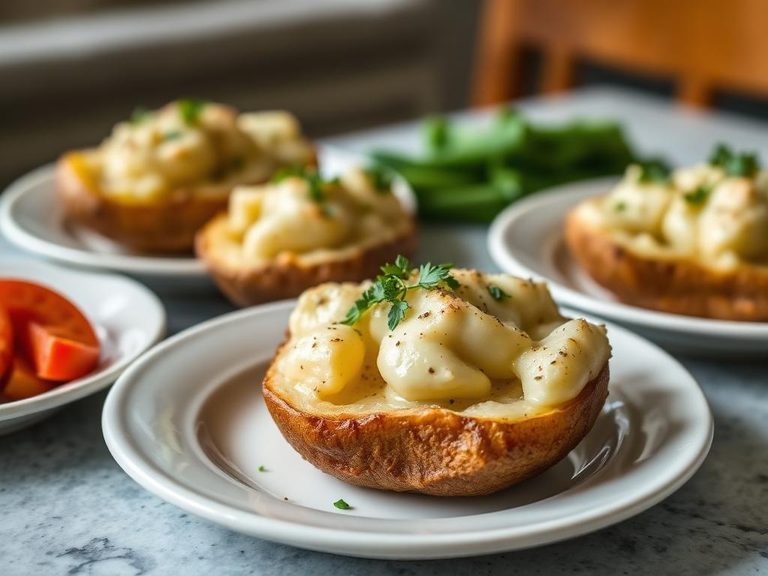
🍽️ Popular dishes
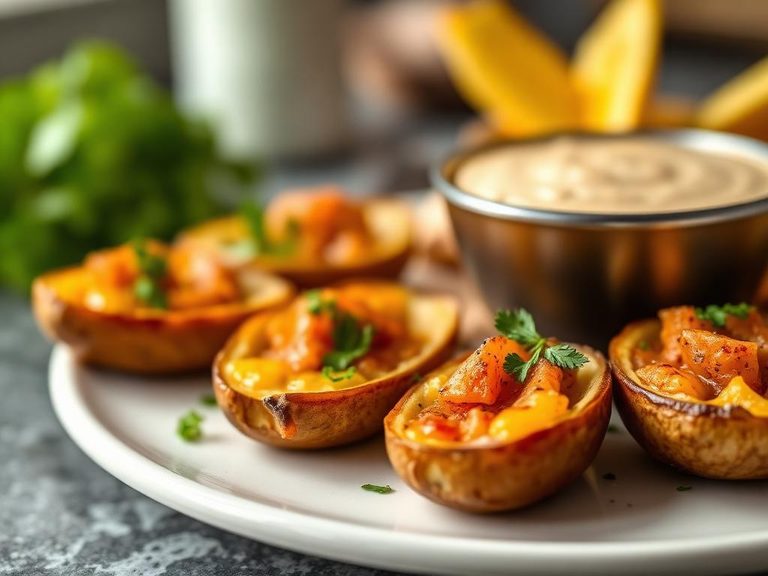
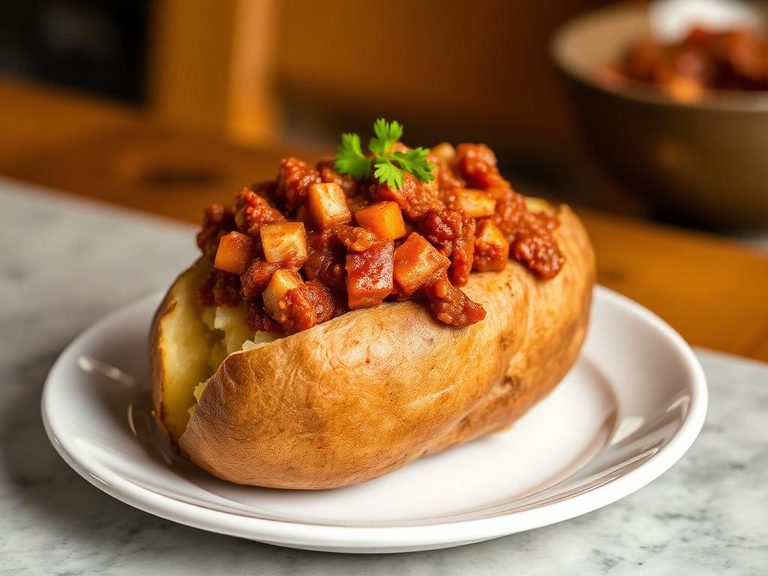
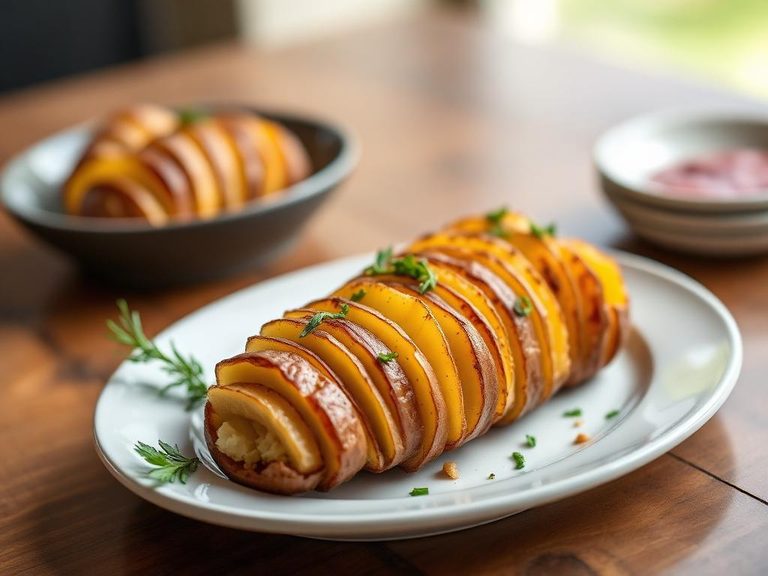
🌍 Where it's eaten
💡 Did you know?
The world record for the largest baked potato is over 1,100 kg (2,466 lbs), achieved by a potato grown in New Zealand.
Full nutrition (USDA data · scales with serving)
| Water | 74.9 g |
| Energy | 93.0 kcal |
| Energy | 390 kj |
| Protein | 2.5 g |
| Total lipid (fat) | 0.13 g |
| Ash | 1.3 g |
| Carbohydrate, by difference | 21.1 g |
| Fiber, total dietary | 2.2 g |
| Total Sugars | 1.2 g |
| Sucrose | 0.40 g |
| Glucose | 0.44 g |
| Fructose | 0.34 g |
| Lactose | 0.00 g |
| Maltose | 0.00 g |
| Galactose | 0.00 g |
| Starch | 17.3 g |
| Calcium, Ca | 15.0 mg |
| Iron, Fe | 1.1 mg |
| Magnesium, Mg | 28.0 mg |
| Phosphorus, P | 70.0 mg |
| Potassium, K | 535 mg |
| Sodium, Na | 10.0 mg |
| Zinc, Zn | 0.36 mg |
| Copper, Cu | 0.12 mg |
| Manganese, Mn | 0.22 mg |
| Selenium, Se | 0.40 ug |
| Vitamin C, total ascorbic acid | 9.6 mg |
| Thiamin | 0.06 mg |
| Riboflavin | 0.05 mg |
| Niacin | 1.4 mg |
| Pantothenic acid | 0.38 mg |
| Vitamin B-6 | 0.31 mg |
| Folate, total | 28.0 ug |
| Folic acid | 0.00 ug |
| Folate, food | 28.0 ug |
| Folate, DFE | 28.0 ug |
| Choline, total | 14.8 mg |
| Betaine | 0.20 mg |
| Vitamin B-12 | 0.00 ug |
| Vitamin B-12, added | 0.00 ug |
| Vitamin A, RAE | 1.0 ug |
| Retinol | 0.00 ug |
| Carotene, beta | 6.0 ug |
| Carotene, alpha | 0.00 ug |
| Cryptoxanthin, beta | 0.00 ug |
| Vitamin A, IU | 10.0 iu |
| Lycopene | 0.00 ug |
| Lutein + zeaxanthin | 30.0 ug |
| Vitamin E (alpha-tocopherol) | 0.04 mg |
| Vitamin E, added | 0.00 mg |
| Tocopherol, beta | 0.00 mg |
| Tocopherol, gamma | 0.00 mg |
| Tocopherol, delta | 0.00 mg |
| Vitamin D (D2 + D3), International Units | 0.00 iu |
| Vitamin D (D2 + D3) | 0.00 ug |
| Vitamin K (phylloquinone) | 2.0 ug |
| Vitamin K (Dihydrophylloquinone) | 0.00 ug |
| Alcohol, ethyl | 0.00 g |
| Caffeine | 0.00 mg |
| Theobromine | 0.00 mg |
Fat & fatty acid profile (per 100g)
| Fatty acids, total saturated | 0.03 g |
| SFA 4:0 | 0.00 g |
| SFA 6:0 | 0.00 g |
| SFA 8:0 | 0.00 g |
| SFA 10:0 | 0.00 g |
| SFA 12:0 | 0.00 g |
| SFA 14:0 | 0.00 g |
| SFA 16:0 | 0.02 g |
| SFA 18:0 | 0.01 g |
| Fatty acids, total monounsaturated | 0.00 g |
| MUFA 16:1 | 0.00 g |
| MUFA 18:1 | 0.00 g |
| MUFA 20:1 | 0.00 g |
| MUFA 22:1 | 0.00 g |
| Fatty acids, total polyunsaturated | 0.06 g |
| PUFA 18:2 | 0.04 g |
| PUFA 18:3 | 0.01 g |
| PUFA 18:4 | 0.00 g |
| PUFA 20:4 | 0.00 g |
| PUFA 20:5 n-3 (EPA) | 0.00 g |
| PUFA 22:5 n-3 (DPA) | 0.00 g |
| PUFA 22:6 n-3 (DHA) | 0.00 g |
| Fatty acids, total trans | 0.00 g |
| Cholesterol | 0.00 mg |
Amino acid profile (per 100g)
| Tryptophan | 0.03 g |
| Threonine | 0.08 g |
| Isoleucine | 0.08 g |
| Leucine | 0.12 g |
| Lysine | 0.13 g |
| Methionine | 0.04 g |
| Cystine | 0.03 g |
| Phenylalanine | 0.10 g |
| Tyrosine | 0.06 g |
| Valine | 0.13 g |
| Arginine | 0.12 g |
| Histidine | 0.04 g |
| Alanine | 0.08 g |
| Aspartic acid | 0.58 g |
| Glutamic acid | 0.43 g |
| Glycine | 0.07 g |
| Proline | 0.08 g |
| Serine | 0.09 g |
FAQ
Is the skin of a baked potato nutritious?
Yes, the skin is highly nutritious, containing a significant portion of the potato's fiber, potassium, and vitamins. Eating it maximizes the health benefits.
Why does my baked potato sometimes turn blue or green inside?
A blue or green tint is caused by anthocyanins (in blue potatoes) or chlorophyll from light exposure. It's safe to eat, but if the potato tastes bitter, it may also contain solanine, a natural toxin; discard it if so.
How can I get a crispy skin on a baked potato?
For a crispy skin, scrub and dry the potato thoroughly, rub the skin with a little oil and salt, and bake directly on the oven rack at a high temperature (around 200°C/400°F).
Nutrient density (calculated · NRF9.3)
Nutrient Rich Foods index: beneficial nutrients (protein, fiber, vitamins, minerals) minus saturated fat, added sugar & sodium, per 100 kcal.
NRF9.3 index — Fulgoni, Keast & Drewnowski, 2009. Computed from USDA nutrients.
Weight-loss friendliness (composite index)
Energy density 0.93 kcal/g · 11% calories from protein · 2.2 g fiber · 1.2 g sugar per 100 g.
Composite of energy density (Rolls et al., 1999), protein & fiber satiety, minus sugar. A calculated heuristic — ranks satiety-per-calorie, not a clinical measure.
Dietary load (calculated from USDA values)
Potential renal acid load. Positive = acid-forming, negative = alkaline-forming.
Sodium-to-potassium ratio: 0.02 (lower is better — aim for ≤ 1)
Sodium:potassium per WHO potassium guidance. Computed from USDA nutrients.