

Plums, wild (Northern Plains Indians)
Whole food · American Indian/Alaska Native Foods

Photo: Wikipedia
Wild plums from the Northern Plains are small, tart, and intensely flavored fruits, often with a deep red or purple skin and a juicy, fibrous texture. They are a powerhouse of dietary fiber, providing 6 grams per 100g, which supports digestive health and helps regulate blood sugar absorption. Their vibrant color signals a rich concentration of antioxidants, making them a nutrient-dense wild food.
Calorie split: 2% protein · 96% carbs · 2% fat
↓ Full nutrition💚 Why it's loved
People love wild plums for their explosive, tart-sweet flavor that captures the essence of the prairie, and their incredible versatility in both sweet and savory preparations. They are deeply cherished in Plains Indian cultures as a traditional food source, symbolizing resilience and connection to the land.
⚠️ Watch-outs & how to enjoy it better
The high fiber and tartness can cause digestive discomfort or bloating for some, especially when consumed in large quantities. The natural sugars, while healthy, can still impact blood sugar levels, so those monitoring glucose should practice portion control. To mitigate, pair them with a source of protein or fat (like nuts or yogurt) and enjoy them as part of a balanced meal.
Key benefits
- Excellent source of dietary fiber (6g per 100g)
- Rich in antioxidants like anthocyanins
- Low in fat and a source of natural sugars
- Historically important for Indigenous food security
- Supports gut health due to high fiber content
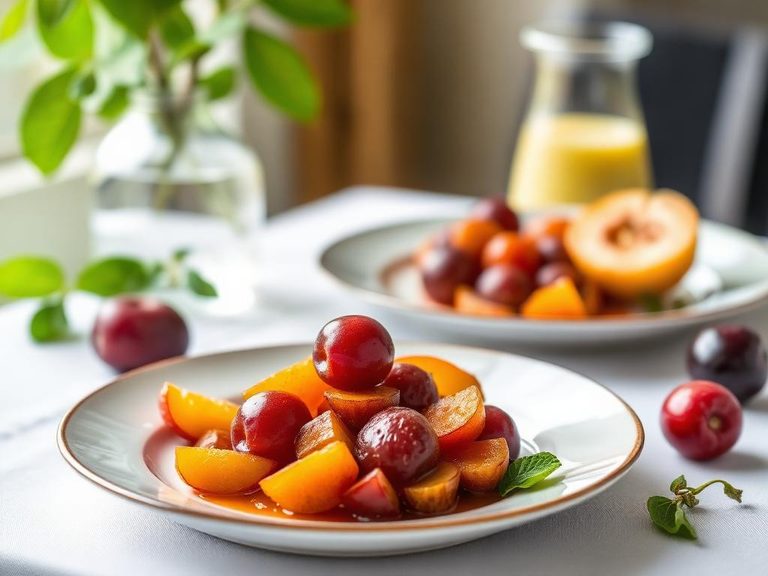
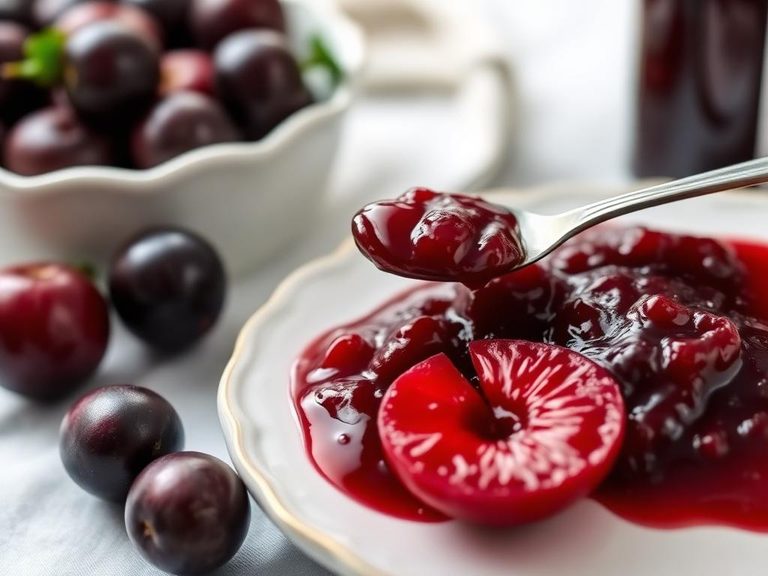
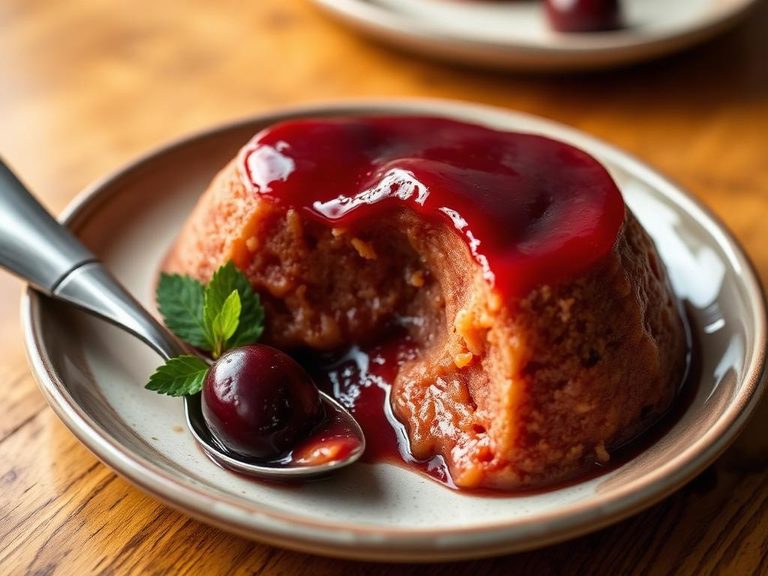
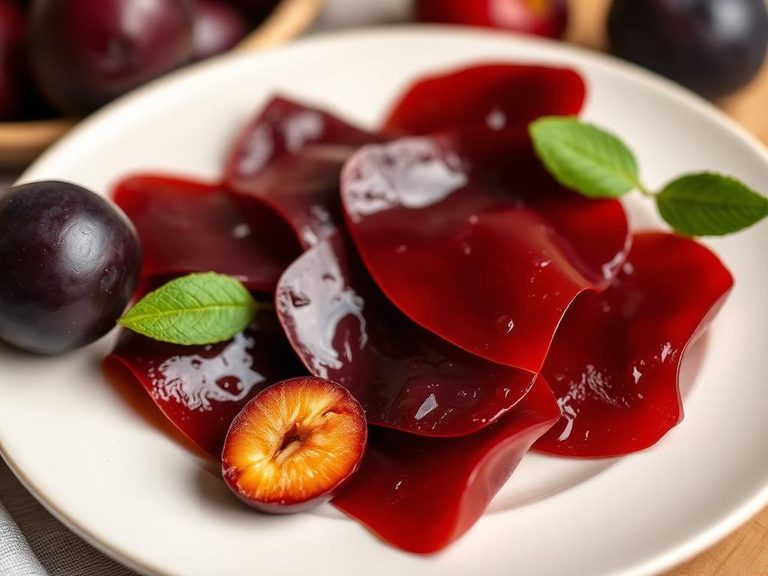
🍽️ Popular dishes
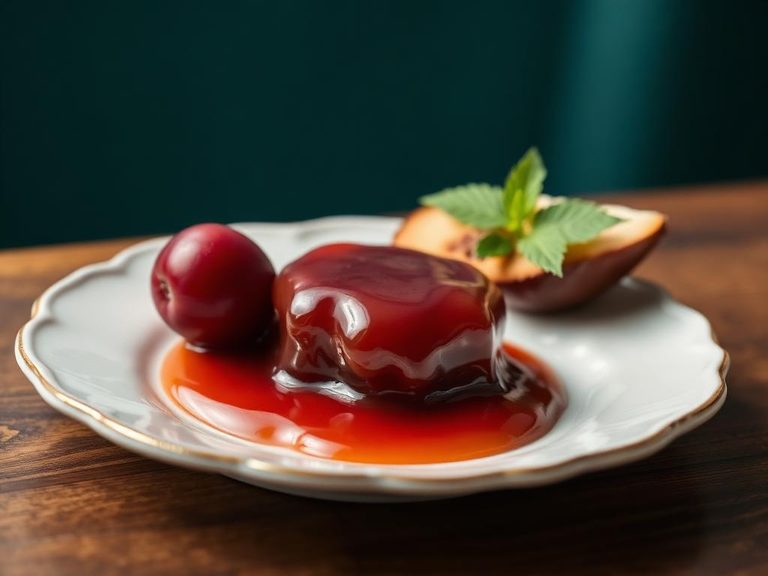
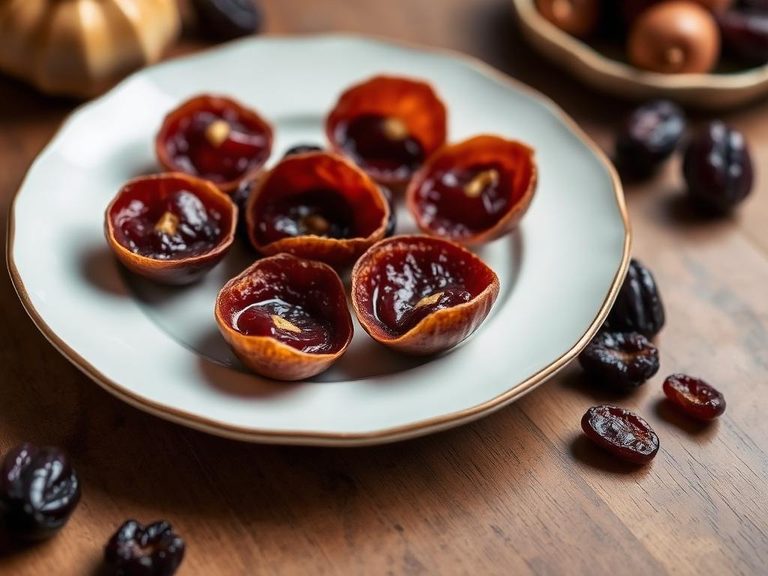
🌍 Where it's eaten
💡 Did you know?
The wild plum (Prunus americana) was so vital that some tribes, like the Lakota, used it as a form of currency and a key ingredient in pemmica, a life-sustaining travel food.
Full nutrition (USDA data · scales with serving)
| Water | 76.7 g |
| Energy | 91.0 kcal |
| Energy | 381 kj |
| Protein | 0.43 g |
| Total lipid (fat) | 0.17 g |
| Ash | 0.77 g |
| Carbohydrate, by difference | 21.9 g |
| Fiber, total dietary | 6.0 g |
| Total Sugars | 10.6 g |
| Sucrose | 0.07 g |
| Glucose | 5.1 g |
| Fructose | 5.5 g |
| Lactose | 0.00 g |
| Maltose | 0.00 g |
| Galactose | 0.00 g |
| Calcium, Ca | 11.0 mg |
| Iron, Fe | 0.17 mg |
| Magnesium, Mg | 8.0 mg |
| Phosphorus, P | 30.0 mg |
| Potassium, K | 364 mg |
| Sodium, Na | 4.0 mg |
| Zinc, Zn | 0.09 mg |
| Copper, Cu | 0.04 mg |
| Manganese, Mn | 0.08 mg |
| Vitamin C, total ascorbic acid | 10.3 mg |
| Thiamin | 0.01 mg |
| Riboflavin | 0.04 mg |
| Niacin | 0.37 mg |
| Pantothenic acid | 0.30 mg |
| Vitamin B-6 | 0.09 mg |
| Folate, total | 1.0 ug |
| Folate, food | 1.0 ug |
| Choline, total | 5.2 mg |
| Betaine | 0.20 mg |
| Vitamin A, RAE | 173 ug |
| Carotene, beta | 1930 ug |
| Carotene, alpha | 140 ug |
| Cryptoxanthin, beta | 157 ug |
| Vitamin A, IU | 3464 iu |
| Lycopene | 0.00 ug |
| Lutein + zeaxanthin | 920 ug |
| Vitamin E (alpha-tocopherol) | 0.53 mg |
| Tocopherol, beta | 0.01 mg |
| Tocopherol, gamma | 0.41 mg |
| Tocopherol, delta | 0.05 mg |
| Tocotrienol, alpha | 0.00 mg |
| Tocotrienol, beta | 0.00 mg |
| Tocotrienol, gamma | 0.00 mg |
| Tocotrienol, delta | 0.00 mg |
| Vitamin K (phylloquinone) | 11.2 ug |
| Vitamin K (Dihydrophylloquinone) | 0.00 ug |
| Vitamin K (Menaquinone-4) | 0.00 ug |
Fat & fatty acid profile (per 100g)
Estimated from Plums, dried (prunes), uncooked — USDA does not publish this profile for Plums.
| Fatty acids, total saturated | 0.09 g |
| SFA 4:0 | 0.00 g |
| SFA 6:0 | 0.00 g |
| SFA 8:0 | 0.01 g |
| SFA 10:0 | 0.01 g |
| SFA 12:0 | 0.00 g |
| SFA 14:0 | 0.00 g |
| SFA 15:0 | 0.00 g |
| SFA 16:0 | 0.03 g |
| SFA 17:0 | 0.00 g |
| SFA 18:0 | 0.04 g |
| SFA 20:0 | 0.00 g |
| SFA 22:0 | 0.00 g |
| Fatty acids, total monounsaturated | 0.05 g |
| MUFA 14:1 | 0.00 g |
| MUFA 15:1 | 0.00 g |
| MUFA 16:1 | 0.04 g |
| MUFA 17:1 | 0.00 g |
| MUFA 18:1 | 0.01 g |
| MUFA 20:1 | 0.00 g |
| MUFA 22:1 | 0.00 g |
| Fatty acids, total polyunsaturated | 0.06 g |
| PUFA 18:2 | 0.04 g |
| PUFA 18:3 | 0.02 g |
| PUFA 18:3 n-6 c,c,c | 0.00 g |
| PUFA 18:4 | 0.00 g |
| PUFA 20:2 n-6 c,c | 0.00 g |
| PUFA 20:3 | 0.00 g |
| PUFA 20:4 | 0.00 g |
| PUFA 20:5 n-3 (EPA) | 0.00 g |
| PUFA 22:5 n-3 (DPA) | 0.00 g |
| PUFA 22:6 n-3 (DHA) | 0.00 g |
| Cholesterol | 0.00 mg |
Amino acid profile (per 100g)
Estimated from Plums, dried (prunes), uncooked — USDA does not publish this profile for Plums.
| Tryptophan | 0.03 g |
| Threonine | 0.05 g |
| Isoleucine | 0.04 g |
| Leucine | 0.07 g |
| Lysine | 0.05 g |
| Methionine | 0.02 g |
| Cystine | 0.01 g |
| Phenylalanine | 0.05 g |
| Tyrosine | 0.02 g |
| Valine | 0.06 g |
| Arginine | 0.04 g |
| Histidine | 0.03 g |
| Alanine | 0.07 g |
| Aspartic acid | 0.80 g |
| Glutamic acid | 0.11 g |
| Glycine | 0.05 g |
| Proline | 0.13 g |
| Serine | 0.06 g |
FAQ
How do wild plums differ from cultivated plums?
Wild plums are typically smaller, more tart, and have a thicker skin and more fibrous flesh compared to the larger, sweeter, and smoother-fleshed cultivated varieties found in supermarkets.
Are the pits of wild plums edible?
No, the pits (stones) of wild plums, like those of many Prunus species, contain compounds that can release cyanide and should not be eaten.
How were wild plums traditionally preserved?
They were commonly sun-dried into cakes or leathers, cooked down into thick sauces or puddings like Wojapi, or incorporated into pemmica for long-term storage.
Nutrient density (calculated · NRF9.3)
Nutrient Rich Foods index: beneficial nutrients (protein, fiber, vitamins, minerals) minus saturated fat, added sugar & sodium, per 100 kcal.
NRF9.3 index — Fulgoni, Keast & Drewnowski, 2009. Computed from USDA nutrients.
Weight-loss friendliness (composite index)
Energy density 0.91 kcal/g · 2% calories from protein · 6.0 g fiber · 10.6 g sugar per 100 g.
Composite of energy density (Rolls et al., 1999), protein & fiber satiety, minus sugar. A calculated heuristic — ranks satiety-per-calorie, not a clinical measure.
Dietary load (calculated from USDA values)
Potential renal acid load. Positive = acid-forming, negative = alkaline-forming.
Sodium-to-potassium ratio: 0.01 (lower is better — aim for ≤ 1)
Sodium:potassium per WHO potassium guidance. Computed from USDA nutrients.