

Margarine-like, vegetable oil spread, 60% fat, stick, with salt
Whole food · Fats and Oils

Photo: Wikipedia
This is a solid, salted vegetable oil spread designed as a butter substitute, typically sold in 1-stick (113g) blocks for easy measuring. It has a smooth, creamy texture and a mild, slightly salty flavor that melts easily on warm foods. Nutritionally, it's a concentrated source of fat, providing over 60 grams per 100g with negligible protein or carbohydrates.
Calorie split: 0% protein · 1% carbs · 99% fat
↓ Full nutrition💚 Why it's loved
People love it for its buttery versatility in baking, sautéing, and spreading on toast, especially as a cost-effective and shelf-stable staple. Its neutral flavor allows it to blend seamlessly into recipes without overpowering other ingredients.
⚠️ Watch-outs & how to enjoy it better
It is very high in fat and calories, which can contribute to weight gain if used excessively. Some varieties may contain trans fats from partial hydrogenation, and the added salt can be a concern for those monitoring sodium intake. To counteract, use strict portion control (e.g., 1 tsp per slice of bread) and check labels for '0g trans fat' and lower sodium options.
Key benefits
- Provides a dairy-free, vegan alternative to butter
- High in polyunsaturated and monounsaturated fats from vegetable oils
- Contains no cholesterol, unlike animal-based butter
- Often fortified with vitamins A and D
- Long shelf life and stable for baking and spreading
🍽️ Popular dishes
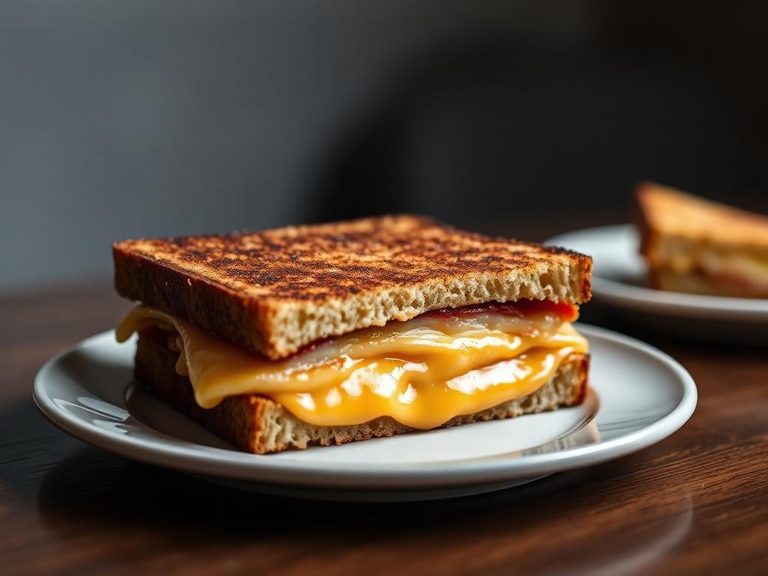



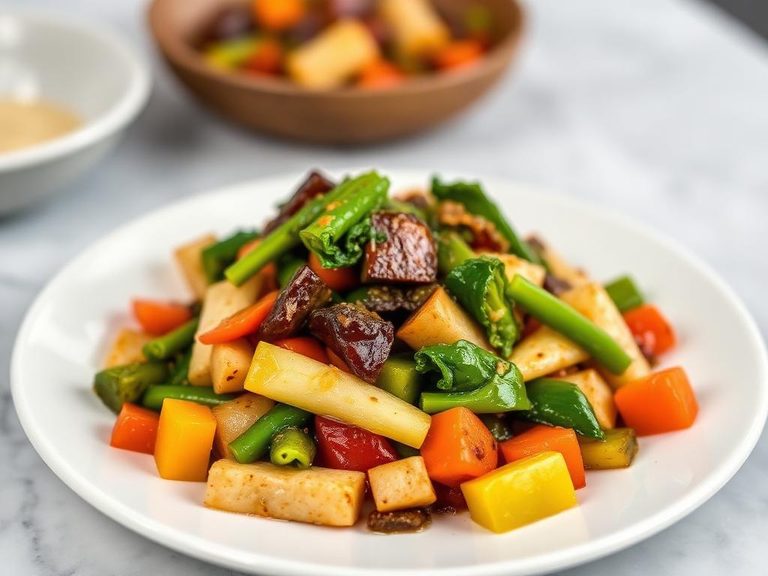
🌍 Where it's eaten
💡 Did you know?
Margarine was originally created in 1869 in France as a cheap butter substitute for the navy and working class, winning a competition hosted by Emperor Napoleon III.
Full nutrition (USDA data · scales with serving)
| Water | 37.0 g |
| Energy | 537 kcal |
| Energy | 2248 kj |
| Protein | 0.12 g |
| Total lipid (fat) | 60.4 g |
| Ash | 1.8 g |
| Carbohydrate, by difference | 0.69 g |
| Fiber, total dietary | 0.00 g |
| Total Sugars | 0.00 g |
| Calcium, Ca | 21.0 mg |
| Iron, Fe | 0.00 mg |
| Magnesium, Mg | 2.0 mg |
| Phosphorus, P | 16.0 mg |
| Potassium, K | 30.0 mg |
| Sodium, Na | 785 mg |
| Zinc, Zn | 0.00 mg |
| Copper, Cu | 0.01 mg |
| Manganese, Mn | 0.00 mg |
| Selenium, Se | 0.00 ug |
| Vitamin C, total ascorbic acid | 0.10 mg |
| Thiamin | 0.01 mg |
| Riboflavin | 0.03 mg |
| Niacin | 0.02 mg |
| Pantothenic acid | 0.06 mg |
| Vitamin B-6 | 0.01 mg |
| Folate, total | 1.0 ug |
| Folic acid | 0.00 ug |
| Folate, food | 1.0 ug |
| Folate, DFE | 1.0 ug |
| Choline, total | 12.4 mg |
| Vitamin B-12 | 0.07 ug |
| Vitamin B-12, added | 0.00 ug |
| Vitamin A, RAE | 819 ug |
| Retinol | 768 ug |
| Carotene, beta | 610 ug |
| Carotene, alpha | 0.00 ug |
| Cryptoxanthin, beta | 0.00 ug |
| Vitamin A, IU | 3571 iu |
| Lycopene | 0.00 ug |
| Lutein + zeaxanthin | 0.00 ug |
| Vitamin E (alpha-tocopherol) | 5.0 mg |
| Vitamin E, added | 0.00 mg |
| Vitamin D (D2 + D3), International Units | 0.00 iu |
| Vitamin D (D2 + D3) | 0.00 ug |
| Vitamin K (phylloquinone) | 101 ug |
| Vitamin K (Dihydrophylloquinone) | 26.7 ug |
| Alcohol, ethyl | 0.00 g |
| Caffeine | 0.00 mg |
| Theobromine | 0.00 mg |
Fat & fatty acid profile (per 100g)
| Fatty acids, total saturated | 10.9 g |
| SFA 4:0 | 0.00 g |
| SFA 6:0 | 0.00 g |
| SFA 8:0 | 0.00 g |
| SFA 10:0 | 0.00 g |
| SFA 12:0 | 0.00 g |
| SFA 14:0 | 0.04 g |
| SFA 15:0 | 0.01 g |
| SFA 16:0 | 6.3 g |
| SFA 17:0 | 0.05 g |
| SFA 18:0 | 4.1 g |
| SFA 20:0 | 0.18 g |
| SFA 22:0 | 0.14 g |
| SFA 24:0 | 0.06 g |
| Fatty acids, total monounsaturated | 29.7 g |
| MUFA 14:1 | 0.00 g |
| MUFA 15:1 | 0.00 g |
| MUFA 16:1 | 0.03 g |
| MUFA 16:1 c | 0.03 g |
| MUFA 17:1 | 0.02 g |
| MUFA 18:1 | 29.5 g |
| MUFA 18:1 c | 17.6 g |
| MUFA 20:1 | 0.10 g |
| MUFA 22:1 | 0.00 g |
| MUFA 22:1 c | 0.00 g |
| MUFA 24:1 c | 0.00 g |
| Fatty acids, total polyunsaturated | 16.7 g |
| PUFA 18:2 | 14.9 g |
| PUFA 18:2 n-6 c,c | 14.1 g |
| PUFA 18:2 CLAs | 0.04 g |
| PUFA 18:3 | 1.8 g |
| PUFA 18:3 n-3 c,c,c (ALA) | 1.7 g |
| PUFA 18:3 n-6 c,c,c | 0.05 g |
| PUFA 18:4 | 0.00 g |
| PUFA 20:2 n-6 c,c | 0.00 g |
| PUFA 20:3 | 0.00 g |
| PUFA 20:3 n-3 | 0.00 g |
| PUFA 20:3 n-6 | 0.00 g |
| PUFA 20:4 | 0.00 g |
| PUFA 20:5 n-3 (EPA) | 0.00 g |
| PUFA 22:4 | 0.00 g |
| PUFA 22:5 n-3 (DPA) | 0.00 g |
| PUFA 22:6 n-3 (DHA) | 0.00 g |
| Fatty acids, total trans | 12.7 g |
| Fatty acids, total trans-monoenoic | 11.9 g |
| TFA 16:1 t | 0.00 g |
| TFA 18:1 t | 11.9 g |
| TFA 22:1 t | 0.00 g |
| TFA 18:2 t not further defined | 0.81 g |
| Fatty acids, total trans-polyenoic | 0.81 g |
| Cholesterol | 0.00 mg |
| Stigmasterol | 31.0 mg |
| Campesterol | 34.0 mg |
| Beta-sitosterol | 94.0 mg |
FAQ
Is margarine the same as vegetable oil spread?
Not exactly. While often used interchangeably, 'vegetable oil spread' is a broader category that can have a lower fat content (like this 60% fat product) and may contain more water and additives than traditional margarine, which is typically around 80% fat.
Can I use this for baking cakes?
Yes, it's commonly used in baking for cookies, cakes, and pie crusts. However, because it has a higher water content than butter, it may result in slightly different textures, like less flakiness in pastries. It's best for recipes where a tender crumb is desired.
Is it healthier than butter?
It's a trade-off. This spread is cholesterol-free and lower in saturated fat than butter, but it may contain processed fats. Butter is less processed but high in saturated fat and cholesterol. The healthiest choice depends on your overall dietary goals.
Nutrient density (calculated · NRF9.3)
Nutrient Rich Foods index: beneficial nutrients (protein, fiber, vitamins, minerals) minus saturated fat, added sugar & sodium, per 100 kcal.
NRF9.3 index — Fulgoni, Keast & Drewnowski, 2009. Computed from USDA nutrients.
Weight-loss friendliness (composite index)
Energy density 5.37 kcal/g · 0% calories from protein · 0.0 g fiber · 0.0 g sugar per 100 g.
Composite of energy density (Rolls et al., 1999), protein & fiber satiety, minus sugar. A calculated heuristic — ranks satiety-per-calorie, not a clinical measure.
Dietary load (calculated from USDA values)
Potential renal acid load. Positive = acid-forming, negative = alkaline-forming.
Sodium-to-potassium ratio: 26.17 (lower is better — aim for ≤ 1)
Sodium:potassium per WHO potassium guidance. Computed from USDA nutrients.