

Cake frosting
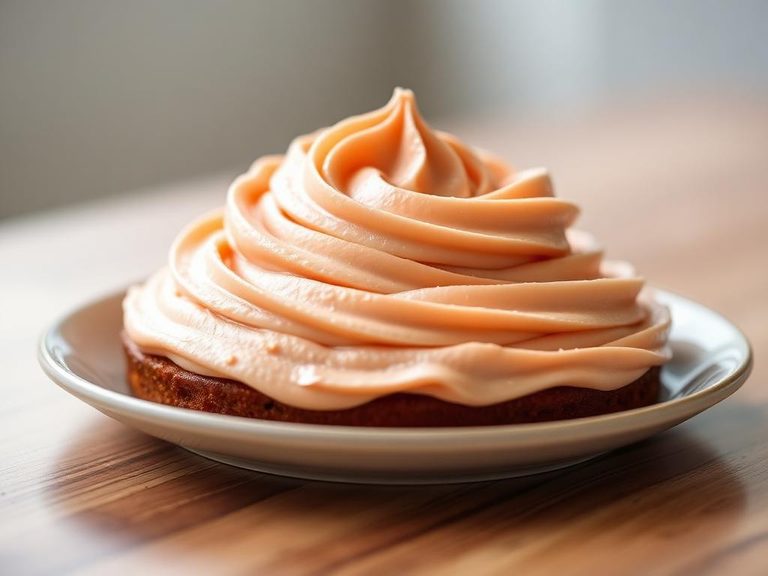
Cake frosting is a sweet, creamy topping used to decorate and flavor cakes, cupcakes, and other baked goods. It's typically made from a base of butter or shortening, powdered sugar, and flavorings like vanilla extract, and it originated in Europe during the 17th century as a way to preserve and adorn elaborate cakes. Today, it's a global staple in baking, with countless variations like buttercream, cream cheese, and royal icing.
🍳 View the full Cake frosting recipe →
🍽️ Nutrition at a glance
Frosting is extremely high in carbohydrates and fats, with very little protein or essential nutrients, making it a calorie-dense treat. A typical two-tablespoon serving can contain around 100-150 calories, mostly from sugar and fat.
Nutrition breakdown
| Calories | 240 kcal |
| Protein | 0.5 g |
| Carbs | 32 g |
| Fat | 12 g |
| Fiber | 0 g |
| Sugar | 30 g |
| Sodium | 45 mg |
| Calcium | 10 mg |
| Iron | 0.1 mg |
| Potassium | 25 mg |
| Vitamin A | 100 IU |
| Vitamin D | 0.2 mcg |
| Vitamin E | 0.5 mg |
| Vitamin K | 1 mcg |
| Phosphorus | 15 mg |
Per 1/4 cup (60 g) · estimated, varies by recipe
💡 What's interesting
Culturally, frosting is often the centerpiece of celebration cakes, symbolizing joy and festivity in events from birthdays to weddings. Nutritionally, its high sugar and fat content provides quick energy but offers minimal nutritional value, highlighting its role as an indulgent pleasure rather than a dietary staple.
🍽️ Related dishes

AI estimate may be inaccurate · Terms