

Game meat, deer, ground, raw
Whole food · Lamb, Veal, and Game Products

Photo: Wikipedia
Raw ground deer meat, or venison mince, is a lean, deep-red protein with a fine, dense texture and a subtly sweet, earthy flavor distinct from beef. Nutritionally, it's a powerhouse, delivering over 21 grams of high-quality protein per 100 grams with virtually no carbohydrates and a modest 7 grams of fat, much of which is heart-healthy unsaturated fat.
Calorie split: 58% protein · 0% carbs · 42% fat
↓ Full nutrition💚 Why it's loved
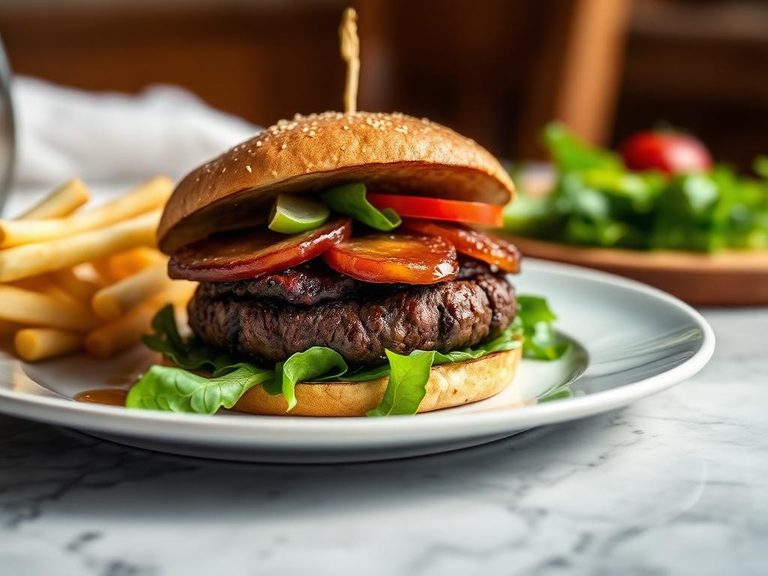
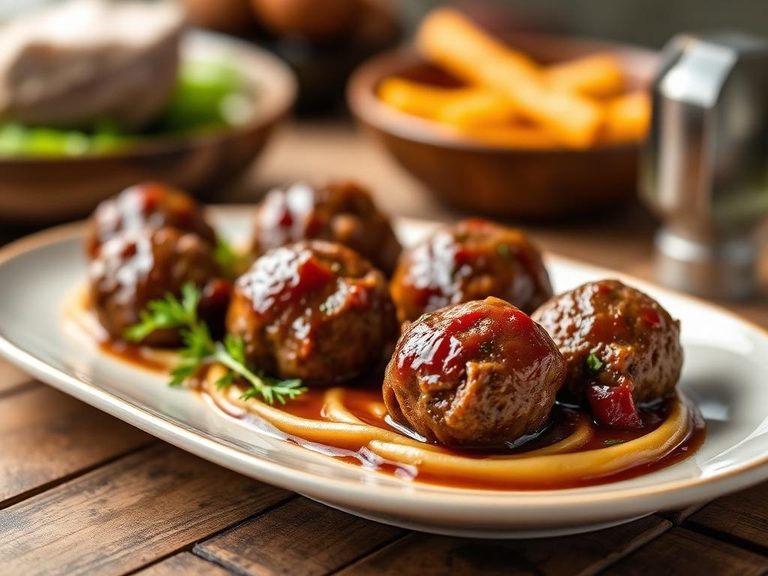
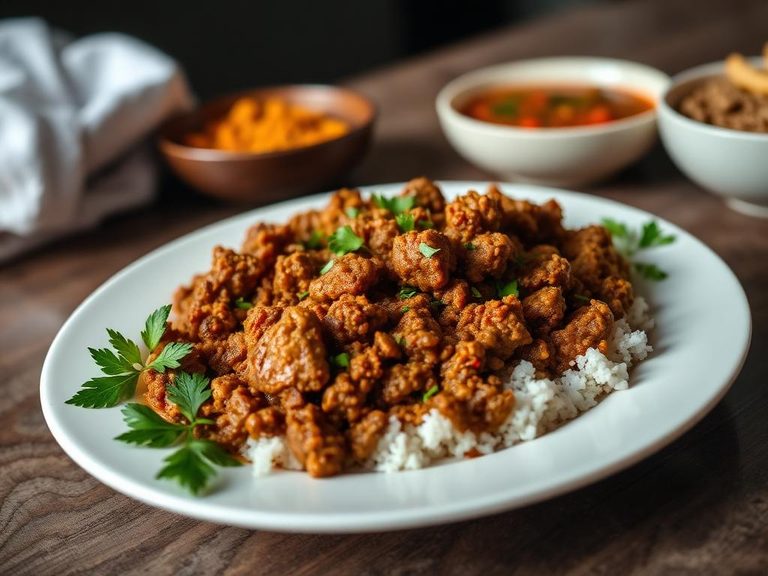
People love venison for its rich, complex flavor that carries herbs and spices beautifully, offering a more 'wild' and lean alternative to beef. Its versatility in everything from hearty burgers to delicate meatballs makes it a favorite for adventurous home cooks and chefs alike.
⚠️ Watch-outs & how to enjoy it better
The very leanness that is a benefit can lead to dry, tough results if overcooked, as it lacks the intramuscular fat of beef. To counteract this, cook it quickly to medium or medium-rare, or add moisture by mixing in ingredients like grated onion, mushrooms, or a splash of broth to burgers and meatloaf.
Key benefits
- Exceptionally high in protein for muscle maintenance and satiety.
- Very low in carbohydrates, making it suitable for ketogenic and low-carb diets.
- Rich in iron and B vitamins, particularly B12 and niacin.
- Typically lower in total fat and saturated fat than conventional ground beef.
- Often sourced from wild animals, meaning no added hormones or antibiotics.
🍽️ Popular dishes
🌍 Where it's eaten
💡 Did you know?
The flavor of venison can change dramatically based on the animal's diet; deer that forage on acorns and wild herbs develop a richer, more nutty taste compared to those raised on farmed feed.
Full nutrition (USDA data · scales with serving)
| Water | 71.2 g |
| Energy | 157 kcal |
| Energy | 658 kj |
| Protein | 21.8 g |
| Total lipid (fat) | 7.1 g |
| Ash | 0.88 g |
| Carbohydrate, by difference | 0.00 g |
| Fiber, total dietary | 0.00 g |
| Total Sugars | 0.00 g |
| Calcium, Ca | 11.0 mg |
| Iron, Fe | 2.9 mg |
| Magnesium, Mg | 21.0 mg |
| Phosphorus, P | 201 mg |
| Potassium, K | 330 mg |
| Sodium, Na | 75.0 mg |
| Zinc, Zn | 4.2 mg |
| Copper, Cu | 0.14 mg |
| Manganese, Mn | 0.01 mg |
| Selenium, Se | 10.0 ug |
| Vitamin C, total ascorbic acid | 0.00 mg |
| Thiamin | 0.55 mg |
| Riboflavin | 0.29 mg |
| Niacin | 5.7 mg |
| Pantothenic acid | 0.69 mg |
| Vitamin B-6 | 0.46 mg |
| Folate, total | 4.0 ug |
| Folic acid | 0.00 ug |
| Folate, food | 4.0 ug |
| Folate, DFE | 4.0 ug |
| Choline, total | 87.9 mg |
| Betaine | 12.9 mg |
| Vitamin B-12 | 1.9 ug |
| Vitamin B-12, added | 0.00 ug |
| Vitamin A, RAE | 0.00 ug |
| Retinol | 0.00 ug |
| Carotene, beta | 0.00 ug |
| Carotene, alpha | 0.00 ug |
| Cryptoxanthin, beta | 0.00 ug |
| Vitamin A, IU | 0.00 iu |
| Lycopene | 0.00 ug |
| Lutein + zeaxanthin | 0.00 ug |
| Vitamin E (alpha-tocopherol) | 0.45 mg |
| Vitamin E, added | 0.00 mg |
| Vitamin D (D2 + D3), International Units | 0.00 iu |
| Vitamin D (D2 + D3) | 0.00 ug |
| Vitamin D3 (cholecalciferol) | 0.00 ug |
| Vitamin K (phylloquinone) | 1.2 ug |
| Alcohol, ethyl | 0.00 g |
| Caffeine | 0.00 mg |
| Theobromine | 0.00 mg |
Fat & fatty acid profile (per 100g)
| Fatty acids, total saturated | 3.4 g |
| SFA 4:0 | 0.00 g |
| SFA 6:0 | 0.00 g |
| SFA 8:0 | 0.00 g |
| SFA 10:0 | 0.00 g |
| SFA 12:0 | 0.01 g |
| SFA 14:0 | 0.21 g |
| SFA 15:0 | 0.09 g |
| SFA 16:0 | 1.3 g |
| SFA 17:0 | 0.10 g |
| SFA 18:0 | 1.6 g |
| SFA 20:0 | 0.02 g |
| SFA 22:0 | 0.00 g |
| Fatty acids, total monounsaturated | 1.3 g |
| MUFA 14:1 | 0.02 g |
| MUFA 15:1 | 0.00 g |
| MUFA 16:1 | 0.11 g |
| MUFA 17:1 | 0.02 g |
| MUFA 18:1 | 1.2 g |
| MUFA 20:1 | 0.00 g |
| MUFA 22:1 | 0.00 g |
| Fatty acids, total polyunsaturated | 0.39 g |
| PUFA 18:2 | 0.23 g |
| PUFA 18:3 | 0.10 g |
| PUFA 18:3 n-6 c,c,c | 0.00 g |
| PUFA 18:4 | 0.00 g |
| PUFA 20:2 n-6 c,c | 0.00 g |
| PUFA 20:3 | 0.00 g |
| PUFA 20:4 | 0.06 g |
| PUFA 20:5 n-3 (EPA) | 0.00 g |
| PUFA 22:5 n-3 (DPA) | 0.00 g |
| PUFA 22:6 n-3 (DHA) | 0.00 g |
| Cholesterol | 80.0 mg |
Amino acid profile (per 100g)
| Tryptophan | 0.19 g |
| Threonine | 0.82 g |
| Isoleucine | 0.93 g |
| Leucine | 1.6 g |
| Lysine | 1.8 g |
| Methionine | 0.51 g |
| Cystine | 0.20 g |
| Phenylalanine | 0.82 g |
| Tyrosine | 0.68 g |
| Valine | 1.1 g |
| Arginine | 1.3 g |
| Histidine | 0.65 g |
| Alanine | 1.3 g |
| Aspartic acid | 1.9 g |
| Glutamic acid | 3.1 g |
| Glycine | 1.2 g |
| Proline | 0.95 g |
| Serine | 0.75 g |
| Hydroxyproline | 0.31 g |
FAQ
How is ground deer different from ground beef?
Ground deer (venison) is significantly leaner, with a darker red color, a finer grain, and a more pronounced, slightly sweet and earthy flavor compared to the milder, fattier taste of ground beef.
Why does my ground venison turn out dry and tough?
Because it is very low in fat, it dries out quickly. Avoid overcooking; cook to an internal temperature of 160°F (71°C) for safety but not beyond. Adding fat (like bacon) or moisture-rich ingredients (onion, tomato) to recipes helps retain juiciness.
Is it safe to eat raw or rare?
Like any ground meat, it should be cooked to a safe internal temperature of 160°F (71°C) to eliminate potential bacteria. It is not recommended to consume raw or undercooked ground venison.
Nutrient density (calculated · NRF9.3)
Nutrient Rich Foods index: beneficial nutrients (protein, fiber, vitamins, minerals) minus saturated fat, added sugar & sodium, per 100 kcal.
NRF9.3 index — Fulgoni, Keast & Drewnowski, 2009. Computed from USDA nutrients.
Weight-loss friendliness (composite index)
Energy density 1.57 kcal/g · 55% calories from protein · 0.0 g fiber · 0.0 g sugar per 100 g.
Composite of energy density (Rolls et al., 1999), protein & fiber satiety, minus sugar. A calculated heuristic — ranks satiety-per-calorie, not a clinical measure.
Dietary load (calculated from USDA values)
Potential renal acid load. Positive = acid-forming, negative = alkaline-forming.
Sodium-to-potassium ratio: 0.23 (lower is better — aim for ≤ 1)
Sodium:potassium per WHO potassium guidance. Computed from USDA nutrients.