

Frozen novelties, No Sugar Added, FUDGSICLE pops
Whole food · Sweets

Photo: Wikipedia
The Fudgsicle is a classic American frozen noveltie, a chocolate-flavored ice pop on a stick known for its smooth, creamy texture that's less icy than a standard popsicle. This 'No Sugar Added' version delivers that signature rich chocolate taste with a significantly reduced sugar and calorie profile. It's a nostalgic treat reimagined for a more health-conscious palate.
Calorie split: 12% protein · 75% carbs · 14% fat
↓ Full nutrition💚 Why it's loved
People love it for the authentic, rich chocolate flavor and smooth, melt-in-your-mouth texture that evokes childhood summers. It's a versatile, guilt-free dessert that satisfies a chocolate craving without the heaviness of ice cream.
⚠️ Watch-outs & how to enjoy it better
The 'no sugar added' sweeteners (like maltitol or polydextrose) can cause digestive discomfort or a laxative effect in sensitive individuals. To counteract this, start with a single pop to assess tolerance and consume it slowly. Those monitoring blood sugar should still pair it with a source of protein or healthy fat, like a handful of nuts, to blunt any glycemic response.
Key benefits
- Provides a creamy, chocolatey treat with less sugar than traditional popsicles.
- Low in fat and a good source of plant-based protein for a frozen dessert.
- Offers a satisfying portion-controlled serving to manage sweet cravings.
- Contains dietary fiber, which is uncommon in frozen novelties.
🍽️ Popular dishes
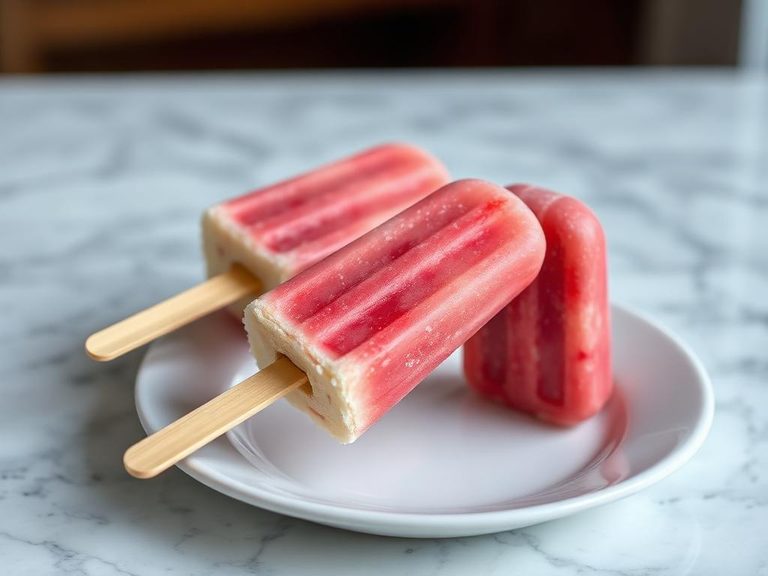



🌍 Where it's eaten
💡 Did you know?
The Fudgsicle was invented in the 1920s by a man named E.J. Brach, whose candy company later became a major brand, and the name is a portmanteau of 'fudge' and 'popsicle'.
Full nutrition (USDA data · scales with serving)
| Water | 69.9 g |
| Energy | 124 kcal |
| Energy | 519 kj |
| Protein | 3.7 g |
| Total lipid (fat) | 1.9 g |
| Ash | 1.4 g |
| Carbohydrate, by difference | 23.1 g |
| Fiber, total dietary | 1.5 g |
| Total Sugars | 5.1 g |
| Sucrose | 0.00 g |
| Glucose | 0.00 g |
| Fructose | 0.00 g |
| Lactose | 5.1 g |
| Maltose | 0.00 g |
| Galactose | 0.00 g |
| Calcium, Ca | 231 mg |
| Iron, Fe | 1.6 mg |
| Magnesium, Mg | 27.0 mg |
| Phosphorus, P | 160 mg |
| Potassium, K | 253 mg |
| Sodium, Na | 96.0 mg |
| Zinc, Zn | 0.55 mg |
| Copper, Cu | 0.11 mg |
| Manganese, Mn | 0.15 mg |
| Selenium, Se | 1.7 ug |
| Vitamin C, total ascorbic acid | 0.00 mg |
| Thiamin | 0.07 mg |
| Riboflavin | 0.23 mg |
| Niacin | 0.17 mg |
| Pantothenic acid | 0.27 mg |
| Vitamin B-6 | 0.06 mg |
| Folate, total | 6.0 ug |
| Folic acid | 0.00 ug |
| Folate, food | 6.0 ug |
| Folate, DFE | 6.0 ug |
| Choline, total | 11.7 mg |
| Vitamin B-12 | 0.07 ug |
| Vitamin B-12, added | 0.00 ug |
| Vitamin A, RAE | 0.00 ug |
| Retinol | 0.00 ug |
| Carotene, beta | 0.00 ug |
| Carotene, alpha | 0.00 ug |
| Cryptoxanthin, beta | 0.00 ug |
| Vitamin A, IU | 0.00 iu |
| Lycopene | 0.00 ug |
| Lutein + zeaxanthin | 2.0 ug |
| Vitamin E (alpha-tocopherol) | 0.30 mg |
| Vitamin E, added | 0.00 mg |
| Vitamin D (D2 + D3), International Units | 0.00 iu |
| Vitamin D (D2 + D3) | 0.00 ug |
| Vitamin K (phylloquinone) | 0.10 ug |
| Alcohol, ethyl | 0.00 g |
| Caffeine | 4.0 mg |
| Theobromine | 133 mg |
Fat & fatty acid profile (per 100g)
| Fatty acids, total saturated | 0.98 g |
| SFA 4:0 | 0.00 g |
| SFA 6:0 | 0.00 g |
| SFA 8:0 | 0.00 g |
| SFA 10:0 | 0.00 g |
| SFA 12:0 | 0.00 g |
| SFA 14:0 | 0.02 g |
| SFA 15:0 | 0.00 g |
| SFA 16:0 | 0.69 g |
| SFA 17:0 | 0.00 g |
| SFA 18:0 | 0.26 g |
| SFA 20:0 | 0.01 g |
| SFA 22:0 | 0.00 g |
| SFA 24:0 | 0.00 g |
| Fatty acids, total monounsaturated | 0.65 g |
| MUFA 14:1 | 0.00 g |
| MUFA 15:1 | 0.00 g |
| MUFA 16:1 | 0.00 g |
| MUFA 16:1 c | 0.00 g |
| MUFA 17:1 | 0.00 g |
| MUFA 18:1 | 0.64 g |
| MUFA 18:1 c | 0.64 g |
| MUFA 20:1 | 0.00 g |
| MUFA 22:1 | 0.00 g |
| MUFA 22:1 c | 0.00 g |
| MUFA 24:1 c | 0.00 g |
| Fatty acids, total polyunsaturated | 0.15 g |
| PUFA 18:2 | 0.15 g |
| PUFA 18:2 n-6 c,c | 0.14 g |
| PUFA 18:2 CLAs | 0.00 g |
| PUFA 18:3 | 0.00 g |
| PUFA 18:3 n-3 c,c,c (ALA) | 0.00 g |
| PUFA 18:3 n-6 c,c,c | 0.00 g |
| PUFA 18:3i | 0.00 g |
| PUFA 18:4 | 0.00 g |
| PUFA 20:2 n-6 c,c | 0.00 g |
| PUFA 20:3 | 0.00 g |
| PUFA 20:3 n-3 | 0.00 g |
| PUFA 20:3 n-6 | 0.00 g |
| PUFA 20:4 | 0.00 g |
| PUFA 20:5 n-3 (EPA) | 0.00 g |
| PUFA 22:4 | 0.00 g |
| PUFA 22:5 n-3 (DPA) | 0.00 g |
| PUFA 22:6 n-3 (DHA) | 0.00 g |
| Fatty acids, total trans | 0.00 g |
| Fatty acids, total trans-monoenoic | 0.00 g |
| TFA 16:1 t | 0.00 g |
| TFA 18:1 t | 0.00 g |
| TFA 22:1 t | 0.00 g |
| TFA 18:2 t not further defined | 0.00 g |
| Fatty acids, total trans-polyenoic | 0.00 g |
| Cholesterol | 2.0 mg |
FAQ
How is a Fudgsicle different from a regular chocolate popsicle?
A Fudgsicle is specifically formulated to have a smooth, creamy, fudge-like texture, whereas a standard chocolate popsicle is typically more icy and less creamy.
Is this a good option for people with diabetes?
While it has no added sugar, it contains carbohydrates and sugar alcohols which can affect blood sugar. It's best consumed in moderation and as part of a balanced meal, and individuals should consult their healthcare provider.
What are the 'no sugar added' sweeteners used?
Common ingredients include maltitol, polydextrose, and glycerin, which provide sweetness and texture without traditional sugar.
Nutrient density (calculated · NRF9.3)
Nutrient Rich Foods index: beneficial nutrients (protein, fiber, vitamins, minerals) minus saturated fat, added sugar & sodium, per 100 kcal.
NRF9.3 index — Fulgoni, Keast & Drewnowski, 2009. Computed from USDA nutrients.
Weight-loss friendliness (composite index)
Energy density 1.24 kcal/g · 12% calories from protein · 1.5 g fiber · 5.1 g sugar per 100 g.
Composite of energy density (Rolls et al., 1999), protein & fiber satiety, minus sugar. A calculated heuristic — ranks satiety-per-calorie, not a clinical measure.
Dietary load (calculated from USDA values)
Potential renal acid load. Positive = acid-forming, negative = alkaline-forming.
Sodium-to-potassium ratio: 0.38 (lower is better — aim for ≤ 1)
Sodium:potassium per WHO potassium guidance. Computed from USDA nutrients.