

Candies, fudge, chocolate marshmallow, prepared-from-recipe
Whole food · Sweets

Photo: Wikipedia
A decadent, layered confection of rich chocolate fudge and pillowy marshmallow, often swirled together for a marbled effect. It delivers a dense, chewy texture with a deep cocoa sweetness balanced by the airy, sugary notes of marshmallow. Nutritionally, it is a high-energy treat, packing over 450 calories and 64 grams of sugar per 100 grams.
Calorie split: 2% protein · 63% carbs · 35% fat
↓ Full nutrition💚 Why it's loved
People adore it for the nostalgic, comforting combination of creamy fudge and soft marshmallow, a classic American treat often associated with holidays and homemade gifts. Its versatility allows it to be cut into squares, layered in desserts, or crumbled as a topping.
⚠️ Watch-outs & how to enjoy it better
Its very high sugar and calorie content can lead to blood-sugar spikes and is not suitable for low-sugar diets. For those with dairy or egg allergies, it must be avoided. To counteract the sugar impact, enjoy a small portion alongside a source of protein or healthy fat (like nuts) to slow absorption, and consider it an occasional treat rather than a staple.
Key benefits
- Provides a quick source of energy from carbohydrates.
- Contains a small amount of protein from dairy and egg ingredients.
- Offers a rich source of antioxidants from cocoa in the chocolate component.
- Can serve as a morale-boosting comfort food in moderation.
🍽️ Popular dishes

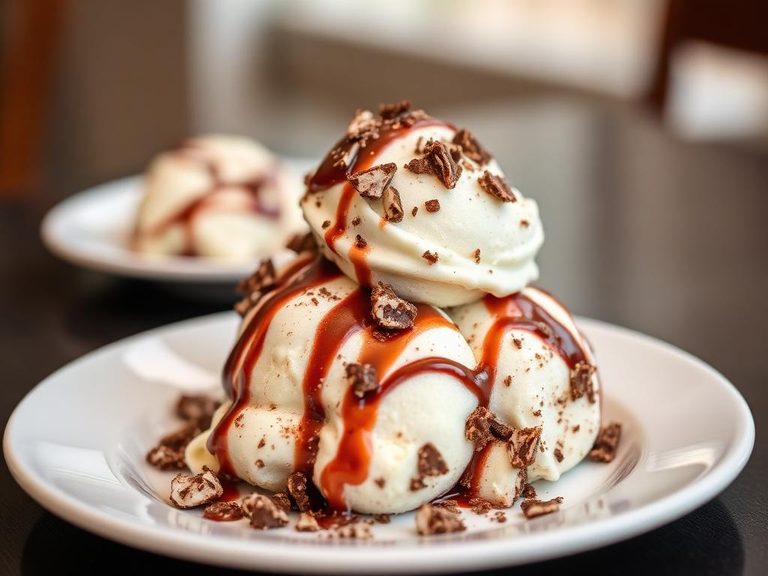

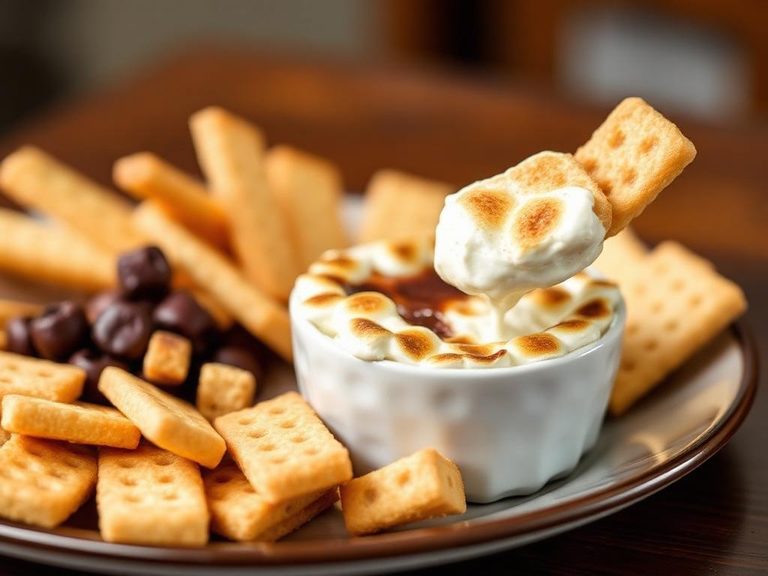
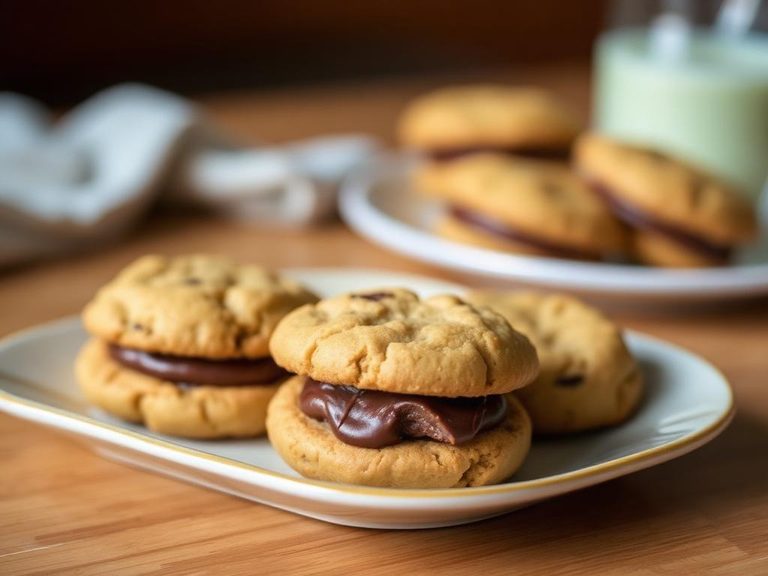
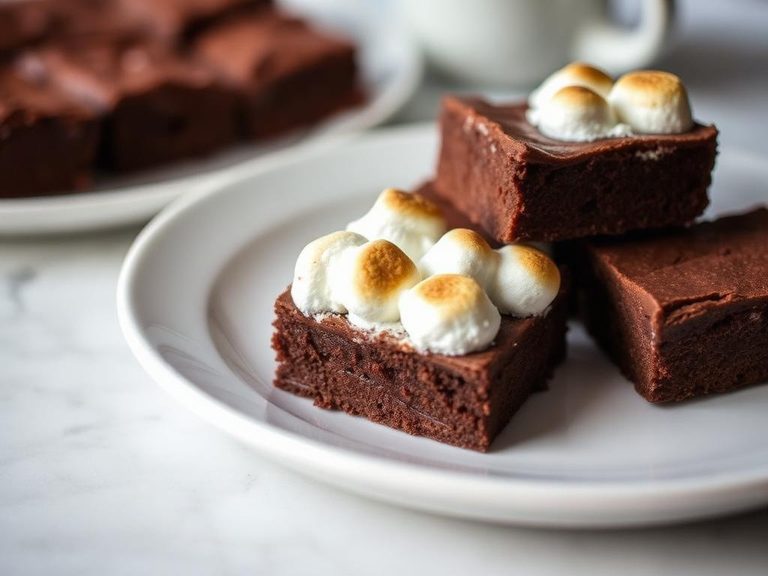
🌍 Where it's eaten
💡 Did you know?
The marshmallow component was originally derived from the mallow plant (Althaea officinalis), but modern recipes use gelatin to achieve that signature bouncy texture.
Full nutrition (USDA data · scales with serving)
| Water | 7.8 g |
| Energy | 453 kcal |
| Energy | 1893 kj |
| Protein | 2.3 g |
| Total lipid (fat) | 17.5 g |
| Ash | 0.76 g |
| Carbohydrate, by difference | 71.3 g |
| Fiber, total dietary | 1.7 g |
| Total Sugars | 64.1 g |
| Calcium, Ca | 45.0 mg |
| Iron, Fe | 0.96 mg |
| Magnesium, Mg | 36.0 mg |
| Phosphorus, P | 67.0 mg |
| Potassium, K | 147 mg |
| Sodium, Na | 85.0 mg |
| Zinc, Zn | 0.58 mg |
| Copper, Cu | 0.22 mg |
| Manganese, Mn | 0.23 mg |
| Selenium, Se | 2.1 ug |
| Vitamin C, total ascorbic acid | 0.20 mg |
| Thiamin | 0.02 mg |
| Riboflavin | 0.08 mg |
| Niacin | 0.16 mg |
| Pantothenic acid | 0.12 mg |
| Vitamin B-6 | 0.02 mg |
| Folate, total | 5.0 ug |
| Folic acid | 0.00 ug |
| Folate, food | 5.0 ug |
| Folate, DFE | 5.0 ug |
| Vitamin B-12 | 0.03 ug |
| Vitamin B-12, added | 0.00 ug |
| Vitamin A, RAE | 75.0 ug |
| Retinol | 73.0 ug |
| Carotene, beta | 17.0 ug |
| Carotene, alpha | 0.00 ug |
| Cryptoxanthin, beta | 0.00 ug |
| Vitamin A, IU | 273 iu |
| Lycopene | 0.00 ug |
| Lutein + zeaxanthin | 5.0 ug |
| Vitamin E (alpha-tocopherol) | 0.32 mg |
| Vitamin E, added | 0.00 mg |
| Vitamin K (phylloquinone) | 2.3 ug |
| Caffeine | 18.0 mg |
| Theobromine | 139 mg |
Fat & fatty acid profile (per 100g)
| Fatty acids, total saturated | 10.7 g |
| SFA 4:0 | 0.34 g |
| SFA 6:0 | 0.21 g |
| SFA 8:0 | 0.12 g |
| SFA 10:0 | 0.26 g |
| SFA 12:0 | 0.27 g |
| SFA 13:0 | 0.00 g |
| SFA 14:0 | 0.82 g |
| SFA 15:0 | 0.00 g |
| SFA 16:0 | 4.5 g |
| SFA 17:0 | 0.07 g |
| SFA 18:0 | 4.0 g |
| SFA 20:0 | 0.09 g |
| SFA 22:0 | 0.01 g |
| SFA 24:0 | 0.00 g |
| Fatty acids, total monounsaturated | 5.2 g |
| MUFA 14:1 | 0.00 g |
| MUFA 15:1 | 0.00 g |
| MUFA 16:1 | 0.13 g |
| MUFA 16:1 c | 0.09 g |
| MUFA 17:1 | 0.00 g |
| MUFA 18:1 | 5.1 g |
| MUFA 18:1 c | 1.7 g |
| MUFA 20:1 | 0.01 g |
| MUFA 22:1 | 0.00 g |
| MUFA 24:1 c | 0.00 g |
| Fatty acids, total polyunsaturated | 0.61 g |
| PUFA 18:2 | 0.55 g |
| PUFA 18:2 n-6 c,c | 0.21 g |
| PUFA 18:2 CLAs | 0.03 g |
| PUFA 18:2 i | 0.03 g |
| PUFA 18:3 | 0.06 g |
| PUFA 18:3 n-3 c,c,c (ALA) | 0.03 g |
| PUFA 18:4 | 0.00 g |
| PUFA 20:2 n-6 c,c | 0.00 g |
| PUFA 20:3 | 0.00 g |
| PUFA 20:4 | 0.00 g |
| PUFA 20:5 n-3 (EPA) | 0.00 g |
| PUFA 22:5 n-3 (DPA) | 0.00 g |
| PUFA 22:6 n-3 (DHA) | 0.00 g |
| Fatty acids, total trans | 0.32 g |
| Fatty acids, total trans-monoenoic | 0.29 g |
| TFA 18:1 t | 0.29 g |
| Fatty acids, total trans-polyenoic | 0.03 g |
| Cholesterol | 25.0 mg |
Amino acid profile (per 100g)
Estimated from Candies, honey-combed, with peanut butter — USDA does not publish this profile for Candies.
| Tryptophan | 0.09 g |
| Threonine | 0.21 g |
| Isoleucine | 0.24 g |
| Leucine | 0.61 g |
| Lysine | 0.27 g |
| Methionine | 0.10 g |
| Cystine | 0.09 g |
| Phenylalanine | 0.47 g |
| Tyrosine | 0.33 g |
| Valine | 0.31 g |
| Arginine | 1.1 g |
| Histidine | 0.22 g |
| Alanine | 0.36 g |
| Aspartic acid | 1.2 g |
| Glutamic acid | 2.0 g |
| Glycine | 0.56 g |
| Proline | 0.55 g |
| Serine | 0.58 g |
FAQ
What's the difference between this and regular chocolate fudge?
The key difference is the incorporated marshmallow, which adds a contrasting soft, airy texture and a distinct sweet, vanilla-like flavor to the dense chocolate fudge base.
Can I make a version with less sugar?
You can experiment with sugar substitutes or reduce the sugar in the fudge base, but note that sugar is critical for the proper texture and set of both the fudge and marshmallow components.
How should I store it to keep it fresh?
Store it in an airtight container at cool room temperature for up to a week, or refrigerate for up to 3 weeks. Let it come to room temperature before serving for the best texture.
Nutrient density (calculated · NRF9.3)
Nutrient Rich Foods index: beneficial nutrients (protein, fiber, vitamins, minerals) minus saturated fat, added sugar & sodium, per 100 kcal.
NRF9.3 index — Fulgoni, Keast & Drewnowski, 2009. Computed from USDA nutrients.
Weight-loss friendliness (composite index)
Energy density 4.53 kcal/g · 2% calories from protein · 1.7 g fiber · 64.1 g sugar per 100 g.
Composite of energy density (Rolls et al., 1999), protein & fiber satiety, minus sugar. A calculated heuristic — ranks satiety-per-calorie, not a clinical measure.
Dietary load (calculated from USDA values)
Potential renal acid load. Positive = acid-forming, negative = alkaline-forming.
Sodium-to-potassium ratio: 0.58 (lower is better — aim for ≤ 1)
Sodium:potassium per WHO potassium guidance. Computed from USDA nutrients.