

Beef, rib, back ribs, bone-in, separable lean and fat, trimmed to 0" fat, choice, raw
Whole food · Beef Products

Photo: Wikipedia
Beef back ribs are the long, curved ribs from the upper back, prized for their rich marbling of fat that melts during cooking, yielding a deeply savory, beefy flavor and tender, pull-apart texture. Nutritionally, they are a dense source of energy and protein, with nearly all their calories coming from fat, making them a hearty, indulgent cut.
Calorie split: 19% protein · 1% carbs · 80% fat
↓ Full nutrition💚 Why it's loved
People adore beef back ribs for their unparalleled flavor and satisfying, melt-in-your-mouth texture when cooked low and slow. They are a centerpiece of communal feasts and barbecue culture, symbolizing celebration and comfort.
⚠️ Watch-outs & how to enjoy it better
This is a high-fat, calorie-dense cut, which may not align with low-fat dietary goals. To enjoy mindfully, practice portion control (a 3-4 oz serving is typical) and pair with fiber-rich vegetables like roasted broccoli or a vinegar-based slaw to balance the meal and aid digestion.
Key benefits
- Excellent source of high-quality protein for muscle maintenance.
- Rich in iron, zinc, and B vitamins, especially B12.
- Provides conjugated linoleic acid (CLA), a type of beneficial fat.
- The bone-in cut adds collagen and gelatin when cooked slowly.
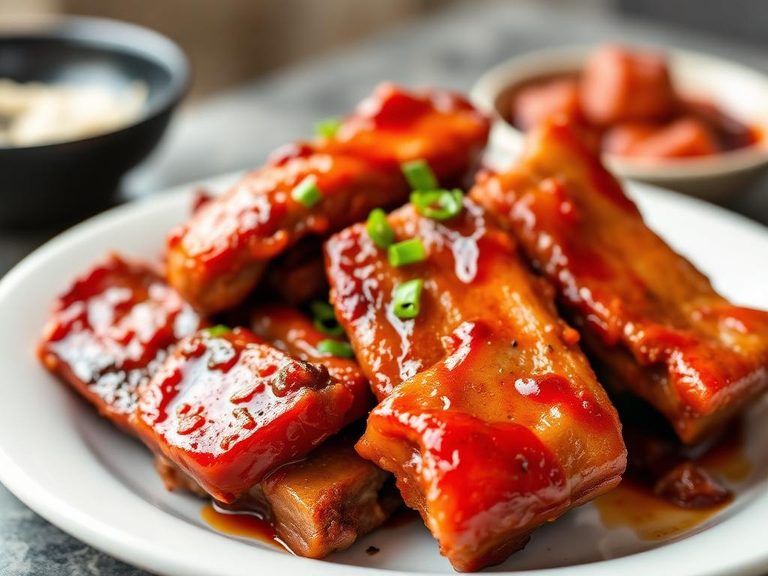
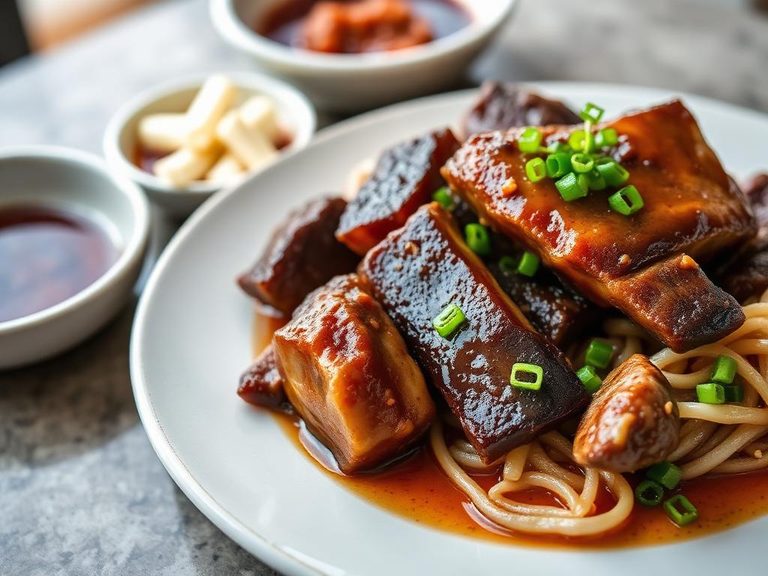
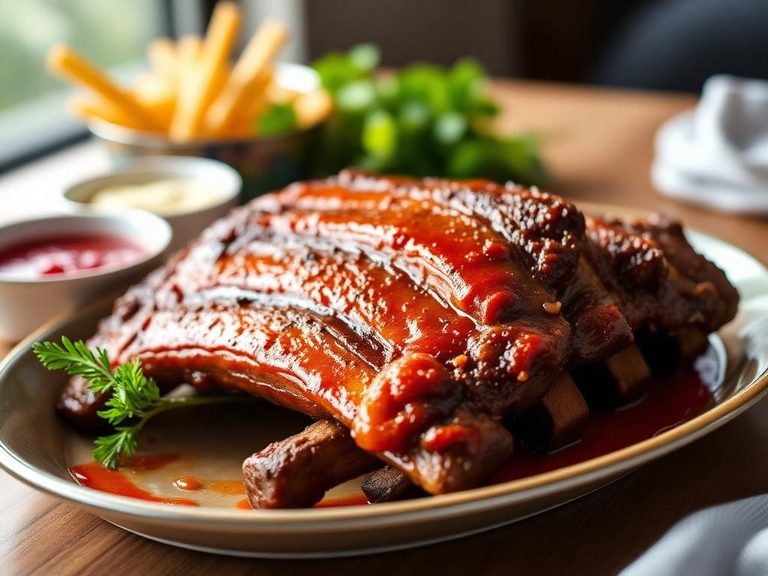
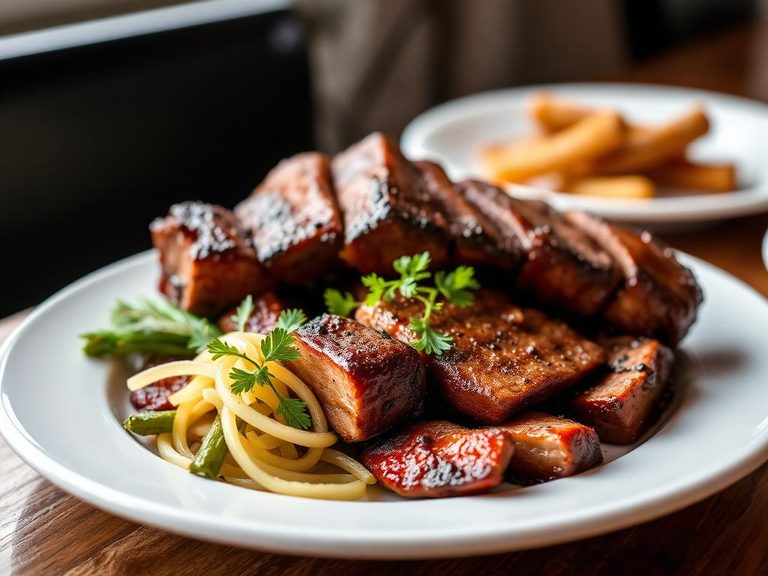
🍽️ Popular dishes
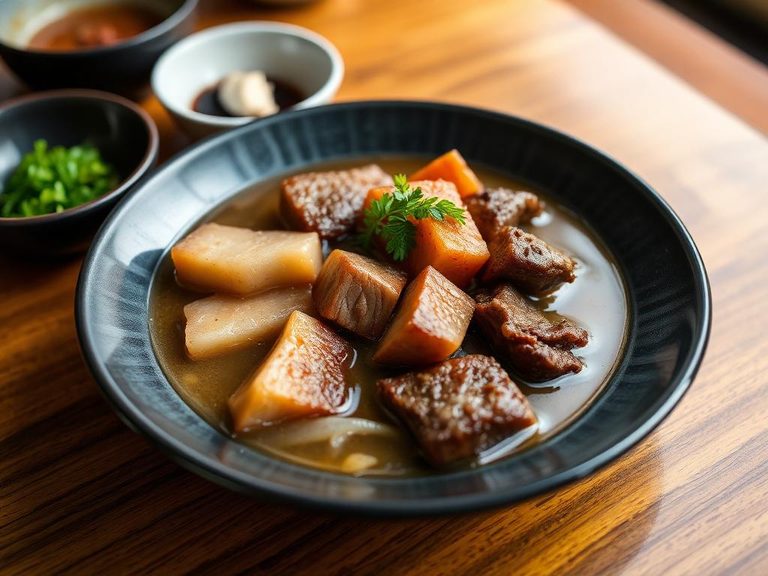
🌍 Where it's eaten
💡 Did you know?
The 'back ribs' come from the same section as the ribeye steak, meaning the meat between the bones is essentially the prized ribeye muscle.
Full nutrition (USDA data · scales with serving)
| Water | 52.7 g |
| Energy | 336 kcal |
| Energy | 1404 kj |
| Protein | 15.8 g |
| Total lipid (fat) | 29.9 g |
| Ash | 0.72 g |
| Carbohydrate, by difference | 0.90 g |
| Fiber, total dietary | 0.00 g |
| Total Sugars | 0.00 g |
| Calcium, Ca | 9.0 mg |
| Iron, Fe | 1.6 mg |
| Magnesium, Mg | 17.0 mg |
| Phosphorus, P | 122 mg |
| Potassium, K | 214 mg |
| Sodium, Na | 53.0 mg |
| Zinc, Zn | 3.8 mg |
| Copper, Cu | 0.06 mg |
| Selenium, Se | 17.3 ug |
| Vitamin C, total ascorbic acid | 0.00 mg |
| Thiamin | 0.07 mg |
| Riboflavin | 0.21 mg |
| Niacin | 3.6 mg |
| Vitamin B-6 | 0.35 mg |
| Folate, total | 3.0 ug |
| Folic acid | 0.00 ug |
| Folate, food | 3.0 ug |
| Folate, DFE | 3.0 ug |
| Vitamin B-12 | 1.5 ug |
| Vitamin B-12, added | 0.00 ug |
| Vitamin A, RAE | 6.0 ug |
| Retinol | 6.0 ug |
| Carotene, beta | 0.00 ug |
| Carotene, alpha | 0.00 ug |
| Cryptoxanthin, beta | 0.00 ug |
| Vitamin A, IU | 18.0 iu |
| Lycopene | 0.00 ug |
| Lutein + zeaxanthin | 0.00 ug |
| Vitamin K (phylloquinone) | 1.5 ug |
| Alcohol, ethyl | 0.00 g |
| Caffeine | 0.00 mg |
| Theobromine | 0.00 mg |
Fat & fatty acid profile (per 100g)
| Fatty acids, total saturated | 13.3 g |
| SFA 4:0 | 0.00 g |
| SFA 6:0 | 0.00 g |
| SFA 8:0 | 0.00 g |
| SFA 10:0 | 0.02 g |
| SFA 12:0 | 0.02 g |
| SFA 14:0 | 0.88 g |
| SFA 15:0 | 0.18 g |
| SFA 16:0 | 7.0 g |
| SFA 17:0 | 0.41 g |
| SFA 18:0 | 4.8 g |
| SFA 20:0 | 0.02 g |
| SFA 24:0 | 0.01 g |
| Fatty acids, total monounsaturated | 14.6 g |
| MUFA 14:1 | 0.18 g |
| MUFA 15:1 | 0.04 g |
| MUFA 16:1 | 0.98 g |
| MUFA 16:1 c | 0.90 g |
| MUFA 17:1 | 0.26 g |
| MUFA 18:1 | 13.0 g |
| MUFA 18:1 c | 11.3 g |
| MUFA 20:1 | 0.07 g |
| MUFA 22:1 | 0.00 g |
| Fatty acids, total polyunsaturated | 1.2 g |
| PUFA 18:2 | 1.1 g |
| PUFA 18:2 n-6 c,c | 0.83 g |
| PUFA 18:2 CLAs | 0.14 g |
| PUFA 18:3 | 0.05 g |
| PUFA 18:3 n-3 c,c,c (ALA) | 0.05 g |
| PUFA 18:4 | 0.00 g |
| PUFA 20:2 n-6 c,c | 0.01 g |
| PUFA 20:3 | 0.03 g |
| PUFA 20:3 n-6 | 0.03 g |
| PUFA 20:4 | 0.05 g |
| PUFA 20:5 n-3 (EPA) | 0.00 g |
| PUFA 22:5 n-3 (DPA) | 0.01 g |
| PUFA 22:6 n-3 (DHA) | 0.00 g |
| Fatty acids, total trans | 1.9 g |
| Fatty acids, total trans-monoenoic | 1.8 g |
| TFA 16:1 t | 0.08 g |
| TFA 18:1 t | 1.8 g |
| TFA 18:2 t not further defined | 0.11 g |
| Fatty acids, total trans-polyenoic | 0.11 g |
| Cholesterol | 76.0 mg |
Amino acid profile (per 100g)
| Tryptophan | 0.18 g |
| Threonine | 0.74 g |
| Isoleucine | 0.73 g |
| Leucine | 1.3 g |
| Lysine | 1.5 g |
| Methionine | 0.42 g |
| Cystine | 0.16 g |
| Phenylalanine | 0.63 g |
| Tyrosine | 0.58 g |
| Valine | 0.79 g |
| Arginine | 1.1 g |
| Histidine | 0.58 g |
| Alanine | 0.97 g |
| Aspartic acid | 1.5 g |
| Glutamic acid | 2.6 g |
| Glycine | 0.78 g |
| Proline | 0.70 g |
| Serine | 0.64 g |
| Hydroxyproline | 0.11 g |
FAQ
What's the difference between back ribs and short ribs?
Back ribs are from the upper back and are longer, leaner, and meatier between the bones. Short ribs are from the lower rib cage, have more marbling and connective tissue, and are often cut into blocks for braising.
How do I get tender meat off the bone?
Low and slow cooking is key. Whether braising, smoking, or roasting, cooking at a low temperature for several hours breaks down the collagen, making the meat tender and easy to pull off the bone.
Is the nutritional information for raw or cooked weight?
The provided data is for raw meat. Cooking renders out fat and moisture, so the cooked weight will be less, and the calories and fat per 100g will be higher.
Nutrient density (calculated · NRF9.3)
Nutrient Rich Foods index: beneficial nutrients (protein, fiber, vitamins, minerals) minus saturated fat, added sugar & sodium, per 100 kcal.
NRF9.3 index — Fulgoni, Keast & Drewnowski, 2009. Computed from USDA nutrients.
Weight-loss friendliness (composite index)
Energy density 3.36 kcal/g · 19% calories from protein · 0.0 g fiber · 0.0 g sugar per 100 g.
Composite of energy density (Rolls et al., 1999), protein & fiber satiety, minus sugar. A calculated heuristic — ranks satiety-per-calorie, not a clinical measure.
Dietary load (calculated from USDA values)
Potential renal acid load. Positive = acid-forming, negative = alkaline-forming.
Sodium-to-potassium ratio: 0.25 (lower is better — aim for ≤ 1)
Sodium:potassium per WHO potassium guidance. Computed from USDA nutrients.