

Beef, ground, 75% lean meat / 25% fat, crumbles, cooked, pan-browned
Whole food · Beef Products

Photo: Wikipedia
This is ground beef, pan-browned to a savory, crumbly texture with a rich, beefy flavor and a satisfyingly juicy mouthfeel from its 25% fat content. Nutritionally, it's a powerhouse of complete protein, delivering over 26 grams per 100g serving, making it a dense source of fuel for muscle repair and satiety.
Calorie split: 39% protein · 0% carbs · 61% fat
↓ Full nutrition💚 Why it's loved
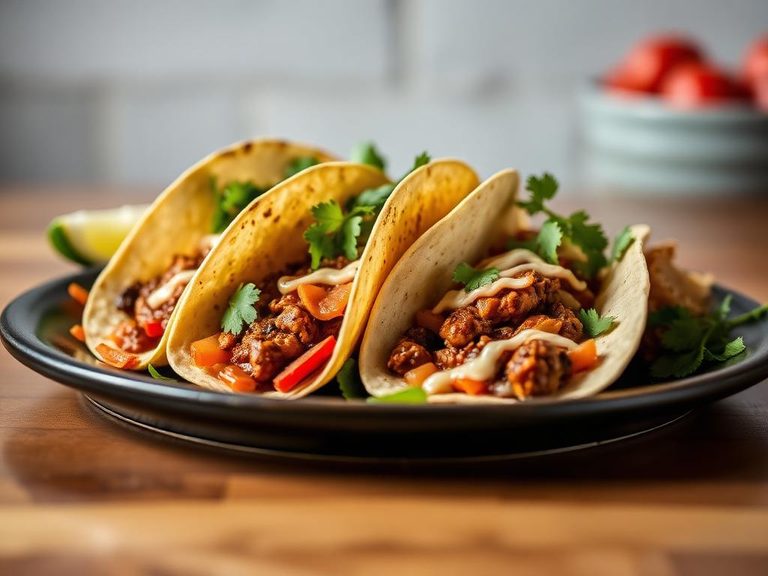
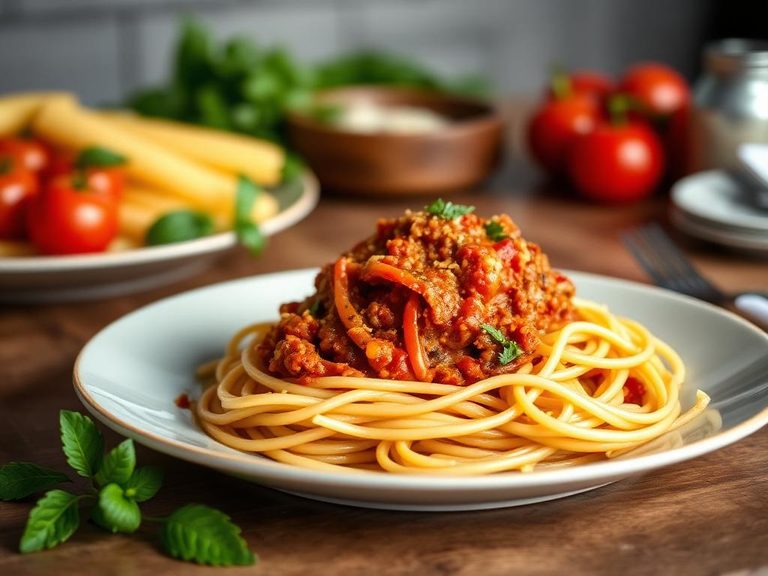
People adore it for its deep, umami-rich flavor that forms the savory backbone of countless comfort foods. Its versatility is legendary—it can be the star in a simple taco or the foundational layer in a complex lasagna, adapting to virtually any spice profile.
⚠️ Watch-outs & how to enjoy it better
The high saturated fat content means it should be consumed in moderation, and the browning process can create heterocyclic amines (HCAs) if charred. To counteract this, avoid overcooking or charring, and pair it with fiber-rich vegetables or a side salad to balance the meal and aid digestion.
Key benefits
- Excellent source of complete, high-quality protein
- Rich in heme iron, which is highly absorbable
- Provides essential B vitamins, especially B12 and niacin
- Contains zinc, important for immune function
- No carbohydrates, suitable for low-carb diets
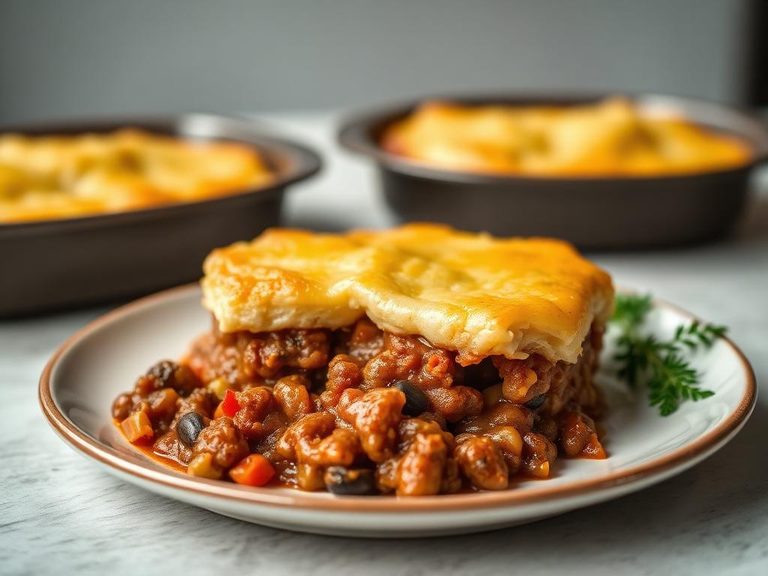
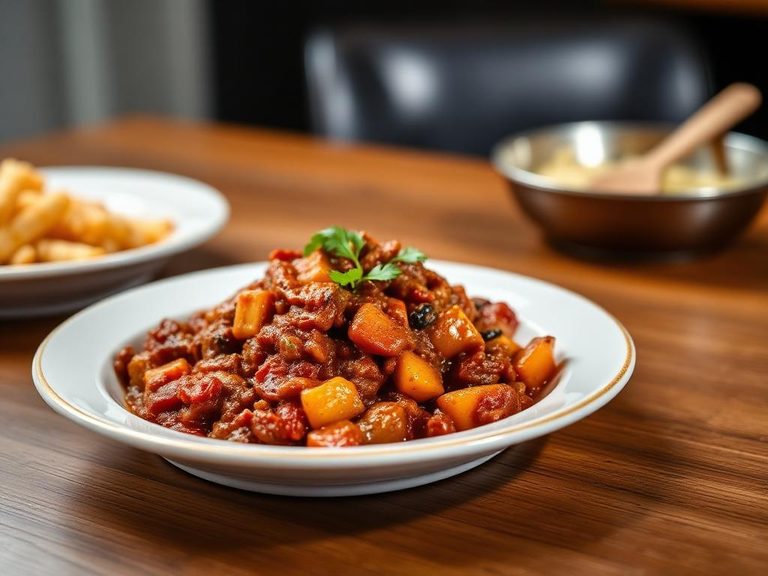
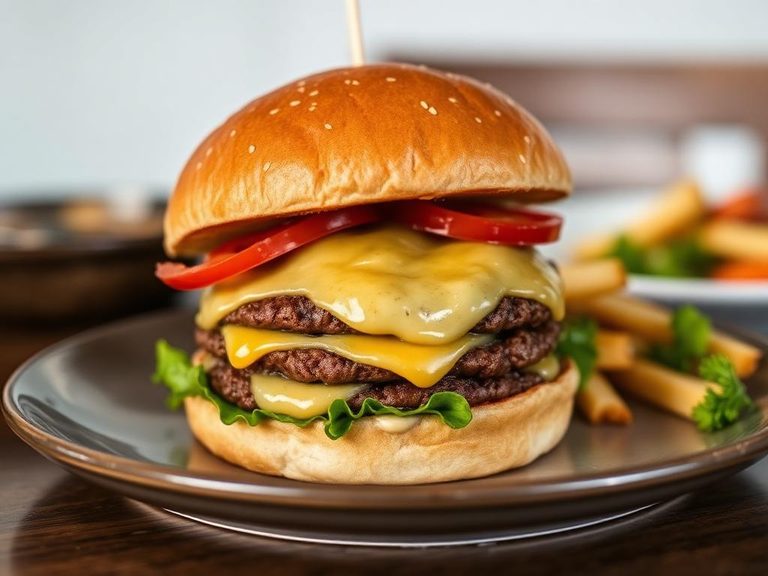
🍽️ Popular dishes
🌍 Where it's eaten
💡 Did you know?
The term 'hamburger' is believed to be named not after the city of Hamburg, Germany, but after the 'Hamburg steak'—a dish of minced beef brought to the US by German immigrants in the 19th century.
Full nutrition (USDA data · scales with serving)
| Water | 54.5 g |
| Energy | 277 kcal |
| Energy | 1157 kj |
| Protein | 26.3 g |
| Total lipid (fat) | 18.2 g |
| Ash | 1.1 g |
| Carbohydrate, by difference | 0.00 g |
| Fiber, total dietary | 0.00 g |
| Total Sugars | 0.00 g |
| Calcium, Ca | 34.0 mg |
| Iron, Fe | 2.6 mg |
| Magnesium, Mg | 22.0 mg |
| Phosphorus, P | 214 mg |
| Potassium, K | 354 mg |
| Sodium, Na | 93.0 mg |
| Zinc, Zn | 6.2 mg |
| Copper, Cu | 0.08 mg |
| Manganese, Mn | 0.01 mg |
| Selenium, Se | 21.6 ug |
| Vitamin C, total ascorbic acid | 0.00 mg |
| Thiamin | 0.05 mg |
| Riboflavin | 0.19 mg |
| Niacin | 5.3 mg |
| Pantothenic acid | 0.81 mg |
| Vitamin B-6 | 0.43 mg |
| Folate, total | 12.0 ug |
| Folic acid | 0.00 ug |
| Folate, food | 12.0 ug |
| Folate, DFE | 12.0 ug |
| Choline, total | 81.5 mg |
| Betaine | 9.8 mg |
| Vitamin B-12 | 2.8 ug |
| Vitamin B-12, added | 0.00 ug |
| Vitamin A, RAE | 3.0 ug |
| Retinol | 3.0 ug |
| Carotene, beta | 0.00 ug |
| Carotene, alpha | 0.00 ug |
| Cryptoxanthin, beta | 0.00 ug |
| Vitamin A, IU | 9.0 iu |
| Lycopene | 0.00 ug |
| Lutein + zeaxanthin | 0.00 ug |
| Vitamin E (alpha-tocopherol) | 0.12 mg |
| Vitamin E, added | 0.00 mg |
| Vitamin D (D2 + D3), International Units | 2.0 iu |
| Vitamin D (D2 + D3) | 0.00 ug |
| Vitamin D3 (cholecalciferol) | 0.00 ug |
| Vitamin K (phylloquinone) | 2.2 ug |
| Vitamin K (Dihydrophylloquinone) | 0.00 ug |
| Alcohol, ethyl | 0.00 g |
| Caffeine | 0.00 mg |
| Theobromine | 0.00 mg |
Fat & fatty acid profile (per 100g)
| Fatty acids, total saturated | 6.9 g |
| SFA 4:0 | 0.00 g |
| SFA 6:0 | 0.00 g |
| SFA 8:0 | 0.00 g |
| SFA 10:0 | 0.00 g |
| SFA 12:0 | 0.01 g |
| SFA 14:0 | 0.42 g |
| SFA 15:0 | 0.07 g |
| SFA 16:0 | 3.1 g |
| SFA 17:0 | 0.16 g |
| SFA 18:0 | 3.2 g |
| SFA 20:0 | 0.01 g |
| Fatty acids, total monounsaturated | 8.2 g |
| MUFA 14:1 | 0.13 g |
| MUFA 16:1 | 0.55 g |
| MUFA 17:1 | 0.14 g |
| MUFA 18:1 | 5.7 g |
| MUFA 20:1 | 0.04 g |
| MUFA 22:1 | 0.00 g |
| Fatty acids, total polyunsaturated | 0.50 g |
| PUFA 18:2 | 0.39 g |
| PUFA 18:3 | 0.01 g |
| PUFA 18:3 n-6 c,c,c | 0.01 g |
| PUFA 18:4 | 0.00 g |
| PUFA 20:4 | 0.05 g |
| PUFA 20:5 n-3 (EPA) | 0.00 g |
| PUFA 22:5 n-3 (DPA) | 0.00 g |
| PUFA 22:6 n-3 (DHA) | 0.00 g |
| Fatty acids, total trans | 0.95 g |
| Fatty acids, total trans-monoenoic | 0.95 g |
| TFA 18:1 t | 0.95 g |
| Cholesterol | 89.0 mg |
Amino acid profile (per 100g)
| Tryptophan | 0.13 g |
| Threonine | 1.0 g |
| Isoleucine | 1.2 g |
| Leucine | 2.0 g |
| Lysine | 2.2 g |
| Methionine | 0.68 g |
| Cystine | 0.27 g |
| Phenylalanine | 1.0 g |
| Tyrosine | 0.81 g |
| Valine | 1.3 g |
| Arginine | 1.7 g |
| Histidine | 0.85 g |
| Alanine | 1.6 g |
| Aspartic acid | 2.4 g |
| Glutamic acid | 3.9 g |
| Glycine | 1.8 g |
| Proline | 1.3 g |
| Serine | 1.1 g |
FAQ
What does '75% lean' actually mean?
It means that by weight, 75% of the raw product is lean meat tissue, and 25% is fat. After cooking, the fat renders out, so the cooked product will have a higher percentage of protein by weight.
Is this the same as 'hamburger meat'?
Yes, 'ground beef' and 'hamburger meat' are often used interchangeably. The key difference is that hamburger meat may contain added seasonings or fat from other cuts, while ground beef is typically pure beef from various cuts.
How can I reduce the fat content when cooking?
After browning, drain the crumbles in a colander and rinse briefly with hot water to wash away excess rendered fat. You can also choose a leaner grind (like 90/10) for future purchases.
Nutrient density (calculated · NRF9.3)
Nutrient Rich Foods index: beneficial nutrients (protein, fiber, vitamins, minerals) minus saturated fat, added sugar & sodium, per 100 kcal.
NRF9.3 index — Fulgoni, Keast & Drewnowski, 2009. Computed from USDA nutrients.
Weight-loss friendliness (composite index)
Energy density 2.77 kcal/g · 38% calories from protein · 0.0 g fiber · 0.0 g sugar per 100 g.
Composite of energy density (Rolls et al., 1999), protein & fiber satiety, minus sugar. A calculated heuristic — ranks satiety-per-calorie, not a clinical measure.
Dietary load (calculated from USDA values)
Potential renal acid load. Positive = acid-forming, negative = alkaline-forming.
Sodium-to-potassium ratio: 0.26 (lower is better — aim for ≤ 1)
Sodium:potassium per WHO potassium guidance. Computed from USDA nutrients.