

Soup, chunky vegetable, reduced sodium, canned, ready-to-serve
Whole food · Soups, Sauces, and Gravies

Photo: Wikipedia
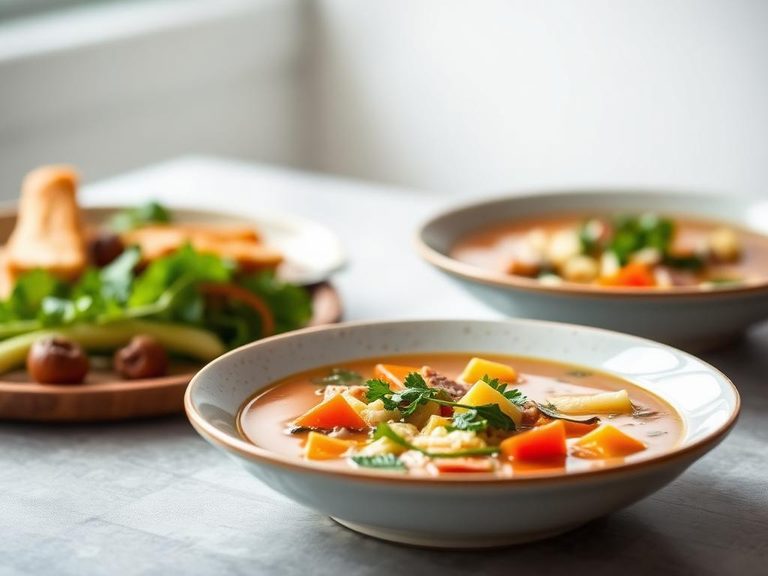
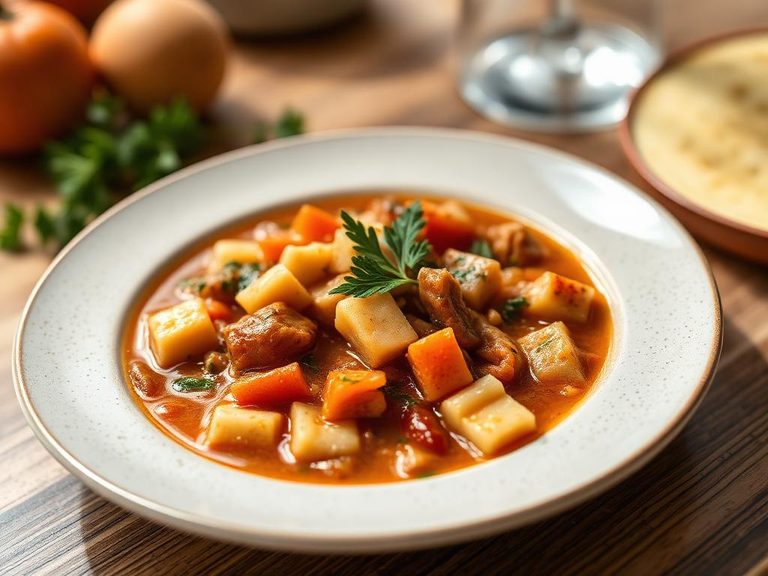
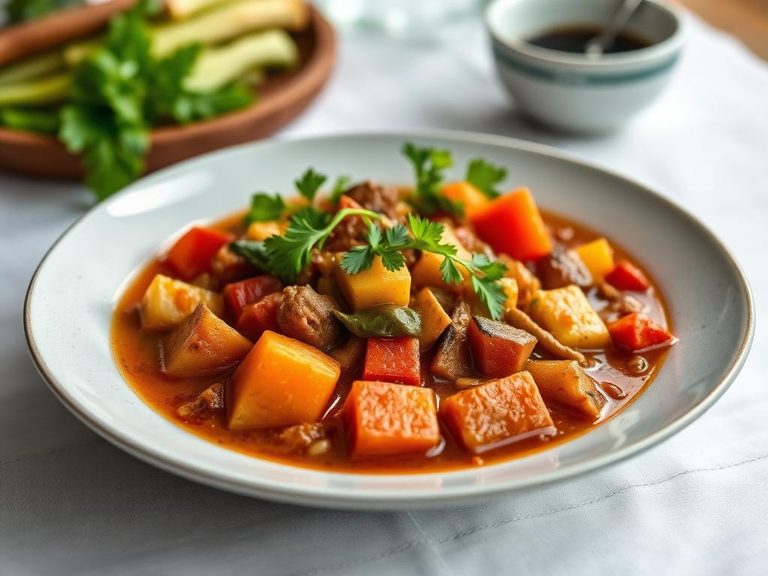
This is a hearty, ready-to-eat canned soup packed with a medley of chunky vegetables like carrots, celery, potatoes, and tomatoes in a savory broth. The texture is satisfyingly thick with tender vegetable pieces, offering a comforting mouthfeel. Nutritionally, it's a low-calorie, low-fat option that provides a decent source of dietary fiber and natural sugars from its vegetable content.
Calorie split: 9% protein · 82% carbs · 9% fat
↓ Full nutrition💚 Why it's loved
People love it for its comforting, familiar taste and the convenience of having a warm, vegetable-rich meal ready in minutes. It's a versatile base that can be enjoyed alone or used as a starter for countless other dishes.
⚠️ Watch-outs & how to enjoy it better
The reduced sodium formulation can sometimes taste less vibrant or 'flat' to those accustomed to standard canned soups. To counteract this, you can brighten the flavor with a squeeze of fresh lemon juice, a dash of herbs, or a sprinkle of black pepper. Those monitoring blood sugar should note the 2.78g of sugar per 100g; pairing it with a protein source like chicken or beans can help moderate the glycemic impact.
Key benefits
- Low in calories (50 kcal per 100g)
- Very low in fat (0.51g per 100g)
- Good source of dietary fiber (1.1g per 100g)
- Provides natural vegetable-based sugars
- Convenient, ready-to-serve meal component
🍽️ Popular dishes
🌍 Where it's eaten
💡 Did you know?
The 'chunky' designation in canned soup is a specific marketing and labeling term that legally requires the product to contain at least 12% of its ingredients as solid, identifiable chunks of vegetables or meat.
Full nutrition (USDA data · scales with serving)
| Water | 86.9 g |
| Energy | 50.0 kcal |
| Energy | 211 kj |
| Protein | 1.2 g |
| Total lipid (fat) | 0.51 g |
| Ash | 1.1 g |
| Carbohydrate, by difference | 10.3 g |
| Fiber, total dietary | 1.1 g |
| Total Sugars | 2.8 g |
| Sucrose | 1.2 g |
| Glucose | 0.85 g |
| Fructose | 0.75 g |
| Lactose | 0.00 g |
| Maltose | 0.00 g |
| Galactose | 0.00 g |
| Starch | 7.0 g |
| Calcium, Ca | 25.0 mg |
| Iron, Fe | 0.40 mg |
| Magnesium, Mg | 12.0 mg |
| Phosphorus, P | 28.0 mg |
| Potassium, K | 349 mg |
| Sodium, Na | 138 mg |
| Zinc, Zn | 0.24 mg |
| Copper, Cu | 0.05 mg |
| Manganese, Mn | 0.09 mg |
| Selenium, Se | 0.80 ug |
| Vitamin C, total ascorbic acid | 0.70 mg |
| Thiamin | 0.05 mg |
| Riboflavin | 0.10 mg |
| Niacin | 0.61 mg |
| Pantothenic acid | 0.22 mg |
| Vitamin B-6 | 0.07 mg |
| Folate, total | 10.0 ug |
| Folic acid | 0.00 ug |
| Folate, food | 10.0 ug |
| Folate, DFE | 10.0 ug |
| Choline, total | 10.6 mg |
| Vitamin B-12 | 0.02 ug |
| Vitamin B-12, added | 0.00 ug |
| Vitamin A, RAE | 58.0 ug |
| Retinol | 2.0 ug |
| Carotene, beta | 572 ug |
| Carotene, alpha | 195 ug |
| Cryptoxanthin, beta | 0.00 ug |
| Vitamin A, IU | 1122 iu |
| Lycopene | 659 ug |
| Lutein + zeaxanthin | 116 ug |
| Vitamin E (alpha-tocopherol) | 0.18 mg |
| Vitamin E, added | 0.00 mg |
| Tocopherol, beta | 0.04 mg |
| Tocopherol, gamma | 0.07 mg |
| Tocopherol, delta | 0.01 mg |
| Tocotrienol, alpha | 0.02 mg |
| Tocotrienol, beta | 0.00 mg |
| Tocotrienol, gamma | 0.00 mg |
| Tocotrienol, delta | 0.00 mg |
| Vitamin D (D2 + D3), International Units | 0.00 iu |
| Vitamin D (D2 + D3) | 0.00 ug |
| Vitamin K (phylloquinone) | 6.2 ug |
| Alcohol, ethyl | 0.00 g |
| Caffeine | 0.00 mg |
| Theobromine | 0.00 mg |
Fat & fatty acid profile (per 100g)
| Fatty acids, total saturated | 0.22 g |
| SFA 4:0 | 0.01 g |
| SFA 6:0 | 0.01 g |
| SFA 8:0 | 0.00 g |
| SFA 10:0 | 0.01 g |
| SFA 12:0 | 0.01 g |
| SFA 14:0 | 0.03 g |
| SFA 16:0 | 0.11 g |
| SFA 18:0 | 0.04 g |
| Fatty acids, total monounsaturated | 0.11 g |
| MUFA 16:1 | 0.01 g |
| MUFA 18:1 | 0.11 g |
| MUFA 20:1 | 0.00 g |
| MUFA 22:1 | 0.00 g |
| Fatty acids, total polyunsaturated | 0.10 g |
| PUFA 18:2 | 0.08 g |
| PUFA 18:3 | 0.01 g |
| PUFA 18:4 | 0.00 g |
| PUFA 20:4 | 0.00 g |
| PUFA 20:5 n-3 (EPA) | 0.00 g |
| PUFA 22:5 n-3 (DPA) | 0.00 g |
| PUFA 22:6 n-3 (DHA) | 0.00 g |
| Cholesterol | 1.0 mg |
Amino acid profile (per 100g)
Estimated from Soup, bean with pork, canned, condensed — USDA does not publish this profile for Soup.
| Tryptophan | 0.06 g |
| Threonine | 0.24 g |
| Isoleucine | 0.29 g |
| Leucine | 0.48 g |
| Lysine | 0.40 g |
| Methionine | 0.07 g |
| Cystine | 0.07 g |
| Phenylalanine | 0.33 g |
| Tyrosine | 0.18 g |
| Valine | 0.32 g |
| Arginine | 0.31 g |
| Histidine | 0.15 g |
| Alanine | 0.29 g |
| Aspartic acid | 0.66 g |
| Glutamic acid | 1.1 g |
| Glycine | 0.28 g |
| Proline | 0.27 g |
| Serine | 0.29 g |
FAQ
Is reduced sodium soup significantly lower in salt than regular versions?
Yes, 'reduced sodium' typically means at least 25% less sodium per serving than the regular version of the same product. However, the absolute amount can still be moderate, so checking the nutrition label is advised for strict low-sodium diets.
Can I use this as a base for other recipes?
Absolutely. It's an excellent shortcut for stews, casseroles, or braises. You can add extra proteins, grains, or fresh vegetables to stretch it into a more substantial meal.
Does the fiber content help with fullness?
The 1.1g of fiber per 100g contributes to satiety, but for a more filling meal, it's best to combine it with a protein source like beans, lentils, or lean meat.
Nutrient density (calculated · NRF9.3)
Nutrient Rich Foods index: beneficial nutrients (protein, fiber, vitamins, minerals) minus saturated fat, added sugar & sodium, per 100 kcal.
NRF9.3 index — Fulgoni, Keast & Drewnowski, 2009. Computed from USDA nutrients.
Weight-loss friendliness (composite index)
Energy density 0.50 kcal/g · 9% calories from protein · 1.1 g fiber · 2.8 g sugar per 100 g.
Composite of energy density (Rolls et al., 1999), protein & fiber satiety, minus sugar. A calculated heuristic — ranks satiety-per-calorie, not a clinical measure.
Dietary load (calculated from USDA values)
Potential renal acid load. Positive = acid-forming, negative = alkaline-forming.
Sodium-to-potassium ratio: 0.40 (lower is better — aim for ≤ 1)
Sodium:potassium per WHO potassium guidance. Computed from USDA nutrients.