

Vegetable Stew
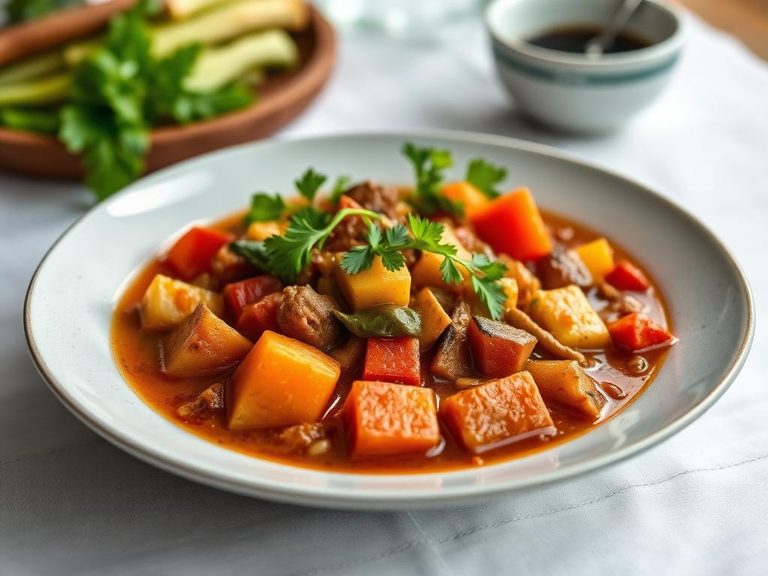
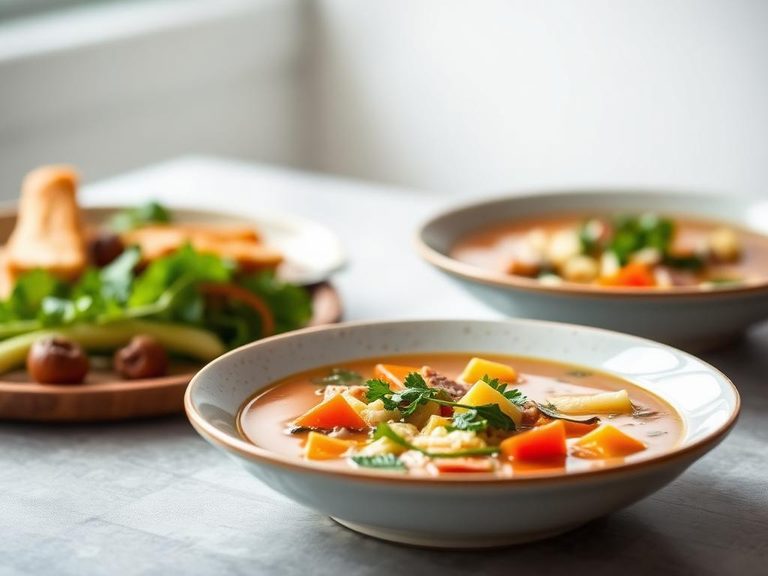
Vegetable stew is a hearty, slow-cooked dish featuring a medley of seasonal vegetables simmered in a flavorful broth or tomato-based sauce. It typically includes ingredients like potatoes, carrots, celery, onions, and beans, often seasoned with herbs like thyme and rosemary. While found in many cuisines worldwide, it is particularly popular in European and North American home cooking.
🍳 View the full Vegetable Stew recipe →
🍽️ Nutrition at a glance
Vegetable stew is generally low in fat and high in fiber and complex carbohydrates, making it a filling, nutrient-dense meal. A typical serving provides a good source of vitamins A and C, potassium, and iron, with a calorie range of approximately 200-350 per serving depending on the specific ingredients and portion size.
Nutrition breakdown
| Calories | 150 kcal |
| Protein | 5 g |
| Carbs | 25 g |
| Fat | 4 g |
| Fiber | 6 g |
| Sugar | 8 g |
| Sodium | 480 mg |
| Potassium | 650 mg |
| Vitamin A | 120 µg RAE |
| Vitamin C | 35 mg |
| Vitamin K | 45 µg |
| Folate | 80 µg |
| Manganese | 0.8 mg |
| Iron | 2.5 mg |
| Magnesium | 40 mg |
Per 1 cup (240 g) · estimated, varies by recipe
💡 What's interesting
Vegetable stew is culturally significant as a 'peasant dish' that historically utilized whatever vegetables were available, making it a symbol of resourcefulness and community. Nutritionally, it is unique because the slow-cooking process helps break down the vegetables' cell walls, making nutrients more bioavailable and enhancing the overall flavor profile.
🍽️ Related dishes



AI estimate may be inaccurate · Terms