

Shortening, industrial, soy (partially hydrogenated ) and corn for frying
Whole food · Fats and Oils

Photo: Wikipedia
This is a solid, white, odorless industrial fat made from soybean and corn oils that have been partially hydrogenated to become shelf-stable and heat-resistant. It has a neutral, waxy taste and a smooth, creamy texture when softened, but becomes very firm and brittle when chilled. Nutritionally, it is a concentrated source of energy, providing 884 calories and 100 grams of fat per 100 grams, with no protein, carbohydrates, or fiber.
Calorie split: 0% protein · 0% carbs · 100% fat
↓ Full nutrition💚 Why it's loved
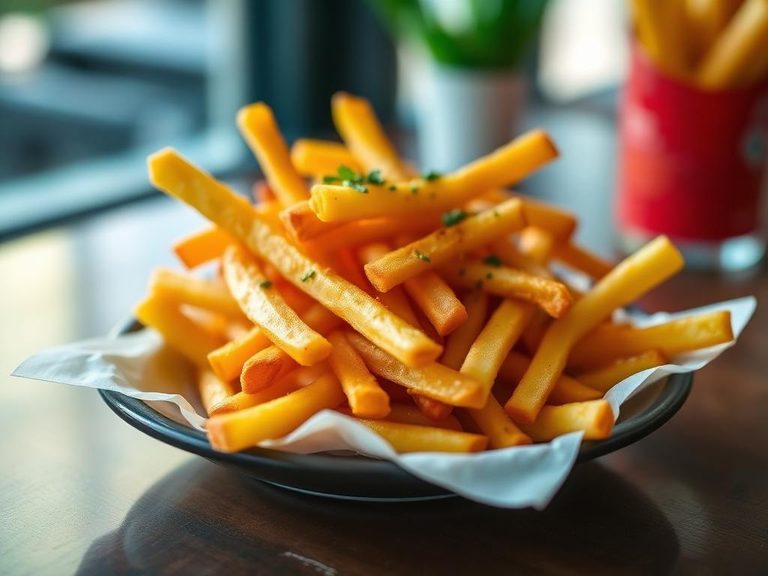
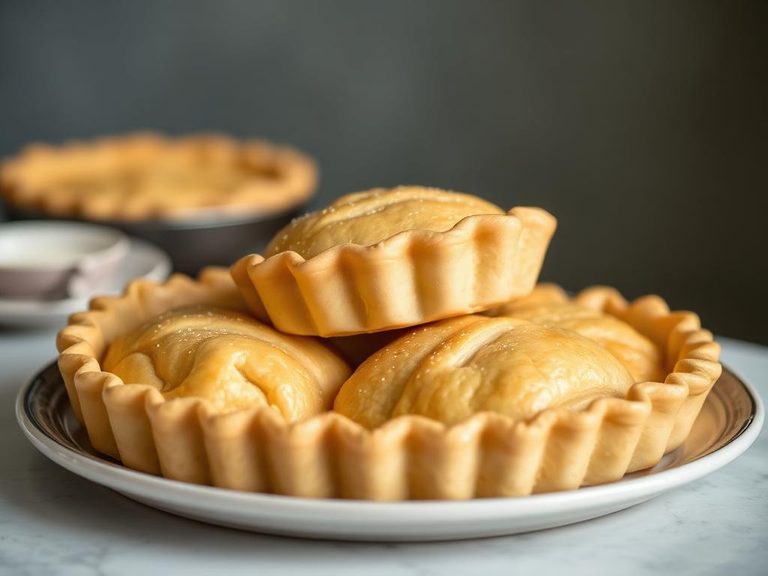
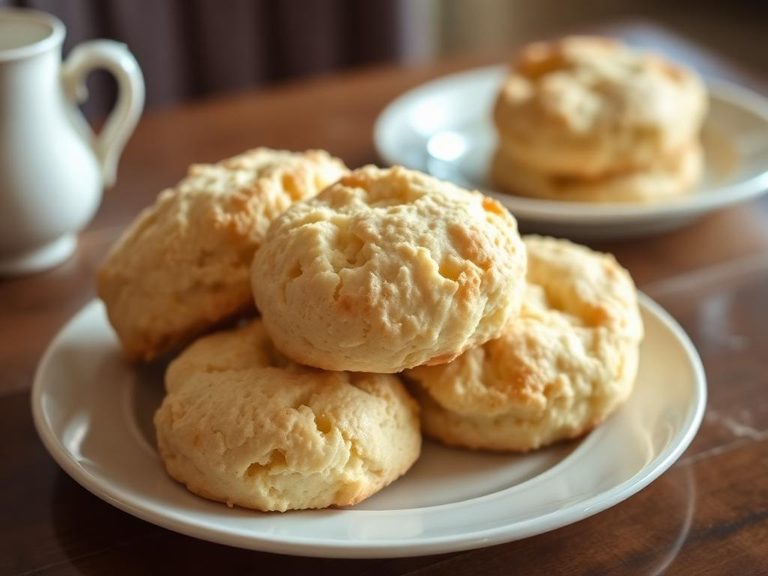
Food manufacturers and bakers love it for its functional properties: it creates exceptionally flaky pie crusts and biscuits, and its stability makes it perfect for high-volume, continuous frying in commercial settings.
⚠️ Watch-outs & how to enjoy it better
This product is a significant source of artificial trans fats, which are linked to increased risk of heart disease. It offers no beneficial nutrients, being essentially 'empty' calories from processed fat. Consumers concerned about cardiovascular health should limit intake; choosing oils high in monounsaturated fats (like olive or avocado oil) for home cooking is a healthier alternative.
Key benefits
- High smoke point ideal for deep-frying
- Neutral flavor does not overpower other ingredients
- Creates a very flaky, tender texture in baked goods
- Very shelf-stable with a long storage life
- Inexpensive for commercial food production
🍽️ Popular dishes


🌍 Where it's eaten
💡 Did you know?
The process of partial hydrogenation, which creates this fat, was developed in the early 1900s and was once hailed as a 'miracle' for making liquid vegetable oils solid and more versatile for cooking and baking.
Full nutrition (USDA data · scales with serving)
| Water | 0.00 g |
| Energy | 884 kcal |
| Energy | 3699 kj |
| Protein | 0.00 g |
| Total lipid (fat) | 100 g |
| Ash | 0.00 g |
| Carbohydrate, by difference | 0.00 g |
| Fiber, total dietary | 0.00 g |
| Total Sugars | 0.00 g |
| Calcium, Ca | 0.00 mg |
| Iron, Fe | 0.00 mg |
| Magnesium, Mg | 0.00 mg |
| Phosphorus, P | 0.00 mg |
| Potassium, K | 0.00 mg |
| Sodium, Na | 0.00 mg |
| Zinc, Zn | 0.00 mg |
| Copper, Cu | 0.00 mg |
| Selenium, Se | 0.00 ug |
| Vitamin C, total ascorbic acid | 0.00 mg |
| Thiamin | 0.00 mg |
| Riboflavin | 0.00 mg |
| Niacin | 0.00 mg |
| Pantothenic acid | 0.00 mg |
| Vitamin B-6 | 0.00 mg |
| Folate, total | 0.00 ug |
| Folic acid | 0.00 ug |
| Folate, food | 0.00 ug |
| Folate, DFE | 0.00 ug |
| Choline, total | 0.20 mg |
| Vitamin B-12 | 0.00 ug |
| Vitamin B-12, added | 0.00 ug |
| Vitamin A, RAE | 0.00 ug |
| Retinol | 0.00 ug |
| Carotene, beta | 0.00 ug |
| Carotene, alpha | 0.00 ug |
| Cryptoxanthin, beta | 0.00 ug |
| Vitamin A, IU | 0.00 iu |
| Lycopene | 0.00 ug |
| Lutein + zeaxanthin | 0.00 ug |
| Vitamin E (alpha-tocopherol) | 6.1 mg |
| Vitamin E, added | 0.00 mg |
| Tocopherol, beta | 0.00 mg |
| Tocopherol, gamma | 32.3 mg |
| Tocopherol, delta | 15.4 mg |
| Vitamin D (D2 + D3), International Units | 0.00 iu |
| Vitamin D (D2 + D3) | 0.00 ug |
| Vitamin K (phylloquinone) | 43.0 ug |
| Alcohol, ethyl | 0.00 g |
| Caffeine | 0.00 mg |
| Theobromine | 0.00 mg |
Fat & fatty acid profile (per 100g)
| Fatty acids, total saturated | 17.4 g |
| SFA 4:0 | 0.00 g |
| SFA 6:0 | 0.00 g |
| SFA 8:0 | 0.00 g |
| SFA 10:0 | 0.00 g |
| SFA 12:0 | 0.00 g |
| SFA 14:0 | 0.07 g |
| SFA 15:0 | 0.04 g |
| SFA 16:0 | 10.4 g |
| SFA 17:0 | 0.10 g |
| SFA 18:0 | 6.1 g |
| SFA 20:0 | 0.39 g |
| SFA 22:0 | 0.29 g |
| Fatty acids, total monounsaturated | 40.8 g |
| MUFA 16:1 | 0.13 g |
| MUFA 16:1 c | 0.13 g |
| MUFA 18:1 | 40.5 g |
| MUFA 18:1 c | 30.7 g |
| MUFA 20:1 | 0.20 g |
| MUFA 22:1 | 0.00 g |
| Fatty acids, total polyunsaturated | 36.0 g |
| PUFA 18:2 | 33.7 g |
| PUFA 18:2 n-6 c,c | 30.4 g |
| PUFA 18:2 i | 3.3 g |
| PUFA 18:3 | 2.3 g |
| PUFA 18:3 n-3 c,c,c (ALA) | 1.6 g |
| PUFA 18:3i | 0.69 g |
| PUFA 18:4 | 0.00 g |
| PUFA 20:4 | 0.00 g |
| PUFA 20:5 n-3 (EPA) | 0.00 g |
| PUFA 22:5 n-3 (DPA) | 0.00 g |
| PUFA 22:6 n-3 (DHA) | 0.00 g |
| Fatty acids, total trans | 13.8 g |
| Fatty acids, total trans-monoenoic | 9.7 g |
| TFA 18:1 t | 9.7 g |
| Fatty acids, total trans-polyenoic | 4.0 g |
| Cholesterol | 0.00 mg |
Amino acid profile (per 100g)
Estimated from Shortening, industrial, soy (partially hydrogenated), pourable liquid fry shortening — USDA does not publish this profile for Shortening.
| Tryptophan | 0.00 g |
| Threonine | 0.00 g |
| Isoleucine | 0.00 g |
| Leucine | 0.00 g |
| Lysine | 0.00 g |
| Methionine | 0.00 g |
| Cystine | 0.00 g |
| Phenylalanine | 0.00 g |
| Tyrosine | 0.00 g |
| Valine | 0.00 g |
| Arginine | 0.00 g |
| Histidine | 0.00 g |
| Alanine | 0.00 g |
| Aspartic acid | 0.00 g |
| Glutamic acid | 0.00 g |
| Glycine | 0.00 g |
| Proline | 0.00 g |
| Serine | 0.00 g |
FAQ
What is the difference between this and regular vegetable oil?
This is a solid fat created by adding hydrogen to liquid vegetable oils (like soy and corn oil) through a process called partial hydrogenation. This makes it more stable and solid at room temperature, unlike regular liquid vegetable oil.
Is it the same as lard or butter?
No. Lard is rendered pork fat, and butter is dairy fat. This is a plant-based, industrially processed fat. While they can sometimes be used interchangeably in recipes for texture (like flakiness), they have very different flavors, compositions, and nutritional profiles.
Why is it used in frying if it's unhealthy?
Its primary advantages are its high smoke point (it doesn't burn easily at high temperatures), its stability (it doesn't break down and form harmful compounds as quickly during long frying sessions), and its low cost for large-scale food production.
Nutrient density (calculated · NRF9.3)
Nutrient Rich Foods index: beneficial nutrients (protein, fiber, vitamins, minerals) minus saturated fat, added sugar & sodium, per 100 kcal.
NRF9.3 index — Fulgoni, Keast & Drewnowski, 2009. Computed from USDA nutrients.
Weight-loss friendliness (composite index)
Energy density 8.84 kcal/g · 0% calories from protein · 0.0 g fiber · 0.0 g sugar per 100 g.
Composite of energy density (Rolls et al., 1999), protein & fiber satiety, minus sugar. A calculated heuristic — ranks satiety-per-calorie, not a clinical measure.
Dietary load (calculated from USDA values)
Potential renal acid load. Positive = acid-forming, negative = alkaline-forming.
Sodium:potassium per WHO potassium guidance. Computed from USDA nutrients.