

Raspberry juice concentrate
Whole food · Fruits and Fruit Juices

Photo: Wikipedia
Raspberry juice concentrate is a thick, intensely flavored syrup made by cooking down raspberry juice to remove most of its water. It boasts a deep ruby-red hue and a potent sweet-tart flavor profile that is far more concentrated than fresh raspberries. Nutritionally, it is a significant source of carbohydrates and natural sugars, providing a quick energy boost.
Calorie split: 5% protein · 90% carbs · 5% fat
↓ Full nutrition💚 Why it's loved
People adore it for delivering a powerful, authentic raspberry punch that can transform beverages, desserts, and sauces with just a spoonful. Its versatility makes it a beloved staple for home bakers and mixologists looking to add a vibrant, fruity note.
⚠️ Watch-outs & how to enjoy it better
The high sugar content (over 38g per 100g) can cause rapid blood-sugar spikes if consumed in large quantities undiluted. To counteract this, always dilute it significantly with water or sparkling water, or use it as a flavoring in dishes that also contain protein or healthy fats to slow sugar absorption.
Key benefits
- Provides a concentrated source of antioxidants like vitamin C and ellagic acid.
- Offers a natural, intense raspberry flavor without added artificial flavors.
- Can be used in small amounts to add depth to a wide variety of dishes.
- A shelf-stable way to enjoy raspberry flavor year-round.
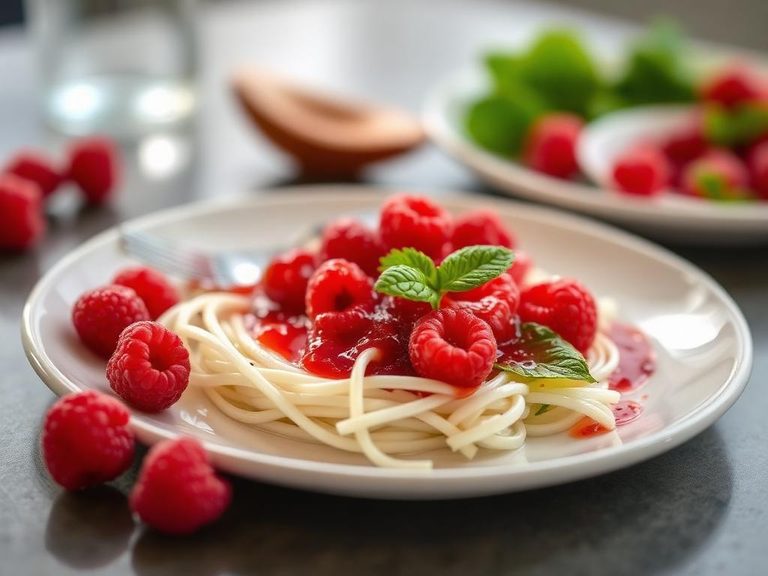
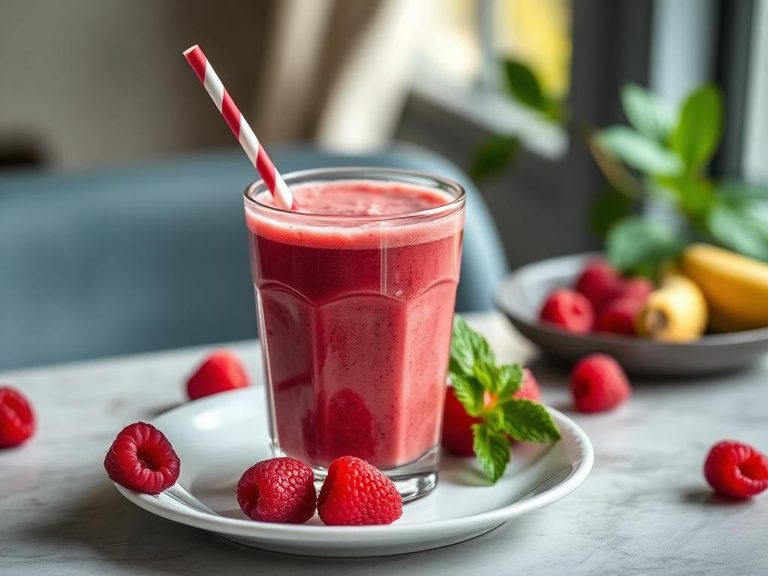
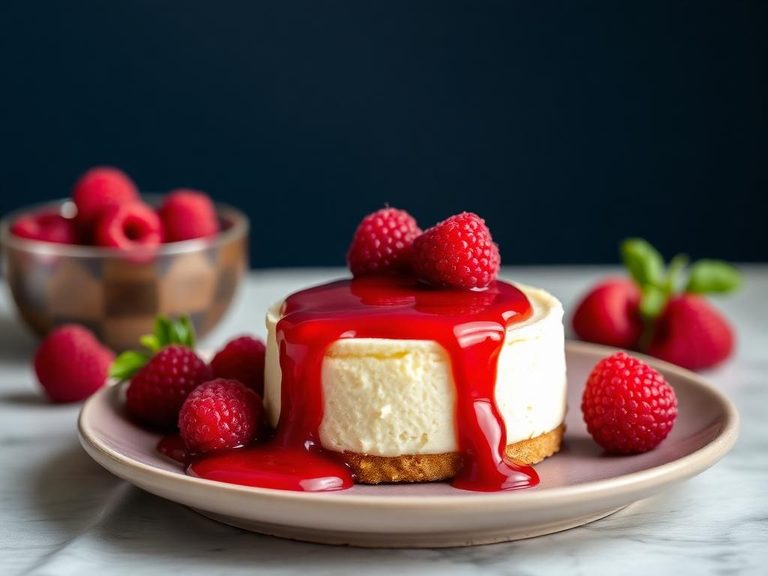
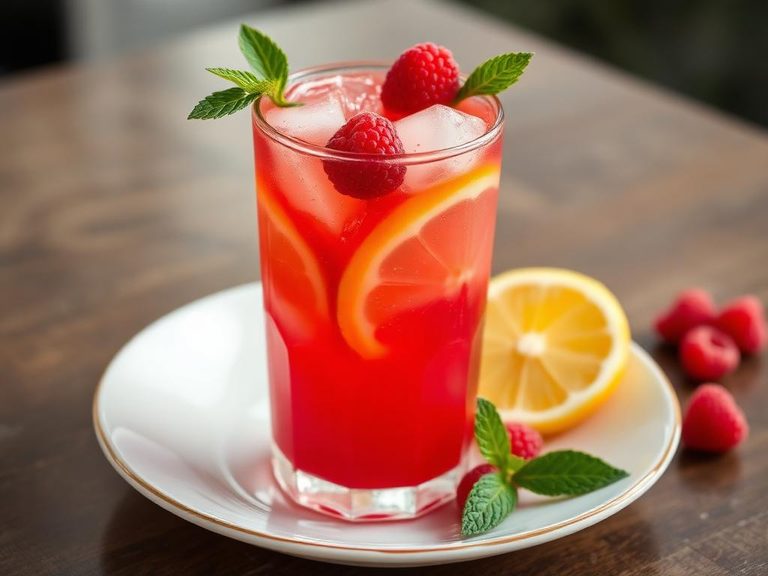
🍽️ Popular dishes
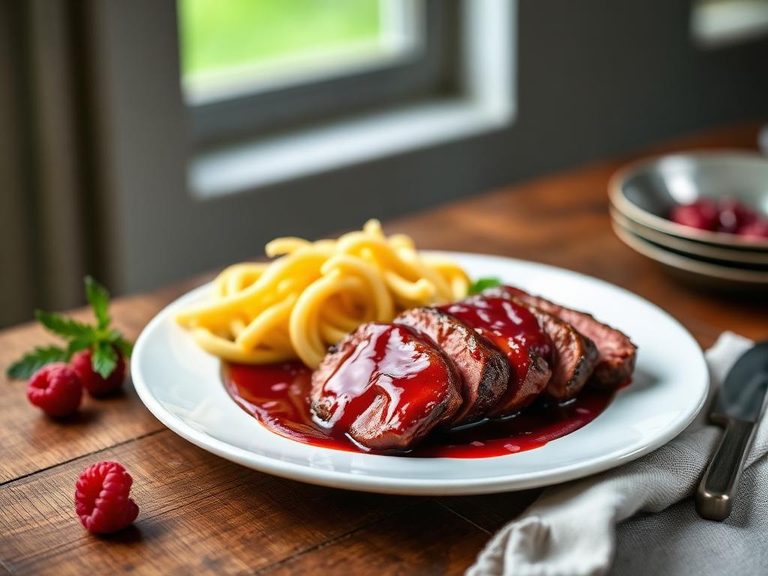
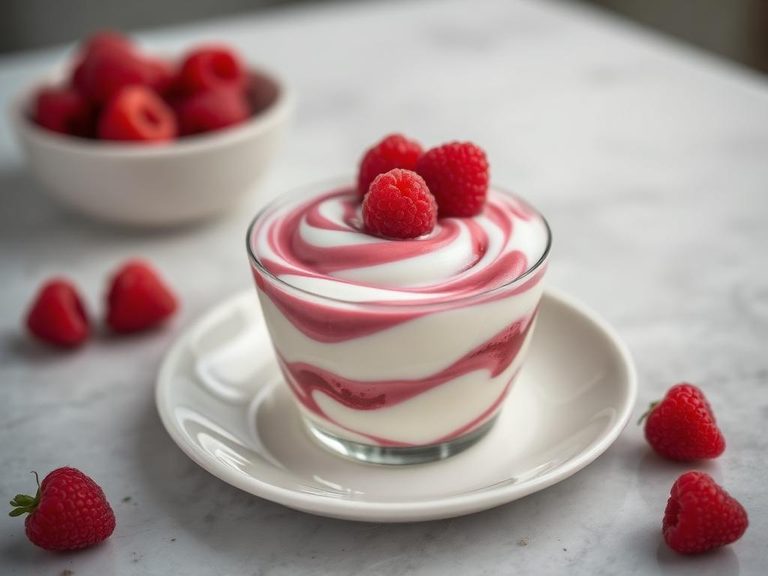
🌍 Where it's eaten
💡 Did you know?
It takes approximately 4 to 5 pounds of fresh raspberries to produce just one 16-ounce bottle of juice concentrate, highlighting its intense flavor density.
Full nutrition (USDA data · scales with serving)
| Water | 41.1 g |
| Energy | 221 kcal |
| Energy | 924 kj |
| Protein | 3.0 g |
| Total lipid (fat) | 1.3 g |
| Ash | 1.3 g |
| Carbohydrate, by difference | 53.2 g |
| Fiber, total dietary | 1.1 g |
| Total Sugars | 38.2 g |
| Sucrose | 1.0 g |
| Glucose | 17.1 g |
| Fructose | 20.1 g |
| Lactose | 0.00 g |
| Maltose | 0.00 g |
| Galactose | 0.00 g |
| Starch | 0.32 g |
| Calcium, Ca | 97.0 mg |
| Iron, Fe | 1.2 mg |
| Magnesium, Mg | 112 mg |
| Phosphorus, P | 100 mg |
| Potassium, K | 1178 mg |
| Sodium, Na | 10.0 mg |
| Zinc, Zn | 1.3 mg |
| Copper, Cu | 0.14 mg |
| Manganese, Mn | 4.7 mg |
| Vitamin C, total ascorbic acid | 38.1 mg |
| Thiamin | 0.25 mg |
| Riboflavin | 0.34 mg |
| Niacin | 3.9 mg |
| Pantothenic acid | 2.7 mg |
| Vitamin B-6 | 0.25 mg |
| Folate, total | 9.0 ug |
| Folate, food | 9.0 ug |
| Vitamin A, RAE | 0.00 ug |
| Carotene, beta | 0.00 ug |
| Carotene, alpha | 0.00 ug |
| Cryptoxanthin, beta | 0.00 ug |
| Vitamin A, IU | 0.00 iu |
| Lycopene | 0.00 ug |
| Lutein + zeaxanthin | 0.00 ug |
| Vitamin E (alpha-tocopherol) | 0.06 mg |
| Tocopherol, beta | 0.00 mg |
| Tocopherol, gamma | 0.00 mg |
| Tocopherol, delta | 0.00 mg |
| Tocotrienol, alpha | 0.00 mg |
| Tocotrienol, beta | 0.00 mg |
| Tocotrienol, gamma | 0.00 mg |
| Tocotrienol, delta | 0.00 mg |
Fat & fatty acid profile (per 100g)
| Fatty acids, total saturated | 0.06 g |
| SFA 4:0 | 0.01 g |
| SFA 6:0 | 0.00 g |
| SFA 8:0 | 0.00 g |
| SFA 10:0 | 0.00 g |
| SFA 12:0 | 0.01 g |
| SFA 14:0 | 0.00 g |
| SFA 15:0 | 0.00 g |
| SFA 16:0 | 0.02 g |
| SFA 17:0 | 0.00 g |
| SFA 18:0 | 0.01 g |
| SFA 20:0 | 0.00 g |
| SFA 22:0 | 0.00 g |
| SFA 24:0 | 0.00 g |
| Fatty acids, total monounsaturated | 0.03 g |
| MUFA 14:1 | 0.00 g |
| MUFA 15:1 | 0.00 g |
| MUFA 16:1 | 0.00 g |
| MUFA 16:1 c | 0.00 g |
| MUFA 17:1 | 0.00 g |
| MUFA 18:1 | 0.03 g |
| MUFA 18:1 c | 0.03 g |
| MUFA 20:1 | 0.00 g |
| MUFA 22:1 | 0.00 g |
| MUFA 22:1 c | 0.00 g |
| MUFA 24:1 c | 0.00 g |
| Fatty acids, total polyunsaturated | 0.01 g |
| PUFA 18:2 | 0.01 g |
| PUFA 18:2 n-6 c,c | 0.01 g |
| PUFA 18:2 CLAs | 0.00 g |
| PUFA 18:3 | 0.00 g |
| PUFA 18:3 n-3 c,c,c (ALA) | 0.00 g |
| PUFA 18:3 n-6 c,c,c | 0.00 g |
| PUFA 18:3i | 0.00 g |
| PUFA 18:4 | 0.00 g |
| PUFA 20:2 n-6 c,c | 0.00 g |
| PUFA 20:3 | 0.00 g |
| PUFA 20:3 n-3 | 0.00 g |
| PUFA 20:3 n-6 | 0.00 g |
| PUFA 20:4 | 0.00 g |
| PUFA 20:5 n-3 (EPA) | 0.00 g |
| PUFA 22:4 | 0.00 g |
| PUFA 22:5 n-3 (DPA) | 0.00 g |
| PUFA 22:6 n-3 (DHA) | 0.00 g |
| Fatty acids, total trans | 0.00 g |
| TFA 16:1 t | 0.00 g |
| TFA 18:1 t | 0.00 g |
| TFA 22:1 t | 0.00 g |
| TFA 18:2 t not further defined | 0.00 g |
FAQ
What's the difference between raspberry juice concentrate and raspberry syrup?
Concentrate is made by reducing pure raspberry juice, while syrup is typically a sugar-water solution flavored with raspberry juice or artificial flavors, often with a thinner consistency and less authentic fruit taste.
How should I store opened raspberry juice concentrate?
Once opened, it must be refrigerated in a sealed container. Due to its high sugar content, it can last for several weeks in the fridge, but for longer storage, you can freeze it in ice cube trays for easy portioning.
Can I reconstitute it back into juice?
Yes, follow the dilution ratio on the bottle, which is typically around 1 part concentrate to 4-5 parts water, to make a drink similar to regular raspberry juice.
Nutrient density (calculated · NRF9.3)
Nutrient Rich Foods index: beneficial nutrients (protein, fiber, vitamins, minerals) minus saturated fat, added sugar & sodium, per 100 kcal.
NRF9.3 index — Fulgoni, Keast & Drewnowski, 2009. Computed from USDA nutrients.
Weight-loss friendliness (composite index)
Energy density 2.21 kcal/g · 6% calories from protein · 1.1 g fiber · 38.2 g sugar per 100 g.
Composite of energy density (Rolls et al., 1999), protein & fiber satiety, minus sugar. A calculated heuristic — ranks satiety-per-calorie, not a clinical measure.
Dietary load (calculated from USDA values)
Potential renal acid load. Positive = acid-forming, negative = alkaline-forming.
Sodium-to-potassium ratio: 0.01 (lower is better — aim for ≤ 1)
Sodium:potassium per WHO potassium guidance. Computed from USDA nutrients.