

Nuts, pecans, dry roasted, with salt added
Whole food · Nut and Seed Products

Photo: Wikipedia
Pecans, dry-roasted and lightly salted, are a rich, buttery nut with a satisfying crunch and a deep, caramel-like sweetness. Their high fat content (over 74g per 100g) makes them exceptionally calorie-dense, providing a powerful energy source. The roasting process intensifies their natural flavor, while the added salt creates a classic sweet-salty balance.
Calorie split: 5% protein · 7% carbs · 88% fat
↓ Full nutrition💚 Why it's loved
People adore them for their uniquely rich, buttery flavor and tender crunch that elevates both sweet and savory dishes. They are a staple in holiday baking and a beloved snack for their satisfying, indulgent quality.
⚠️ Watch-outs & how to enjoy it better
Their high calorie density and fat content require mindful portioning for those managing weight. The added salt can be a concern for individuals monitoring sodium intake. As a tree nut, they are a common allergen and should be avoided by those with allergies. To counteract, practice strict portion control (stick to a small handful) and pair with high-fiber foods like fruit to enhance satiety.
Key benefits
- Excellent source of monounsaturated fats, particularly oleic acid.
- Very high in manganese, a key mineral for bone health and metabolism.
- Rich in antioxidants, including gamma-tocopherol (a form of Vitamin E).
- Provides a good amount of dietary fiber (9.4g per 100g).
🍽️ Popular dishes



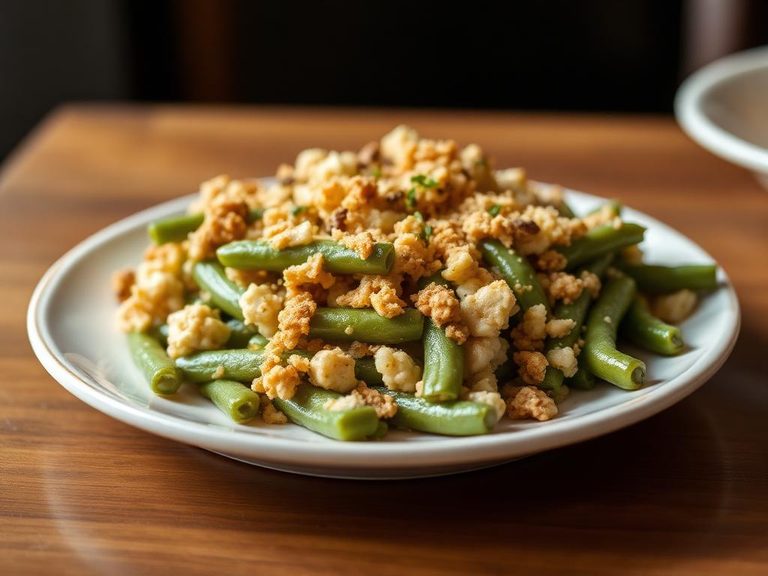

🌍 Where it's eaten
💡 Did you know?
Pecans are the only major tree nut indigenous to North America, with Native Americans using them as a primary food source for thousands of years before European colonization.
Full nutrition (USDA data · scales with serving)
| Water | 1.1 g |
| Energy | 710 kcal |
| Energy | 2969 kj |
| Protein | 9.5 g |
| Total lipid (fat) | 74.3 g |
| Ash | 1.6 g |
| Carbohydrate, by difference | 13.6 g |
| Fiber, total dietary | 9.4 g |
| Total Sugars | 4.1 g |
| Sucrose | 4.0 g |
| Glucose | 0.04 g |
| Fructose | 0.04 g |
| Lactose | 0.00 g |
| Maltose | 0.00 g |
| Starch | 0.24 g |
| Calcium, Ca | 72.0 mg |
| Iron, Fe | 2.8 mg |
| Magnesium, Mg | 132 mg |
| Phosphorus, P | 293 mg |
| Potassium, K | 424 mg |
| Sodium, Na | 383 mg |
| Zinc, Zn | 5.1 mg |
| Copper, Cu | 1.2 mg |
| Manganese, Mn | 3.9 mg |
| Selenium, Se | 4.0 ug |
| Vitamin C, total ascorbic acid | 0.70 mg |
| Thiamin | 0.45 mg |
| Riboflavin | 0.11 mg |
| Niacin | 1.2 mg |
| Pantothenic acid | 0.70 mg |
| Vitamin B-6 | 0.19 mg |
| Folate, total | 16.0 ug |
| Folic acid | 0.00 ug |
| Folate, food | 16.0 ug |
| Folate, DFE | 16.0 ug |
| Vitamin B-12 | 0.00 ug |
| Vitamin A, RAE | 7.0 ug |
| Retinol | 0.00 ug |
| Carotene, beta | 84.0 ug |
| Carotene, alpha | 0.00 ug |
| Vitamin A, IU | 140 iu |
| Vitamin E (alpha-tocopherol) | 1.3 mg |
| Tocopherol, beta | 0.14 mg |
| Tocopherol, gamma | 23.6 mg |
| Tocopherol, delta | 0.77 mg |
| Vitamin D (D2 + D3), International Units | 0.00 iu |
| Vitamin D (D2 + D3) | 0.00 ug |
Fat & fatty acid profile (per 100g)
| Fatty acids, total saturated | 6.3 g |
| SFA 4:0 | 0.00 g |
| SFA 6:0 | 0.00 g |
| SFA 8:0 | 0.00 g |
| SFA 10:0 | 0.00 g |
| SFA 12:0 | 0.00 g |
| SFA 13:0 | 0.00 g |
| SFA 14:0 | 0.00 g |
| SFA 15:0 | 0.00 g |
| SFA 16:0 | 4.4 g |
| SFA 17:0 | 0.00 g |
| SFA 18:0 | 1.8 g |
| SFA 20:0 | 0.07 g |
| SFA 22:0 | 0.00 g |
| SFA 24:0 | 0.00 g |
| Fatty acids, total monounsaturated | 44.0 g |
| MUFA 14:1 | 0.00 g |
| MUFA 16:1 | 0.00 g |
| MUFA 18:1 | 43.7 g |
| MUFA 20:1 | 0.21 g |
| MUFA 22:1 | 0.00 g |
| MUFA 24:1 c | 0.00 g |
| Fatty acids, total polyunsaturated | 20.6 g |
| PUFA 18:2 | 19.6 g |
| PUFA 18:3 | 0.99 g |
| PUFA 18:4 | 0.00 g |
| PUFA 20:2 n-6 c,c | 0.00 g |
| PUFA 20:3 | 0.00 g |
| PUFA 20:4 | 0.00 g |
| PUFA 20:5 n-3 (EPA) | 0.00 g |
| PUFA 22:5 n-3 (DPA) | 0.00 g |
| PUFA 22:6 n-3 (DHA) | 0.00 g |
| Cholesterol | 0.00 mg |
| Phytosterols | 85.0 mg |
| Stigmasterol | 2.0 mg |
| Campesterol | 4.0 mg |
| Beta-sitosterol | 78.0 mg |
Amino acid profile (per 100g)
| Tryptophan | 0.10 g |
| Threonine | 0.32 g |
| Isoleucine | 0.35 g |
| Leucine | 0.62 g |
| Lysine | 0.30 g |
| Methionine | 0.19 g |
| Cystine | 0.16 g |
| Phenylalanine | 0.44 g |
| Tyrosine | 0.22 g |
| Valine | 0.43 g |
| Arginine | 1.2 g |
| Histidine | 0.27 g |
| Alanine | 0.41 g |
| Aspartic acid | 0.96 g |
| Glutamic acid | 1.9 g |
| Glycine | 0.47 g |
| Proline | 0.38 g |
| Serine | 0.49 g |
FAQ
How does dry-roasting affect pecans compared to raw?
Dry-roasting enhances the pecans' natural flavor, making it deeper and more nutty, and creates a crispier texture. It can slightly reduce moisture content but does not significantly alter the core nutritional profile of fats and calories.
Are the added salts a major concern?
The added salt increases sodium content, which can be a consideration for those with hypertension or on a sodium-restricted diet. Opting for unsalted varieties or measuring portions carefully can mitigate this.
What's the best way to store them to prevent spoilage?
Due to their high oil content, pecans can go rancid. Store them in an airtight container in a cool, dark place for short-term use, or in the refrigerator or freezer for several months to preserve freshness.
Nutrient density (calculated · NRF9.3)
Nutrient Rich Foods index: beneficial nutrients (protein, fiber, vitamins, minerals) minus saturated fat, added sugar & sodium, per 100 kcal.
NRF9.3 index — Fulgoni, Keast & Drewnowski, 2009. Computed from USDA nutrients.
Weight-loss friendliness (composite index)
Energy density 7.10 kcal/g · 5% calories from protein · 9.4 g fiber · 4.1 g sugar per 100 g.
Composite of energy density (Rolls et al., 1999), protein & fiber satiety, minus sugar. A calculated heuristic — ranks satiety-per-calorie, not a clinical measure.
Dietary load (calculated from USDA values)
Potential renal acid load. Positive = acid-forming, negative = alkaline-forming.
Sodium-to-potassium ratio: 0.90 (lower is better — aim for ≤ 1)
Sodium:potassium per WHO potassium guidance. Computed from USDA nutrients.