

Macaroni and Cheese, canned entree
Whole food · Meals, Entrees, and Side Dishes

Photo: Wikipedia
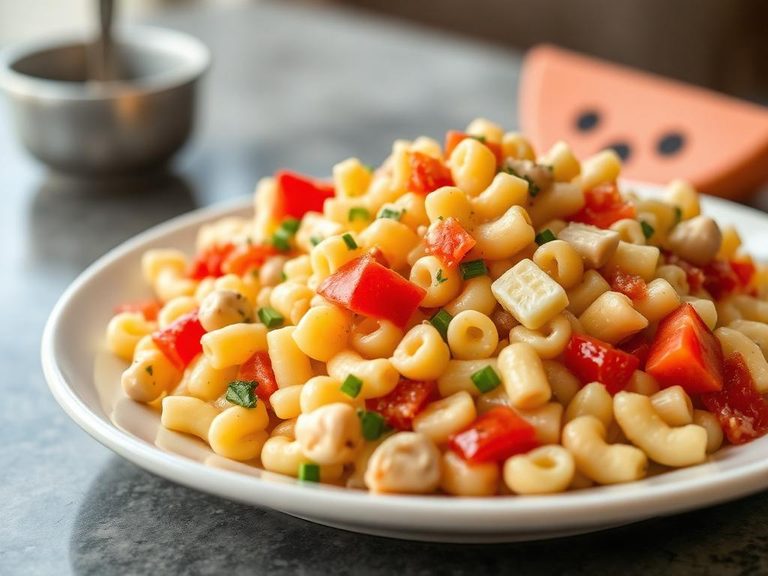
This is the quintessential comfort food in its most convenient form: tender elbow macaroni enveloped in a smooth, creamy, and distinctly savory processed cheese sauce. The texture is uniformly soft, with the pasta yielding easily and the sauce coating each piece in a familiar, slightly salty, umami-rich blanket. Nutritionally, it's a low-calorie, carb-focused snack or side, providing a quick energy boost with minimal fat.
Calorie split: 17% protein · 56% carbs · 27% fat
↓ Full nutrition💚 Why it's loved
People love it for its nostalgic, no-fuss appeal—it's the ultimate quick comfort meal that delivers a predictable, savory, and satisfying flavor profile. Its versatility allows it to be a standalone snack, a side dish, or a base for adding proteins like tuna or hot dogs.
⚠️ Watch-outs & how to enjoy it better
The main downsides are its often high sodium content and the presence of processed ingredients and preservatives. Those monitoring blood sugar should be cautious, as it's a high-glycemic food that can cause spikes. To counteract this, pair it with a source of protein (like chicken or beans) and fiber (like steamed broccoli) to slow digestion and add nutritional balance.
Key benefits
- Extremely convenient and shelf-stable
- Low in calories per serving
- Good source of quick-release carbohydrates
- Consistent taste and texture
- Affordable pantry staple
🍽️ Popular dishes
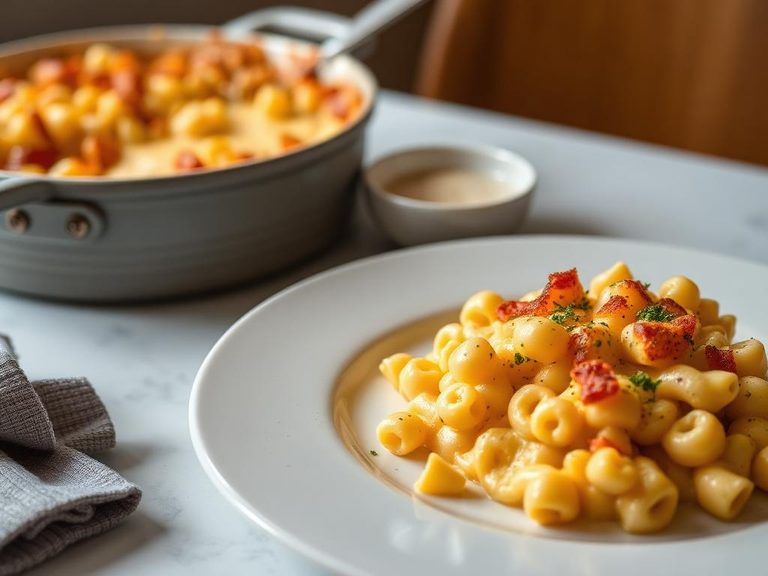
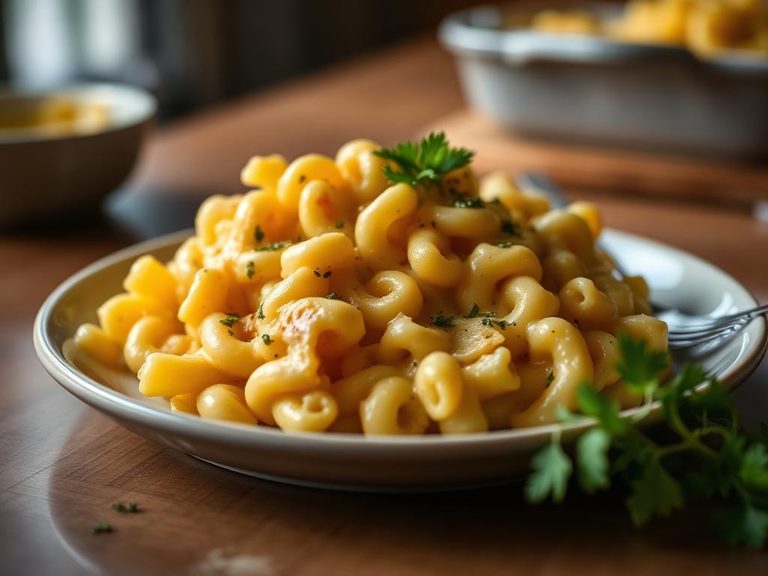
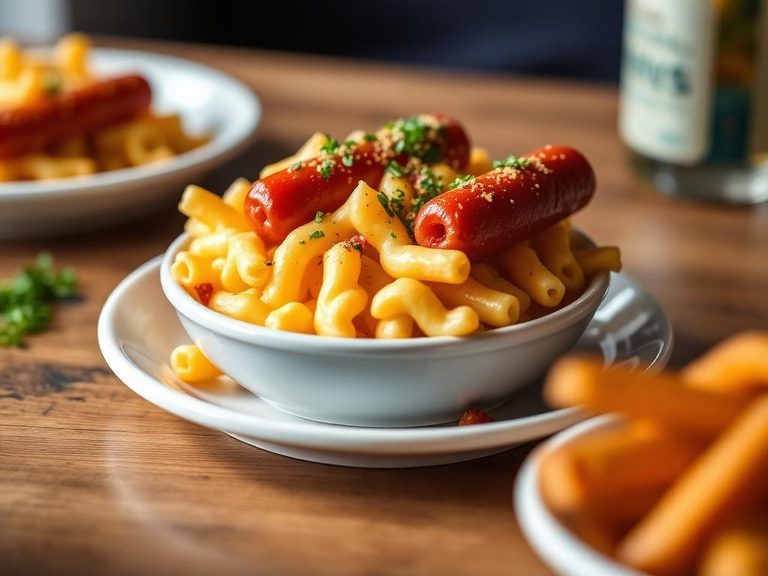
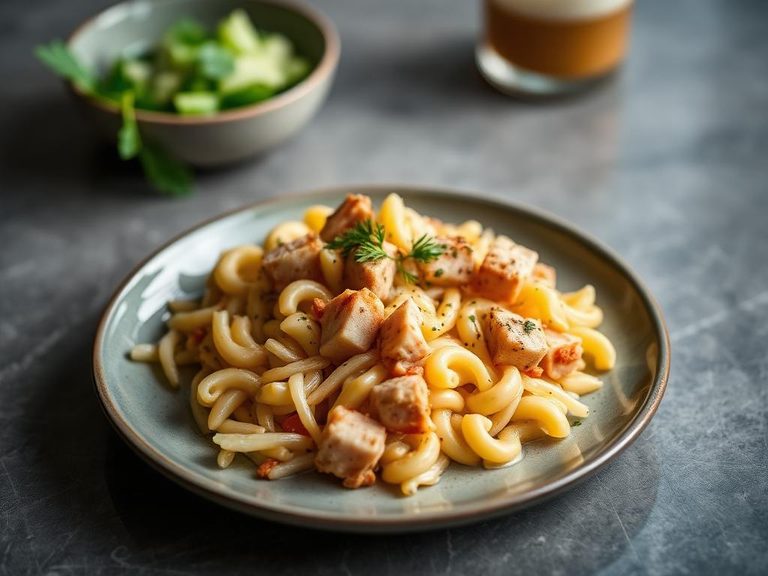
🌍 Where it's eaten
💡 Did you know?
The first known printed recipe for a dish resembling modern macaroni and cheese appeared in a 1390 English cookbook called 'The Forme of Cury,' which called for making a 'makerouns' (fresh pasta) and layering it with grated cheese and butter.
Full nutrition (USDA data · scales with serving)
| Water | 81.4 g |
| Energy | 82.0 kcal |
| Energy | 342 kj |
| Protein | 3.4 g |
| Total lipid (fat) | 2.5 g |
| Ash | 1.3 g |
| Carbohydrate, by difference | 11.5 g |
| Fiber, total dietary | 0.50 g |
| Total Sugars | 0.50 g |
| Sucrose | 0.00 g |
| Glucose | 0.00 g |
| Fructose | 0.00 g |
| Lactose | 0.30 g |
| Maltose | 0.20 g |
| Galactose | 0.00 g |
| Starch | 9.7 g |
| Calcium, Ca | 35.0 mg |
| Iron, Fe | 0.90 mg |
| Magnesium, Mg | 9.0 mg |
| Phosphorus, P | 47.0 mg |
| Potassium, K | 84.0 mg |
| Sodium, Na | 302 mg |
| Zinc, Zn | 0.45 mg |
| Copper, Cu | 0.30 mg |
| Manganese, Mn | 0.22 mg |
| Selenium, Se | 9.5 ug |
| Vitamin C, total ascorbic acid | 0.00 mg |
| Thiamin | 0.10 mg |
| Riboflavin | 0.11 mg |
| Niacin | 1.2 mg |
| Pantothenic acid | 0.07 mg |
| Vitamin B-6 | 0.04 mg |
| Folate, total | 13.0 ug |
| Folic acid | 11.0 ug |
| Folate, food | 2.0 ug |
| Folate, DFE | 21.0 ug |
| Choline, total | 5.4 mg |
| Betaine | 43.2 mg |
| Vitamin B-12 | 0.15 ug |
| Vitamin B-12, added | 0.00 ug |
| Vitamin A, RAE | 17.0 ug |
| Retinol | 17.0 ug |
| Carotene, beta | 5.0 ug |
| Carotene, alpha | 0.00 ug |
| Cryptoxanthin, beta | 0.00 ug |
| Vitamin A, IU | 65.0 iu |
| Lycopene | 0.00 ug |
| Lutein + zeaxanthin | 2.0 ug |
| Vitamin E (alpha-tocopherol) | 0.05 mg |
| Vitamin E, added | 0.00 mg |
| Vitamin D (D2 + D3), International Units | 0.00 iu |
| Vitamin D (D2 + D3) | 0.00 ug |
| Vitamin K (phylloquinone) | 0.20 ug |
| Alcohol, ethyl | 0.00 g |
| Caffeine | 0.00 mg |
| Theobromine | 0.00 mg |
Fat & fatty acid profile (per 100g)
| Fatty acids, total saturated | 0.88 g |
| SFA 4:0 | 0.00 g |
| SFA 6:0 | 0.00 g |
| SFA 8:0 | 0.00 g |
| SFA 10:0 | 0.00 g |
| SFA 12:0 | 0.00 g |
| SFA 13:0 | 0.00 g |
| SFA 14:0 | 0.17 g |
| SFA 15:0 | 0.00 g |
| SFA 16:0 | 0.59 g |
| SFA 17:0 | 0.00 g |
| SFA 18:0 | 0.12 g |
| SFA 20:0 | 0.00 g |
| SFA 22:0 | 0.00 g |
| SFA 24:0 | 0.00 g |
| Fatty acids, total monounsaturated | 0.60 g |
| MUFA 14:1 | 0.00 g |
| MUFA 16:1 | 0.00 g |
| MUFA 17:1 | 0.00 g |
| MUFA 18:1 | 0.60 g |
| MUFA 20:1 | 0.00 g |
| MUFA 22:1 | 0.00 g |
| MUFA 24:1 c | 0.00 g |
| Fatty acids, total polyunsaturated | 0.30 g |
| PUFA 18:2 | 0.30 g |
| PUFA 18:3 | 0.00 g |
| PUFA 18:4 | 0.00 g |
| PUFA 20:2 n-6 c,c | 0.00 g |
| PUFA 20:3 | 0.00 g |
| PUFA 20:4 | 0.00 g |
| PUFA 20:5 n-3 (EPA) | 0.00 g |
| PUFA 22:5 n-3 (DPA) | 0.00 g |
| PUFA 22:6 n-3 (DHA) | 0.00 g |
| Cholesterol | 6.0 mg |
Amino acid profile (per 100g)
Estimated from Macaroni and cheese, box mix with cheese sauce, unprepared — USDA does not publish this profile for Macaroni and Cheese.
| Tryptophan | 0.15 g |
| Threonine | 0.40 g |
| Isoleucine | 0.47 g |
| Leucine | 0.86 g |
| Lysine | 0.42 g |
| Methionine | 0.16 g |
| Cystine | 0.17 g |
| Phenylalanine | 0.52 g |
| Tyrosine | 0.29 g |
| Valine | 0.54 g |
| Arginine | 0.38 g |
| Histidine | 0.25 g |
| Alanine | 0.35 g |
| Aspartic acid | 0.59 g |
| Glutamic acid | 3.2 g |
| Glycine | 0.31 g |
| Proline | 1.2 g |
| Serine | 0.52 g |
| Hydroxyproline | 0.00 g |
FAQ
Is canned mac and cheese a good source of protein?
It provides a modest amount of protein (about 3.4g per 100g), but it's not considered a primary protein source. It's best enjoyed as part of a balanced meal that includes a more significant protein component.
How can I make canned mac and cheese healthier?
You can boost its nutritional value by stirring in frozen peas, corn, or spinach for fiber and vitamins, adding a can of drained tuna or white beans for protein, or topping it with a sprinkle of nutritional yeast for a cheesy flavor with B vitamins.
What is the difference between canned and boxed mac and cheese?
Canned is fully cooked and ready to eat (just heat and serve), while boxed versions are dry pasta with a powdered cheese sauce mix that you must cook and prepare on the stovetop or in the oven.
Nutrient density (calculated · NRF9.3)
Nutrient Rich Foods index: beneficial nutrients (protein, fiber, vitamins, minerals) minus saturated fat, added sugar & sodium, per 100 kcal.
NRF9.3 index — Fulgoni, Keast & Drewnowski, 2009. Computed from USDA nutrients.
Weight-loss friendliness (composite index)
Energy density 0.82 kcal/g · 16% calories from protein · 0.5 g fiber · 0.5 g sugar per 100 g.
Composite of energy density (Rolls et al., 1999), protein & fiber satiety, minus sugar. A calculated heuristic — ranks satiety-per-calorie, not a clinical measure.
Dietary load (calculated from USDA values)
Potential renal acid load. Positive = acid-forming, negative = alkaline-forming.
Sodium-to-potassium ratio: 3.60 (lower is better — aim for ≤ 1)
Sodium:potassium per WHO potassium guidance. Computed from USDA nutrients.