

Chicken breast tenders, breaded, uncooked
Whole food · Poultry Products

Photo: Wikipedia
Chicken breast tenders, breaded and uncooked, are lean strips of chicken coated in seasoned breadcrumbs or batter, ready for frying or baking. They offer a satisfying crunch when cooked, with a tender, juicy interior and a mild, savory flavor. Nutritionally, they provide a solid protein punch (14.73g per 100g) alongside a moderate fat and carbohydrate content from the breading.
Calorie split: 23% protein · 23% carbs · 54% fat
↓ Full nutrition💚 Why it's loved
People love them for their comforting, familiar flavor and the satisfying crunch of the breading, making them a favorite for both kids and adults. They are incredibly versatile, easily paired with dipping sauces, salads, or served as a main dish in sandwiches and wraps.
⚠️ Watch-outs & how to enjoy it better
The breading can be high in sodium and refined carbohydrates, potentially leading to blood sugar spikes if consumed in large portions without balancing nutrients. To counteract this, pair them with fiber-rich vegetables or a side salad, and opt for baking or air-frying instead of deep-frying to reduce added fats. Be mindful of portion sizes and choose brands with lower sodium content if watching intake.
Key benefits
- High-quality protein source for muscle maintenance and satiety.
- Convenient, pre-portioned for quick meal preparation.
- Versatile base for various cooking methods (baking, air-frying, pan-frying).
- Appealing texture contrast between crispy exterior and tender meat.
🍽️ Popular dishes

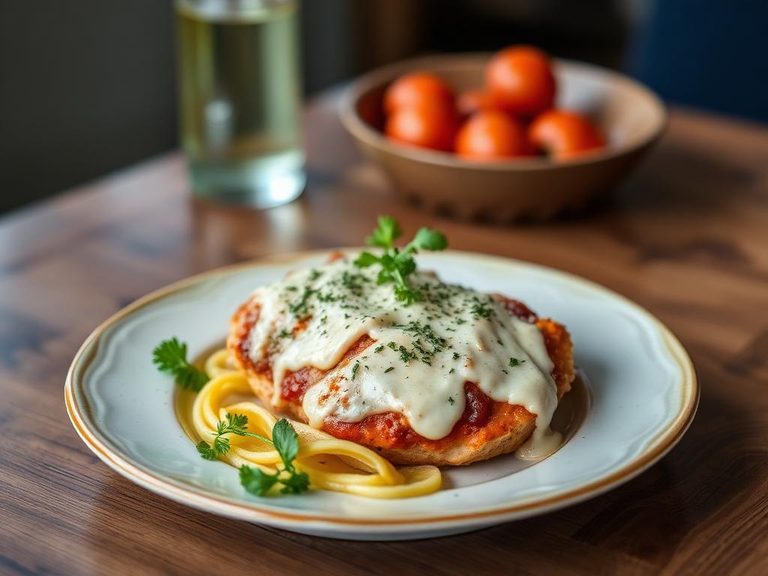


🌍 Where it's eaten
💡 Did you know?
The term 'chicken tenders' originally referred to the pectoralis minor muscle, a small strip of meat located under the breast, which is naturally tender and often used in premium chicken tender preparations.
Full nutrition (USDA data · scales with serving)
| Water | 52.7 g |
| Energy | 263 kcal |
| Energy | 1101 kj |
| Protein | 14.7 g |
| Total lipid (fat) | 15.8 g |
| Ash | 1.8 g |
| Carbohydrate, by difference | 15.0 g |
| Fiber, total dietary | 1.1 g |
| Total Sugars | 0.37 g |
| Sucrose | 0.07 g |
| Glucose | 0.15 g |
| Fructose | 0.00 g |
| Lactose | 0.00 g |
| Maltose | 0.15 g |
| Galactose | 0.00 g |
| Starch | 13.3 g |
| Calcium, Ca | 19.0 mg |
| Iron, Fe | 1.1 mg |
| Magnesium, Mg | 23.0 mg |
| Phosphorus, P | 211 mg |
| Potassium, K | 214 mg |
| Sodium, Na | 536 mg |
| Zinc, Zn | 0.78 mg |
| Copper, Cu | 0.20 mg |
| Manganese, Mn | 0.23 mg |
| Selenium, Se | 24.7 ug |
| Vitamin C, total ascorbic acid | 0.80 mg |
| Thiamin | 0.21 mg |
| Riboflavin | 0.09 mg |
| Niacin | 5.7 mg |
| Pantothenic acid | 0.85 mg |
| Vitamin B-6 | 0.04 mg |
| Folate, total | 12.0 ug |
| Folic acid | 0.00 ug |
| Folate, food | 12.0 ug |
| Folate, DFE | 12.0 ug |
| Choline, total | 96.4 mg |
| Betaine | 12.5 mg |
| Vitamin B-12 | 0.27 ug |
| Vitamin B-12, added | 0.00 ug |
| Vitamin A, RAE | 0.00 ug |
| Retinol | 0.00 ug |
| Carotene, beta | 0.00 ug |
| Carotene, alpha | 0.00 ug |
| Cryptoxanthin, beta | 0.00 ug |
| Vitamin A, IU | 0.00 iu |
| Lycopene | 0.00 ug |
| Lutein + zeaxanthin | 0.00 ug |
| Vitamin E (alpha-tocopherol) | 0.08 mg |
| Vitamin E, added | 0.00 mg |
| Vitamin D (D2 + D3), International Units | 9.0 iu |
| Vitamin D (D2 + D3) | 0.20 ug |
| Vitamin K (phylloquinone) | 14.7 ug |
| Vitamin K (Dihydrophylloquinone) | 15.3 ug |
| Alcohol, ethyl | 0.00 g |
| Caffeine | 0.00 mg |
| Theobromine | 0.00 mg |
Fat & fatty acid profile (per 100g)
| Fatty acids, total saturated | 3.3 g |
| SFA 4:0 | 0.00 g |
| SFA 6:0 | 0.00 g |
| SFA 8:0 | 0.00 g |
| SFA 10:0 | 0.00 g |
| SFA 12:0 | 0.00 g |
| SFA 14:0 | 0.00 g |
| SFA 15:0 | 0.00 g |
| SFA 16:0 | 2.6 g |
| SFA 17:0 | 0.00 g |
| SFA 18:0 | 0.61 g |
| SFA 20:0 | 0.00 g |
| SFA 22:0 | 0.00 g |
| SFA 24:0 | 0.00 g |
| Fatty acids, total monounsaturated | 6.5 g |
| MUFA 14:1 | 0.00 g |
| MUFA 16:1 | 0.51 g |
| MUFA 18:1 | 5.9 g |
| MUFA 20:1 | 0.04 g |
| MUFA 22:1 | 0.00 g |
| Fatty acids, total polyunsaturated | 3.3 g |
| PUFA 18:2 | 3.2 g |
| PUFA 18:3 | 0.14 g |
| PUFA 18:4 | 0.00 g |
| PUFA 20:4 | 0.00 g |
| PUFA 20:5 n-3 (EPA) | 0.00 g |
| PUFA 22:5 n-3 (DPA) | 0.00 g |
| PUFA 22:6 n-3 (DHA) | 0.00 g |
| Cholesterol | 41.0 mg |
Amino acid profile (per 100g)
| Tryptophan | 0.18 g |
| Threonine | 0.56 g |
| Isoleucine | 0.60 g |
| Leucine | 1.0 g |
| Lysine | 0.99 g |
| Methionine | 0.30 g |
| Cystine | 0.17 g |
| Phenylalanine | 0.53 g |
| Tyrosine | 0.33 g |
| Valine | 0.66 g |
| Arginine | 0.80 g |
| Histidine | 0.43 g |
| Alanine | 0.72 g |
| Aspartic acid | 1.2 g |
| Glutamic acid | 2.2 g |
| Glycine | 0.63 g |
| Proline | 0.68 g |
| Serine | 0.54 g |
| Hydroxyproline | 0.07 g |
FAQ
What is the difference between chicken tenders and chicken strips?
Chicken tenders are typically the pectoralis minor muscle, while chicken strips can be any cut of chicken breast sliced into strips. Both are often breaded and cooked similarly.
How should I cook breaded chicken tenders for the best texture?
For a crispy exterior and juicy interior, bake at 400°F (200°C) for 15-20 minutes, flipping halfway, or use an air fryer at 375°F (190°C) for 10-12 minutes. Avoid overcrowding the pan to ensure even cooking.
Are breaded chicken tenders suitable for a low-carb diet?
Traditional breaded chicken tenders contain carbs from the breading, making them less suitable for strict low-carb diets. However, you can make a low-carb version using almond flour or pork rinds for the coating.
Nutrient density (calculated · NRF9.3)
Nutrient Rich Foods index: beneficial nutrients (protein, fiber, vitamins, minerals) minus saturated fat, added sugar & sodium, per 100 kcal.
NRF9.3 index — Fulgoni, Keast & Drewnowski, 2009. Computed from USDA nutrients.
Weight-loss friendliness (composite index)
Energy density 2.63 kcal/g · 22% calories from protein · 1.1 g fiber · 0.4 g sugar per 100 g.
Composite of energy density (Rolls et al., 1999), protein & fiber satiety, minus sugar. A calculated heuristic — ranks satiety-per-calorie, not a clinical measure.
Dietary load (calculated from USDA values)
Potential renal acid load. Positive = acid-forming, negative = alkaline-forming.
Sodium-to-potassium ratio: 2.50 (lower is better — aim for ≤ 1)
Sodium:potassium per WHO potassium guidance. Computed from USDA nutrients.