

Catsup, low sodium
Whole food · Vegetables and Vegetable Products

Photo: Wikipedia
Low-sodium catsup is a bright, tangy, and subtly sweet condiment with a smooth, thick texture, offering the classic tomato flavor profile with significantly reduced salt. Its primary nutritional highlight is its high sugar content, with over 21 grams per 100 grams, making it a concentrated source of quick energy and flavor.
Calorie split: 4% protein · 96% carbs · 1% fat
↓ Full nutrition💚 Why it's loved
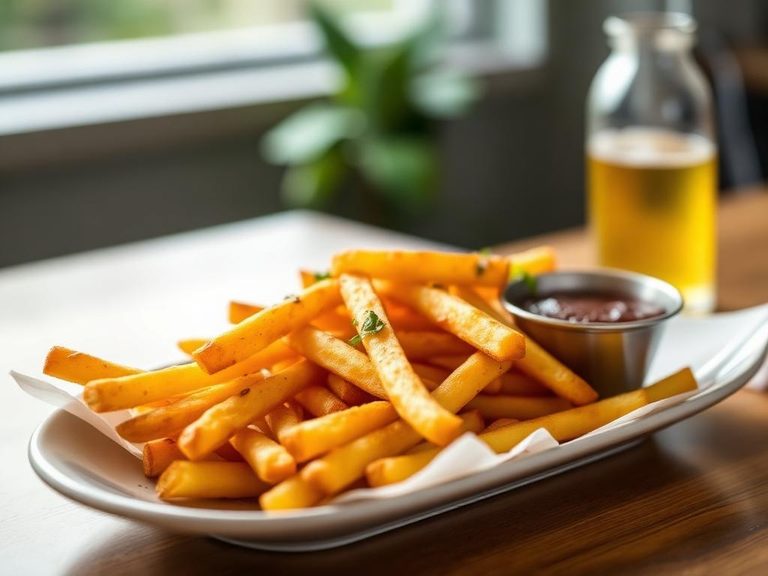
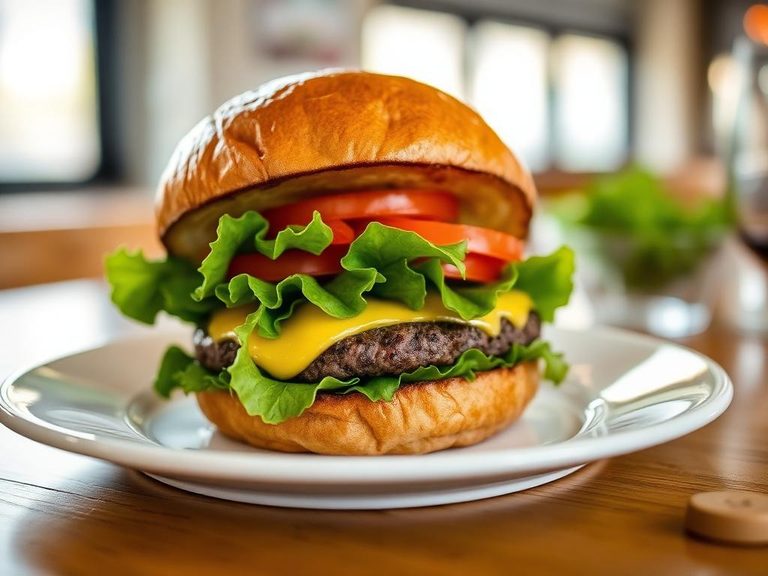
People love it for its iconic sweet-and-sour flavor that instantly elevates simple foods like fries, burgers, and eggs. Its incredible versatility makes it a universal pantry staple, a base for sauces, and a comforting taste of childhood in many cultures.
⚠️ Watch-outs & how to enjoy it better
Its high sugar content can contribute to blood-sugar spikes, making portion control essential for those monitoring their intake. To counteract this, pair it with protein or healthy fats (like on a burger or with eggs) to slow sugar absorption, and consider it a flavor accent rather than a main sauce.
Key benefits
- Provides a quick source of energy from carbohydrates
- Contains lycopene, an antioxidant from cooked tomatoes
- Offers a significant flavor boost with minimal fat
- Lower sodium content supports heart-healthy diets
🍽️ Popular dishes
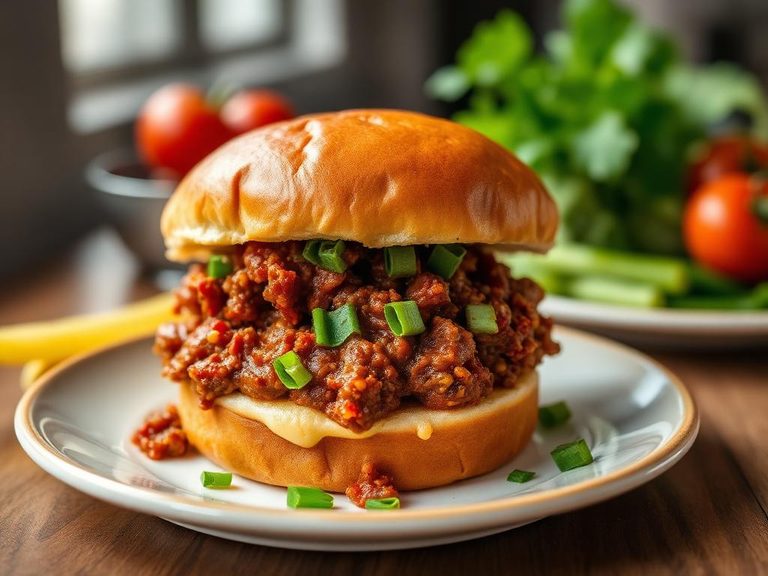

🌍 Where it's eaten
💡 Did you know?
The word 'catsup' is an older spelling of 'ketchup,' and both terms are often used interchangeably in the United States, though 'ketchup' is now far more common.
Full nutrition (USDA data · scales with serving)
| Water | 68.5 g |
| Energy | 101 kcal |
| Energy | 423 kj |
| Protein | 1.0 g |
| Total lipid (fat) | 0.10 g |
| Ash | 2.9 g |
| Carbohydrate, by difference | 27.4 g |
| Fiber, total dietary | 0.30 g |
| Total Sugars | 21.3 g |
| Sucrose | 2.3 g |
| Glucose | 10.3 g |
| Fructose | 8.7 g |
| Lactose | 0.00 g |
| Maltose | 0.00 g |
| Galactose | 0.00 g |
| Calcium, Ca | 15.0 mg |
| Iron, Fe | 0.35 mg |
| Magnesium, Mg | 13.0 mg |
| Phosphorus, P | 26.0 mg |
| Potassium, K | 281 mg |
| Sodium, Na | 20.0 mg |
| Zinc, Zn | 0.17 mg |
| Copper, Cu | 0.09 mg |
| Manganese, Mn | 0.08 mg |
| Selenium, Se | 0.70 ug |
| Vitamin C, total ascorbic acid | 4.1 mg |
| Thiamin | 0.01 mg |
| Riboflavin | 0.17 mg |
| Niacin | 1.4 mg |
| Pantothenic acid | 0.05 mg |
| Vitamin B-6 | 0.16 mg |
| Folate, total | 9.0 ug |
| Folic acid | 0.00 ug |
| Folate, food | 9.0 ug |
| Folate, DFE | 9.0 ug |
| Choline, total | 12.5 mg |
| Betaine | 0.20 mg |
| Vitamin B-12 | 0.00 ug |
| Vitamin B-12, added | 0.00 ug |
| Vitamin A, RAE | 26.0 ug |
| Retinol | 0.00 ug |
| Carotene, beta | 316 ug |
| Carotene, alpha | 0.00 ug |
| Cryptoxanthin, beta | 0.00 ug |
| Vitamin A, IU | 527 iu |
| Lycopene | 12062 ug |
| Lutein + zeaxanthin | 161 ug |
| Vitamin E (alpha-tocopherol) | 1.5 mg |
| Vitamin E, added | 0.00 mg |
| Tocopherol, beta | 0.00 mg |
| Tocopherol, gamma | 0.13 mg |
| Tocopherol, delta | 0.00 mg |
| Vitamin D (D2 + D3), International Units | 0.00 iu |
| Vitamin D (D2 + D3) | 0.00 ug |
| Vitamin K (phylloquinone) | 3.0 ug |
| Vitamin K (Dihydrophylloquinone) | 0.00 ug |
| Alcohol, ethyl | 0.00 g |
| Caffeine | 0.00 mg |
| Theobromine | 0.00 mg |
Fat & fatty acid profile (per 100g)
| Fatty acids, total saturated | 0.01 g |
| SFA 4:0 | 0.00 g |
| SFA 6:0 | 0.00 g |
| SFA 8:0 | 0.00 g |
| SFA 10:0 | 0.00 g |
| SFA 12:0 | 0.00 g |
| SFA 14:0 | 0.00 g |
| SFA 16:0 | 0.01 g |
| SFA 18:0 | 0.00 g |
| Fatty acids, total monounsaturated | 0.01 g |
| MUFA 16:1 | 0.00 g |
| MUFA 18:1 | 0.01 g |
| MUFA 20:1 | 0.00 g |
| MUFA 22:1 | 0.00 g |
| Fatty acids, total polyunsaturated | 0.04 g |
| PUFA 18:2 | 0.04 g |
| PUFA 18:3 | 0.00 g |
| PUFA 18:4 | 0.00 g |
| PUFA 20:4 | 0.00 g |
| PUFA 20:5 n-3 (EPA) | 0.00 g |
| PUFA 22:5 n-3 (DPA) | 0.00 g |
| PUFA 22:6 n-3 (DHA) | 0.00 g |
| Fatty acids, total trans | 0.00 g |
| Cholesterol | 0.00 mg |
Amino acid profile (per 100g)
| Tryptophan | 0.01 g |
| Threonine | 0.02 g |
| Isoleucine | 0.01 g |
| Leucine | 0.02 g |
| Lysine | 0.02 g |
| Methionine | 0.01 g |
| Cystine | 0.01 g |
| Phenylalanine | 0.02 g |
| Tyrosine | 0.01 g |
| Valine | 0.01 g |
| Arginine | 0.02 g |
| Histidine | 0.01 g |
| Alanine | 0.03 g |
| Aspartic acid | 0.13 g |
| Glutamic acid | 0.35 g |
| Glycine | 0.02 g |
| Proline | 0.01 g |
| Serine | 0.02 g |
FAQ
How does low-sodium catsup taste different from regular?
It tastes noticeably less salty, which allows the sweetness of the tomatoes and added sugars to become more prominent. The overall flavor is still tangy and tomato-forward, but with a cleaner, sweeter finish.
Is it healthier than regular catsup?
It is lower in sodium, which is beneficial for blood pressure and heart health. However, its sugar content is typically very similar to regular catsup, so it should still be consumed in moderation.
Can I use it in cooking the same way?
Yes, it can be used as a 1:1 substitute in most recipes like glazes, marinades, or dipping sauces. Be aware that the final dish may taste slightly less salty, so you might need to adjust seasoning with other ingredients.
Nutrient density (calculated · NRF9.3)
Nutrient Rich Foods index: beneficial nutrients (protein, fiber, vitamins, minerals) minus saturated fat, added sugar & sodium, per 100 kcal.
NRF9.3 index — Fulgoni, Keast & Drewnowski, 2009. Computed from USDA nutrients.
Weight-loss friendliness (composite index)
Energy density 1.01 kcal/g · 4% calories from protein · 0.3 g fiber · 21.3 g sugar per 100 g.
Composite of energy density (Rolls et al., 1999), protein & fiber satiety, minus sugar. A calculated heuristic — ranks satiety-per-calorie, not a clinical measure.
Dietary load (calculated from USDA values)
Potential renal acid load. Positive = acid-forming, negative = alkaline-forming.
Sodium-to-potassium ratio: 0.07 (lower is better — aim for ≤ 1)
Sodium:potassium per WHO potassium guidance. Computed from USDA nutrients.