

Catsup
Whole food · Vegetables and Vegetable Products
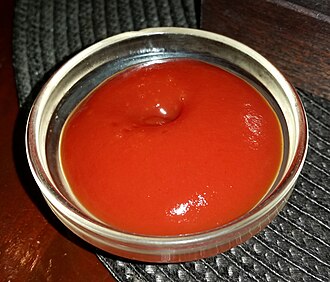
Photo: Wikipedia
Catsup, or ketchup, is a smooth, tangy-sweet condiment made from tomatoes, vinegar, and sugar, with a vibrant red hue and a glossy, pourable texture. Its flavor profile balances bright acidity with a pronounced sweetness, making it a staple for enhancing savory dishes. Nutritionally, it is a low-fat, low-protein source of quick energy, primarily from carbohydrates and sugars.
Calorie split: 4% protein · 96% carbs · 1% fat
↓ Full nutrition💚 Why it's loved
People love catsup for its iconic sweet-tangy flavor that instantly elevates simple foods like fries or burgers, and for its incredible versatility as a dip, marinade, or sauce base. It's deeply embedded in American and global fast-food culture, evoking nostalgia and comfort.
⚠️ Watch-outs & how to enjoy it better
Its high sugar content (over 21g per 100g) can contribute to blood-sugar spikes, and it often contains added sodium, making it less ideal for those monitoring sugar or salt intake. To mitigate, use it sparingly as a condiment rather than a sauce, pair it with protein or fiber-rich foods to slow sugar absorption, or opt for low-sugar or no-sugar-added varieties.
Key benefits
- Provides a small amount of lycopene, an antioxidant from tomatoes.
- Adds flavor without significant fat or protein.
- Can make plain foods more palatable, encouraging consumption.
- Low in calories per tablespoon serving.
🍽️ Popular dishes

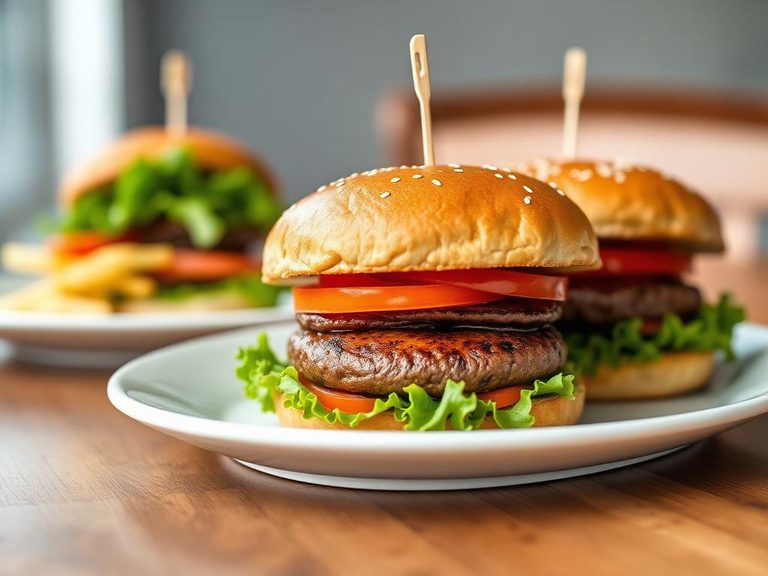
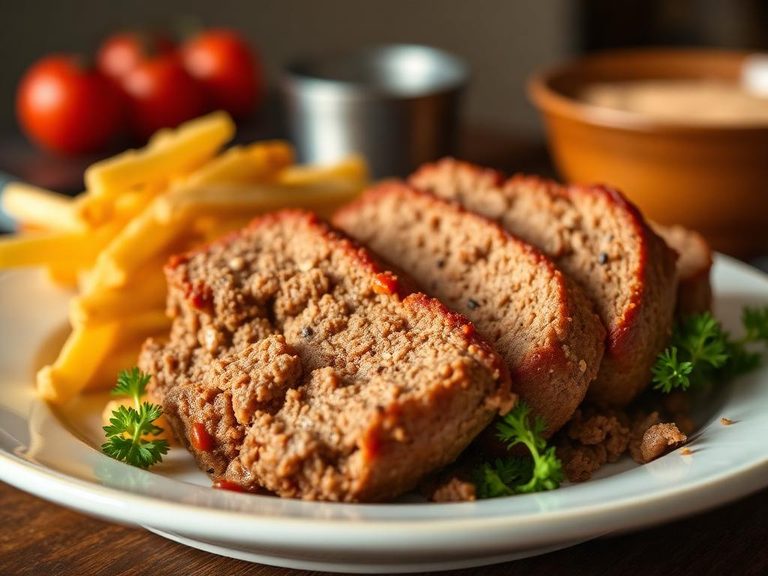

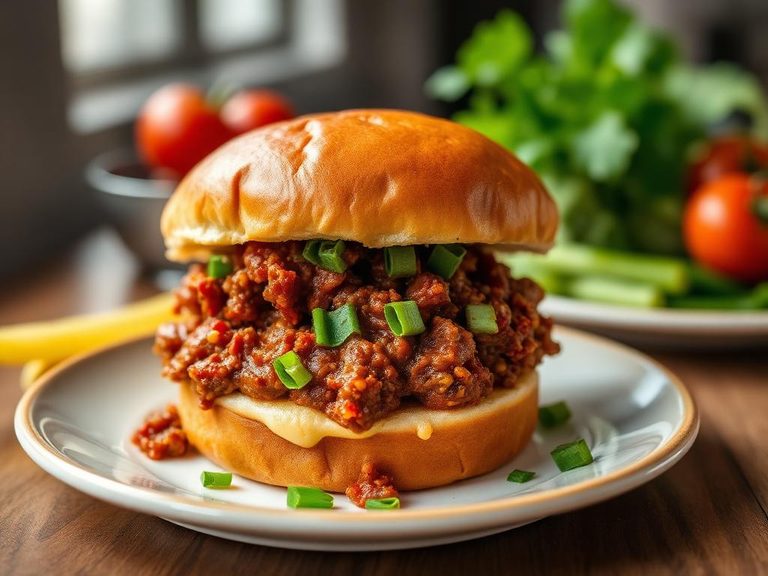
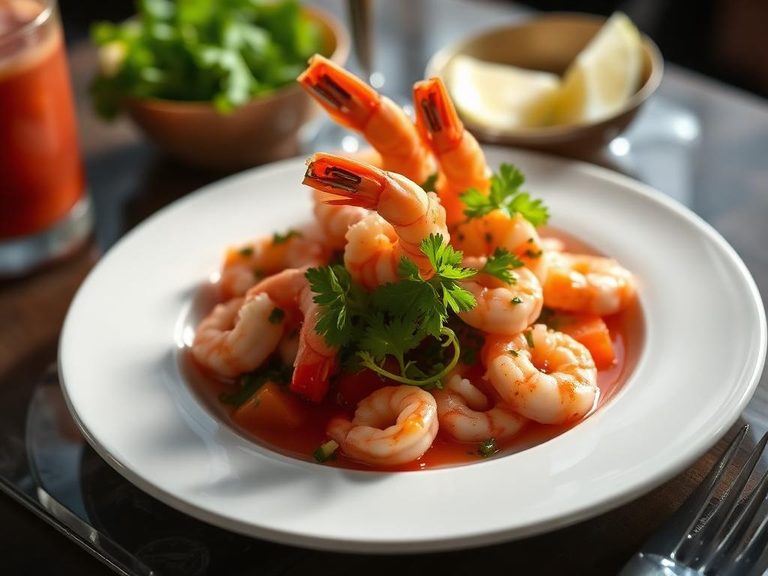
🌍 Where it's eaten
💡 Did you know?
The original precursor to modern catsup was a Chinese fermented fish sauce called 'kê-tsiap,' which traveled to Southeast Asia and eventually inspired tomato-based versions in the West.
Full nutrition (USDA data · scales with serving)
| Water | 68.5 g |
| Energy | 101 kcal |
| Energy | 423 kj |
| Protein | 1.0 g |
| Total lipid (fat) | 0.10 g |
| Ash | 2.9 g |
| Carbohydrate, by difference | 27.4 g |
| Fiber, total dietary | 0.30 g |
| Total Sugars | 21.3 g |
| Sucrose | 2.3 g |
| Glucose | 10.3 g |
| Fructose | 8.7 g |
| Lactose | 0.00 g |
| Maltose | 0.00 g |
| Galactose | 0.00 g |
| Calcium, Ca | 15.0 mg |
| Iron, Fe | 0.35 mg |
| Magnesium, Mg | 13.0 mg |
| Phosphorus, P | 26.0 mg |
| Potassium, K | 281 mg |
| Sodium, Na | 907 mg |
| Zinc, Zn | 0.17 mg |
| Copper, Cu | 0.09 mg |
| Manganese, Mn | 0.08 mg |
| Selenium, Se | 0.70 ug |
| Fluoride, F | 15.1 ug |
| Vitamin C, total ascorbic acid | 4.1 mg |
| Thiamin | 0.01 mg |
| Riboflavin | 0.17 mg |
| Niacin | 1.4 mg |
| Pantothenic acid | 0.05 mg |
| Vitamin B-6 | 0.16 mg |
| Folate, total | 9.0 ug |
| Folic acid | 0.00 ug |
| Folate, food | 9.0 ug |
| Folate, DFE | 9.0 ug |
| Choline, total | 12.5 mg |
| Betaine | 0.20 mg |
| Vitamin B-12 | 0.00 ug |
| Vitamin B-12, added | 0.00 ug |
| Vitamin A, RAE | 26.0 ug |
| Retinol | 0.00 ug |
| Carotene, beta | 316 ug |
| Carotene, alpha | 0.00 ug |
| Cryptoxanthin, beta | 0.00 ug |
| Vitamin A, IU | 527 iu |
| Lycopene | 12062 ug |
| Lutein + zeaxanthin | 161 ug |
| Vitamin E (alpha-tocopherol) | 1.5 mg |
| Vitamin E, added | 0.00 mg |
| Tocopherol, beta | 0.00 mg |
| Tocopherol, gamma | 0.13 mg |
| Tocopherol, delta | 0.00 mg |
| Vitamin D (D2 + D3), International Units | 0.00 iu |
| Vitamin D (D2 + D3) | 0.00 ug |
| Vitamin K (phylloquinone) | 3.0 ug |
| Vitamin K (Dihydrophylloquinone) | 0.00 ug |
| Alcohol, ethyl | 0.00 g |
| Caffeine | 0.00 mg |
| Theobromine | 0.00 mg |
Fat & fatty acid profile (per 100g)
| Fatty acids, total saturated | 0.01 g |
| SFA 4:0 | 0.00 g |
| SFA 6:0 | 0.00 g |
| SFA 8:0 | 0.00 g |
| SFA 10:0 | 0.00 g |
| SFA 12:0 | 0.00 g |
| SFA 14:0 | 0.00 g |
| SFA 16:0 | 0.01 g |
| SFA 18:0 | 0.00 g |
| Fatty acids, total monounsaturated | 0.01 g |
| MUFA 16:1 | 0.00 g |
| MUFA 18:1 | 0.01 g |
| MUFA 20:1 | 0.00 g |
| MUFA 22:1 | 0.00 g |
| Fatty acids, total polyunsaturated | 0.04 g |
| PUFA 18:2 | 0.04 g |
| PUFA 18:3 | 0.00 g |
| PUFA 18:4 | 0.00 g |
| PUFA 20:4 | 0.00 g |
| PUFA 20:5 n-3 (EPA) | 0.00 g |
| PUFA 22:5 n-3 (DPA) | 0.00 g |
| PUFA 22:6 n-3 (DHA) | 0.00 g |
| Fatty acids, total trans | 0.00 g |
| Cholesterol | 0.00 mg |
Amino acid profile (per 100g)
| Tryptophan | 0.01 g |
| Threonine | 0.02 g |
| Isoleucine | 0.01 g |
| Leucine | 0.02 g |
| Lysine | 0.02 g |
| Methionine | 0.01 g |
| Cystine | 0.01 g |
| Phenylalanine | 0.02 g |
| Tyrosine | 0.01 g |
| Valine | 0.01 g |
| Arginine | 0.02 g |
| Histidine | 0.01 g |
| Alanine | 0.03 g |
| Aspartic acid | 0.13 g |
| Glutamic acid | 0.35 g |
| Glycine | 0.02 g |
| Proline | 0.01 g |
| Serine | 0.02 g |
FAQ
What is the difference between catsup and ketchup?
There is no difference in the product itself; 'catsup' and 'ketchup' are simply different spellings of the same tomato-based condiment, with 'ketchup' being the more common modern spelling in the United States.
Is catsup gluten-free?
Most commercial catsup is gluten-free, as it's made from tomatoes, vinegar, sugar, and spices, but it's always best to check the label for any added thickeners or flavorings that might contain gluten.
Can catsup be used in cooking beyond as a condiment?
Yes, it's a key ingredient in many recipes, including meatloaf glazes, barbecue sauces, sweet-and-sour dishes, and as a base for cocktail sauce or Russian dressing.
Nutrient density (calculated · NRF9.3)
Nutrient Rich Foods index: beneficial nutrients (protein, fiber, vitamins, minerals) minus saturated fat, added sugar & sodium, per 100 kcal.
NRF9.3 index — Fulgoni, Keast & Drewnowski, 2009. Computed from USDA nutrients.
Weight-loss friendliness (composite index)
Energy density 1.01 kcal/g · 4% calories from protein · 0.3 g fiber · 21.3 g sugar per 100 g.
Composite of energy density (Rolls et al., 1999), protein & fiber satiety, minus sugar. A calculated heuristic — ranks satiety-per-calorie, not a clinical measure.
Dietary load (calculated from USDA values)
Potential renal acid load. Positive = acid-forming, negative = alkaline-forming.
Sodium-to-potassium ratio: 3.23 (lower is better — aim for ≤ 1)
Sodium:potassium per WHO potassium guidance. Computed from USDA nutrients.