

Carrots, frozen, cooked, boiled, drained, with salt
Whole food · Vegetables and Vegetable Products

Photo: Wikipedia
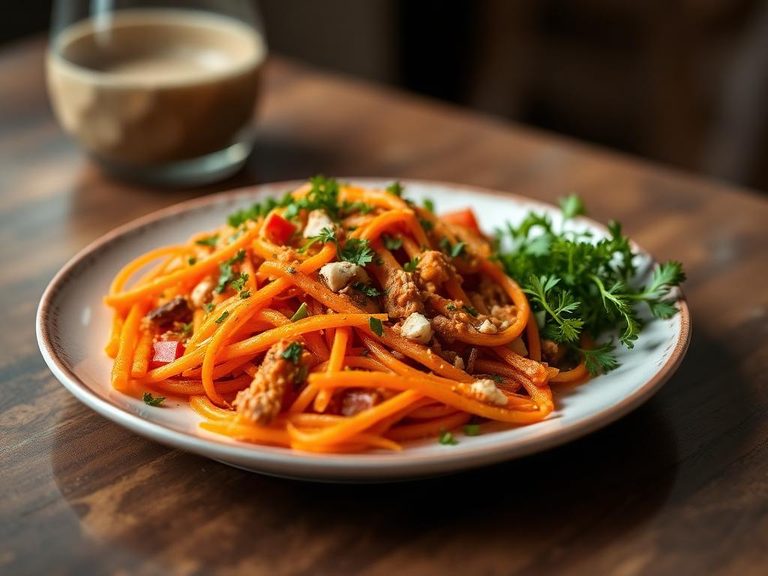
This is the humble carrot, transformed by freezing and boiling into a soft, sweet, and tender vegetable. Its vibrant orange color signals a wealth of beta-carotene, which the body converts to vitamin A. With only 37 calories per 100g, it's a light, nutrient-dense addition to any plate.
Calorie split: 6% protein · 79% carbs · 16% fat
↓ Full nutrition💚 Why it's loved
People adore its natural, concentrated sweetness that intensifies with cooking, making it a kid-friendly favorite and a versatile ingredient. It seamlessly blends into savory stews, brightens up a glaze, or stands alone as a simple, comforting side.
⚠️ Watch-outs & how to enjoy it better
The added salt in this preparation can be a concern for those monitoring sodium intake. For individuals managing blood sugar, the combination of natural sugars and a relatively high glycemic index may cause spikes. To counteract this, pair it with a protein (like chicken or lentils) or a healthy fat (like olive oil or butter) to slow digestion and stabilize blood sugar response.
Key benefits
- Excellent source of beta-carotene (vitamin A precursor)
- High in dietary fiber for digestive health
- Low in calories and fat
- Contains antioxidants like lutein and lycopene
- Provides a good source of potassium
🍽️ Popular dishes
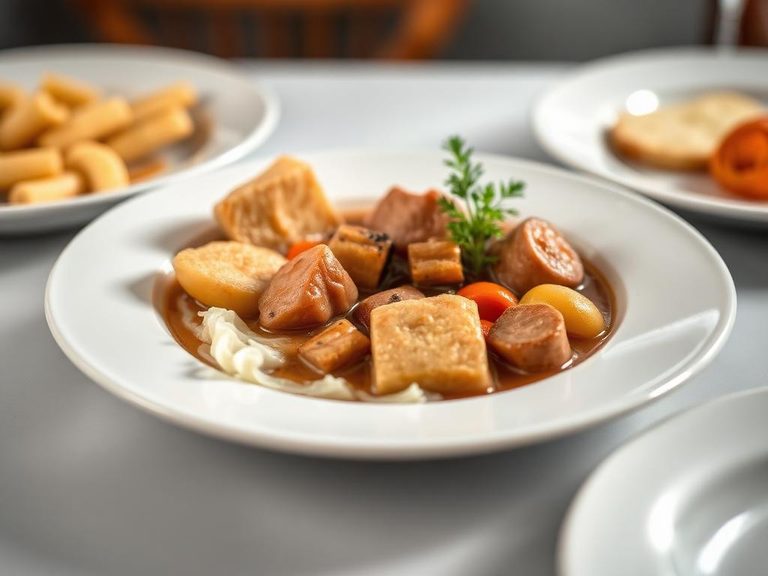
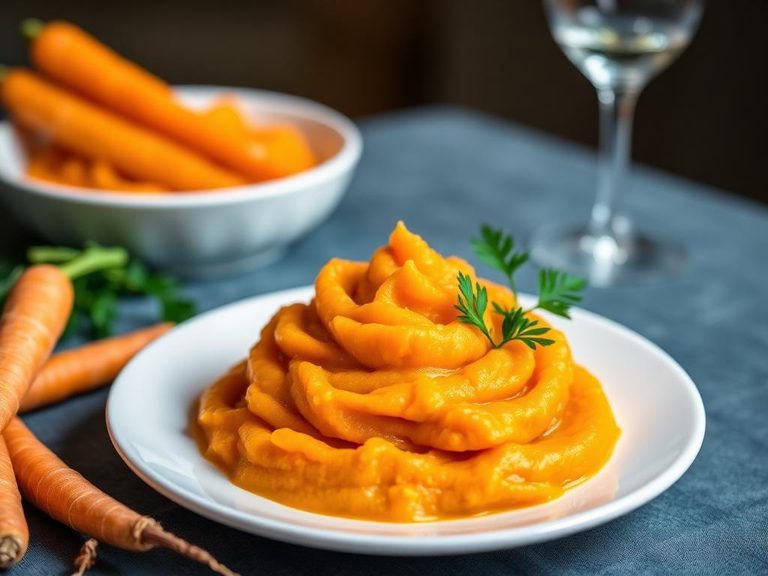
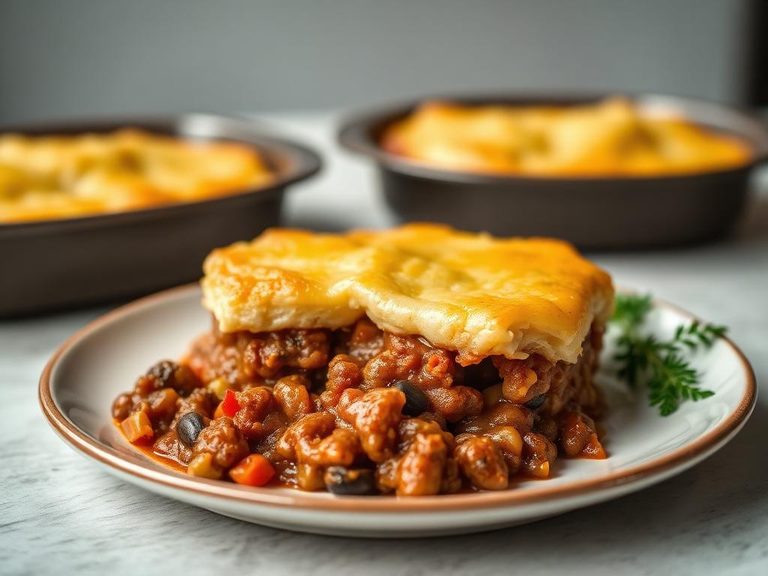

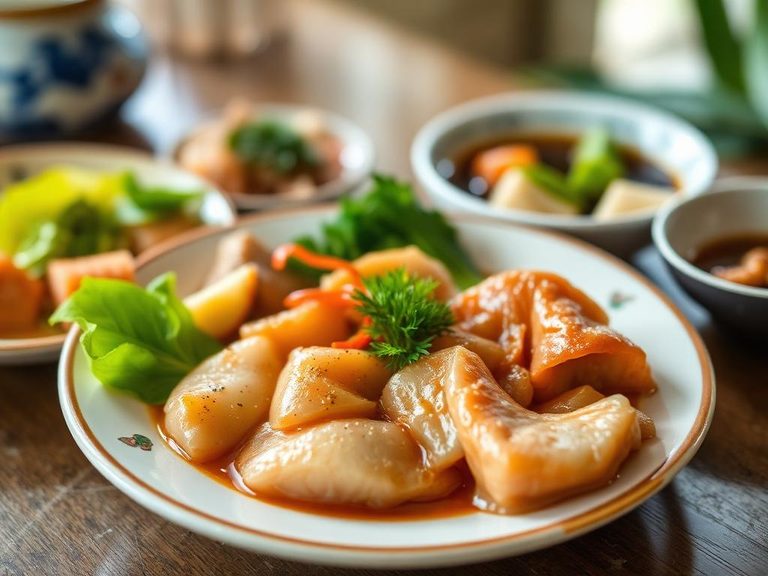
🌍 Where it's eaten
💡 Did you know?
The world's heaviest carrot, recorded in 2014, weighed over 10 kg (22 lbs)—roughly the size of a medium dog!
Full nutrition (USDA data · scales with serving)
| Water | 90.3 g |
| Energy | 37.0 kcal |
| Energy | 155 kj |
| Protein | 0.58 g |
| Total lipid (fat) | 0.68 g |
| Ash | 0.69 g |
| Carbohydrate, by difference | 7.7 g |
| Fiber, total dietary | 3.3 g |
| Total Sugars | 4.1 g |
| Sucrose | 3.4 g |
| Glucose | 0.36 g |
| Fructose | 0.28 g |
| Lactose | 0.00 g |
| Maltose | 0.00 g |
| Galactose | 0.00 g |
| Starch | 0.31 g |
| Calcium, Ca | 35.0 mg |
| Iron, Fe | 0.53 mg |
| Magnesium, Mg | 11.0 mg |
| Phosphorus, P | 31.0 mg |
| Potassium, K | 192 mg |
| Sodium, Na | 295 mg |
| Zinc, Zn | 0.35 mg |
| Copper, Cu | 0.08 mg |
| Manganese, Mn | 0.17 mg |
| Selenium, Se | 0.60 ug |
| Vitamin C, total ascorbic acid | 2.3 mg |
| Thiamin | 0.03 mg |
| Riboflavin | 0.04 mg |
| Niacin | 0.42 mg |
| Pantothenic acid | 0.17 mg |
| Vitamin B-6 | 0.08 mg |
| Folate, total | 11.0 ug |
| Folic acid | 0.00 ug |
| Folate, food | 11.0 ug |
| Folate, DFE | 11.0 ug |
| Choline, total | 8.6 mg |
| Betaine | 0.10 mg |
| Vitamin B-12 | 0.00 ug |
| Vitamin B-12, added | 0.00 ug |
| Vitamin A, RAE | 846 ug |
| Retinol | 0.00 ug |
| Carotene, beta | 8199 ug |
| Carotene, alpha | 3716 ug |
| Cryptoxanthin, beta | 199 ug |
| Vitamin A, IU | 16928 iu |
| Lycopene | 0.00 ug |
| Lutein + zeaxanthin | 676 ug |
| Vitamin E (alpha-tocopherol) | 1.0 mg |
| Vitamin E, added | 0.00 mg |
| Vitamin D (D2 + D3), International Units | 0.00 iu |
| Vitamin D (D2 + D3) | 0.00 ug |
| Vitamin K (phylloquinone) | 13.6 ug |
| Vitamin K (Dihydrophylloquinone) | 0.00 ug |
| Caffeine | 0.00 mg |
| Theobromine | 0.00 mg |
Fat & fatty acid profile (per 100g)
| Fatty acids, total saturated | 0.13 g |
| SFA 4:0 | 0.00 g |
| SFA 6:0 | 0.00 g |
| SFA 8:0 | 0.00 g |
| SFA 10:0 | 0.00 g |
| SFA 12:0 | 0.01 g |
| SFA 14:0 | 0.01 g |
| SFA 15:0 | 0.00 g |
| SFA 16:0 | 0.11 g |
| SFA 18:0 | 0.01 g |
| SFA 20:0 | 0.00 g |
| SFA 22:0 | 0.00 g |
| SFA 24:0 | 0.00 g |
| Fatty acids, total monounsaturated | 0.04 g |
| MUFA 16:1 | 0.01 g |
| MUFA 18:1 | 0.03 g |
| Fatty acids, total polyunsaturated | 0.32 g |
| PUFA 18:2 | 0.32 g |
| PUFA 18:3 | 0.00 g |
| PUFA 18:4 | 0.00 g |
| PUFA 20:4 | 0.00 g |
| PUFA 20:5 n-3 (EPA) | 0.00 g |
| PUFA 22:5 n-3 (DPA) | 0.00 g |
| PUFA 22:6 n-3 (DHA) | 0.00 g |
| Fatty acids, total trans | 0.00 g |
| Cholesterol | 0.00 mg |
Amino acid profile (per 100g)
| Tryptophan | 0.01 g |
| Threonine | 0.12 g |
| Isoleucine | 0.05 g |
| Leucine | 0.06 g |
| Lysine | 0.06 g |
| Methionine | 0.01 g |
| Cystine | 0.05 g |
| Phenylalanine | 0.04 g |
| Tyrosine | 0.03 g |
| Valine | 0.04 g |
| Arginine | 0.06 g |
| Histidine | 0.03 g |
| Alanine | 0.07 g |
| Aspartic acid | 0.12 g |
| Glutamic acid | 0.23 g |
| Glycine | 0.03 g |
| Proline | 0.03 g |
| Serine | 0.03 g |
FAQ
Does freezing affect the nutritional value of carrots?
Freezing preserves most nutrients, including beta-carotene, very well. The blanching process before freezing can cause a minor loss of water-soluble vitamins like vitamin C, but the overall nutritional profile remains strong.
Why are my boiled carrots mushy?
Overcooking breaks down the carrot's cell walls. For a firmer texture, boil just until tender when pierced with a fork (usually 5-8 minutes for slices). Starting with cold water also helps them cook more evenly.
Is the salt content in frozen cooked carrots high?
It varies by brand. 'With salt' typically means salt was added during processing. Check the nutrition label for sodium content per serving. You can often find 'no salt added' versions or simply rinse the carrots briefly before using.
Nutrient density (calculated · NRF9.3)
Nutrient Rich Foods index: beneficial nutrients (protein, fiber, vitamins, minerals) minus saturated fat, added sugar & sodium, per 100 kcal.
NRF9.3 index — Fulgoni, Keast & Drewnowski, 2009. Computed from USDA nutrients.
Weight-loss friendliness (composite index)
Energy density 0.37 kcal/g · 6% calories from protein · 3.3 g fiber · 4.1 g sugar per 100 g.
Composite of energy density (Rolls et al., 1999), protein & fiber satiety, minus sugar. A calculated heuristic — ranks satiety-per-calorie, not a clinical measure.
Dietary load (calculated from USDA values)
Potential renal acid load. Positive = acid-forming, negative = alkaline-forming.
Sodium-to-potassium ratio: 1.54 (lower is better — aim for ≤ 1)
Sodium:potassium per WHO potassium guidance. Computed from USDA nutrients.