

Candies, HERSHEY'S SKOR Toffee Bar
Whole food · Sweets

Photo: Wikipedia
The Hershey's SKOR Toffee Bar is a classic American candy featuring a crisp, buttery toffee center coated in a thin layer of rich milk chocolate. Its signature texture is a satisfying, brittle snap that gives way to a chewy, caramelized sweetness. Nutritionally, it is a high-energy treat, delivering over 540 calories per 100 grams, with the majority coming from sugar and fat.
Calorie split: 2% protein · 47% carbs · 51% fat
↓ Full nutrition💚 Why it's loved
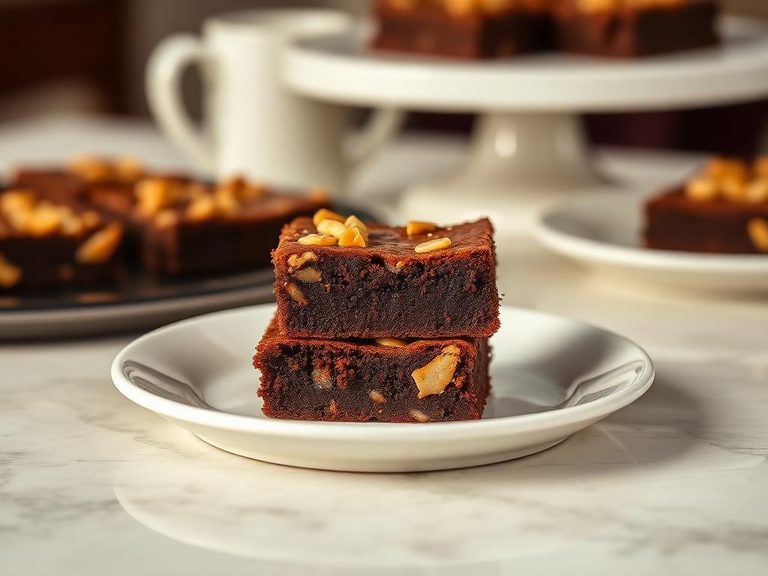
People love the SKOR bar for its perfect balance of salty-sweet, buttery toffee and smooth chocolate, creating a deeply satisfying crunch. Its versatility as a standalone treat or a chopped topping for ice cream and brownies makes it a beloved staple in American dessert culture.
⚠️ Watch-outs & how to enjoy it better
With nearly 60g of sugar per 100g, it can cause significant blood-sugar spikes, making it unsuitable for those managing diabetes or insulin resistance. To counteract this, consume a small portion (e.g., a 20g piece) alongside a source of protein or healthy fat, like a handful of nuts or a piece of cheese, to slow sugar absorption. Its high fat and calorie content also make it a poor choice for frequent consumption.
Key benefits
- Provides a quick source of energy from carbohydrates and fats.
- The buttery toffee flavor offers a classic, indulgent taste experience.
- The crisp texture provides a satisfying sensory contrast to the chocolate coating.
- Can be used as a flavorful ingredient in baking and dessert recipes.
🍽️ Popular dishes




🌍 Where it's eaten
💡 Did you know?
The SKOR bar was introduced in 1966, and its name is Swedish for 'treasure' or 'shoe', though Hershey's has never officially confirmed the meaning, leading to decades of speculation.
Full nutrition (USDA data · scales with serving)
| Water | 1.6 g |
| Energy | 541 kcal |
| Energy | 2263 kj |
| Protein | 3.1 g |
| Total lipid (fat) | 30.4 g |
| Ash | 1.2 g |
| Carbohydrate, by difference | 63.7 g |
| Fiber, total dietary | 1.3 g |
| Total Sugars | 59.9 g |
| Calcium, Ca | 30.0 mg |
| Iron, Fe | 0.57 mg |
| Magnesium, Mg | 10.0 mg |
| Phosphorus, P | 61.0 mg |
| Potassium, K | 153 mg |
| Sodium, Na | 317 mg |
| Zinc, Zn | 0.17 mg |
| Copper, Cu | 0.04 mg |
| Manganese, Mn | 0.00 mg |
| Selenium, Se | 0.00 ug |
| Fluoride, F | 0.00 ug |
| Vitamin C, total ascorbic acid | 0.50 mg |
| Thiamin | 0.02 mg |
| Riboflavin | 0.10 mg |
| Niacin | 0.13 mg |
| Pantothenic acid | 0.04 mg |
| Vitamin B-6 | 0.02 mg |
| Folate, total | 2.0 ug |
| Folic acid | 0.00 ug |
| Folate, food | 2.0 ug |
| Folate, DFE | 2.0 ug |
| Choline, total | 3.1 mg |
| Vitamin B-12 | 0.21 ug |
| Vitamin B-12, added | 0.00 ug |
| Vitamin A, RAE | 61.0 ug |
| Retinol | 61.0 ug |
| Carotene, beta | 0.00 ug |
| Carotene, alpha | 2.0 ug |
| Cryptoxanthin, beta | 0.00 ug |
| Vitamin A, IU | 204 iu |
| Lycopene | 0.00 ug |
| Lutein + zeaxanthin | 7.0 ug |
| Vitamin E (alpha-tocopherol) | 0.58 mg |
| Vitamin E, added | 0.00 mg |
| Vitamin D (D2 + D3), International Units | 3.0 iu |
| Vitamin D (D2 + D3) | 0.10 ug |
| Vitamin D3 (cholecalciferol) | 0.10 ug |
| Vitamin K (phylloquinone) | 8.6 ug |
| Alcohol, ethyl | 0.00 g |
| Caffeine | 10.0 mg |
| Theobromine | 111 mg |
Fat & fatty acid profile (per 100g)
| Fatty acids, total saturated | 18.8 g |
| SFA 4:0 | 0.02 g |
| SFA 6:0 | 0.01 g |
| SFA 8:0 | 0.01 g |
| SFA 10:0 | 0.02 g |
| SFA 12:0 | 0.02 g |
| SFA 14:0 | 0.09 g |
| SFA 15:0 | 0.01 g |
| SFA 16:0 | 7.5 g |
| SFA 17:0 | 0.02 g |
| SFA 18:0 | 9.7 g |
| SFA 20:0 | 0.07 g |
| SFA 22:0 | 0.01 g |
| SFA 24:0 | 0.01 g |
| Fatty acids, total monounsaturated | 9.7 g |
| MUFA 14:1 | 0.00 g |
| MUFA 15:1 | 0.00 g |
| MUFA 16:1 | 0.08 g |
| MUFA 17:1 | 0.00 g |
| MUFA 18:1 | 9.6 g |
| MUFA 20:1 | 0.00 g |
| MUFA 22:1 | 0.00 g |
| MUFA 24:1 c | 0.00 g |
| Fatty acids, total polyunsaturated | 1.2 g |
| PUFA 18:2 | 1.1 g |
| PUFA 18:3 | 0.07 g |
| PUFA 18:4 | 0.00 g |
| PUFA 20:2 n-6 c,c | 0.00 g |
| PUFA 20:3 | 0.00 g |
| PUFA 20:4 | 0.00 g |
| PUFA 20:5 n-3 (EPA) | 0.00 g |
| PUFA 22:4 | 0.00 g |
| PUFA 22:5 n-3 (DPA) | 0.00 g |
| PUFA 22:6 n-3 (DHA) | 0.00 g |
| Cholesterol | 53.0 mg |
Amino acid profile (per 100g)
Estimated from Candies, honey-combed, with peanut butter — USDA does not publish this profile for Candies.
| Tryptophan | 0.09 g |
| Threonine | 0.21 g |
| Isoleucine | 0.24 g |
| Leucine | 0.61 g |
| Lysine | 0.27 g |
| Methionine | 0.10 g |
| Cystine | 0.09 g |
| Phenylalanine | 0.47 g |
| Tyrosine | 0.33 g |
| Valine | 0.31 g |
| Arginine | 1.1 g |
| Histidine | 0.22 g |
| Alanine | 0.36 g |
| Aspartic acid | 1.2 g |
| Glutamic acid | 2.0 g |
| Glycine | 0.56 g |
| Proline | 0.55 g |
| Serine | 0.58 g |
FAQ
What is the difference between a SKOR bar and a Heath bar?
Both are Hershey's toffee bars with milk chocolate coating. The primary difference is in the toffee itself: SKOR bars are known for a thinner, more brittle, and crispier toffee, while Heath bars have a slightly thicker, chewier, and more buttery toffee center.
Is SKOR bar gluten-free?
While the ingredients (toffee, chocolate, butter) are not inherently gluten-containing, Hershey's does not certify SKOR bars as gluten-free. They are manufactured in facilities that may process wheat, so there is a risk of cross-contamination for those with celiac disease or severe gluten sensitivity.
Can I bake with SKOR bars?
Yes, SKOR bars are excellent for baking. Chopped SKOR pieces can be folded into cookie dough, brownie batter, or cheesecake filling for a crunchy, buttery toffee flavor. They are also commonly crushed and used as a topping for ice cream cakes or as a crust for no-bake desserts.
Nutrient density (calculated · NRF9.3)
Nutrient Rich Foods index: beneficial nutrients (protein, fiber, vitamins, minerals) minus saturated fat, added sugar & sodium, per 100 kcal.
NRF9.3 index — Fulgoni, Keast & Drewnowski, 2009. Computed from USDA nutrients.
Weight-loss friendliness (composite index)
Energy density 5.41 kcal/g · 2% calories from protein · 1.3 g fiber · 59.9 g sugar per 100 g.
Composite of energy density (Rolls et al., 1999), protein & fiber satiety, minus sugar. A calculated heuristic — ranks satiety-per-calorie, not a clinical measure.
Dietary load (calculated from USDA values)
Potential renal acid load. Positive = acid-forming, negative = alkaline-forming.
Sodium-to-potassium ratio: 2.07 (lower is better — aim for ≤ 1)
Sodium:potassium per WHO potassium guidance. Computed from USDA nutrients.