

Candies, fudge, chocolate marshmallow, with nuts, prepared-by-recipe
Whole food · Sweets

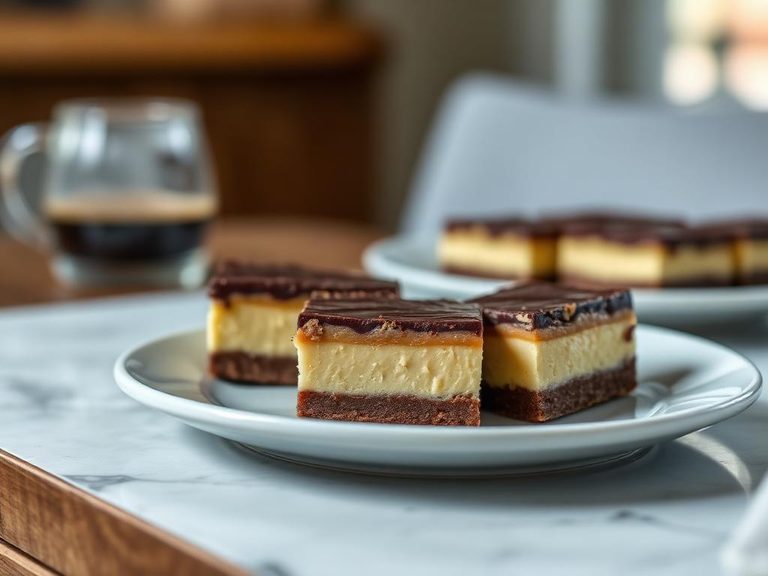
Photo: Wikipedia
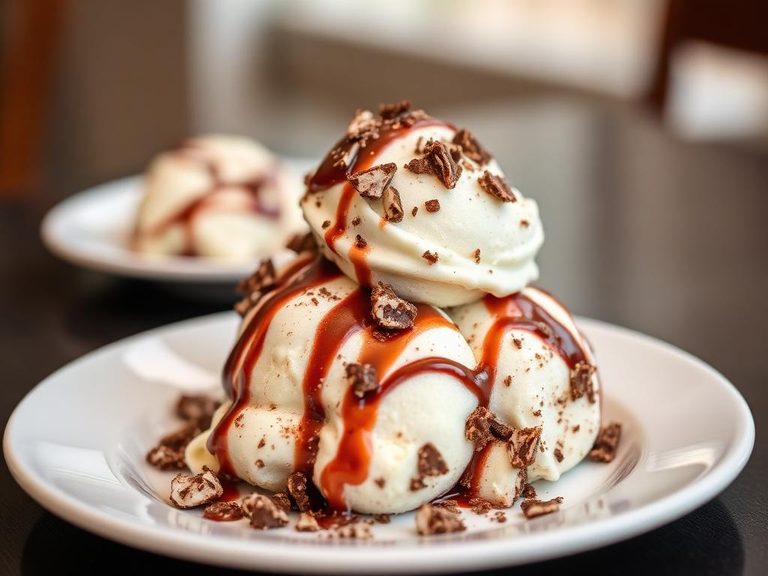
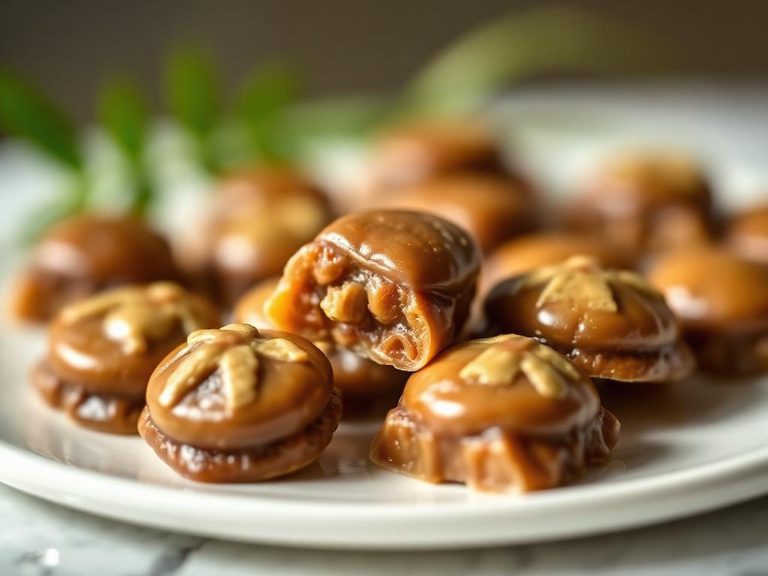
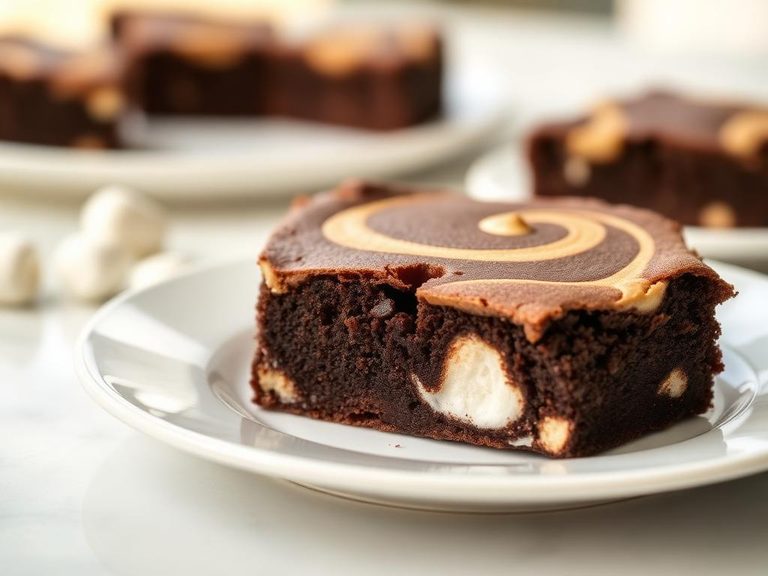
This is a rich, layered confection where a dense, fudgy chocolate base meets a pillowy marshmallow swirl, studded with crunchy nuts for textural contrast. Each bite delivers a deep cocoa flavor balanced by sweet, airy marshmallow and the earthy, toasty notes of the nuts. Nutritionally, it's a calorie-dense treat, with a significant carbohydrate load primarily from sugars and a moderate fat content from the nuts and chocolate.
Calorie split: 3% protein · 57% carbs · 40% fat
↓ Full nutrition💚 Why it's loved
People love it for the perfect trifecta of textures—chewy, fluffy, and crunchy—and the harmonious blend of rich chocolate and sweet marshmallow. It's a nostalgic, celebratory treat often associated with holidays, potlucks, and homemade gifting.
⚠️ Watch-outs & how to enjoy it better
Its high sugar and calorie content can lead to blood-sugar spikes and is not ideal for those monitoring glycemic load or caloric intake. To enjoy mindfully, practice strict portion control (e.g., a 1-inch square) and pair it with a source of protein or fiber, like a handful of almonds or a glass of milk, to slow sugar absorption. It also contains common allergens: nuts and likely dairy.
Key benefits
- Provides quick energy from carbohydrates
- Nuts add plant-based protein and healthy fats
- Contains dietary fiber from nuts and chocolate
- Offers a satisfying, indulgent sensory experience
- Can serve as a morale-boosting comfort food
🍽️ Popular dishes

🌍 Where it's eaten
💡 Did you know?
The marshmallow component in this fudge is derived from the mallow plant (Althaea officinalis), whose root was historically boiled to create a sweet, spongy confection for medicinal purposes.
Full nutrition (USDA data · scales with serving)
| Water | 7.1 g |
| Energy | 474 kcal |
| Energy | 1982 kj |
| Protein | 3.2 g |
| Total lipid (fat) | 21.1 g |
| Ash | 0.84 g |
| Carbohydrate, by difference | 67.7 g |
| Fiber, total dietary | 2.1 g |
| Calcium, Ca | 49.0 mg |
| Iron, Fe | 1.1 mg |
| Magnesium, Mg | 46.0 mg |
| Phosphorus, P | 88.0 mg |
| Potassium, K | 170 mg |
| Sodium, Na | 79.0 mg |
| Zinc, Zn | 0.76 mg |
| Copper, Cu | 0.32 mg |
| Manganese, Mn | 0.47 mg |
| Selenium, Se | 2.3 ug |
| Vitamin C, total ascorbic acid | 0.30 mg |
| Thiamin | 0.04 mg |
| Riboflavin | 0.08 mg |
| Niacin | 0.23 mg |
| Pantothenic acid | 0.16 mg |
| Vitamin B-6 | 0.05 mg |
| Folate, total | 11.0 ug |
| Folic acid | 0.00 ug |
| Folate, food | 11.0 ug |
| Folate, DFE | 11.0 ug |
| Vitamin B-12 | 0.03 ug |
| Vitamin B-12, added | 0.00 ug |
| Vitamin A, RAE | 68.0 ug |
| Retinol | 68.0 ug |
| Cryptoxanthin, beta | 0.00 ug |
| Vitamin A, IU | 228 iu |
| Lycopene | 0.00 ug |
| Lutein + zeaxanthin | 6.0 ug |
| Vitamin E (alpha-tocopherol) | 0.59 mg |
| Vitamin E, added | 0.00 mg |
| Vitamin K (phylloquinone) | 2.4 ug |
| Alcohol, ethyl | 0.00 g |
| Caffeine | 16.0 mg |
| Theobromine | 129 mg |
Fat & fatty acid profile (per 100g)
| Fatty acids, total saturated | 10.4 g |
| SFA 4:0 | 0.32 g |
| SFA 6:0 | 0.20 g |
| SFA 8:0 | 0.11 g |
| SFA 10:0 | 0.24 g |
| SFA 12:0 | 0.25 g |
| SFA 13:0 | 0.00 g |
| SFA 14:0 | 0.77 g |
| SFA 15:0 | 0.00 g |
| SFA 16:0 | 4.5 g |
| SFA 17:0 | 0.06 g |
| SFA 18:0 | 3.8 g |
| SFA 20:0 | 0.09 g |
| SFA 22:0 | 0.01 g |
| SFA 24:0 | 0.00 g |
| Fatty acids, total monounsaturated | 5.5 g |
| MUFA 14:1 | 0.00 g |
| MUFA 15:1 | 0.00 g |
| MUFA 16:1 | 0.12 g |
| MUFA 16:1 c | 0.09 g |
| MUFA 17:1 | 0.00 g |
| MUFA 18:1 | 5.4 g |
| MUFA 18:1 c | 1.5 g |
| MUFA 20:1 | 0.02 g |
| MUFA 22:1 | 0.00 g |
| MUFA 24:1 c | 0.00 g |
| Fatty acids, total polyunsaturated | 4.1 g |
| PUFA 18:2 | 3.3 g |
| PUFA 18:2 n-6 c,c | 0.20 g |
| PUFA 18:2 CLAs | 0.02 g |
| PUFA 18:2 i | 0.03 g |
| PUFA 18:3 | 0.73 g |
| PUFA 18:3 n-3 c,c,c (ALA) | 0.03 g |
| PUFA 18:4 | 0.00 g |
| PUFA 20:2 n-6 c,c | 0.00 g |
| PUFA 20:3 | 0.00 g |
| PUFA 20:4 | 0.00 g |
| PUFA 20:5 n-3 (EPA) | 0.00 g |
| PUFA 22:5 n-3 (DPA) | 0.00 g |
| PUFA 22:6 n-3 (DHA) | 0.00 g |
| Fatty acids, total trans | 0.30 g |
| Fatty acids, total trans-monoenoic | 0.27 g |
| TFA 18:1 t | 0.27 g |
| Fatty acids, total trans-polyenoic | 0.03 g |
| Cholesterol | 23.0 mg |
Amino acid profile (per 100g)
Estimated from Candies, honey-combed, with peanut butter — USDA does not publish this profile for Candies.
| Tryptophan | 0.09 g |
| Threonine | 0.21 g |
| Isoleucine | 0.24 g |
| Leucine | 0.61 g |
| Lysine | 0.27 g |
| Methionine | 0.10 g |
| Cystine | 0.09 g |
| Phenylalanine | 0.47 g |
| Tyrosine | 0.33 g |
| Valine | 0.31 g |
| Arginine | 1.1 g |
| Histidine | 0.22 g |
| Alanine | 0.36 g |
| Aspartic acid | 1.2 g |
| Glutamic acid | 2.0 g |
| Glycine | 0.56 g |
| Proline | 0.55 g |
| Serine | 0.58 g |
FAQ
How does the nutrition compare to plain chocolate fudge?
This version typically has slightly fewer calories and fat per gram than pure chocolate fudge due to the inclusion of lower-density marshmallow, but it has a higher carbohydrate content from the added sugars in the marshmallow.
Can I make it with different nuts?
Absolutely. While pecans and walnuts are traditional for their flavor and texture, you can substitute almonds, peanuts, or even toasted coconut for a different twist.
Why does my homemade version sometimes get grainy?
Graininess is often caused by sugar crystallization. To prevent this, avoid stirring the mixture once it reaches the soft-ball stage, and ensure your pot and utensils are clean and free of any sugar crystals.
Nutrient density (calculated · NRF9.3)
Nutrient Rich Foods index: beneficial nutrients (protein, fiber, vitamins, minerals) minus saturated fat, added sugar & sodium, per 100 kcal.
NRF9.3 index — Fulgoni, Keast & Drewnowski, 2009. Computed from USDA nutrients.
Weight-loss friendliness (composite index)
Energy density 4.74 kcal/g · 3% calories from protein · 2.1 g fiber · 0.0 g sugar per 100 g.
Composite of energy density (Rolls et al., 1999), protein & fiber satiety, minus sugar. A calculated heuristic — ranks satiety-per-calorie, not a clinical measure.
Dietary load (calculated from USDA values)
Potential renal acid load. Positive = acid-forming, negative = alkaline-forming.
Sodium-to-potassium ratio: 0.46 (lower is better — aim for ≤ 1)
Sodium:potassium per WHO potassium guidance. Computed from USDA nutrients.