Fish, salmon, pink, cooked, dry heat
Whole food · Finfish and Shellfish Products

Photo: Wikipedia
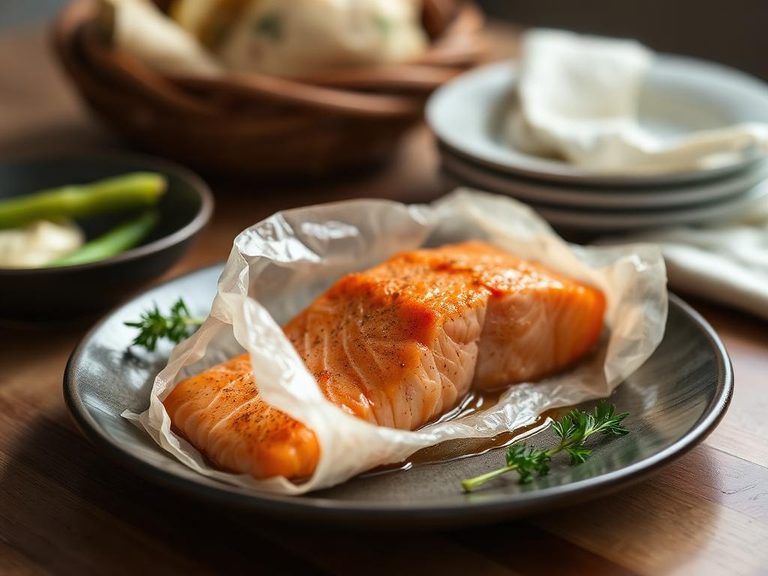
Pink salmon, cooked by dry heat, offers a delicate, flaky texture with a mild, slightly sweet flavor that's less intense than its sockeye cousin. Its vibrant coral-pink flesh turns opaque and tender when baked, broiled, or grilled. This lean protein powerhouse provides nearly 25 grams of complete protein per 100-gram serving with minimal fat.
💚 Why it's loved
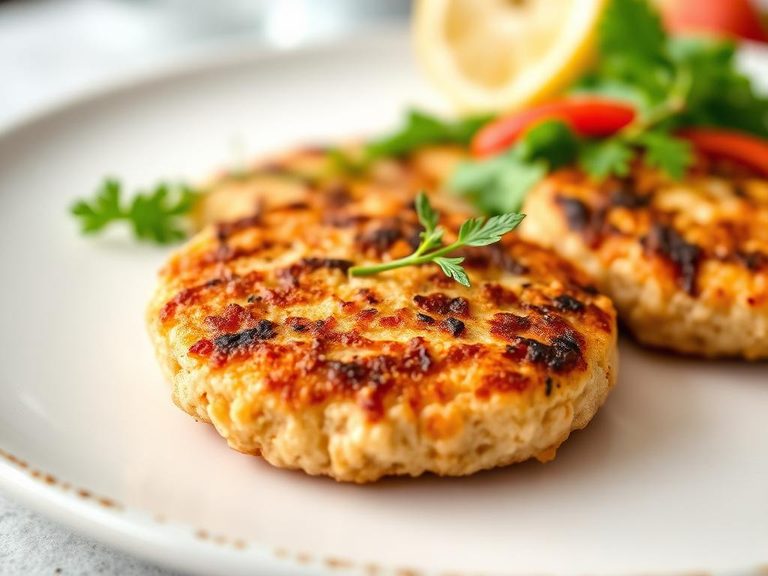
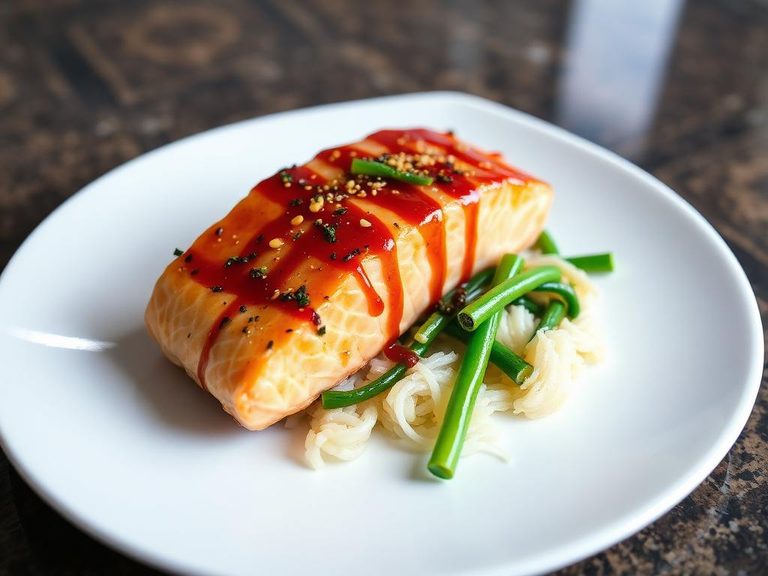
People cherish pink salmon for its approachable, non-fishy taste that serves as a perfect canvas for various seasonings and preparations. It's a beloved, affordable staple for quick weeknight meals, from simple baked fillets to classic salmon patties.
⚠️ Watch-outs & how to enjoy it better
The primary caution is for individuals with fish or seafood allergies. While low in fat, dry-heat cooking can sometimes lead to a drier texture if overcooked. To counteract dryness, cook just until the flesh flakes easily and consider a quick baste with olive oil or a flavorful sauce. For those monitoring sodium, be mindful of added salt or pre-seasoned preparations.
Key benefits
- Excellent source of high-quality, complete protein for muscle maintenance.
- Very low in carbohydrates, making it ideal for low-carb and keto diets.
- Provides heart-healthy omega-3 fatty acids, particularly EPA and DHA.
- Naturally free of sugar and dietary fiber.
- A good source of B vitamins, especially niacin and B12.
🍽️ Popular dishes
🌍 Where it's eaten
💡 Did you know?
Pink salmon gets its name not from its flesh, but from its light-colored mouth and gums, which contrast with the dark mouths of other salmon species.
Full nutrition (scales with serving)
| Water | 70.7 g |
| Energy | 153 kcal |
| Energy | 638 kj |
| Protein | 24.6 g |
| Total lipid (fat) | 5.3 g |
| Ash | 1.8 g |
| Carbohydrate, by difference | 0.00 g |
| Fiber, total dietary | 0.00 g |
| Total Sugars | 0.00 g |
| Calcium, Ca | 8.0 mg |
| Iron, Fe | 0.45 mg |
| Magnesium, Mg | 32.0 mg |
| Phosphorus, P | 313 mg |
| Potassium, K | 439 mg |
| Sodium, Na | 90.0 mg |
| Zinc, Zn | 0.46 mg |
| Copper, Cu | 0.07 mg |
| Manganese, Mn | 0.01 mg |
| Selenium, Se | 37.6 ug |
| Vitamin C, total ascorbic acid | 0.00 mg |
| Thiamin | 0.09 mg |
| Riboflavin | 0.13 mg |
| Niacin | 9.6 mg |
| Pantothenic acid | 1.2 mg |
| Vitamin B-6 | 0.70 mg |
| Folate, total | 5.0 ug |
| Folic acid | 0.00 ug |
| Folate, food | 5.0 ug |
| Folate, DFE | 5.0 ug |
| Choline, total | 113 mg |
| Vitamin B-12 | 4.7 ug |
| Vitamin B-12, added | 0.00 ug |
| Vitamin A, RAE | 42.0 ug |
| Retinol | 42.0 ug |
| Carotene, beta | 0.00 ug |
| Carotene, alpha | 0.00 ug |
| Cryptoxanthin, beta | 0.00 ug |
| Vitamin A, IU | 126 iu |
| Lycopene | 0.00 ug |
| Lutein + zeaxanthin | 0.00 ug |
| Vitamin E (alpha-tocopherol) | 0.48 mg |
| Vitamin E, added | 0.00 mg |
| Tocopherol, beta | 0.00 mg |
| Tocopherol, gamma | 0.00 mg |
| Tocopherol, delta | 0.00 mg |
| Tocotrienol, alpha | 0.00 mg |
| Tocotrienol, beta | 0.00 mg |
| Tocotrienol, gamma | 0.00 mg |
| Tocotrienol, delta | 0.00 mg |
| Vitamin D (D2 + D3), International Units | 522 iu |
| Vitamin D (D2 + D3) | 13.0 ug |
| Vitamin D3 (cholecalciferol) | 13.0 ug |
| Vitamin K (phylloquinone) | 0.50 ug |
| Alcohol, ethyl | 0.00 g |
| Caffeine | 0.00 mg |
| Theobromine | 0.00 mg |
Fat & fatty acid profile (per 100g)
| Fatty acids, total saturated | 0.97 g |
| SFA 4:0 | 0.00 g |
| SFA 6:0 | 0.00 g |
| SFA 8:0 | 0.00 g |
| SFA 10:0 | 0.00 g |
| SFA 12:0 | 0.00 g |
| SFA 14:0 | 0.24 g |
| SFA 15:0 | 0.01 g |
| SFA 16:0 | 0.57 g |
| SFA 17:0 | 0.01 g |
| SFA 18:0 | 0.12 g |
| SFA 20:0 | 0.01 g |
| SFA 22:0 | 0.00 g |
| SFA 24:0 | 0.00 g |
| Fatty acids, total monounsaturated | 1.6 g |
| MUFA 14:1 | 0.00 g |
| MUFA 15:1 | 0.00 g |
| MUFA 16:1 | 0.21 g |
| MUFA 17:1 | 0.00 g |
| MUFA 18:1 | 0.76 g |
| MUFA 20:1 | 0.54 g |
| MUFA 22:1 | 0.06 g |
| MUFA 24:1 c | 0.04 g |
| Fatty acids, total polyunsaturated | 0.97 g |
| PUFA 18:2 | 0.10 g |
| PUFA 18:3 | 0.06 g |
| PUFA 18:4 | 0.09 g |
| PUFA 20:2 n-6 c,c | 0.02 g |
| PUFA 20:3 | 0.01 g |
| PUFA 20:4 | 0.02 g |
| PUFA 20:5 n-3 (EPA) | 0.22 g |
| PUFA 22:4 | 0.00 g |
| PUFA 22:5 n-3 (DPA) | 0.06 g |
| PUFA 22:6 n-3 (DHA) | 0.40 g |
| Fatty acids, total trans | 0.04 g |
| Cholesterol | 55.0 mg |
Amino acid profile (per 100g)
| Tryptophan | 0.27 g |
| Threonine | 1.3 g |
| Isoleucine | 1.1 g |
| Leucine | 1.9 g |
| Lysine | 2.1 g |
| Methionine | 0.69 g |
| Cystine | 0.19 g |
| Phenylalanine | 1.0 g |
| Tyrosine | 0.89 g |
| Valine | 1.3 g |
| Arginine | 1.5 g |
| Histidine | 0.65 g |
| Alanine | 1.6 g |
| Aspartic acid | 3.1 g |
| Glutamic acid | 3.5 g |
| Glycine | 1.5 g |
| Proline | 1.0 g |
| Serine | 1.1 g |
FAQ
Is pink salmon as nutritious as other salmon?
Yes, it is highly nutritious. While it has slightly less fat (and thus fewer omega-3s) than sockeye or king salmon, it is still an excellent source of protein, B12, and omega-3s, often at a more affordable price.
What's the best way to cook it to keep it moist?
For dry-heat methods, avoid overcooking. Bake at 400°F (200°C) for about 10-12 minutes per inch of thickness, or grill over medium-high heat. The fish is done when it reaches an internal temperature of 145°F (63°C) and flakes easily with a fork.
Can I eat the skin?
Yes, the skin is edible and becomes crispy when pan-seared or grilled. It's rich in healthy fats and adds great texture. Simply cook it skin-side down in a hot pan for the best results.