

Wheat, khorasan, uncooked
Whole food · Cereal Grains and Pasta

Photo: Wikipedia
Khorasan wheat, also known as Kamut, is an ancient grain with large, golden-brown kernels that offer a rich, nutty flavor and a satisfyingly chewy texture when cooked. It's a nutritional powerhouse, boasting significantly more protein and essential minerals like selenium and magnesium than modern wheat, all while being easier for many to digest.
Calorie split: 16% protein · 78% carbs · 5% fat
↓ Full nutrition💚 Why it's loved
People love Khorasan wheat for its deep, buttery, and slightly sweet nutty taste that elevates simple dishes. Its firm, chewy texture holds up beautifully in salads, soups, and pilafs, making it a versatile and satisfying staple in health-conscious and gourmet kitchens alike.
⚠️ Watch-outs & how to enjoy it better
As a wheat variety, it contains gluten and is unsuitable for those with celiac disease or gluten sensitivity. Its high fiber content can cause digestive discomfort if introduced too quickly; start with small portions and drink plenty of water. To manage blood sugar, pair it with a source of protein or healthy fat (like nuts or olive oil) rather than eating it plain.
Key benefits
- Excellent source of plant-based protein (14.5g per 100g uncooked).
- High in dietary fiber (11.1g per 100g) for digestive health.
- Rich in selenium, an antioxidant that supports thyroid function.
- Contains more magnesium and zinc than standard whole wheat.
- Its nutty flavor reduces the need for added fats or sugars.
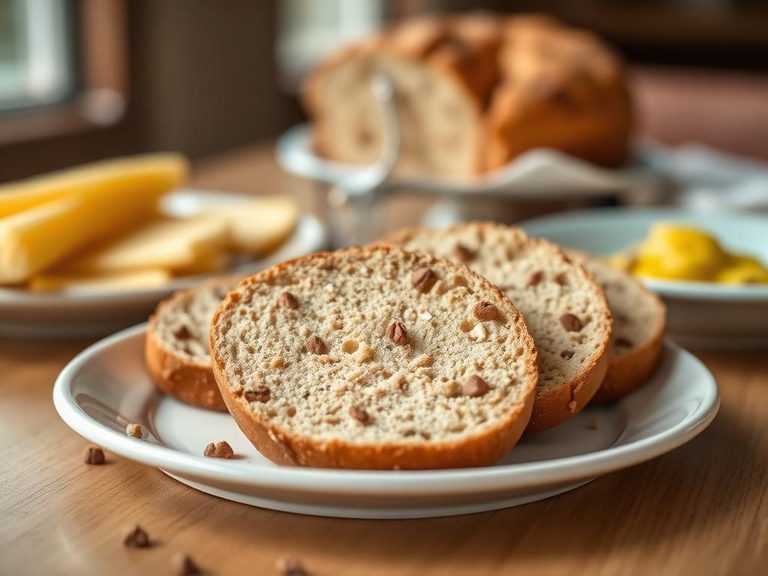
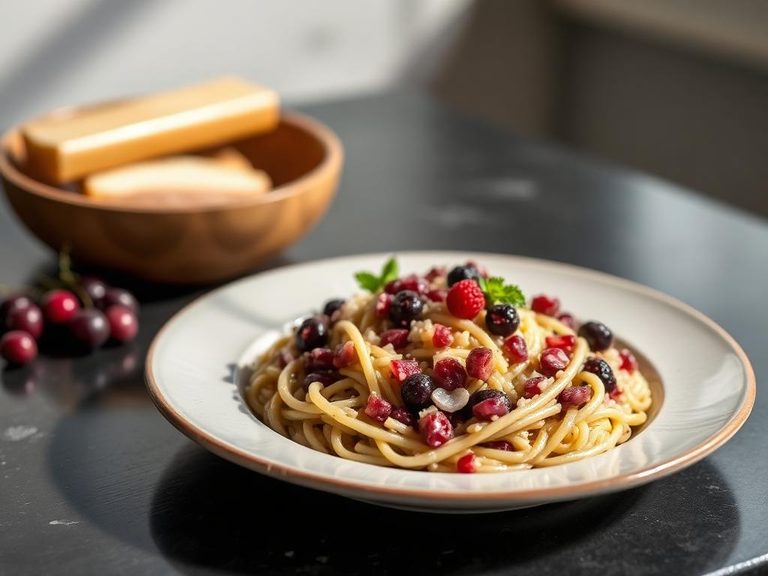
🍽️ Popular dishes
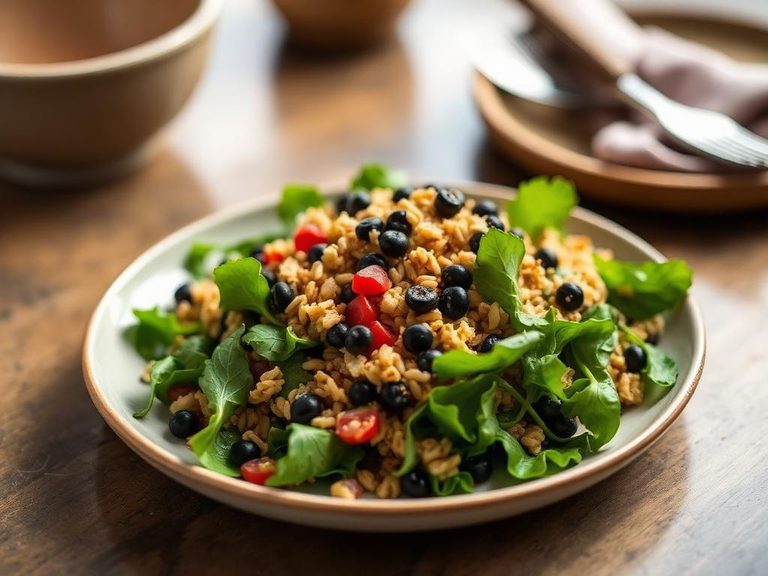
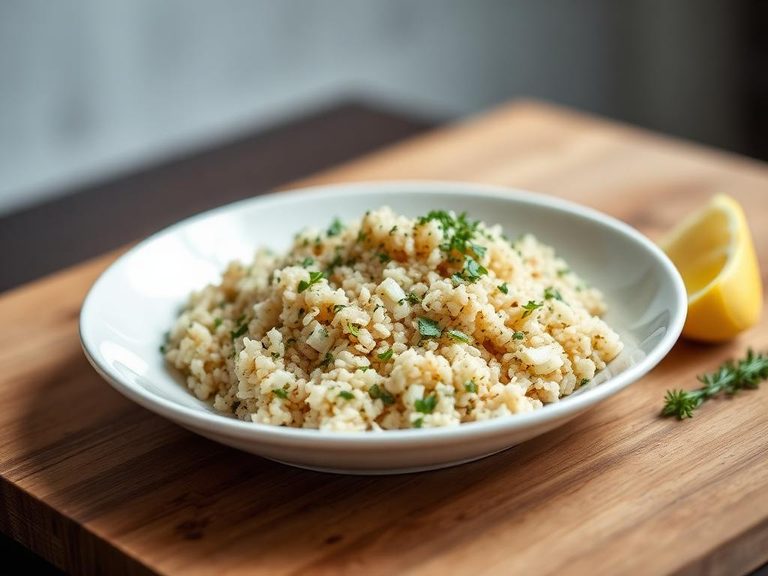
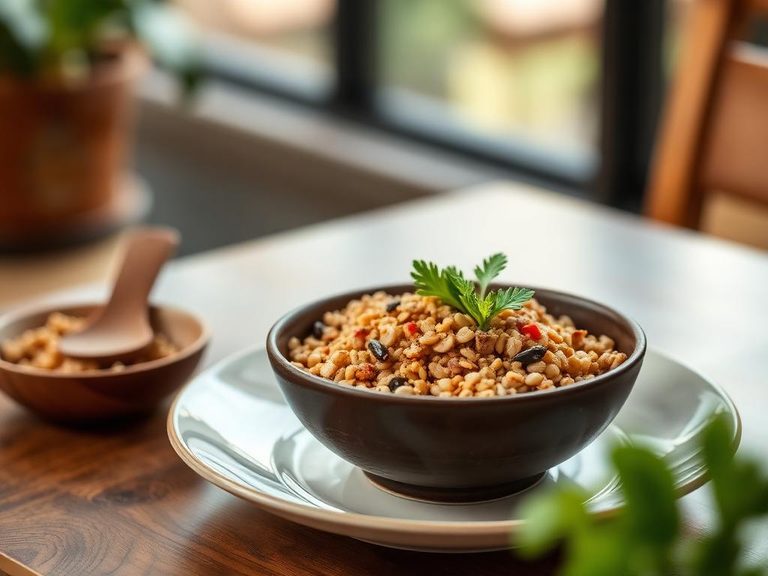
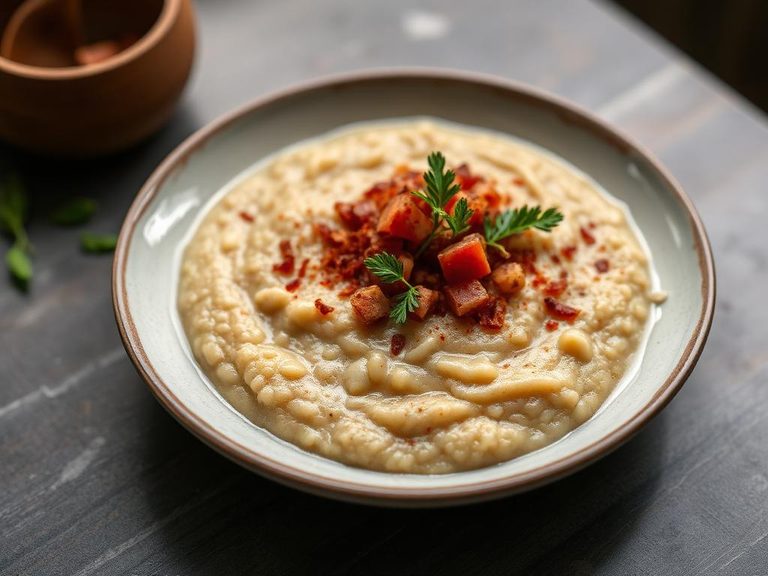
🌍 Where it's eaten
💡 Did you know?
The name 'Kamut' is a registered trademark owned by a Montana family farm, which helped popularize the grain by guaranteeing it is always grown organically and is never genetically modified.
Full nutrition (USDA data · scales with serving)
| Water | 11.1 g |
| Energy | 337 kcal |
| Energy | 1409 kj |
| Protein | 14.5 g |
| Total lipid (fat) | 2.1 g |
| Ash | 1.7 g |
| Carbohydrate, by difference | 70.6 g |
| Fiber, total dietary | 11.1 g |
| Total Sugars | 7.8 g |
| Sucrose | 0.55 g |
| Glucose | 0.62 g |
| Fructose | 0.11 g |
| Lactose | 0.00 g |
| Maltose | 6.6 g |
| Galactose | 0.00 g |
| Starch | 52.4 g |
| Calcium, Ca | 22.0 mg |
| Iron, Fe | 3.8 mg |
| Magnesium, Mg | 130 mg |
| Phosphorus, P | 364 mg |
| Potassium, K | 403 mg |
| Sodium, Na | 5.0 mg |
| Zinc, Zn | 3.7 mg |
| Copper, Cu | 0.51 mg |
| Manganese, Mn | 2.7 mg |
| Selenium, Se | 81.5 ug |
| Vitamin C, total ascorbic acid | 0.00 mg |
| Thiamin | 0.57 mg |
| Riboflavin | 0.18 mg |
| Niacin | 6.4 mg |
| Pantothenic acid | 0.95 mg |
| Vitamin B-6 | 0.26 mg |
| Choline, total | 25.8 mg |
| Betaine | 113 mg |
| Vitamin A, RAE | 1.0 ug |
| Carotene, beta | 5.0 ug |
| Carotene, alpha | 2.0 ug |
| Cryptoxanthin, beta | 1.0 ug |
| Vitamin A, IU | 10.0 iu |
| Lycopene | 0.00 ug |
| Lutein + zeaxanthin | 301 ug |
| Vitamin E (alpha-tocopherol) | 0.61 mg |
| Tocopherol, beta | 0.14 mg |
| Tocopherol, gamma | 1.1 mg |
| Tocopherol, delta | 0.01 mg |
| Tocotrienol, alpha | 0.31 mg |
| Tocotrienol, beta | 0.00 mg |
| Tocotrienol, gamma | 0.02 mg |
| Tocotrienol, delta | 0.00 mg |
| Vitamin K (phylloquinone) | 1.8 ug |
| Vitamin K (Dihydrophylloquinone) | 0.00 ug |
| Vitamin K (Menaquinone-4) | 0.00 ug |
Fat & fatty acid profile (per 100g)
| Fatty acids, total saturated | 0.20 g |
| SFA 8:0 | 0.00 g |
| SFA 10:0 | 0.00 g |
| SFA 12:0 | 0.00 g |
| SFA 14:0 | 0.00 g |
| SFA 15:0 | 0.00 g |
| SFA 16:0 | 0.18 g |
| SFA 17:0 | 0.00 g |
| SFA 18:0 | 0.01 g |
| SFA 20:0 | 0.00 g |
| SFA 22:0 | 0.00 g |
| Fatty acids, total monounsaturated | 0.21 g |
| MUFA 14:1 | 0.00 g |
| MUFA 15:1 | 0.00 g |
| MUFA 16:1 | 0.00 g |
| MUFA 17:1 | 0.00 g |
| MUFA 18:1 | 0.20 g |
| MUFA 20:1 | 0.01 g |
| Fatty acids, total polyunsaturated | 0.62 g |
| PUFA 18:2 | 0.57 g |
| PUFA 18:3 | 0.05 g |
| PUFA 18:3 n-3 c,c,c (ALA) | 0.05 g |
| PUFA 18:3 n-6 c,c,c | 0.00 g |
| PUFA 20:2 n-6 c,c | 0.00 g |
| PUFA 20:3 | 0.00 g |
| PUFA 20:4 | 0.00 g |
| Fatty acids, total trans | 0.01 g |
| Cholesterol | 0.00 mg |
Amino acid profile (per 100g)
| Tryptophan | 0.13 g |
| Threonine | 0.44 g |
| Isoleucine | 0.57 g |
| Leucine | 1.1 g |
| Lysine | 0.42 g |
| Methionine | 0.25 g |
| Cystine | 0.31 g |
| Phenylalanine | 0.77 g |
| Tyrosine | 0.35 g |
| Valine | 0.69 g |
| Arginine | 0.70 g |
| Histidine | 0.38 g |
| Alanine | 0.54 g |
| Aspartic acid | 0.80 g |
| Glutamic acid | 4.8 g |
| Glycine | 0.58 g |
| Proline | 1.6 g |
| Serine | 0.76 g |
FAQ
Is Khorasan wheat the same as Kamut?
Yes, 'Kamut' is a trademarked brand name for Khorasan wheat, ensuring specific quality standards like organic cultivation. All Kamut is Khorasan wheat, but not all Khorasan wheat is branded as Kamut.
How do I cook Khorasan wheat berries?
Rinse 1 cup of berries, then simmer in 3 cups of water or broth for 45-60 minutes until tender but still chewy. Drain any excess liquid. It can also be cooked in a pressure cooker for about 20-25 minutes.
Is it more nutritious than regular whole wheat?
Generally, yes. Khorasan wheat typically contains higher levels of protein, fiber, and key minerals like selenium, magnesium, and zinc compared to modern whole wheat varieties.
Nutrient density (calculated · NRF9.3)
Nutrient Rich Foods index: beneficial nutrients (protein, fiber, vitamins, minerals) minus saturated fat, added sugar & sodium, per 100 kcal.
NRF9.3 index — Fulgoni, Keast & Drewnowski, 2009. Computed from USDA nutrients.
Weight-loss friendliness (composite index)
Energy density 3.37 kcal/g · 17% calories from protein · 11.1 g fiber · 7.8 g sugar per 100 g.
Composite of energy density (Rolls et al., 1999), protein & fiber satiety, minus sugar. A calculated heuristic — ranks satiety-per-calorie, not a clinical measure.
Dietary load (calculated from USDA values)
Potential renal acid load. Positive = acid-forming, negative = alkaline-forming.
Sodium-to-potassium ratio: 0.01 (lower is better — aim for ≤ 1)
Sodium:potassium per WHO potassium guidance. Computed from USDA nutrients.