Whole Grain Bread
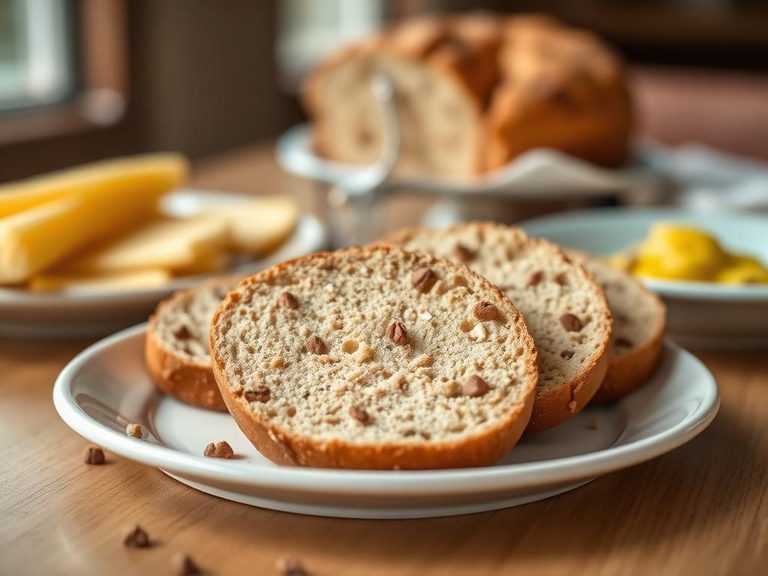
Whole grain bread is a hearty loaf made from flour that retains all parts of the grain kernel—the bran, germ, and endosperm. It's a staple food found worldwide, from the dense rye loaves of Northern Europe to the soft whole wheat sandwich bread common in North America.
🍽️ Nutrition at a glance
It is a complex carbohydrate source, providing sustained energy, and is notably higher in dietary fiber, protein, and essential nutrients compared to refined white bread. A typical slice contains roughly 80-110 calories.
Nutrition breakdown
| Calories | 90 kcal |
| Protein | 4 g |
| Carbs | 15 g |
| Fat | 1.5 g |
| Fiber | 2 g |
| Sugar | 2 g |
| Sodium | 150 mg |
| Manganese | 0.7 mg |
| Selenium | 10 mcg |
| Thiamin (B1) | 0.1 mg |
| Niacin (B3) | 1.5 mg |
| Folate | 25 mcg |
| Magnesium | 25 mg |
| Phosphorus | 60 mg |
| Zinc | 0.6 mg |
Per 1 slice (40 g) · estimated, varies by recipe
💡 What's interesting
Unlike refined bread, whole grain bread's inclusion of the germ and bran makes it a living food that can continue to slowly ferment, contributing to its distinct, often nutty flavor and chewy texture.
🍽️ Related dishes



Log Whole Grain Bread and 50,000+ foods with a photo. Get FittestMe.ai on the App Store →