

Tomatoes, red, ripe, canned, stewed
Whole food · Vegetables and Vegetable Products
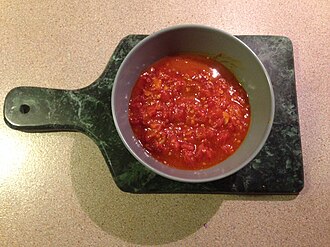
Photo: Wikipedia
Canned stewed tomatoes are whole or diced red tomatoes gently cooked with a touch of sugar and salt, then sealed in their own savory-sweet juice. They offer a soft, yielding texture and a concentrated, mellow tomato flavor that's less bright than fresh but deeply savory. Nutritionally, they are a low-calorie source of vitamin C and provide a modest amount of fiber and natural sugars.
Calorie split: 12% protein · 82% carbs · 6% fat
↓ Full nutrition💚 Why it's loved
People love canned stewed tomatoes for their consistent, ready-to-use quality and the rich, sweet-tart depth they add to sauces, soups, and stews without the work of peeling and simmering fresh tomatoes. They are a staple pantry item that brings a comforting, familiar tomato flavor to countless home-cooked meals.
⚠️ Watch-outs & how to enjoy it better
The added sugars and sodium can be a concern for those monitoring blood sugar or blood pressure. To counteract this, look for 'no salt added' or 'no sugar added' versions, and balance them in a dish with plenty of vegetables, lean protein, and healthy fats to slow sugar absorption and enhance nutrition.
Key benefits
- Low in calories and fat
- Good source of vitamin C
- Provides dietary fiber
- Contains the antioxidant lycopene
- Convenient and shelf-stable
🍽️ Popular dishes
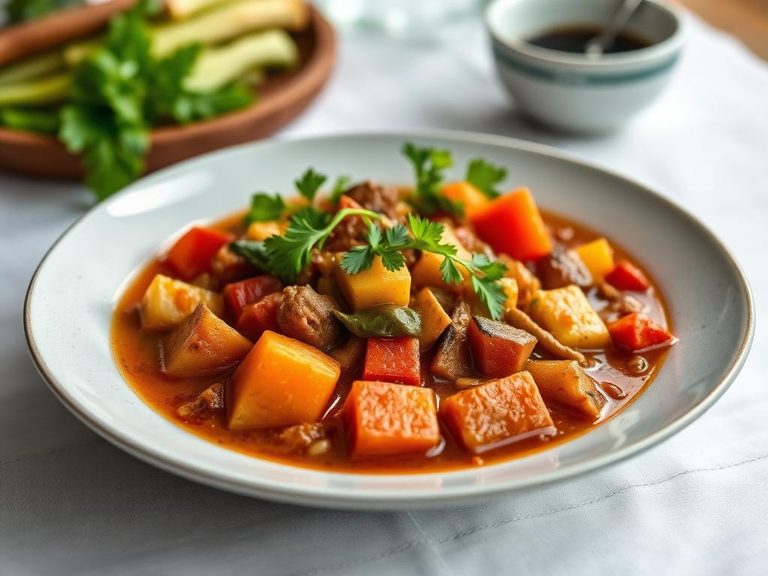
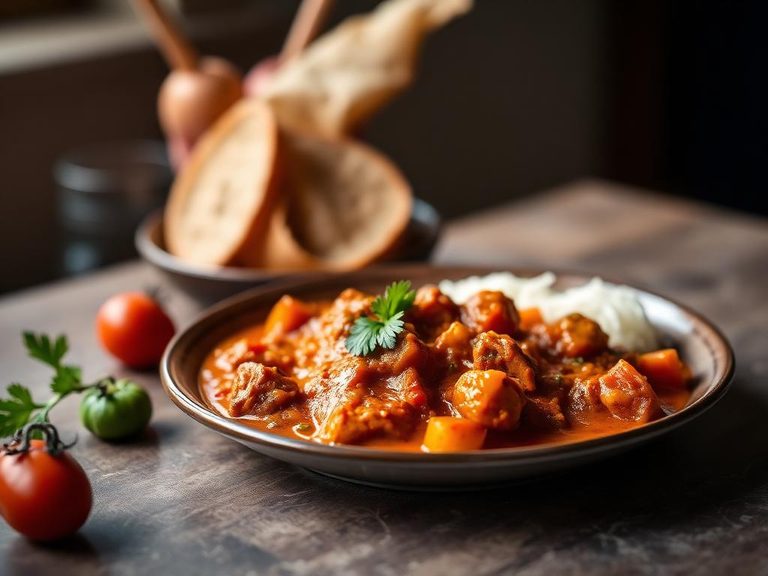
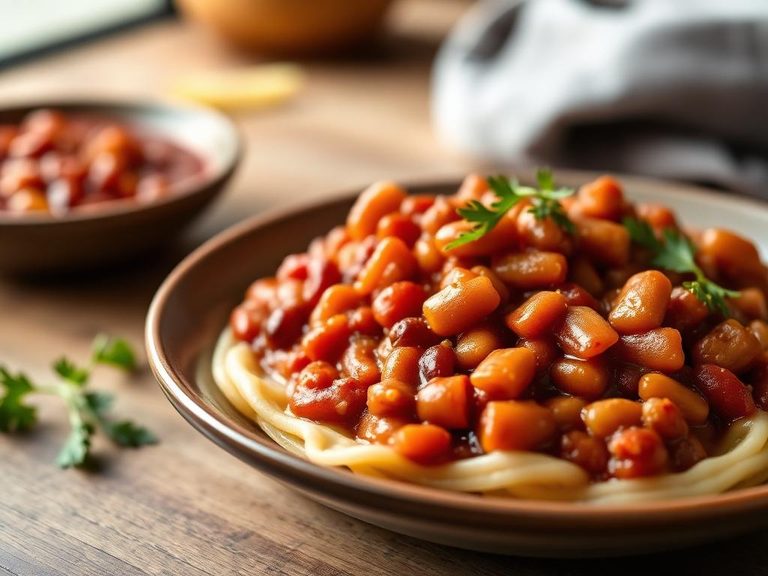
🌍 Where it's eaten
💡 Did you know?
The process of canning actually increases the bioavailability of lycopene, a powerful antioxidant, making canned tomatoes a more potent source than many fresh ones.
Full nutrition (USDA data · scales with serving)
| Water | 91.5 g |
| Energy | 26.0 kcal |
| Energy | 108 kj |
| Protein | 0.91 g |
| Total lipid (fat) | 0.19 g |
| Ash | 1.2 g |
| Carbohydrate, by difference | 6.2 g |
| Fiber, total dietary | 1.0 g |
| Total Sugars | 3.5 g |
| Sucrose | 0.02 g |
| Glucose | 1.6 g |
| Fructose | 1.9 g |
| Lactose | 0.00 g |
| Maltose | 0.00 g |
| Galactose | 0.00 g |
| Calcium, Ca | 34.0 mg |
| Iron, Fe | 1.3 mg |
| Magnesium, Mg | 12.0 mg |
| Phosphorus, P | 20.0 mg |
| Potassium, K | 207 mg |
| Sodium, Na | 221 mg |
| Zinc, Zn | 0.17 mg |
| Copper, Cu | 0.11 mg |
| Manganese, Mn | 0.06 mg |
| Selenium, Se | 0.60 ug |
| Vitamin C, total ascorbic acid | 7.9 mg |
| Thiamin | 0.05 mg |
| Riboflavin | 0.04 mg |
| Niacin | 0.71 mg |
| Pantothenic acid | 0.11 mg |
| Vitamin B-6 | 0.02 mg |
| Folate, total | 5.0 ug |
| Folic acid | 0.00 ug |
| Folate, food | 5.0 ug |
| Folate, DFE | 5.0 ug |
| Choline, total | 10.4 mg |
| Vitamin B-12 | 0.00 ug |
| Vitamin B-12, added | 0.00 ug |
| Vitamin A, RAE | 9.0 ug |
| Retinol | 0.00 ug |
| Carotene, beta | 103 ug |
| Carotene, alpha | 0.00 ug |
| Cryptoxanthin, beta | 0.00 ug |
| Vitamin A, IU | 172 iu |
| Lycopene | 4088 ug |
| Lutein + zeaxanthin | 126 ug |
| Vitamin E (alpha-tocopherol) | 0.83 mg |
| Vitamin E, added | 0.00 mg |
| Tocopherol, beta | 0.00 mg |
| Tocopherol, gamma | 0.20 mg |
| Tocopherol, delta | 0.00 mg |
| Vitamin D (D2 + D3), International Units | 0.00 iu |
| Vitamin D (D2 + D3) | 0.00 ug |
| Vitamin K (phylloquinone) | 2.4 ug |
| Alcohol, ethyl | 0.00 g |
| Caffeine | 0.00 mg |
| Theobromine | 0.00 mg |
Fat & fatty acid profile (per 100g)
| Fatty acids, total saturated | 0.03 g |
| SFA 4:0 | 0.00 g |
| SFA 6:0 | 0.00 g |
| SFA 8:0 | 0.00 g |
| SFA 10:0 | 0.00 g |
| SFA 12:0 | 0.00 g |
| SFA 14:0 | 0.00 g |
| SFA 16:0 | 0.02 g |
| SFA 18:0 | 0.01 g |
| Fatty acids, total monounsaturated | 0.03 g |
| MUFA 16:1 | 0.00 g |
| MUFA 18:1 | 0.03 g |
| MUFA 20:1 | 0.00 g |
| MUFA 22:1 | 0.00 g |
| Fatty acids, total polyunsaturated | 0.08 g |
| PUFA 18:2 | 0.07 g |
| PUFA 18:3 | 0.00 g |
| PUFA 18:4 | 0.00 g |
| PUFA 20:4 | 0.00 g |
| PUFA 20:5 n-3 (EPA) | 0.00 g |
| PUFA 22:5 n-3 (DPA) | 0.00 g |
| PUFA 22:6 n-3 (DHA) | 0.00 g |
| Fatty acids, total trans | 0.00 g |
| Cholesterol | 0.00 mg |
Amino acid profile (per 100g)
| Tryptophan | 0.01 g |
| Threonine | 0.02 g |
| Isoleucine | 0.02 g |
| Leucine | 0.04 g |
| Lysine | 0.04 g |
| Methionine | 0.01 g |
| Cystine | 0.01 g |
| Phenylalanine | 0.03 g |
| Tyrosine | 0.02 g |
| Valine | 0.03 g |
| Arginine | 0.02 g |
| Histidine | 0.01 g |
| Alanine | 0.03 g |
| Aspartic acid | 0.13 g |
| Glutamic acid | 0.35 g |
| Glycine | 0.02 g |
| Proline | 0.02 g |
| Serine | 0.03 g |
FAQ
Are canned stewed tomatoes as healthy as fresh?
They are very healthy and offer similar nutrients. Canning can even increase lycopene availability. The main differences are the potential added sodium and sugar, and a slightly softer texture.
What's the difference between stewed, diced, and crushed tomatoes?
Stewed tomatoes are pre-cooked with sugar and seasonings, giving them a sweeter, softer profile. Diced and crushed tomatoes are typically just tomatoes (and maybe salt), offering more texture and a brighter, more acidic flavor.
How can I use them in cooking?
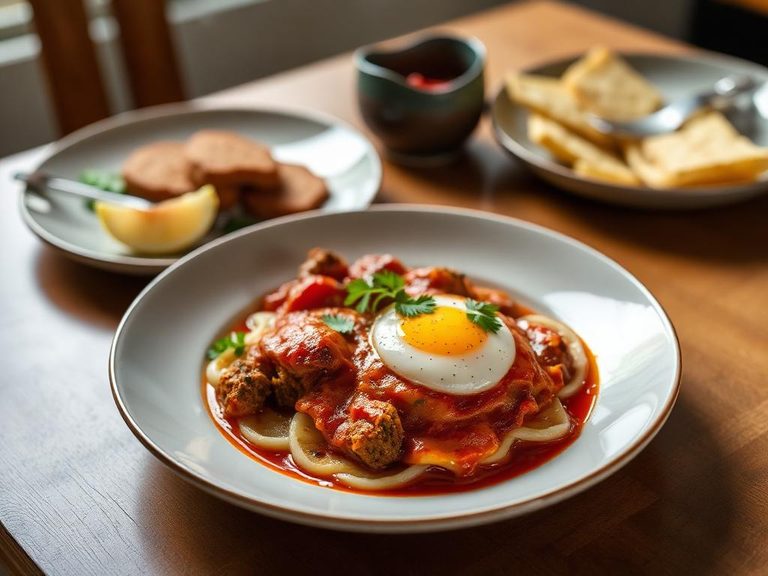
They are perfect for long-simmered dishes like soups, stews, and braises. You can also blend them for a quick sauce, or add them to grain bowls and shakshuka for instant depth.
Nutrient density (calculated · NRF9.3)
Nutrient Rich Foods index: beneficial nutrients (protein, fiber, vitamins, minerals) minus saturated fat, added sugar & sodium, per 100 kcal.
NRF9.3 index — Fulgoni, Keast & Drewnowski, 2009. Computed from USDA nutrients.
Weight-loss friendliness (composite index)
Energy density 0.26 kcal/g · 14% calories from protein · 1.0 g fiber · 3.5 g sugar per 100 g.
Composite of energy density (Rolls et al., 1999), protein & fiber satiety, minus sugar. A calculated heuristic — ranks satiety-per-calorie, not a clinical measure.
Dietary load (calculated from USDA values)
Potential renal acid load. Positive = acid-forming, negative = alkaline-forming.
Sodium-to-potassium ratio: 1.07 (lower is better — aim for ≤ 1)
Sodium:potassium per WHO potassium guidance. Computed from USDA nutrients.