

Shortening, industrial, soy (partially hydrogenated), pourable liquid fry shortening
Whole food · Fats and Oils

Photo: Wikipedia
This is a highly refined, pourable liquid fat derived from soybeans, engineered for the demanding environment of commercial deep fryers. It has a neutral, clean taste and a smooth, pourable consistency that solidifies into a waxy, opaque block when chilled. Nutritionally, it is a concentrated source of energy, providing 884 calories and 100 grams of fat per 100 grams, with no protein, carbohydrates, or fiber.
Calorie split: 0% protein · 0% carbs · 100% fat
↓ Full nutrition💚 Why it's loved
Food service professionals and home cooks value it for its reliability and neutrality. It allows the true flavor of the food to shine while delivering a perfectly crisp, non-greasy finish to everything from fries to doughnuts.
⚠️ Watch-outs & how to enjoy it better
As a partially hydrogenated oil, it is a primary source of artificial trans fats, which are strongly linked to adverse health effects like increased LDL cholesterol. To counteract this, prioritize using it sparingly, choose products labeled 'zero trans fat' when possible, and balance meals with whole foods rich in fiber, antioxidants, and omega-3s.
Key benefits
- Extremely high smoke point for safe, high-heat frying
- Neutral flavor doesn't alter the taste of fried foods
- Long, stable shelf life in commercial settings
- Cost-effective for high-volume food service
- Creates a consistent, crisp texture in fried foods
🍽️ Popular dishes
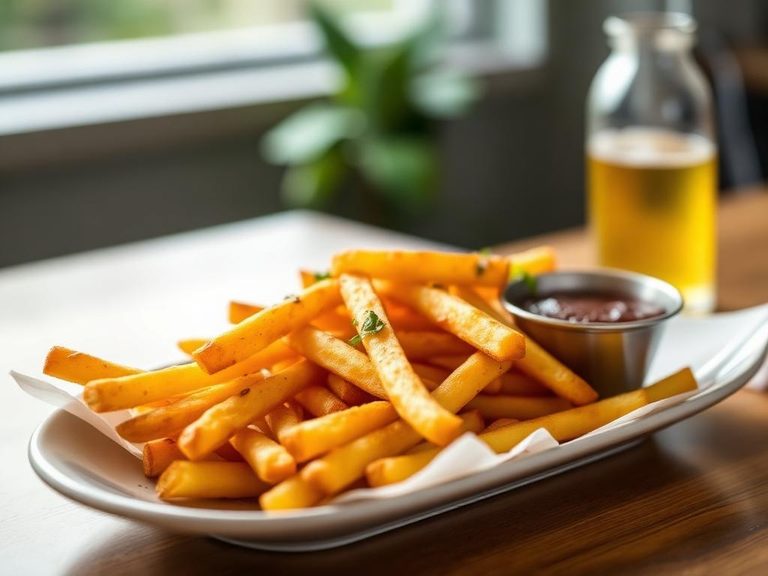




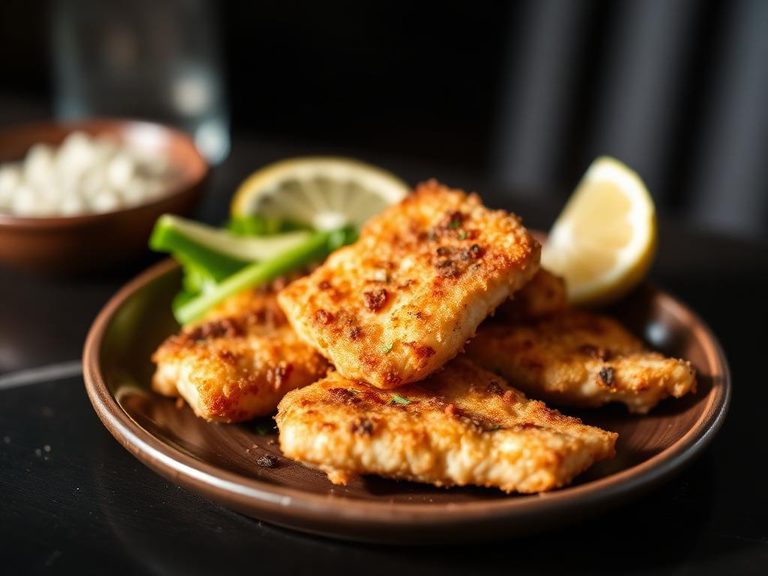
🌍 Where it's eaten
💡 Did you know?
The 'pourable' form is specifically designed for automated fryer systems that continuously filter and replenish oil, a process that can keep a commercial fryer running 24/7 for weeks.
Full nutrition (USDA data · scales with serving)
| Water | 0.00 g |
| Energy | 884 kcal |
| Energy | 3699 kj |
| Protein | 0.00 g |
| Total lipid (fat) | 100 g |
| Ash | 0.00 g |
| Carbohydrate, by difference | 0.00 g |
| Fiber, total dietary | 0.00 g |
| Total Sugars | 0.00 g |
| Calcium, Ca | 0.00 mg |
| Iron, Fe | 0.00 mg |
| Magnesium, Mg | 0.00 mg |
| Phosphorus, P | 0.00 mg |
| Potassium, K | 0.00 mg |
| Sodium, Na | 0.00 mg |
| Zinc, Zn | 0.00 mg |
| Copper, Cu | 0.00 mg |
| Selenium, Se | 0.00 ug |
| Vitamin C, total ascorbic acid | 0.00 mg |
| Thiamin | 0.00 mg |
| Riboflavin | 0.00 mg |
| Niacin | 0.00 mg |
| Pantothenic acid | 0.00 mg |
| Vitamin B-6 | 0.00 mg |
| Folate, total | 0.00 ug |
| Folic acid | 0.00 ug |
| Folate, food | 0.00 ug |
| Folate, DFE | 0.00 ug |
| Choline, total | 0.20 mg |
| Vitamin B-12 | 0.00 ug |
| Vitamin B-12, added | 0.00 ug |
| Vitamin A, RAE | 0.00 ug |
| Retinol | 0.00 ug |
| Carotene, beta | 0.00 ug |
| Carotene, alpha | 0.00 ug |
| Cryptoxanthin, beta | 0.00 ug |
| Vitamin A, IU | 0.00 iu |
| Lycopene | 0.00 ug |
| Lutein + zeaxanthin | 0.00 ug |
| Vitamin E (alpha-tocopherol) | 8.1 mg |
| Vitamin E, added | 0.00 mg |
| Vitamin K (phylloquinone) | 24.7 ug |
| Alcohol, ethyl | 0.00 g |
| Caffeine | 0.00 mg |
| Theobromine | 0.00 mg |
Fat & fatty acid profile (per 100g)
| Fatty acids, total saturated | 18.4 g |
| SFA 4:0 | 0.00 g |
| SFA 6:0 | 0.00 g |
| SFA 8:0 | 0.00 g |
| SFA 10:0 | 0.00 g |
| SFA 12:0 | 0.00 g |
| SFA 14:0 | 0.09 g |
| SFA 15:0 | 0.04 g |
| SFA 16:0 | 10.7 g |
| SFA 17:0 | 0.10 g |
| SFA 18:0 | 6.7 g |
| SFA 20:0 | 0.35 g |
| SFA 22:0 | 0.35 g |
| Fatty acids, total monounsaturated | 38.9 g |
| MUFA 16:1 | 0.10 g |
| MUFA 16:1 c | 0.10 g |
| MUFA 18:1 | 38.6 g |
| MUFA 18:1 c | 29.3 g |
| MUFA 20:1 | 0.16 g |
| MUFA 22:1 | 0.00 g |
| Fatty acids, total polyunsaturated | 38.0 g |
| PUFA 18:2 | 34.8 g |
| PUFA 18:2 n-6 c,c | 32.2 g |
| PUFA 18:2 i | 2.6 g |
| PUFA 18:3 | 2.5 g |
| PUFA 18:3 n-3 c,c,c (ALA) | 2.5 g |
| PUFA 18:3i | 0.69 g |
| PUFA 18:4 | 0.00 g |
| PUFA 20:4 | 0.00 g |
| PUFA 20:5 n-3 (EPA) | 0.00 g |
| PUFA 22:5 n-3 (DPA) | 0.00 g |
| PUFA 22:6 n-3 (DHA) | 0.00 g |
| Fatty acids, total trans | 12.6 g |
| Fatty acids, total trans-monoenoic | 9.3 g |
| TFA 18:1 t | 9.3 g |
| Fatty acids, total trans-polyenoic | 3.3 g |
| Cholesterol | 0.00 mg |
| Phytosterols | 132 mg |
Amino acid profile (per 100g)
| Tryptophan | 0.00 g |
| Threonine | 0.00 g |
| Isoleucine | 0.00 g |
| Leucine | 0.00 g |
| Lysine | 0.00 g |
| Methionine | 0.00 g |
| Cystine | 0.00 g |
| Phenylalanine | 0.00 g |
| Tyrosine | 0.00 g |
| Valine | 0.00 g |
| Arginine | 0.00 g |
| Histidine | 0.00 g |
| Alanine | 0.00 g |
| Aspartic acid | 0.00 g |
| Glutamic acid | 0.00 g |
| Glycine | 0.00 g |
| Proline | 0.00 g |
| Serine | 0.00 g |
FAQ
What is the difference between this and regular vegetable oil?
This is a specifically engineered *industrial* product. It is more heavily refined, often partially hydrogenated for stability, and formulated to withstand the extreme, continuous heat of commercial deep fryers far better than standard grocery store vegetable oil.
Can I use this for baking at home?
While possible, it's not recommended. Its high melting point and waxy texture can result in a greasy, unpleasant mouthfeel in baked goods. Home bakers are better served by butter, lard, or standard vegetable oils like canola or sunflower oil.
Why does it turn solid in the fridge?
The partial hydrogenation process increases the saturation of the fat molecules, raising its melting point. This is a desired trait for fryer stability, but it causes the liquid to solidify into a white, opaque block at refrigerator temperatures.
Nutrient density (calculated · NRF9.3)
Nutrient Rich Foods index: beneficial nutrients (protein, fiber, vitamins, minerals) minus saturated fat, added sugar & sodium, per 100 kcal.
NRF9.3 index — Fulgoni, Keast & Drewnowski, 2009. Computed from USDA nutrients.
Weight-loss friendliness (composite index)
Energy density 8.84 kcal/g · 0% calories from protein · 0.0 g fiber · 0.0 g sugar per 100 g.
Composite of energy density (Rolls et al., 1999), protein & fiber satiety, minus sugar. A calculated heuristic — ranks satiety-per-calorie, not a clinical measure.
Dietary load (calculated from USDA values)
Potential renal acid load. Positive = acid-forming, negative = alkaline-forming.
Sodium:potassium per WHO potassium guidance. Computed from USDA nutrients.