

Seal, bearded (Oogruk), meat, dried, in oil (Alaska Native)
Whole food · American Indian/Alaska Native Foods

Photo: Wikipedia
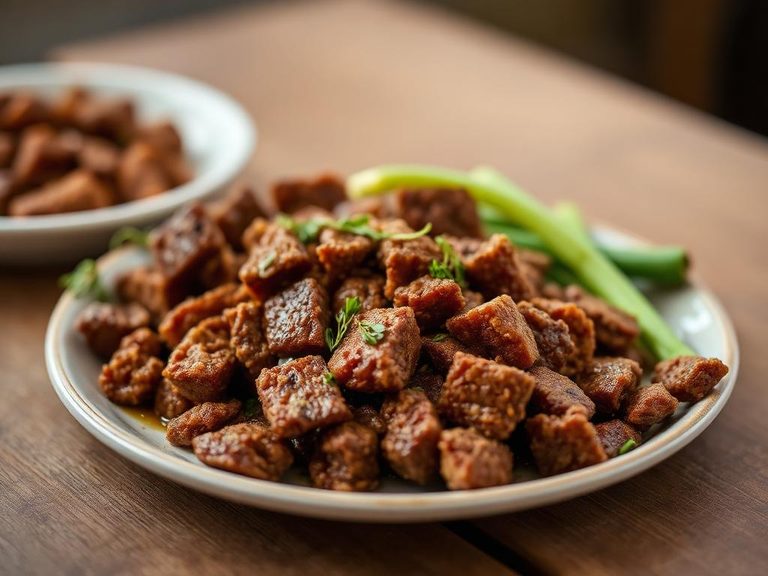
This is dried, oil-packed meat from the bearded seal, a staple in Arctic and sub-Arctic regions. It has a dense, chewy, almost jerky-like texture with a rich, deeply savory, and slightly oily flavor from the preservation method. Nutritionally, it's a powerhouse of protein and healthy fats, with virtually no carbohydrates.
Calorie split: 38% protein · 0% carbs · 62% fat
↓ Full nutrition💚 Why it's loved
People love it for its intense, umami-rich flavor that embodies the taste of the Arctic, and its incredible portability and long shelf life as a traditional survival food. It's a cherished cultural food, connecting communities to ancestral hunting and preservation practices.
⚠️ Watch-outs & how to enjoy it better
Its strong, fishy, and oily taste can be overwhelming for those unaccustomed to it, and the high fat content, while healthy, is very calorie-dense. Those monitoring mercury intake should be cautious, as marine mammals can be higher in environmental contaminants. Tip: Start with a small portion, perhaps mixed into a milder dish, to acclimate to the flavor.
Key benefits
- Extremely high in protein for muscle maintenance and satiety.
- Excellent source of omega-3 fatty acids from marine sources.
- Provides essential vitamins like B12 and minerals like iron and selenium.
- Shelf-stable and calorie-dense, ideal for energy in harsh climates.
- Zero carbohydrates, making it suitable for ketogenic and carnivore diets.
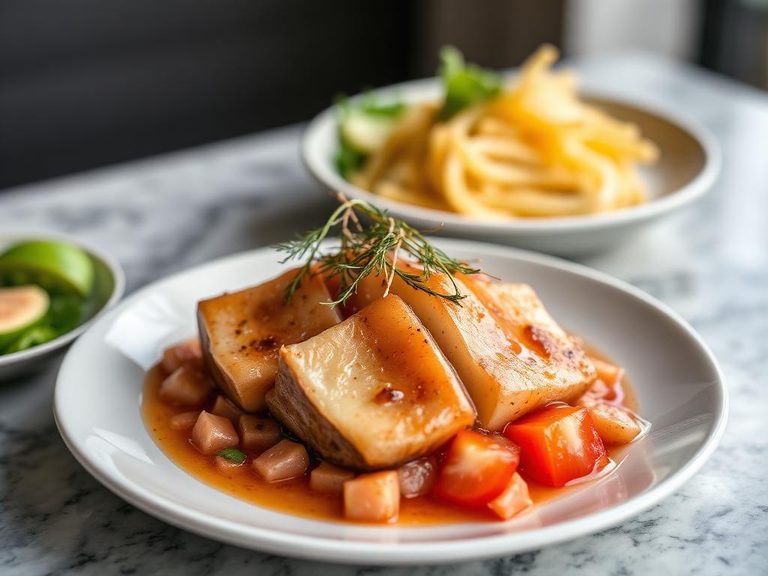
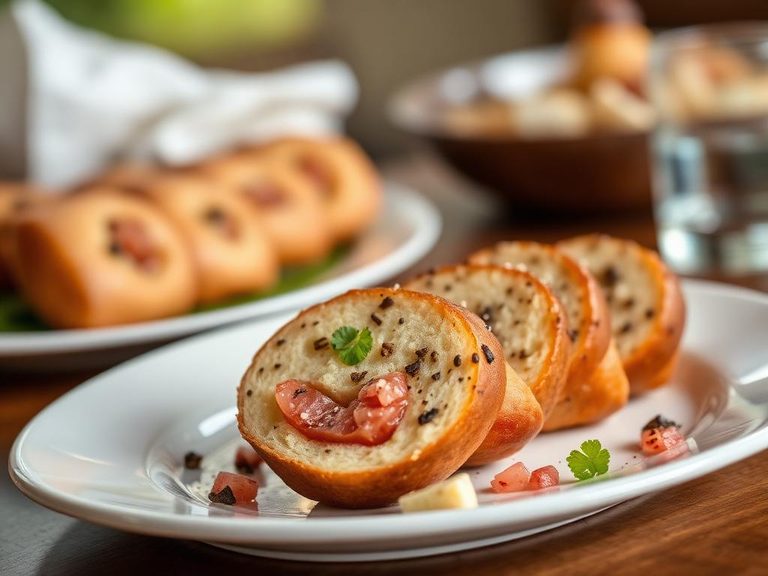
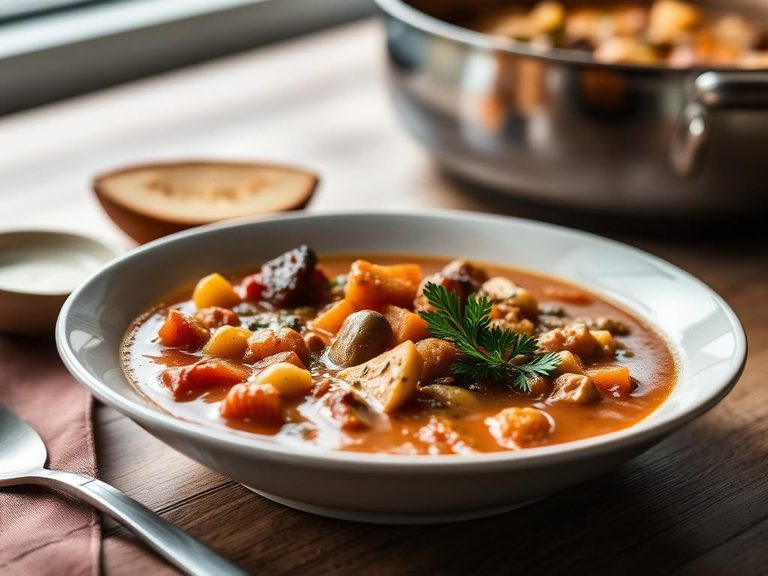
🍽️ Popular dishes
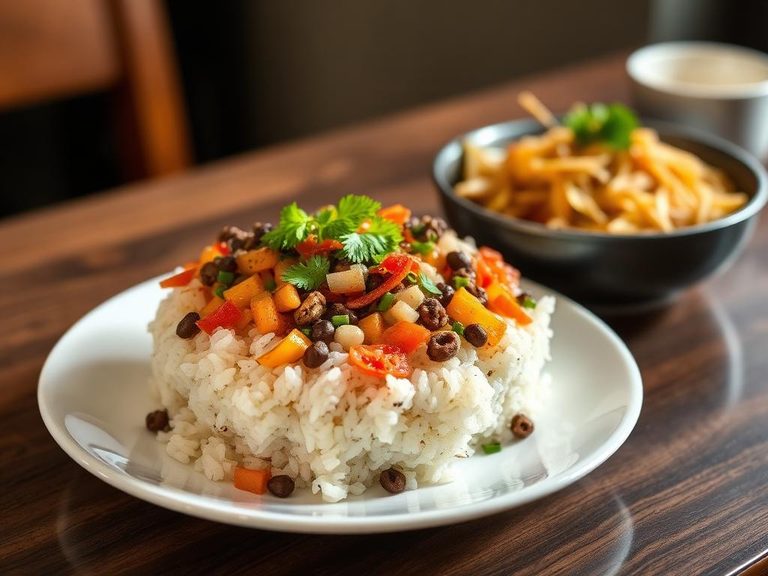
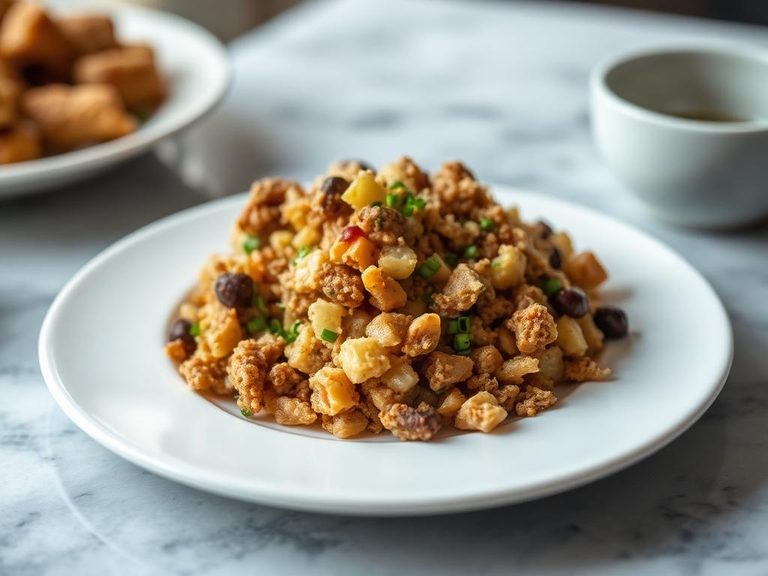
🌍 Where it's eaten
💡 Did you know?
The bearded seal, or 'Oogruk,' is the largest of the Arctic seals and is a primary food source for polar bears, making this dried meat part of a food chain that sustains life at the top of the Arctic ecosystem.
Full nutrition (USDA data · scales with serving)
| Water | 35.5 g |
| Energy | 367 kcal |
| Energy | 1535 kj |
| Protein | 35.3 g |
| Total lipid (fat) | 25.1 g |
| Ash | 1.4 g |
| Carbohydrate, by difference | 0.00 g |
| Fiber, total dietary | 0.00 g |
| Total Sugars | 0.00 g |
| Starch | 0.00 g |
| Calcium, Ca | 7.0 mg |
| Iron, Fe | 17.0 mg |
| Magnesium, Mg | 29.0 mg |
| Phosphorus, P | 240 mg |
| Potassium, K | 400 mg |
| Sodium, Na | 120 mg |
| Zinc, Zn | 3.1 mg |
| Copper, Cu | 0.27 mg |
| Manganese, Mn | 0.04 mg |
| Selenium, Se | 90.8 ug |
| Vitamin C, total ascorbic acid | 0.00 mg |
| Thiamin | 0.01 mg |
| Riboflavin | 0.36 mg |
| Niacin | 6.5 mg |
| Pantothenic acid | 0.73 mg |
| Vitamin B-6 | 0.09 mg |
| Folate, total | 11.0 ug |
| Folic acid | 0.00 ug |
| Folate, food | 11.0 ug |
| Folate, DFE | 11.0 ug |
| Choline, total | 68.1 mg |
| Betaine | 60.9 mg |
| Vitamin B-12 | 5.8 ug |
| Vitamin B-12, added | 0.00 ug |
| Vitamin A, IU | 1947 iu |
| Vitamin E (alpha-tocopherol) | 0.55 mg |
| Vitamin E, added | 0.00 mg |
| Tocopherol, beta | 0.00 mg |
| Tocopherol, gamma | 0.00 mg |
| Tocopherol, delta | 0.00 mg |
| Tocotrienol, alpha | 0.00 mg |
| Tocotrienol, beta | 0.00 mg |
| Tocotrienol, gamma | 0.00 mg |
| Tocotrienol, delta | 0.00 mg |
| Vitamin K (phylloquinone) | 0.00 ug |
| Vitamin K (Dihydrophylloquinone) | 4.0 ug |
| Vitamin K (Menaquinone-4) | 0.80 ug |
| Alcohol, ethyl | 0.00 g |
| Caffeine | 0.00 mg |
| Theobromine | 0.00 mg |
Fat & fatty acid profile (per 100g)
| Fatty acids, total saturated | 3.9 g |
| SFA 8:0 | 0.00 g |
| SFA 10:0 | 0.00 g |
| SFA 12:0 | 0.03 g |
| SFA 14:0 | 0.69 g |
| SFA 15:0 | 0.11 g |
| SFA 16:0 | 2.5 g |
| SFA 17:0 | 0.10 g |
| SFA 18:0 | 0.54 g |
| SFA 20:0 | 0.00 g |
| SFA 22:0 | 0.00 g |
| SFA 24:0 | 0.00 g |
| Fatty acids, total monounsaturated | 11.2 g |
| MUFA 14:1 | 0.09 g |
| MUFA 15:1 | 0.03 g |
| MUFA 16:1 | 3.9 g |
| MUFA 17:1 | 0.00 g |
| MUFA 18:1 | 5.3 g |
| MUFA 20:1 | 1.7 g |
| MUFA 22:1 | 0.12 g |
| MUFA 24:1 c | 0.00 g |
| Fatty acids, total polyunsaturated | 1.2 g |
| PUFA 18:2 | 0.19 g |
| PUFA 18:3 | 0.13 g |
| PUFA 18:4 | 0.05 g |
| PUFA 20:2 n-6 c,c | 0.05 g |
| PUFA 20:3 | 0.02 g |
| PUFA 20:4 | 0.08 g |
| PUFA 20:5 n-3 (EPA) | 0.28 g |
| PUFA 21:5 | 0.02 g |
| PUFA 22:4 | 0.02 g |
| PUFA 22:5 n-3 (DPA) | 0.15 g |
| PUFA 22:6 n-3 (DHA) | 0.19 g |
| Cholesterol | 64.0 mg |
Amino acid profile (per 100g)
| Tryptophan | 0.34 g |
| Threonine | 1.4 g |
| Isoleucine | 1.3 g |
| Leucine | 2.7 g |
| Lysine | 2.9 g |
| Methionine | 0.72 g |
| Cystine | 0.19 g |
| Phenylalanine | 1.4 g |
| Tyrosine | 0.92 g |
| Valine | 1.4 g |
| Arginine | 2.0 g |
| Histidine | 1.3 g |
| Alanine | 2.0 g |
| Aspartic acid | 2.9 g |
| Glutamic acid | 4.7 g |
| Glycine | 1.9 g |
| Proline | 1.6 g |
| Serine | 1.3 g |
FAQ
How is it different from regular beef jerky?
Unlike beef jerky, which is typically lean and dried, this is made from fatty seal meat preserved in its own oil or added oil. This results in a much higher fat content, a softer (though still chewy) texture, and a distinct marine flavor.
Is it safe to eat raw?
Traditional preparations like mikigaq involve fermentation, which is a form of preservation. The dried and oil-packed version is a preserved food, but it's generally cooked or heated before eating for safety and palatability, though some may eat it as-is.
What does it taste like?
Imagine a very rich, savory, and oily fish or game meat. It has a strong, deep flavor with notes of the sea, similar to a potent anchovy or sardine, but with the texture of dense, chewy meat.
Nutrient density (calculated · NRF9.3)
Nutrient Rich Foods index: beneficial nutrients (protein, fiber, vitamins, minerals) minus saturated fat, added sugar & sodium, per 100 kcal.
NRF9.3 index — Fulgoni, Keast & Drewnowski, 2009. Computed from USDA nutrients.
Weight-loss friendliness (composite index)
Energy density 3.67 kcal/g · 38% calories from protein · 0.0 g fiber · 0.0 g sugar per 100 g.
Composite of energy density (Rolls et al., 1999), protein & fiber satiety, minus sugar. A calculated heuristic — ranks satiety-per-calorie, not a clinical measure.
Dietary load (calculated from USDA values)
Potential renal acid load. Positive = acid-forming, negative = alkaline-forming.
Sodium-to-potassium ratio: 0.30 (lower is better — aim for ≤ 1)
Sodium:potassium per WHO potassium guidance. Computed from USDA nutrients.