

Mikigaq
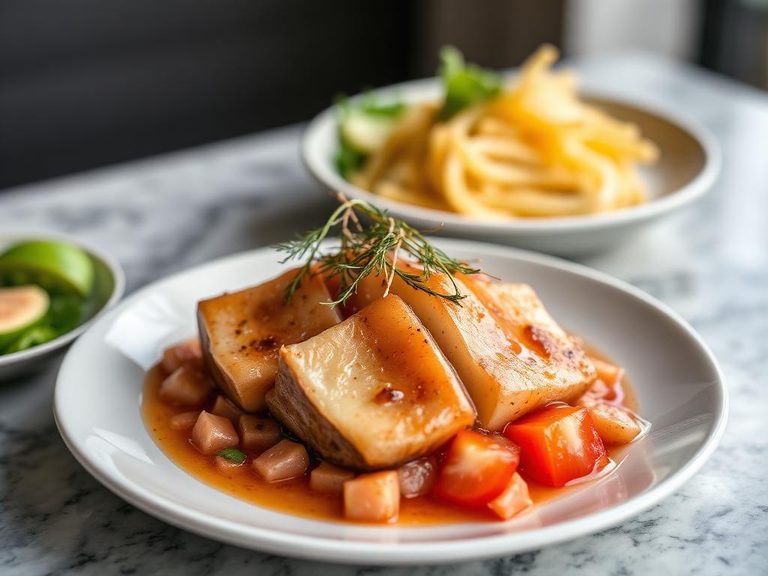
Mikigaq is a traditional fermented food from the Inuit and other Arctic Indigenous peoples, primarily made from raw meat (often seal, caribou, or whale) that is preserved in its own fat or blubber. It is a staple in circumpolar regions like Canada, Alaska, and Greenland, serving as a vital source of nutrition in harsh environments. The fermentation process, which can take months, tenderizes the meat and develops a distinct, pungent flavor.
🍽️ Nutrition at a glance
Mikigaq is extremely high in protein and fat, providing a dense source of calories essential for survival in cold climates. It is also rich in fat-soluble vitamins like Vitamin A and D, as well as omega-3 fatty acids from marine sources, with a single serving potentially offering over 500 kcal.
Nutrition breakdown
| Calories | 550 kcal |
| Protein | 35 g |
| Carbs | 0 g |
| Fat | 45 g |
| Fiber | 0 g |
| Sugar | 0 g |
| Sodium | 600 mg |
| Vitamin A | 900 mcg RAE |
| Vitamin D | 15 mcg |
| Vitamin B12 | 25 mcg |
| Iron | 8 mg |
| Zinc | 12 mg |
| Selenium | 45 mcg |
| Omega-3 (EPA+DHA) | 2000 mg |
| Potassium | 400 mg |
Per 1 cup (150 g) · estimated, varies by recipe
💡 What's interesting
Culturally, Mikigaq represents a profound connection to ancestral knowledge and sustainable hunting practices, with preparation methods passed down through generations. Nutritionally, its fermentation process not only preserves the meat but may also enhance the bioavailability of certain nutrients and produce beneficial compounds.
AI estimate may be inaccurate · Terms