

Sausage, turkey, fresh, raw
Whole food · Sausages and Luncheon Meats
Fresh, raw turkey sausage is a lean, finely ground poultry product with a mild, savory flavor and a soft, pliable texture ready for cooking. Its standout nutritional feature is its high protein-to-fat ratio, offering nearly 19 grams of protein per 100 grams with less than half the fat of many pork sausages. It serves as a versatile, lighter base for a wide range of seasoned dishes.
Calorie split: 50% protein · 1% carbs · 49% fat
↓ Full nutrition💚 Why it's loved
People love fresh turkey sausage for its ability to absorb bold seasonings while providing a satisfying, protein-rich meal with a lighter footprint. Its mild flavor makes it a crowd-pleasing canvas for everything from spicy Italian-inspired dishes to herb-forward breakfasts.
⚠️ Watch-outs & how to enjoy it better
A common downside is its potential for high sodium content in pre-seasoned varieties, which can be a concern for those monitoring blood pressure. To counteract this, look for low-sodium brands or make your own from ground turkey, and always pair it with potassium-rich vegetables like spinach or roasted tomatoes to help balance electrolytes.
Key benefits
- Excellent source of lean, complete protein for muscle maintenance.
- Very low in carbohydrates (less than 1g per 100g).
- Significantly lower in total fat than traditional pork sausage.
- Provides essential nutrients like selenium and B vitamins (especially B12).
- A flexible, mild-flavored protein for various meal preparations.
🍽️ Popular dishes
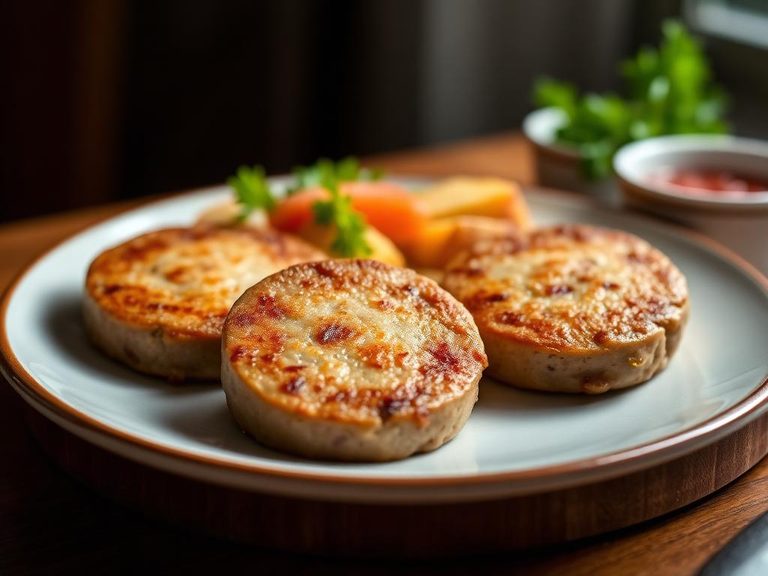
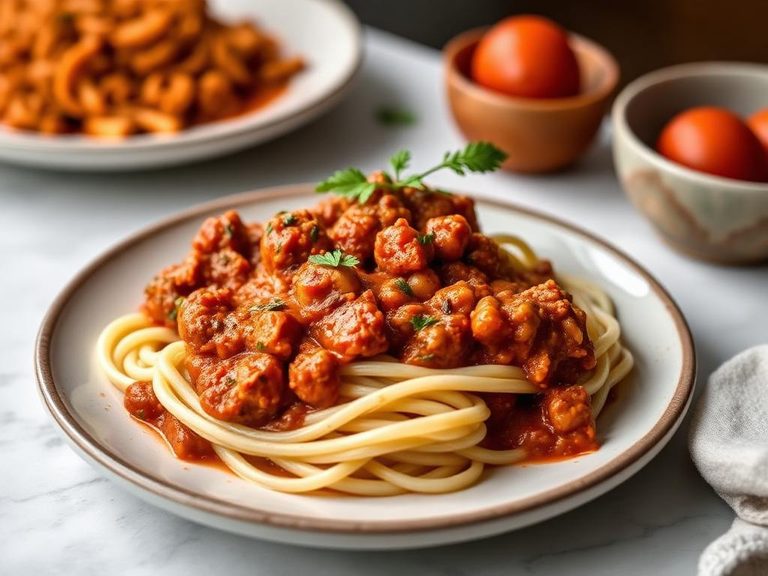
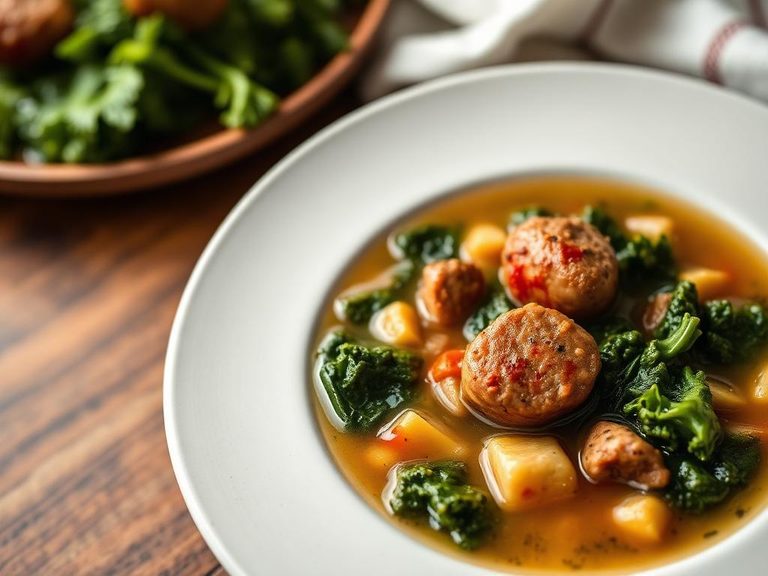
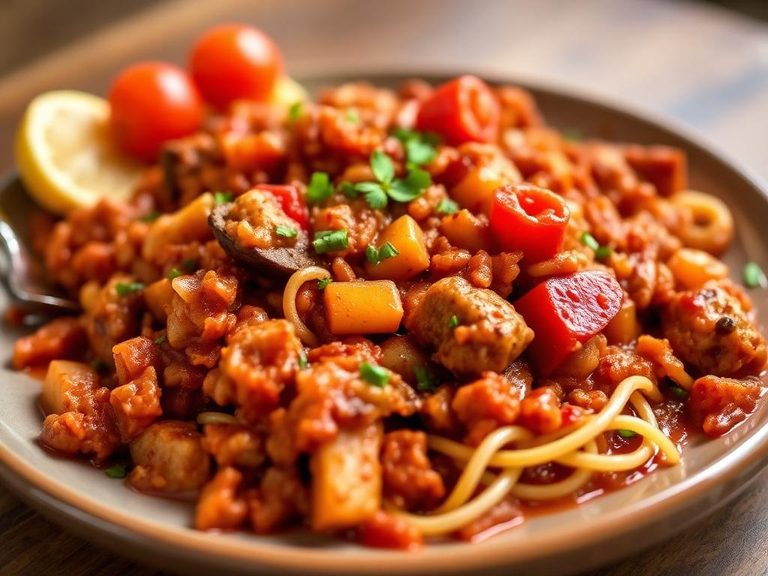
🌍 Where it's eaten
💡 Did you know?
Despite its name, the 'sausage' form is ancient, but using turkey as the primary meat is a distinctly modern, 20th-century American innovation driven by a search for leaner protein alternatives.
Full nutrition (USDA data · scales with serving)
| Water | 70.4 g |
| Energy | 155 kcal |
| Energy | 648 kj |
| Protein | 18.8 g |
| Total lipid (fat) | 8.1 g |
| Ash | 2.2 g |
| Carbohydrate, by difference | 0.47 g |
| Fiber, total dietary | 0.00 g |
| Total Sugars | 0.00 g |
| Calcium, Ca | 19.0 mg |
| Iron, Fe | 1.2 mg |
| Magnesium, Mg | 19.0 mg |
| Phosphorus, P | 177 mg |
| Potassium, K | 262 mg |
| Sodium, Na | 593 mg |
| Zinc, Zn | 3.1 mg |
| Copper, Cu | 0.09 mg |
| Manganese, Mn | 0.02 mg |
| Selenium, Se | 0.00 ug |
| Vitamin C, total ascorbic acid | 2.3 mg |
| Thiamin | 0.08 mg |
| Riboflavin | 0.23 mg |
| Niacin | 4.6 mg |
| Pantothenic acid | 1.0 mg |
| Vitamin B-6 | 0.43 mg |
| Folate, total | 5.0 ug |
| Folic acid | 0.00 ug |
| Folate, food | 5.0 ug |
| Folate, DFE | 5.0 ug |
| Vitamin B-12 | 1.3 ug |
| Vitamin A, RAE | 13.0 ug |
| Retinol | 11.0 ug |
| Carotene, beta | 11.0 ug |
| Carotene, alpha | 11.0 ug |
| Cryptoxanthin, beta | 11.0 ug |
| Vitamin A, IU | 75.0 iu |
| Lycopene | 11.0 ug |
| Lutein + zeaxanthin | 11.0 ug |
| Vitamin E (alpha-tocopherol) | 0.13 mg |
| Tocopherol, beta | 0.00 mg |
| Tocopherol, gamma | 0.13 mg |
| Tocopherol, delta | 0.00 mg |
| Tocotrienol, alpha | 0.09 mg |
| Tocotrienol, beta | 0.00 mg |
| Tocotrienol, gamma | 0.00 mg |
| Tocotrienol, delta | 0.00 mg |
| Vitamin K (phylloquinone) | 0.00 ug |
| Alcohol, ethyl | 0.00 g |
| Caffeine | 0.00 mg |
| Theobromine | 0.00 mg |
Fat & fatty acid profile (per 100g)
| Fatty acids, total saturated | 2.0 g |
| SFA 4:0 | 0.00 g |
| SFA 6:0 | 0.00 g |
| SFA 8:0 | 0.00 g |
| SFA 10:0 | 0.00 g |
| SFA 12:0 | 0.00 g |
| SFA 14:0 | 0.07 g |
| SFA 15:0 | 0.01 g |
| SFA 16:0 | 1.3 g |
| SFA 17:0 | 0.02 g |
| SFA 18:0 | 0.56 g |
| SFA 20:0 | 0.00 g |
| SFA 22:0 | 0.00 g |
| Fatty acids, total monounsaturated | 2.6 g |
| MUFA 14:1 | 0.01 g |
| MUFA 15:1 | 0.00 g |
| MUFA 16:1 | 0.21 g |
| MUFA 18:1 | 2.4 g |
| MUFA 20:1 | 0.03 g |
| MUFA 22:1 | 0.00 g |
| Fatty acids, total polyunsaturated | 2.4 g |
| PUFA 18:2 | 2.1 g |
| PUFA 18:3 | 0.14 g |
| PUFA 18:3 n-3 c,c,c (ALA) | 0.13 g |
| PUFA 18:3 n-6 c,c,c | 0.01 g |
| PUFA 18:4 | 0.00 g |
| PUFA 20:2 n-6 c,c | 0.02 g |
| PUFA 20:3 | 0.00 g |
| PUFA 20:4 | 0.11 g |
| PUFA 20:5 n-3 (EPA) | 0.00 g |
| PUFA 22:5 n-3 (DPA) | 0.00 g |
| PUFA 22:6 n-3 (DHA) | 0.00 g |
| Fatty acids, total trans | 0.35 g |
| Cholesterol | 75.0 mg |
Amino acid profile (per 100g)
| Tryptophan | 0.13 g |
| Threonine | 0.71 g |
| Isoleucine | 0.78 g |
| Leucine | 1.3 g |
| Lysine | 1.5 g |
| Methionine | 0.41 g |
| Cystine | 0.20 g |
| Phenylalanine | 0.67 g |
| Tyrosine | 0.57 g |
| Valine | 0.80 g |
| Histidine | 0.47 g |
| Alanine | 1.0 g |
| Aspartic acid | 1.6 g |
| Glutamic acid | 2.8 g |
| Glycine | 0.94 g |
| Proline | 0.74 g |
| Serine | 0.73 g |
| Hydroxyproline | 0.19 g |
FAQ
How do I know when fresh turkey sausage is cooked through?
The safest method is to use a meat thermometer. The internal temperature should reach 165°F (74°C) at the thickest part. The sausage will also lose its pink color and become opaque throughout.
Can I freeze fresh turkey sausage?
Yes. For best quality, wrap individual links or portions tightly in plastic wrap and foil, or use a freezer bag. It will maintain good quality for 1-2 months in the freezer.
Why does my turkey sausage sometimes turn out dry or crumbly?
Turkey is very lean, so overcooking is the main culprit. Cook over medium heat and avoid pressing down on patties or links, which squeezes out moisture. Adding a small amount of moisture (like to a Bolognese) or mixing with a little grated onion can also help.
Nutrient density (calculated · NRF9.3)
Nutrient Rich Foods index: beneficial nutrients (protein, fiber, vitamins, minerals) minus saturated fat, added sugar & sodium, per 100 kcal.
NRF9.3 index — Fulgoni, Keast & Drewnowski, 2009. Computed from USDA nutrients.
Weight-loss friendliness (composite index)
Energy density 1.55 kcal/g · 48% calories from protein · 0.0 g fiber · 0.0 g sugar per 100 g.
Composite of energy density (Rolls et al., 1999), protein & fiber satiety, minus sugar. A calculated heuristic — ranks satiety-per-calorie, not a clinical measure.
Dietary load (calculated from USDA values)
Potential renal acid load. Positive = acid-forming, negative = alkaline-forming.
Sodium-to-potassium ratio: 2.26 (lower is better — aim for ≤ 1)
Sodium:potassium per WHO potassium guidance. Computed from USDA nutrients.