

Sauce, salsa, ready-to-serve
Whole food · Soups, Sauces, and Gravies
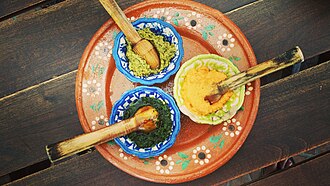
Photo: Wikipedia
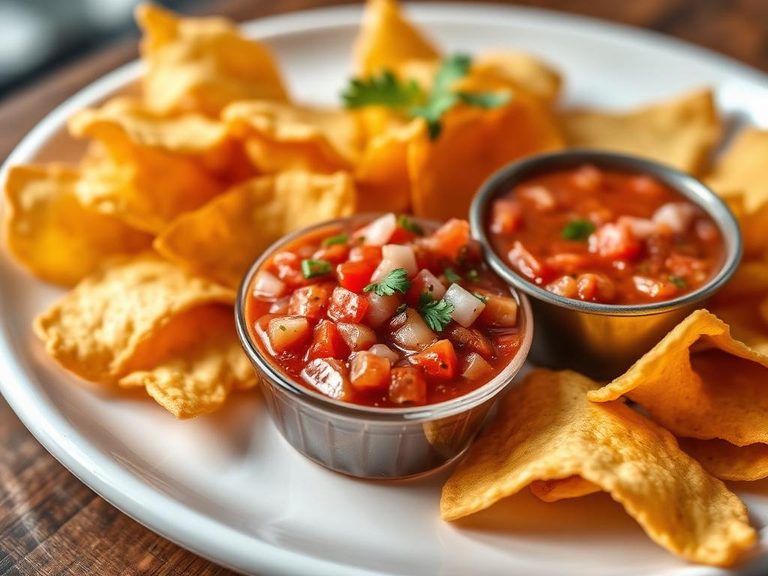
Ready-to-serve salsa is a vibrant, chunky, or smooth blend of tomatoes, onions, chili peppers, cilantro, and lime juice, offering a fresh, tangy, and often spicy kick. Its texture can range from a pourable liquid to a thick, vegetable-rich relish, providing a burst of low-calorie flavor. With only 29 calories per 100g, it's a nutrient-light condiment that adds significant taste without a heavy nutritional load.
Calorie split: 18% protein · 78% carbs · 4% fat
↓ Full nutrition💚 Why it's loved
People love salsa for its explosive, fresh flavor that can transform a simple dish, and its incredible versatility as a dip, topping, or cooking ingredient. It's deeply tied to Mexican and Tex-Mex culture, representing a communal, vibrant way of eating.
⚠️ Watch-outs & how to enjoy it better
Commercial salsas can be high in sodium, which is a consideration for those monitoring blood pressure. The natural sugars and acidic tomatoes may also be a trigger for some with acid reflux or sensitive digestive systems. To counteract sodium, look for 'low-sodium' versions or rinse chunky salsa lightly; to manage acidity, pair it with a starchy food like a tortilla chip or rice.
Key benefits
- Very low in calories and fat
- Provides a source of dietary fiber from vegetables
- Contains natural sugars from tomatoes and fruit
- Adds flavor without needing added fats or oils
- Can increase vegetable intake in a meal
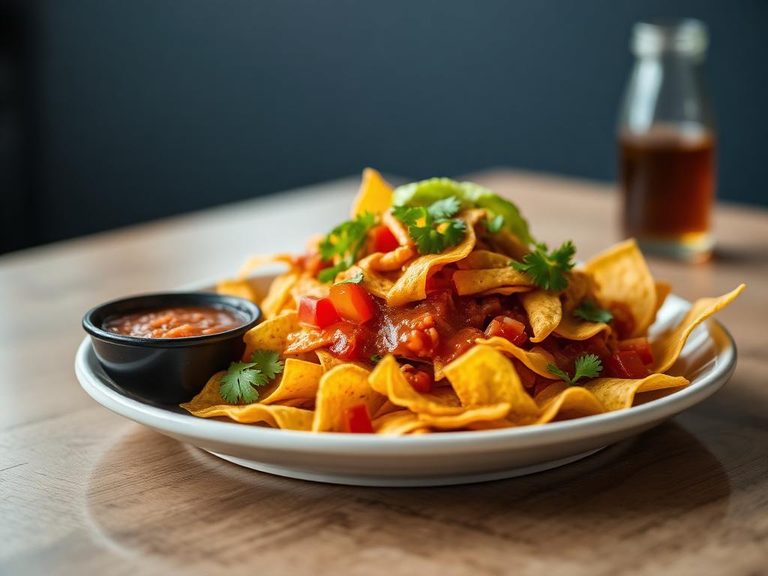
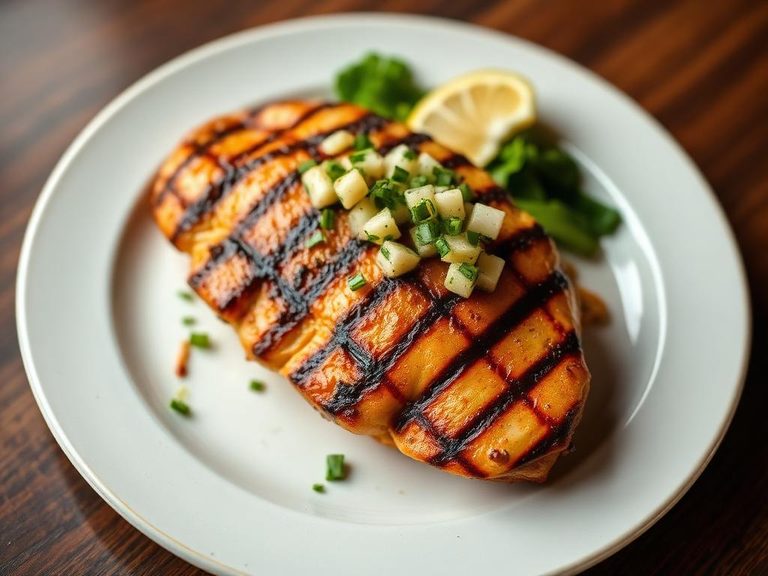
🍽️ Popular dishes
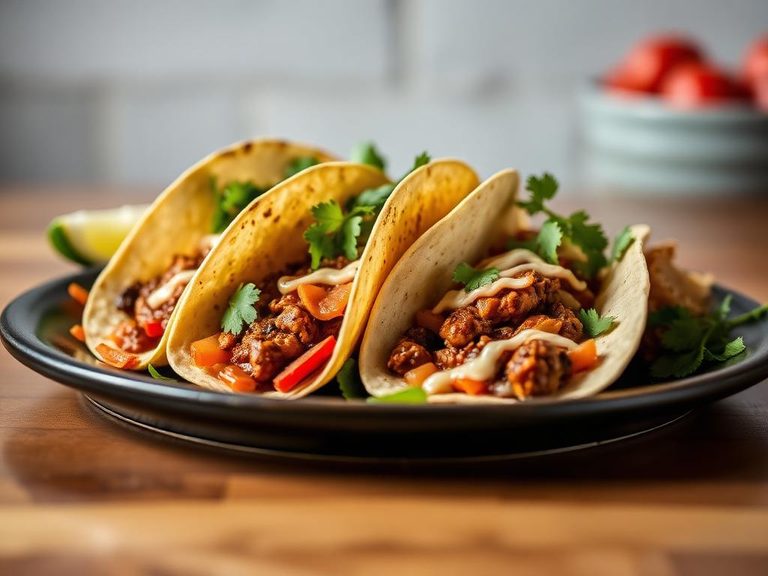
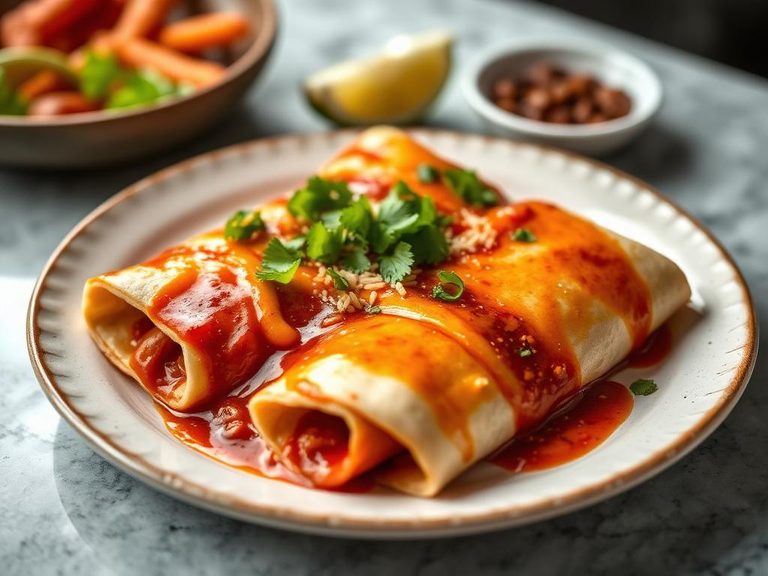

🌍 Where it's eaten
💡 Did you know?
The word 'salsa' simply means 'sauce' in Spanish, and its culinary roots trace back to the Aztec, Mayan, and Inca civilizations, who combined tomatoes, chilies, and squash seeds.
Full nutrition (USDA data · scales with serving)
| Water | 89.3 g |
| Energy | 29.0 kcal |
| Energy | 121 kj |
| Protein | 1.5 g |
| Total lipid (fat) | 0.17 g |
| Ash | 2.4 g |
| Carbohydrate, by difference | 6.6 g |
| Fiber, total dietary | 1.9 g |
| Total Sugars | 4.0 g |
| Sucrose | 0.25 g |
| Glucose | 1.6 g |
| Fructose | 2.1 g |
| Lactose | 0.00 g |
| Maltose | 0.00 g |
| Galactose | 0.00 g |
| Starch | 0.00 g |
| Calcium, Ca | 30.0 mg |
| Iron, Fe | 0.42 mg |
| Magnesium, Mg | 15.0 mg |
| Phosphorus, P | 33.0 mg |
| Potassium, K | 275 mg |
| Sodium, Na | 711 mg |
| Zinc, Zn | 0.18 mg |
| Copper, Cu | 0.07 mg |
| Manganese, Mn | 0.11 mg |
| Selenium, Se | 0.90 ug |
| Vitamin C, total ascorbic acid | 1.9 mg |
| Thiamin | 0.03 mg |
| Riboflavin | 0.03 mg |
| Niacin | 1.1 mg |
| Pantothenic acid | 0.20 mg |
| Vitamin B-6 | 0.17 mg |
| Folate, total | 4.0 ug |
| Folic acid | 0.00 ug |
| Folate, food | 4.0 ug |
| Folate, DFE | 4.0 ug |
| Choline, total | 12.8 mg |
| Vitamin B-12 | 0.00 ug |
| Vitamin B-12, added | 0.00 ug |
| Vitamin A, RAE | 23.0 ug |
| Retinol | 0.00 ug |
| Carotene, beta | 276 ug |
| Carotene, alpha | 0.00 ug |
| Cryptoxanthin, beta | 0.00 ug |
| Vitamin A, IU | 461 iu |
| Lycopene | 6063 ug |
| Lutein + zeaxanthin | 204 ug |
| Vitamin E (alpha-tocopherol) | 1.3 mg |
| Vitamin E, added | 0.00 mg |
| Tocopherol, beta | 0.03 mg |
| Tocopherol, gamma | 0.14 mg |
| Tocopherol, delta | 0.00 mg |
| Tocotrienol, alpha | 0.00 mg |
| Tocotrienol, beta | 0.44 mg |
| Tocotrienol, gamma | 0.00 mg |
| Tocotrienol, delta | 0.02 mg |
| Vitamin D (D2 + D3), International Units | 0.00 iu |
| Vitamin D (D2 + D3) | 0.00 ug |
| Vitamin K (phylloquinone) | 4.3 ug |
| Alcohol, ethyl | 0.00 g |
| Caffeine | 0.00 mg |
| Theobromine | 0.00 mg |
Fat & fatty acid profile (per 100g)
| Fatty acids, total saturated | 0.02 g |
| SFA 4:0 | 0.00 g |
| SFA 6:0 | 0.00 g |
| SFA 8:0 | 0.00 g |
| SFA 10:0 | 0.00 g |
| SFA 12:0 | 0.00 g |
| SFA 14:0 | 0.00 g |
| SFA 16:0 | 0.02 g |
| SFA 18:0 | 0.00 g |
| Fatty acids, total monounsaturated | 0.02 g |
| MUFA 16:1 | 0.00 g |
| MUFA 18:1 | 0.02 g |
| MUFA 20:1 | 0.00 g |
| MUFA 22:1 | 0.00 g |
| Fatty acids, total polyunsaturated | 0.08 g |
| PUFA 18:2 | 0.07 g |
| PUFA 18:3 | 0.00 g |
| PUFA 18:4 | 0.00 g |
| PUFA 20:4 | 0.00 g |
| PUFA 20:5 n-3 (EPA) | 0.00 g |
| PUFA 22:5 n-3 (DPA) | 0.00 g |
| PUFA 22:6 n-3 (DHA) | 0.00 g |
| Cholesterol | 0.00 mg |
Amino acid profile (per 100g)
Estimated from Sauce, homemade, white, medium — USDA does not publish this profile for Sauce.
| Tryptophan | 0.04 g |
| Threonine | 0.14 g |
| Isoleucine | 0.19 g |
| Leucine | 0.30 g |
| Lysine | 0.24 g |
| Methionine | 0.08 g |
| Cystine | 0.03 g |
| Phenylalanine | 0.15 g |
| Tyrosine | 0.15 g |
| Valine | 0.20 g |
| Arginine | 0.11 g |
| Histidine | 0.08 g |
| Alanine | 0.10 g |
| Aspartic acid | 0.23 g |
| Glutamic acid | 0.64 g |
| Glycine | 0.07 g |
| Proline | 0.30 g |
| Serine | 0.17 g |
FAQ
Is salsa healthy?
Yes, it's a low-calorie, low-fat condiment that adds flavor and some nutrients like fiber and vitamins from tomatoes and peppers. Its healthiness can vary by brand, so checking the sodium and sugar content on the label is wise.
How long does opened, ready-to-serve salsa last in the fridge?
Typically, it will stay fresh for about 5 to 7 days after opening, provided it's stored in a sealed container. Always check for any off smells, mold, or significant changes in texture.
Can I use salsa as a cooking sauce?
Absolutely. It's excellent simmered with chicken or shrimp for a quick stew, stirred into rice or quinoa for flavor, or used as a base for a simple pasta sauce. Heating it will mellow the raw onion and garlic flavors.
Nutrient density (calculated · NRF9.3)
Nutrient Rich Foods index: beneficial nutrients (protein, fiber, vitamins, minerals) minus saturated fat, added sugar & sodium, per 100 kcal.
NRF9.3 index — Fulgoni, Keast & Drewnowski, 2009. Computed from USDA nutrients.
Weight-loss friendliness (composite index)
Energy density 0.29 kcal/g · 21% calories from protein · 1.9 g fiber · 4.0 g sugar per 100 g.
Composite of energy density (Rolls et al., 1999), protein & fiber satiety, minus sugar. A calculated heuristic — ranks satiety-per-calorie, not a clinical measure.
Dietary load (calculated from USDA values)
Potential renal acid load. Positive = acid-forming, negative = alkaline-forming.
Sodium-to-potassium ratio: 2.59 (lower is better — aim for ≤ 1)
Sodium:potassium per WHO potassium guidance. Computed from USDA nutrients.