

Pork, fresh, variety meats and by-products, chitterlings, raw
Whole food · Pork Products

Photo: Wikipedia
Pork chitterlings, or chitlins, are the cleaned small intestines of a pig, prized for their uniquely tender yet slightly chewy texture when slow-cooked. They have a rich, savory, and distinctly porky flavor that absorbs seasonings beautifully. Nutritionally, they are a dense source of protein and fat, providing significant energy with zero carbohydrates.
Calorie split: 17% protein · 0% carbs · 83% fat
↓ Full nutrition💚 Why it's loved
People love chitterlings for their deep, savory flavor and the satisfying, tender texture they achieve after hours of careful simmering. They are a cornerstone of soul food and holiday traditions, carrying cultural significance and communal cooking rituals.
⚠️ Watch-outs & how to enjoy it better
Chitterlings are very high in cholesterol and saturated fat, which may be a concern for heart health. They also require meticulous, time-consuming cleaning to remove impurities and odor. To enjoy them more healthily, consider smaller portions as a special occasion dish, and pair them with fiber-rich sides like collard greens or black-eyed peas to balance the meal.
Key benefits
- Excellent source of complete protein for muscle maintenance.
- Provides essential minerals like iron and zinc.
- High in energy-dense fats, useful for calorie needs.
- A traditional, nose-to-tail cut that utilizes the whole animal.
🍽️ Popular dishes
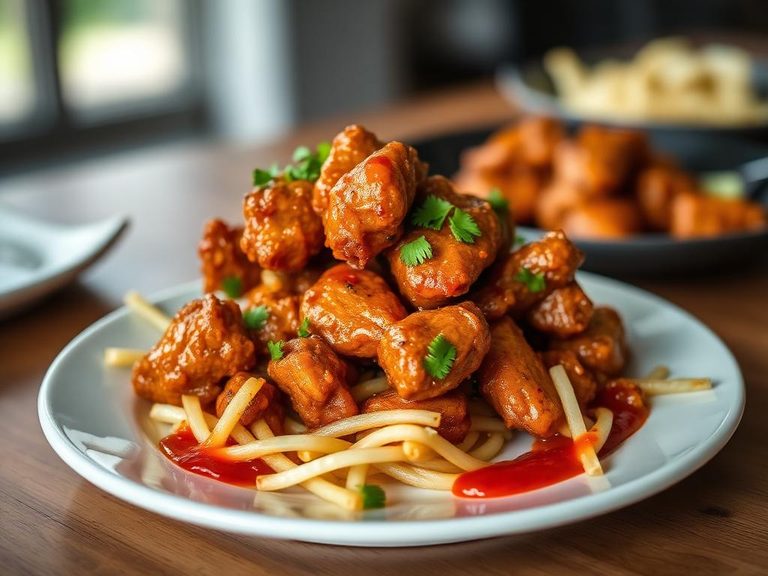
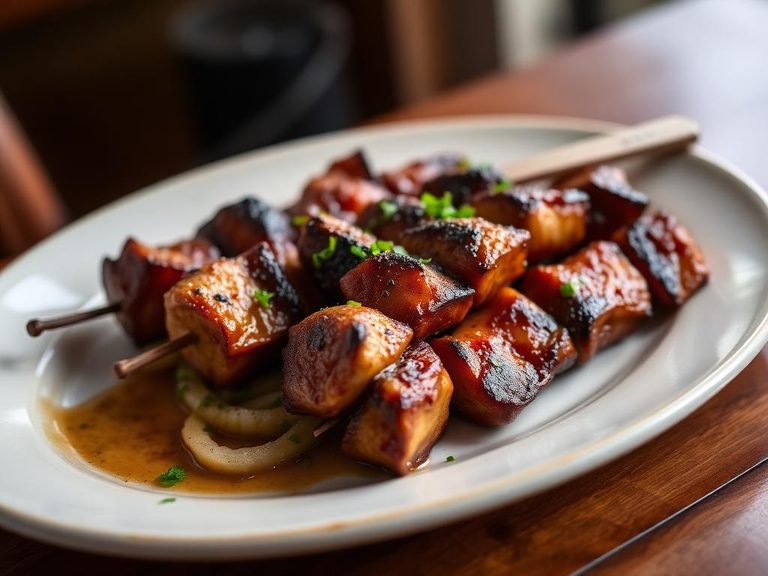
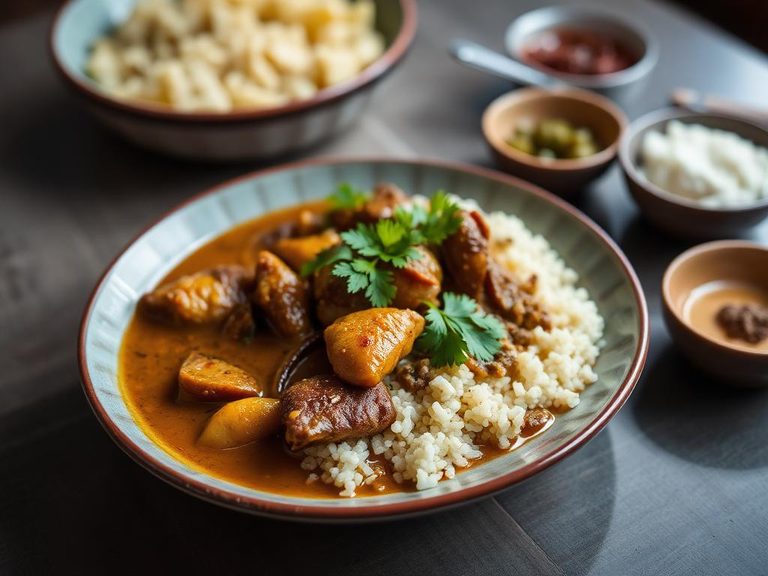
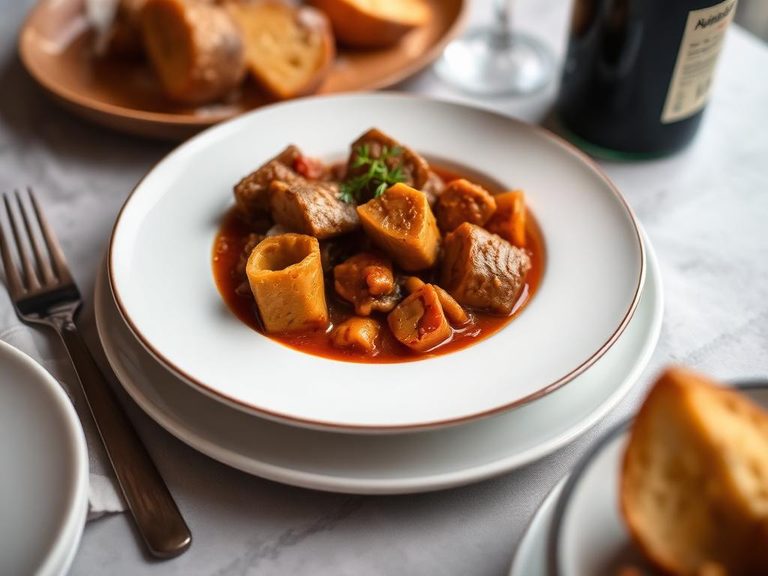
🌍 Where it's eaten
💡 Did you know?
The process of cleaning chitterlings is so labor-intensive that in the American South, it was traditionally a communal, day-long event often called a 'chitlin strut' or 'chitlin cook.'
Full nutrition (USDA data · scales with serving)
| Water | 76.1 g |
| Energy | 182 kcal |
| Energy | 764 kj |
| Protein | 7.6 g |
| Total lipid (fat) | 16.6 g |
| Ash | 0.20 g |
| Carbohydrate, by difference | 0.00 g |
| Fiber, total dietary | 0.00 g |
| Total Sugars | 0.00 g |
| Calcium, Ca | 16.0 mg |
| Iron, Fe | 1.0 mg |
| Magnesium, Mg | 6.0 mg |
| Phosphorus, P | 48.0 mg |
| Potassium, K | 18.0 mg |
| Sodium, Na | 24.0 mg |
| Zinc, Zn | 1.0 mg |
| Copper, Cu | 0.08 mg |
| Manganese, Mn | 0.05 mg |
| Selenium, Se | 15.1 ug |
| Vitamin C, total ascorbic acid | 1.1 mg |
| Thiamin | 0.02 mg |
| Riboflavin | 0.09 mg |
| Niacin | 0.21 mg |
| Pantothenic acid | 0.23 mg |
| Vitamin B-6 | 0.01 mg |
| Folate, total | 3.0 ug |
| Folic acid | 0.00 ug |
| Folate, food | 3.0 ug |
| Folate, DFE | 3.0 ug |
| Vitamin B-12 | 0.82 ug |
| Vitamin A, RAE | 0.00 ug |
| Retinol | 0.00 ug |
| Carotene, beta | 0.00 ug |
| Carotene, alpha | 0.00 ug |
| Cryptoxanthin, beta | 0.00 ug |
| Vitamin A, IU | 0.00 iu |
| Lycopene | 0.00 ug |
| Lutein + zeaxanthin | 0.00 ug |
| Vitamin E (alpha-tocopherol) | 0.18 mg |
| Tocopherol, beta | 0.00 mg |
| Tocopherol, gamma | 0.02 mg |
| Tocopherol, delta | 0.00 mg |
| Tocotrienol, alpha | 0.04 mg |
| Tocotrienol, beta | 0.00 mg |
| Tocotrienol, gamma | 0.00 mg |
| Tocotrienol, delta | 0.00 mg |
| Vitamin K (phylloquinone) | 0.00 ug |
| Alcohol, ethyl | 0.00 g |
| Caffeine | 0.00 mg |
| Theobromine | 0.00 mg |
Fat & fatty acid profile (per 100g)
| Fatty acids, total saturated | 7.6 g |
| SFA 4:0 | 0.00 g |
| SFA 6:0 | 0.00 g |
| SFA 8:0 | 0.00 g |
| SFA 10:0 | 0.00 g |
| SFA 12:0 | 0.00 g |
| SFA 14:0 | 0.23 g |
| SFA 15:0 | 0.02 g |
| SFA 16:0 | 4.1 g |
| SFA 17:0 | 0.13 g |
| SFA 18:0 | 3.2 g |
| SFA 20:0 | 0.03 g |
| SFA 22:0 | 0.00 g |
| Fatty acids, total monounsaturated | 5.4 g |
| MUFA 14:1 | 0.00 g |
| MUFA 15:1 | 0.00 g |
| MUFA 16:1 | 0.26 g |
| MUFA 18:1 | 5.0 g |
| MUFA 20:1 | 0.11 g |
| MUFA 22:1 | 0.00 g |
| Fatty acids, total polyunsaturated | 1.00 g |
| PUFA 18:2 | 0.80 g |
| PUFA 18:3 | 0.03 g |
| PUFA 18:3 n-3 c,c,c (ALA) | 0.03 g |
| PUFA 18:3 n-6 c,c,c | 0.00 g |
| PUFA 18:4 | 0.00 g |
| PUFA 20:2 n-6 c,c | 0.05 g |
| PUFA 20:3 | 0.00 g |
| PUFA 20:4 | 0.10 g |
| PUFA 20:5 n-3 (EPA) | 0.00 g |
| PUFA 22:5 n-3 (DPA) | 0.00 g |
| PUFA 22:6 n-3 (DHA) | 0.00 g |
| Fatty acids, total trans | 0.00 g |
| Cholesterol | 154 mg |
Amino acid profile (per 100g)
Estimated from Pork, cured, salt pork, raw — USDA does not publish this profile for Pork.
| Tryptophan | 0.02 g |
| Threonine | 0.17 g |
| Isoleucine | 0.13 g |
| Leucine | 0.35 g |
| Lysine | 0.42 g |
| Methionine | 0.07 g |
| Cystine | 0.04 g |
| Phenylalanine | 0.19 g |
| Tyrosine | 0.08 g |
| Valine | 0.24 g |
| Arginine | 0.52 g |
| Histidine | 0.06 g |
| Alanine | 0.28 g |
| Aspartic acid | 0.42 g |
| Glutamic acid | 0.69 g |
| Glycine | 0.36 g |
| Proline | 0.27 g |
| Serine | 0.19 g |
FAQ
What do chitterlings taste like?
They have a mild pork flavor that is rich and savory. The taste is largely defined by the seasonings they are cooked with, often garlic, onion, and vinegar. The texture is the key feature—tender but with a slight, pleasant chew.
How do you clean and prepare chitterlings?
Cleaning is critical. They must be rinsed thoroughly under cold water, turned inside out, and all fat and membranes removed. Many cooks soak them in salted water or vinegar water. They then require long, slow cooking (1-2 hours) to become tender.
Are chitterlings the same as tripe?
No. Chitterlings are the small intestines of the pig. Tripe is the stomach lining, most commonly from beef (omasum or blanket tripe). They are different organs with different textures.
Nutrient density (calculated · NRF9.3)
Nutrient Rich Foods index: beneficial nutrients (protein, fiber, vitamins, minerals) minus saturated fat, added sugar & sodium, per 100 kcal.
NRF9.3 index — Fulgoni, Keast & Drewnowski, 2009. Computed from USDA nutrients.
Weight-loss friendliness (composite index)
Energy density 1.82 kcal/g · 17% calories from protein · 0.0 g fiber · 0.0 g sugar per 100 g.
Composite of energy density (Rolls et al., 1999), protein & fiber satiety, minus sugar. A calculated heuristic — ranks satiety-per-calorie, not a clinical measure.
Dietary load (calculated from USDA values)
Potential renal acid load. Positive = acid-forming, negative = alkaline-forming.
Sodium-to-potassium ratio: 1.33 (lower is better — aim for ≤ 1)
Sodium:potassium per WHO potassium guidance. Computed from USDA nutrients.