

Pork, fresh, loin, country-style ribs, separable lean and fat, bone-in, cooked, roasted
Whole food · Pork Products

Photo: Wikipedia
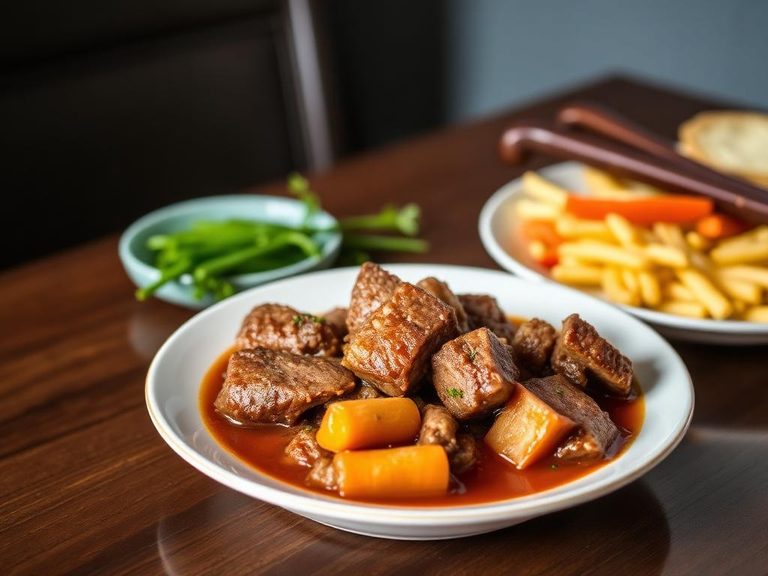
Country-style pork loin ribs are a meaty, bone-in cut from the upper shoulder area, offering a rich, beefy flavor with a tender, juicy texture when roasted. They are a protein-packed, zero-carb option, delivering over 21 grams of protein and nearly 30 grams of fat per 100g, making them a satisfying, high-energy meal component.
Calorie split: 25% protein · 0% carbs · 75% fat
↓ Full nutrition💚 Why it's loved
People adore these ribs for their robust, savory flavor and satisfying, meaty bite that stands up beautifully to bold seasonings and slow-cooking methods. They are a staple of American barbecue culture, often associated with hearty, comforting family meals and weekend cookouts.
⚠️ Watch-outs & how to enjoy it better
The high fat content (nearly 30g per 100g) makes this a calorie-dense choice that may not suit low-fat dietary goals. To balance this, pair with large portions of non-starchy vegetables like roasted broccoli or a vinegar-based slaw to add fiber and volume without excess calories. Also, be mindful of sodium if using pre-made barbecue rubs or sauces.
Key benefits
- Excellent source of complete protein for muscle maintenance.
- Provides essential B vitamins, especially thiamine (B1) and niacin (B3).
- Rich in minerals like zinc, phosphorus, and selenium.
- Contains iron in a highly bioavailable heme form.
- Zero carbohydrates, suitable for ketogenic and low-carb diets.
🍽️ Popular dishes
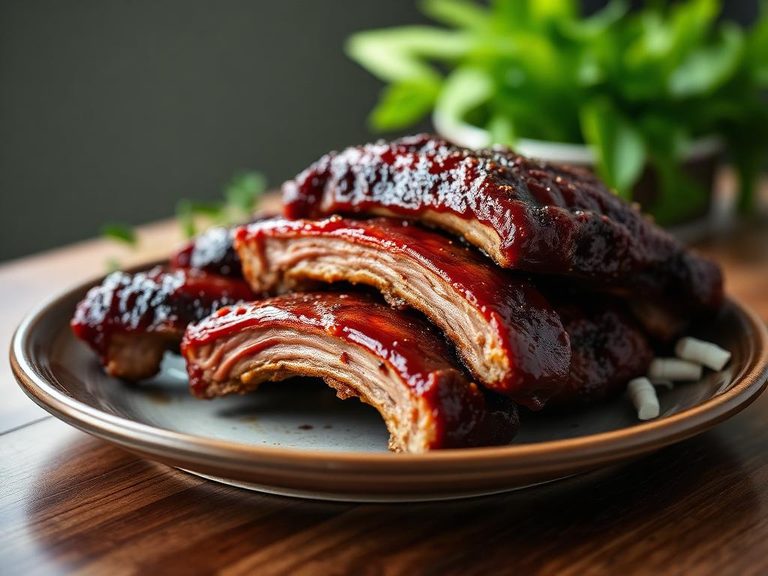
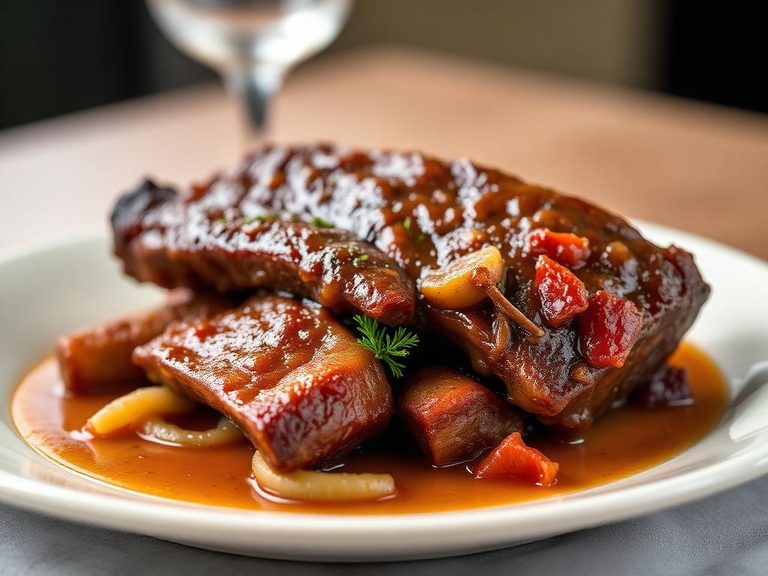
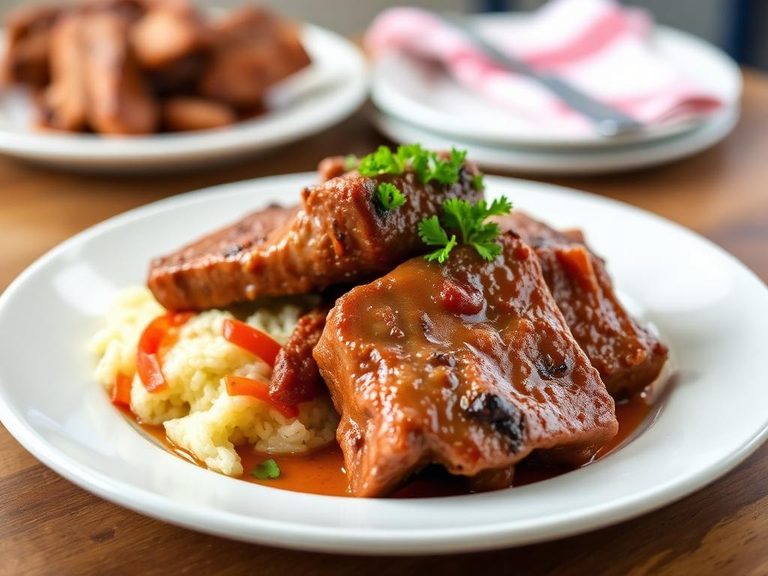
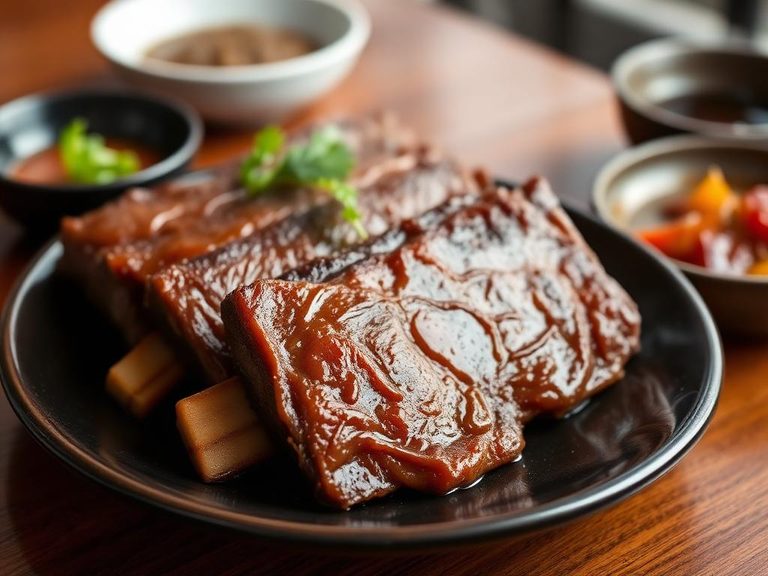
🌍 Where it's eaten
💡 Did you know?
Despite the name, country-style ribs are not actually cut from the rib section of the pig; they are sliced from the blade end of the loin near the shoulder, which is why they are meatier and contain more connective tissue than traditional ribs.
Full nutrition (USDA data · scales with serving)
| Water | 48.4 g |
| Energy | 359 kcal |
| Energy | 1500 kj |
| Protein | 21.8 g |
| Total lipid (fat) | 29.5 g |
| Ash | 0.99 g |
| Carbohydrate, by difference | 0.00 g |
| Fiber, total dietary | 0.00 g |
| Total Sugars | 0.00 g |
| Calcium, Ca | 25.0 mg |
| Iron, Fe | 1.0 mg |
| Magnesium, Mg | 22.0 mg |
| Phosphorus, P | 214 mg |
| Potassium, K | 322 mg |
| Sodium, Na | 52.0 mg |
| Zinc, Zn | 2.2 mg |
| Copper, Cu | 0.06 mg |
| Manganese, Mn | 0.00 mg |
| Selenium, Se | 34.5 ug |
| Vitamin C, total ascorbic acid | 0.30 mg |
| Thiamin | 0.82 mg |
| Riboflavin | 0.33 mg |
| Niacin | 4.2 mg |
| Pantothenic acid | 0.73 mg |
| Vitamin B-6 | 0.42 mg |
| Folate, total | 4.0 ug |
| Folic acid | 0.00 ug |
| Folate, food | 4.0 ug |
| Folate, DFE | 4.0 ug |
| Choline, total | 3.3 mg |
| Betaine | 0.20 mg |
| Vitamin B-12 | 0.76 ug |
| Vitamin B-12, added | 0.00 ug |
| Vitamin A, RAE | 2.0 ug |
| Retinol | 2.0 ug |
| Carotene, beta | 0.00 ug |
| Carotene, alpha | 0.00 ug |
| Cryptoxanthin, beta | 0.00 ug |
| Vitamin A, IU | 8.0 iu |
| Lycopene | 0.00 ug |
| Lutein + zeaxanthin | 0.00 ug |
| Vitamin E (alpha-tocopherol) | 0.00 mg |
| Vitamin E, added | 0.00 mg |
| Vitamin D (D2 + D3), International Units | 72.0 iu |
| Vitamin D (D2 + D3) | 1.8 ug |
| Vitamin D3 (cholecalciferol) | 1.8 ug |
| Vitamin K (phylloquinone) | 0.00 ug |
| Vitamin K (Dihydrophylloquinone) | 0.00 ug |
| Alcohol, ethyl | 0.00 g |
| Caffeine | 0.00 mg |
| Theobromine | 0.00 mg |
Fat & fatty acid profile (per 100g)
| Fatty acids, total saturated | 10.7 g |
| SFA 4:0 | 0.00 g |
| SFA 6:0 | 0.00 g |
| SFA 8:0 | 0.00 g |
| SFA 10:0 | 0.02 g |
| SFA 12:0 | 0.02 g |
| SFA 14:0 | 0.39 g |
| SFA 15:0 | 0.00 g |
| SFA 16:0 | 6.5 g |
| SFA 17:0 | 0.02 g |
| SFA 18:0 | 3.5 g |
| SFA 20:0 | 0.01 g |
| SFA 22:0 | 0.00 g |
| SFA 24:0 | 0.00 g |
| Fatty acids, total monounsaturated | 12.8 g |
| MUFA 14:1 | 0.00 g |
| MUFA 15:1 | 0.00 g |
| MUFA 16:1 | 0.80 g |
| MUFA 17:1 | 0.00 g |
| MUFA 18:1 | 11.7 g |
| MUFA 20:1 | 0.25 g |
| MUFA 22:1 | 0.00 g |
| Fatty acids, total polyunsaturated | 3.0 g |
| PUFA 18:2 | 2.6 g |
| PUFA 18:3 | 0.10 g |
| PUFA 18:4 | 0.00 g |
| PUFA 20:2 n-6 c,c | 0.04 g |
| PUFA 20:3 | 0.01 g |
| PUFA 20:4 | 0.09 g |
| PUFA 20:5 n-3 (EPA) | 0.00 g |
| PUFA 22:5 n-3 (DPA) | 0.00 g |
| PUFA 22:6 n-3 (DHA) | 0.00 g |
| Fatty acids, total trans | 0.05 g |
| Cholesterol | 91.0 mg |
Amino acid profile (per 100g)
| Tryptophan | 0.28 g |
| Threonine | 0.99 g |
| Isoleucine | 1.0 g |
| Leucine | 1.7 g |
| Lysine | 2.0 g |
| Methionine | 0.58 g |
| Cystine | 0.28 g |
| Phenylalanine | 0.87 g |
| Tyrosine | 0.76 g |
| Valine | 1.2 g |
| Arginine | 1.4 g |
| Histidine | 0.87 g |
| Alanine | 1.3 g |
| Aspartic acid | 2.0 g |
| Glutamic acid | 3.4 g |
| Glycine | 1.0 g |
| Proline | 0.87 g |
| Serine | 0.90 g |
| Hydroxyproline | 0.00 g |
FAQ
What is the difference between country-style ribs and spare ribs?
Country-style ribs are cut from the pork shoulder/blade area and are meatier with more fat and connective tissue, while spare ribs (and baby back ribs) are true rib bones from the belly or back with less meat attached.
What is the best cooking method for country-style ribs?
Due to their higher fat and connective tissue content, they excel with slow, moist-heat methods like braising, stewing, or slow-roasting to break down collagen and become tender. Grilling or high-heat roasting requires careful monitoring to avoid drying out.
Are country-style ribs a fatty cut of meat?
Yes, they are a relatively fatty cut, with nearly 30g of fat per 100g cooked weight. This fat contributes significantly to their flavor and juiciness, especially when cooked properly.
Nutrient density (calculated · NRF9.3)
Nutrient Rich Foods index: beneficial nutrients (protein, fiber, vitamins, minerals) minus saturated fat, added sugar & sodium, per 100 kcal.
NRF9.3 index — Fulgoni, Keast & Drewnowski, 2009. Computed from USDA nutrients.
Weight-loss friendliness (composite index)
Energy density 3.59 kcal/g · 24% calories from protein · 0.0 g fiber · 0.0 g sugar per 100 g.
Composite of energy density (Rolls et al., 1999), protein & fiber satiety, minus sugar. A calculated heuristic — ranks satiety-per-calorie, not a clinical measure.
Dietary load (calculated from USDA values)
Potential renal acid load. Positive = acid-forming, negative = alkaline-forming.
Sodium-to-potassium ratio: 0.16 (lower is better — aim for ≤ 1)
Sodium:potassium per WHO potassium guidance. Computed from USDA nutrients.