

Plantains, overripe, raw
Whole food · Fruits and Fruit Juices
An overripe raw plantain is a starchy fruit that has turned deep yellow to black, signaling its starches have fully converted to sugars. Its texture is soft and slightly mushy, with a pronounced sweet, almost caramel-like flavor that is far more intense than a green plantain. Nutritionally, it is a dense source of carbohydrates and provides a good amount of dietary fiber.
Calorie split: 4% protein · 90% carbs · 7% fat
↓ Full nutrition💚 Why it's loved
People love overripe plantains for their deep, natural sweetness and soft, satisfying texture, which makes them ideal for both savory and sweet dishes. They are a beloved staple in many cultures, representing comfort food and culinary tradition.
⚠️ Watch-outs & how to enjoy it better
Their high carbohydrate and sugar content can cause rapid blood sugar spikes, so individuals managing diabetes or insulin resistance should be cautious. To counteract this, pair them with a source of protein (like eggs or beans) or healthy fat (like avocado) to slow glucose absorption, and practice portion control.
Key benefits
- Excellent source of energy-dense complex carbohydrates.
- Provides dietary fiber to support digestive health.
- Naturally rich in potassium, an essential electrolyte.
- Contains vitamins A and C, important for immune function.
- Offers resistant starch when less ripe, which feeds gut bacteria.
🍽️ Popular dishes
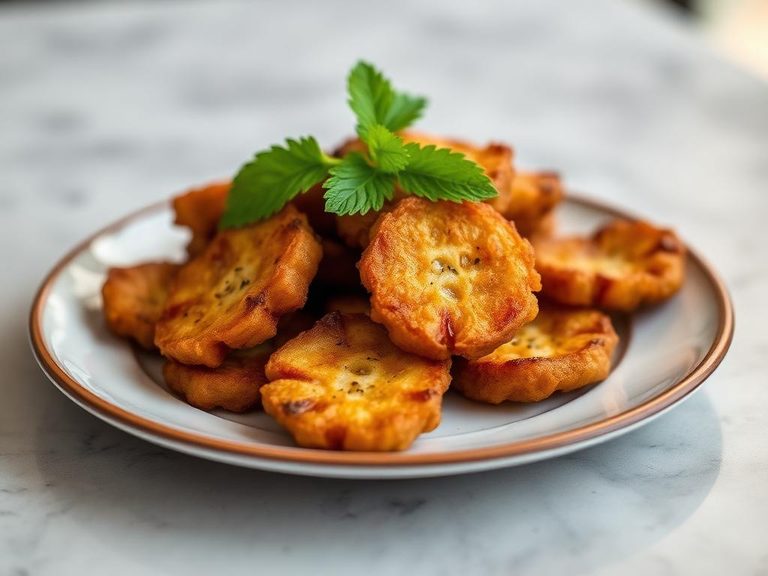
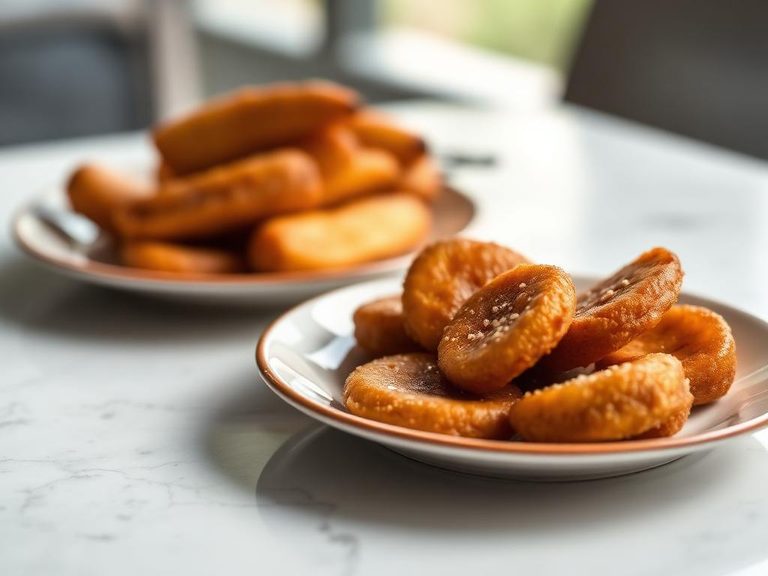
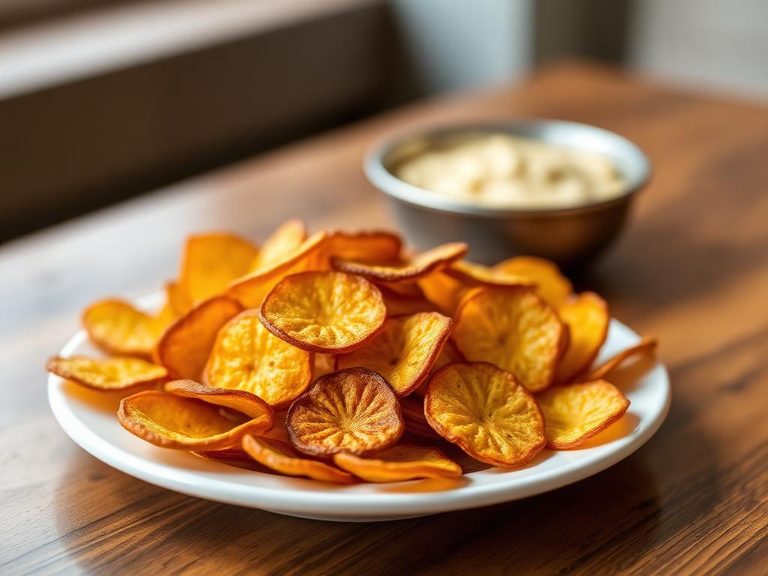
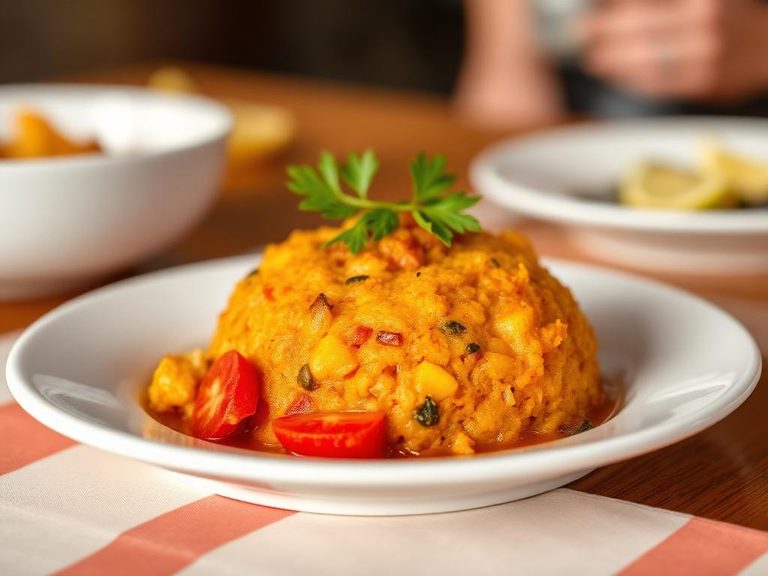
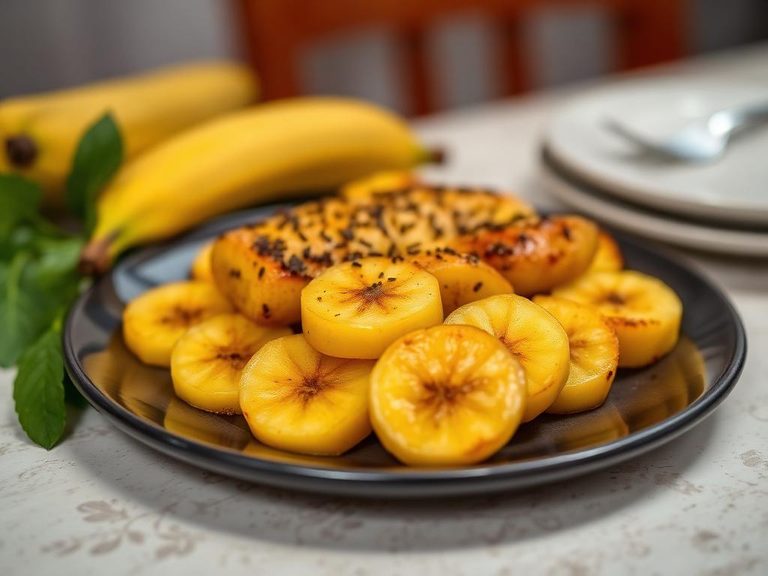
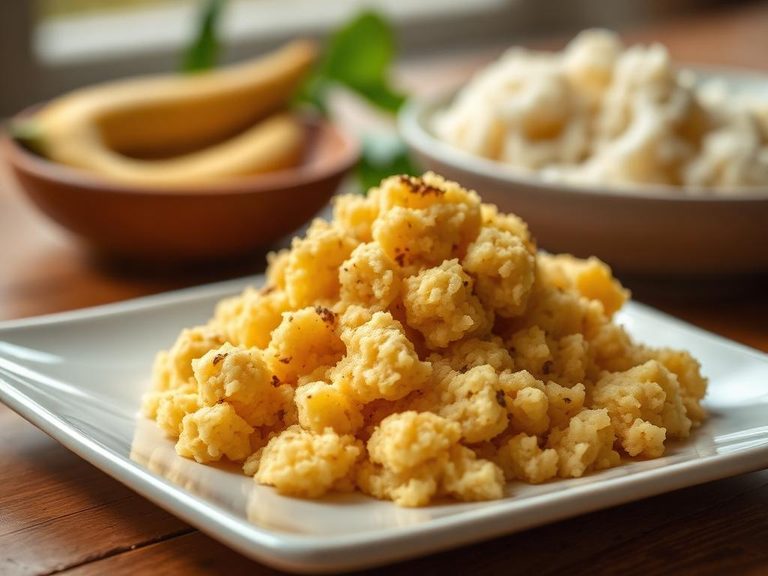
🌍 Where it's eaten
💡 Did you know?
The blackening of an overripe plantain's peel is caused by the enzyme polyphenol oxidase reacting with oxygen, a process similar to how a cut apple turns brown.
Full nutrition (USDA data · scales with serving)
| Water | 67.7 g |
| Energy (Atwater General Factors) | 130 kcal |
| Energy (Atwater Specific Factors) | 117 kcal |
| Nitrogen | 0.19 g |
| Protein | 1.2 g |
| Total lipid (fat) | 0.99 g |
| Ash | 0.94 g |
| Carbohydrate, by difference | 29.2 g |
| Fiber, total dietary | 1.8 g |
| Sugars, Total | 19.2 g |
| Sucrose | 0.00 g |
| Glucose | 9.5 g |
| Fructose | 9.6 g |
| Lactose | 0.00 g |
| Maltose | 0.05 g |
| Starch | 7.4 g |
| Resistant starch | 7.0 g |
| Calcium, Ca | 3.9 mg |
| Iron, Fe | 0.31 mg |
| Magnesium, Mg | 31.7 mg |
| Phosphorus, P | 28.9 mg |
| Potassium, K | 408 mg |
| Sodium, Na | 0.00 mg |
| Zinc, Zn | 0.15 mg |
| Copper, Cu | 0.10 mg |
| Manganese, Mn | 0.21 mg |
| Vitamin C, total ascorbic acid | 19.1 mg |
| Riboflavin | 0.10 mg |
| Vitamin B-6 | 0.20 mg |
Fat & fatty acid profile (per 100g)
Estimated from Plantains, green, boiled — USDA does not publish this profile for Plantains.
| Fatty acids, total saturated | 0.07 g |
| SFA 4:0 | 0.01 g |
| SFA 6:0 | 0.00 g |
| SFA 8:0 | 0.00 g |
| SFA 10:0 | 0.00 g |
| SFA 12:0 | 0.00 g |
| SFA 14:0 | 0.00 g |
| SFA 15:0 | 0.00 g |
| SFA 16:0 | 0.04 g |
| SFA 17:0 | 0.00 g |
| SFA 18:0 | 0.01 g |
| SFA 20:0 | 0.00 g |
| SFA 22:0 | 0.00 g |
| SFA 24:0 | 0.00 g |
| Fatty acids, total monounsaturated | 0.01 g |
| MUFA 14:1 | 0.00 g |
| MUFA 15:1 | 0.00 g |
| MUFA 16:1 | 0.00 g |
| MUFA 16:1 c | 0.00 g |
| MUFA 17:1 | 0.00 g |
| MUFA 18:1 | 0.01 g |
| MUFA 18:1 c | 0.01 g |
| MUFA 20:1 | 0.00 g |
| MUFA 22:1 | 0.00 g |
| MUFA 22:1 c | 0.00 g |
| MUFA 24:1 c | 0.00 g |
| Fatty acids, total polyunsaturated | 0.08 g |
| PUFA 18:2 | 0.05 g |
| PUFA 18:2 n-6 c,c | 0.05 g |
| PUFA 18:2 CLAs | 0.00 g |
| PUFA 18:3 | 0.03 g |
| PUFA 18:3 n-3 c,c,c (ALA) | 0.03 g |
| PUFA 18:3 n-6 c,c,c | 0.00 g |
| PUFA 18:3i | 0.00 g |
| PUFA 18:4 | 0.00 g |
| PUFA 20:2 n-6 c,c | 0.00 g |
| PUFA 20:3 | 0.00 g |
| PUFA 20:3 n-3 | 0.00 g |
| PUFA 20:3 n-6 | 0.00 g |
| PUFA 20:4 | 0.00 g |
| PUFA 20:5 n-3 (EPA) | 0.00 g |
| PUFA 22:4 | 0.00 g |
| PUFA 22:5 n-3 (DPA) | 0.00 g |
| PUFA 22:6 n-3 (DHA) | 0.00 g |
| Fatty acids, total trans | 0.00 g |
| Fatty acids, total trans-monoenoic | 0.00 g |
| TFA 16:1 t | 0.00 g |
| TFA 18:1 t | 0.00 g |
| TFA 22:1 t | 0.00 g |
| TFA 18:2 t not further defined | 0.00 g |
| Fatty acids, total trans-polyenoic | 0.00 g |
Amino acid profile (per 100g)
Estimated from Plantains, green, boiled — USDA does not publish this profile for Plantains.
| Tryptophan | 0.01 g |
| Threonine | 0.02 g |
| Isoleucine | 0.02 g |
| Leucine | 0.04 g |
| Lysine | 0.05 g |
| Methionine | 0.01 g |
| Cystine | 0.02 g |
| Phenylalanine | 0.03 g |
| Tyrosine | 0.02 g |
| Valine | 0.02 g |
| Arginine | 0.06 g |
| Histidine | 0.06 g |
| Alanine | 0.03 g |
| Aspartic acid | 0.09 g |
| Glutamic acid | 0.08 g |
| Glycine | 0.03 g |
| Proline | 0.03 g |
| Serine | 0.03 g |
| Hydroxyproline | 0.00 g |
FAQ
Can I eat a black plantain raw?
Yes, an overripe plantain with a black peel is safe to eat raw. Its starches have converted to sugar, making it soft and sweet, though the texture may be mushy. It is more commonly cooked.
How is an overripe plantain different from a green one?
A green plantain is very starchy, firm, and savory, used like a potato. An overripe (black) plantain is sweet, soft, and has a much higher sugar content, used in desserts or sweet preparations.
What's the best way to store overripe plantains?
If already black, use them within 1-2 days. You can peel, slice, and freeze them on a baking sheet for long-term storage, perfect for future frying or baking.
Nutrient density (calculated · NRF9.3)
Nutrient Rich Foods index: beneficial nutrients (protein, fiber, vitamins, minerals) minus saturated fat, added sugar & sodium, per 100 kcal.
NRF9.3 index — Fulgoni, Keast & Drewnowski, 2009. Computed from USDA nutrients.
Weight-loss friendliness (composite index)
Energy density 1.30 kcal/g · 4% calories from protein · 1.8 g fiber · 0.0 g sugar per 100 g.
Composite of energy density (Rolls et al., 1999), protein & fiber satiety, minus sugar. A calculated heuristic — ranks satiety-per-calorie, not a clinical measure.
Dietary load (calculated from USDA values)
Potential renal acid load. Positive = acid-forming, negative = alkaline-forming.
Sodium-to-potassium ratio: 0.00 (lower is better — aim for ≤ 1)
Sodium:potassium per WHO potassium guidance. Computed from USDA nutrients.