

Ice cream, lowfat, no sugar added, cone, added peanuts and chocolate sauce
Whole food · Dairy and Egg Products

Photo: Wikipedia
This is a light, guilt-free take on a classic treat: a crisp, golden cone filled with low-fat, no-sugar-added ice cream, generously topped with crunchy peanuts and a drizzle of rich chocolate sauce. The texture is a delightful contrast between the cold, creamy base and the satisfying snap of the cone and nuts. It delivers a solid 9.3g of fiber per 100g, making it a surprisingly filling dessert option.
Calorie split: 8% protein · 60% carbs · 32% fat
↓ Full nutrition💚 Why it's loved
People adore the nostalgic joy of an ice cream cone, elevated with the salty crunch of peanuts and the decadent sweetness of chocolate sauce. It's a perfectly balanced, handheld treat that feels like a special occasion without the full sugar overload.
⚠️ Watch-outs & how to enjoy it better
The combination of a high-fiber base and peanuts may cause digestive discomfort for some, and the chocolate sauce can still contribute to a blood-sugar spike if consumed quickly. For a steadier energy release, enjoy it slowly and consider pairing it with a small handful of extra nuts or a piece of cheese beforehand to further blunt the glycemic response.
Key benefits
- High in dietary fiber for a dessert
- Provides plant-based protein from peanuts
- No added sugars, using alternative sweeteners
- Lower in fat than traditional ice cream cones
- Offers a satisfying mix of textures
🍽️ Popular dishes
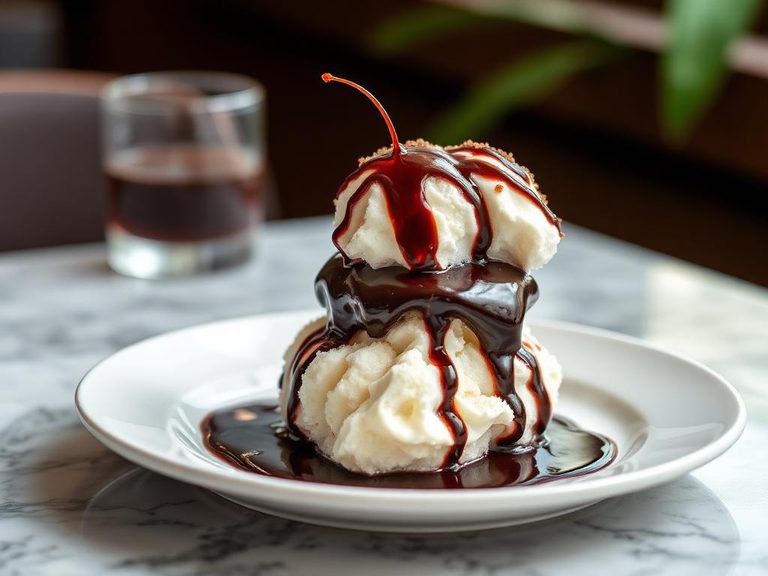
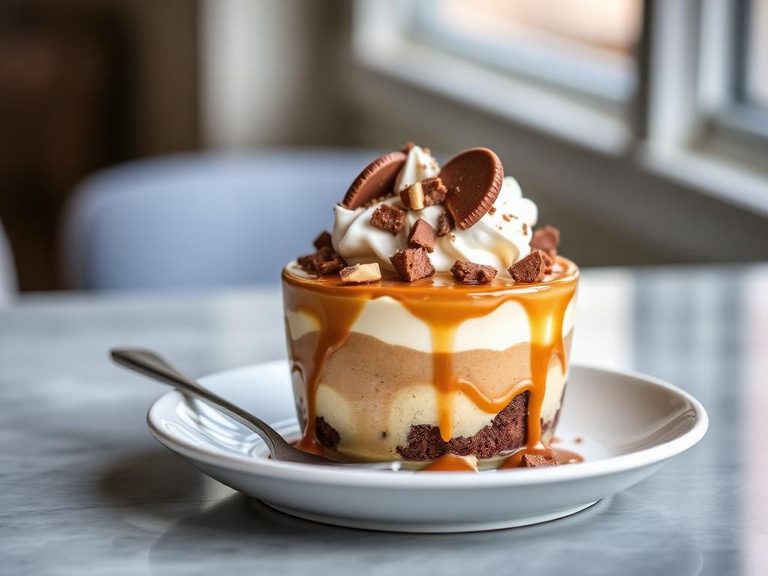
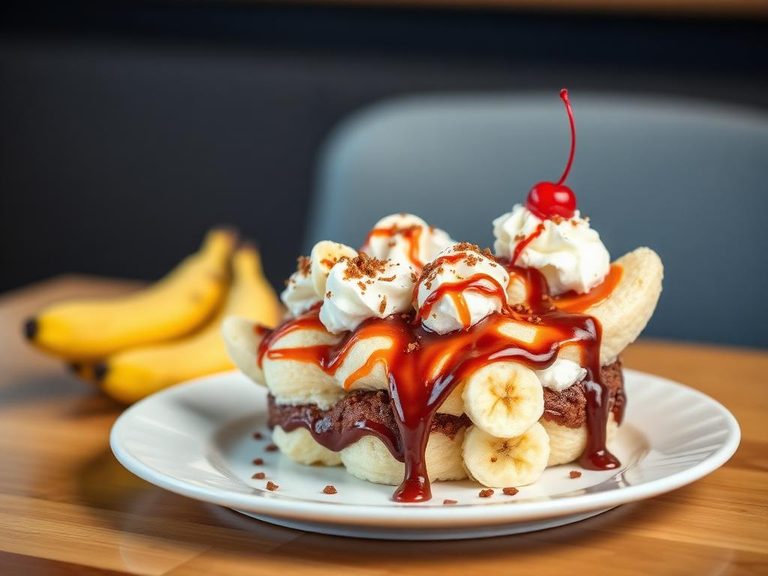

🌍 Where it's eaten
💡 Did you know?
The modern ice cream cone was popularized at the 1904 St. Louis World's Fair, where an ice cream vendor reportedly ran out of dishes and a waffle maker nearby rolled his waffles into cones to help out.
Full nutrition (USDA data · scales with serving)
| Water | 43.9 g |
| Energy | 265 kcal |
| Energy | 1110 kj |
| Protein | 5.3 g |
| Total lipid (fat) | 9.3 g |
| Ash | 1.5 g |
| Carbohydrate, by difference | 40.0 g |
| Fiber, total dietary | 9.3 g |
| Total Sugars | 10.7 g |
| Starch | 0.58 g |
| Calcium, Ca | 133 mg |
| Iron, Fe | 0.48 mg |
| Magnesium, Mg | 65.0 mg |
| Phosphorus, P | 143 mg |
| Potassium, K | 213 mg |
| Sodium, Na | 113 mg |
| Zinc, Zn | 1.1 mg |
| Copper, Cu | 0.36 mg |
| Manganese, Mn | 0.68 mg |
| Selenium, Se | 3.9 ug |
| Vitamin C, total ascorbic acid | 0.00 mg |
| Thiamin | 0.18 mg |
| Riboflavin | 0.20 mg |
| Niacin | 3.5 mg |
| Pantothenic acid | 0.30 mg |
| Vitamin B-6 | 0.09 mg |
| Folate, total | 17.0 ug |
| Folic acid | 0.00 ug |
| Folate, food | 17.0 ug |
| Folate, DFE | 17.0 ug |
| Choline, total | 14.5 mg |
| Vitamin B-12 | 0.07 ug |
| Vitamin B-12, added | 0.00 ug |
| Vitamin A, RAE | 26.0 ug |
| Retinol | 26.0 ug |
| Carotene, beta | 1.0 ug |
| Carotene, alpha | 0.00 ug |
| Cryptoxanthin, beta | 0.00 ug |
| Vitamin A, IU | 89.0 iu |
| Lycopene | 0.00 ug |
| Lutein + zeaxanthin | 6.0 ug |
| Vitamin E (alpha-tocopherol) | 0.70 mg |
| Vitamin E, added | 0.00 mg |
| Vitamin D (D2 + D3), International Units | 8.0 iu |
| Vitamin D (D2 + D3) | 0.20 ug |
| Vitamin D3 (cholecalciferol) | 0.20 ug |
| Vitamin K (phylloquinone) | 0.70 ug |
| Alcohol, ethyl | 0.00 g |
| Caffeine | 3.0 mg |
| Theobromine | 118 mg |
Fat & fatty acid profile (per 100g)
| Fatty acids, total saturated | 6.6 g |
| SFA 4:0 | 0.09 g |
| SFA 6:0 | 0.05 g |
| SFA 8:0 | 0.03 g |
| SFA 10:0 | 0.07 g |
| SFA 12:0 | 0.07 g |
| SFA 14:0 | 0.29 g |
| SFA 15:0 | 0.00 g |
| SFA 16:0 | 3.3 g |
| SFA 17:0 | 0.02 g |
| SFA 18:0 | 1.6 g |
| SFA 20:0 | 0.24 g |
| SFA 22:0 | 0.52 g |
| SFA 24:0 | 0.29 g |
| Fatty acids, total monounsaturated | 1.1 g |
| MUFA 14:1 | 0.00 g |
| MUFA 15:1 | 0.00 g |
| MUFA 16:1 | 0.01 g |
| MUFA 17:1 | 0.00 g |
| MUFA 18:1 | 1.0 g |
| MUFA 20:1 | 0.02 g |
| MUFA 22:1 | 0.00 g |
| MUFA 24:1 c | 0.00 g |
| Fatty acids, total polyunsaturated | 0.43 g |
| PUFA 18:2 | 0.42 g |
| PUFA 18:3 | 0.01 g |
| PUFA 18:4 | 0.00 g |
| PUFA 20:2 n-6 c,c | 0.00 g |
| PUFA 20:3 | 0.00 g |
| PUFA 20:4 | 0.00 g |
| PUFA 20:5 n-3 (EPA) | 0.00 g |
| PUFA 22:4 | 0.00 g |
| PUFA 22:5 n-3 (DPA) | 0.00 g |
| PUFA 22:6 n-3 (DHA) | 0.00 g |
| Fatty acids, total trans | 0.00 g |
| Cholesterol | 7.0 mg |
Amino acid profile (per 100g)
Estimated from Ice cream sundae cone — USDA does not publish this profile for Ice cream.
| Tryptophan | 0.01 g |
| Threonine | 0.02 g |
| Isoleucine | 0.03 g |
| Leucine | 0.06 g |
| Lysine | 0.02 g |
| Methionine | 0.01 g |
| Cystine | 0.02 g |
| Phenylalanine | 0.04 g |
| Tyrosine | 0.02 g |
| Valine | 0.04 g |
| Arginine | 0.03 g |
| Histidine | 0.02 g |
| Alanine | 0.03 g |
| Aspartic acid | 0.03 g |
| Glutamic acid | 0.29 g |
| Glycine | 0.03 g |
| Proline | 0.10 g |
| Serine | 0.04 g |
FAQ
Is this a good option for someone managing their sugar intake?
Yes, as it contains no added sugars. However, it still contains natural sugars from the milk and peanuts, and the chocolate sauce may have some. It's a better choice than regular ice cream but should still be consumed in moderation as part of a balanced diet.
Why is the fiber content so high for an ice cream?
The high fiber likely comes from added ingredients like chicory root fiber or polydextrose, which are common sugar and fat replacers in 'light' ice creams to improve texture and add bulk without calories.
Can I make this at home?
Absolutely. You can use a store-bought or homemade low-fat, no-sugar-added vanilla ice cream, place it in a sugar cone, and top it with unsalted peanuts and a sugar-free chocolate syrup.
Nutrient density (calculated · NRF9.3)
Nutrient Rich Foods index: beneficial nutrients (protein, fiber, vitamins, minerals) minus saturated fat, added sugar & sodium, per 100 kcal.
NRF9.3 index — Fulgoni, Keast & Drewnowski, 2009. Computed from USDA nutrients.
Weight-loss friendliness (composite index)
Energy density 2.65 kcal/g · 8% calories from protein · 9.3 g fiber · 10.7 g sugar per 100 g.
Composite of energy density (Rolls et al., 1999), protein & fiber satiety, minus sugar. A calculated heuristic — ranks satiety-per-calorie, not a clinical measure.
Dietary load (calculated from USDA values)
Potential renal acid load. Positive = acid-forming, negative = alkaline-forming.
Sodium-to-potassium ratio: 0.53 (lower is better — aim for ≤ 1)
Sodium:potassium per WHO potassium guidance. Computed from USDA nutrients.