

Flour, wheat, all-purpose, unenriched, unbleached
Whole food · Cereal Grains and Pasta
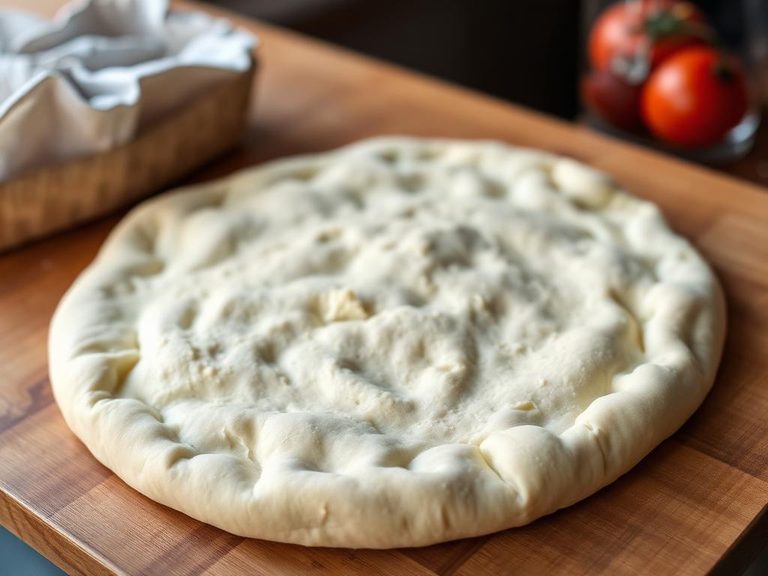
Unbleached all-purpose wheat flour is the workhorse of the kitchen, a pale, creamy powder milled from hard red or white wheat berries. Its moderate gluten content yields a tender yet structured crumb, perfect for everything from flaky biscuits to chewy pizza dough. Nutritionally, it's a dense source of carbohydrates, providing quick energy with a modest protein boost.
Calorie split: 13% protein · 82% carbs · 4% fat
↓ Full nutrition💚 Why it's loved
People love it for its incredible versatility and reliable results—it's the blank canvas that can become a crusty loaf, a delicate cake, or a silky sauce thickener. Its mild, slightly nutty flavor complements rather than competes with other ingredients, making it a foundational staple in global cuisines.
⚠️ Watch-outs & how to enjoy it better
As a refined grain, it can cause rapid blood-sugar spikes and lacks the full nutrient profile of whole grains. It's also a major source of gluten, making it unsafe for those with celiac disease or gluten sensitivity. To counteract, pair it with protein (like eggs or beans) and healthy fats (like olive oil) to slow digestion, or choose a portion-controlled serving.
Key benefits
- Provides quick-release energy from complex carbohydrates
- Contains plant-based protein for muscle maintenance
- Source of dietary fiber for digestive health
- Versatile base for countless staple foods
- Fortified with iron and B vitamins in many regions
🍽️ Popular dishes





🌍 Where it's eaten
💡 Did you know?
The term 'all-purpose' is largely a North American marketing invention; in the UK and Australia, a similar product is called 'plain flour,' and the distinction between 'strong' and 'weak' flour is more commonly emphasized for baking.
Full nutrition (USDA data · scales with serving)
| Water | 11.1 g |
| Energy (Atwater General Factors) | 362 kcal |
| Energy (Atwater Specific Factors) | 370 kcal |
| Energy | 362 kcal |
| Energy | 1510 kj |
| Nitrogen | 1.9 g |
| Protein | 12.0 g |
| Total lipid (fat) | 1.7 g |
| Ash | 0.56 g |
| Carbohydrate, by difference | 74.6 g |
| Fiber, total dietary | 3.0 g |
| Calcium, Ca | 22.0 mg |
| Iron, Fe | 1.2 mg |
| Magnesium, Mg | 36.1 mg |
| Phosphorus, P | 134 mg |
| Potassium, K | 150 mg |
| Sodium, Na | 2.0 mg |
| Zinc, Zn | 1.1 mg |
| Copper, Cu | 0.21 mg |
| Manganese, Mn | 0.82 mg |
| Selenium, Se | 20.1 ug |
| Molybdenum, Mo | 42.6 ug |
| Thiamin | 0.30 mg |
| Riboflavin | 0.00 mg |
| Niacin | 1.6 mg |
| Vitamin B-6 | 0.09 mg |
| Folate, total | 23.0 ug |
Fat & fatty acid profile (per 100g)
Estimated from Pasta, gluten-free, corn flour and quinoa flour, cooked, ANCIENT HARVEST — USDA does not publish this profile for Flour.
| Fatty acids, total saturated | 0.15 g |
| SFA 4:0 | 0.00 g |
| SFA 6:0 | 0.00 g |
| SFA 8:0 | 0.00 g |
| SFA 10:0 | 0.00 g |
| SFA 12:0 | 0.00 g |
| SFA 14:0 | 0.01 g |
| SFA 15:0 | 0.00 g |
| SFA 16:0 | 0.09 g |
| SFA 17:0 | 0.00 g |
| SFA 18:0 | 0.04 g |
| SFA 20:0 | 0.01 g |
| SFA 22:0 | 0.00 g |
| SFA 24:0 | 0.00 g |
| Fatty acids, total monounsaturated | 0.66 g |
| MUFA 14:1 | 0.00 g |
| MUFA 15:1 | 0.17 g |
| MUFA 16:1 | 0.00 g |
| MUFA 16:1 c | 0.00 g |
| MUFA 17:1 | 0.00 g |
| MUFA 18:1 | 0.48 g |
| MUFA 18:1 c | 0.47 g |
| MUFA 20:1 | 0.01 g |
| MUFA 22:1 | 0.00 g |
| MUFA 22:1 c | 0.00 g |
| MUFA 24:1 c | 0.00 g |
| Fatty acids, total polyunsaturated | 0.95 g |
| PUFA 18:2 | 0.91 g |
| PUFA 18:2 n-6 c,c | 0.91 g |
| PUFA 18:2 CLAs | 0.00 g |
| PUFA 18:3 | 0.03 g |
| PUFA 18:3 n-3 c,c,c (ALA) | 0.03 g |
| PUFA 18:3 n-6 c,c,c | 0.00 g |
| PUFA 18:3i | 0.00 g |
| PUFA 18:4 | 0.00 g |
| PUFA 20:2 n-6 c,c | 0.00 g |
| PUFA 20:3 | 0.00 g |
| PUFA 20:3 n-3 | 0.00 g |
| PUFA 20:3 n-6 | 0.00 g |
| PUFA 20:4 | 0.00 g |
| PUFA 20:5 n-3 (EPA) | 0.00 g |
| PUFA 22:4 | 0.00 g |
| PUFA 22:5 n-3 (DPA) | 0.00 g |
| PUFA 22:6 n-3 (DHA) | 0.00 g |
| Fatty acids, total trans | 0.01 g |
| Fatty acids, total trans-monoenoic | 0.00 g |
| TFA 16:1 t | 0.00 g |
| TFA 18:1 t | 0.00 g |
| TFA 22:1 t | 0.00 g |
| TFA 18:2 t not further defined | 0.00 g |
| Fatty acids, total trans-polyenoic | 0.00 g |
| Cholesterol | 0.00 mg |
Amino acid profile (per 100g)
Estimated from Pasta, gluten-free, corn flour and quinoa flour, cooked, ANCIENT HARVEST — USDA does not publish this profile for Flour.
| Tryptophan | 0.02 g |
| Threonine | 0.10 g |
| Isoleucine | 0.09 g |
| Leucine | 0.35 g |
| Lysine | 0.16 g |
| Methionine | 0.06 g |
| Cystine | 0.07 g |
| Phenylalanine | 0.15 g |
| Tyrosine | 0.12 g |
| Valine | 0.11 g |
| Arginine | 0.18 g |
| Histidine | 0.09 g |
| Alanine | 0.21 g |
| Aspartic acid | 0.19 g |
| Glutamic acid | 0.46 g |
| Glycine | 0.12 g |
| Proline | 0.29 g |
| Serine | 0.15 g |
| Hydroxyproline | 0.00 g |
FAQ
What's the difference between unbleached and bleached all-purpose flour?
Unbleached flour is milled and aged naturally by exposure to air, resulting in a creamier color and slightly denser texture. Bleached flour is chemically treated to whiten it quickly and create a softer, finer grain, which can be preferable for delicate cakes.
Can I substitute it for bread flour or cake flour?
Yes, with adjustments. For bread, adding a tablespoon of vital wheat gluten per cup can boost protein for better rise. For cake, replace 2 tablespoons per cup with cornstarch to mimic cake flour's lower protein content.
Why does my recipe say to 'sift' the flour?
Sifting aerates the flour, removing lumps and allowing it to incorporate more evenly into batters. For dry ingredients, it ensures proper measurement; for combining with wet ingredients, it helps prevent overmixing, which can make baked goods tough.
Nutrient density (calculated · NRF9.3)
Nutrient Rich Foods index: beneficial nutrients (protein, fiber, vitamins, minerals) minus saturated fat, added sugar & sodium, per 100 kcal.
NRF9.3 index — Fulgoni, Keast & Drewnowski, 2009. Computed from USDA nutrients.
Weight-loss friendliness (composite index)
Energy density 3.62 kcal/g · 13% calories from protein · 3.0 g fiber · 0.0 g sugar per 100 g.
Composite of energy density (Rolls et al., 1999), protein & fiber satiety, minus sugar. A calculated heuristic — ranks satiety-per-calorie, not a clinical measure.
Dietary load (calculated from USDA values)
Potential renal acid load. Positive = acid-forming, negative = alkaline-forming.
Sodium-to-potassium ratio: 0.01 (lower is better — aim for ≤ 1)
Sodium:potassium per WHO potassium guidance. Computed from USDA nutrients.