

Flour, oat, whole grain
Whole food · Cereal Grains and Pasta

Photo: Wikipedia
Whole grain oat flour is a finely milled powder made by grinding whole oats, retaining the bran, germ, and endosperm. It has a mild, slightly sweet, nutty flavor and a soft, dense texture that creates moist, chewy baked goods. Nutritionally, it's a fiber powerhouse, providing over 10 grams per 100g, along with a solid 13g of plant-based protein.
Calorie split: 14% protein · 72% carbs · 15% fat
↓ Full nutrition💚 Why it's loved
People love it for its wholesome, comforting taste that adds a subtle nuttiness to pancakes, cookies, and breads. Its versatility makes it a staple for healthy baking, thickening sauces, or as a nutrient-boosting addition to smoothies.
⚠️ Watch-outs & how to enjoy it better
Its dense texture can make baked goods heavy if not balanced with leavening agents. Those with celiac disease or severe gluten sensitivity must ensure it's certified gluten-free to avoid cross-contamination. Tip: Combine with lighter flours like tapioca or almond flour for better rise, and always check labels for allergen warnings.
Key benefits
- Excellent source of soluble fiber (beta-glucan) for heart health.
- Provides sustained energy from complex carbohydrates.
- Naturally gluten-free (if processed in a dedicated facility).
- Rich in minerals like manganese, phosphorus, and magnesium.
🍽️ Popular dishes

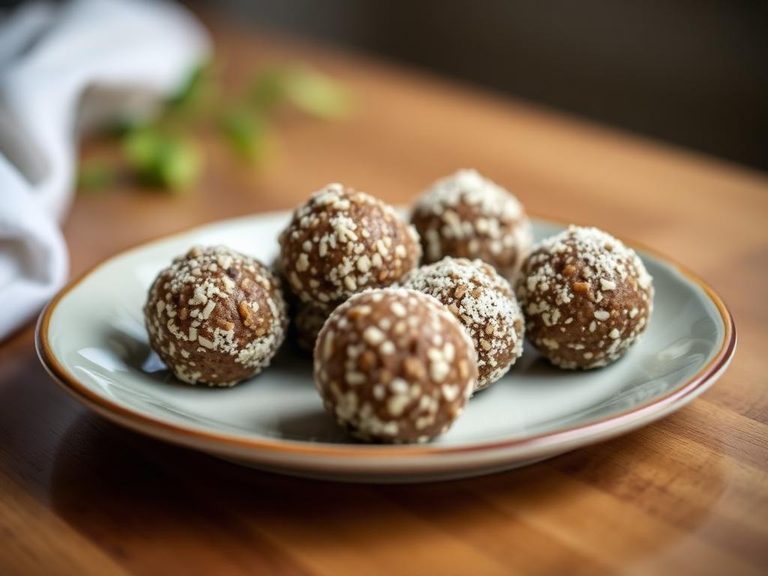
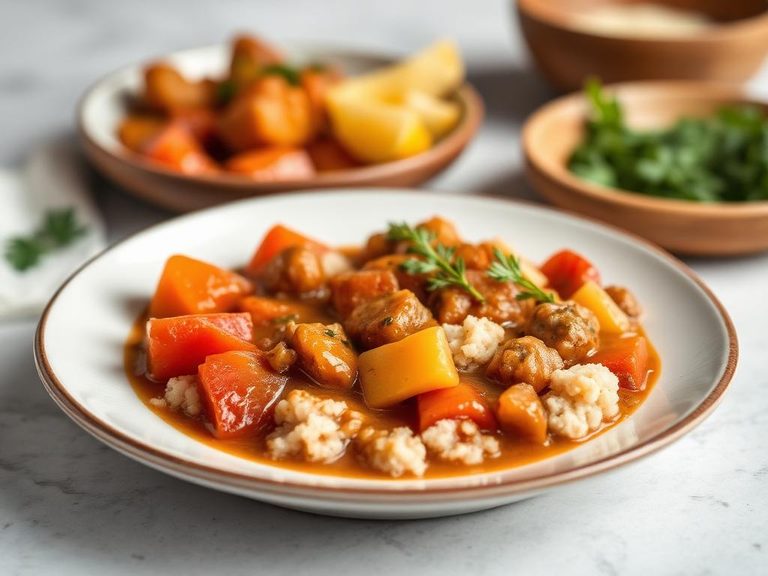
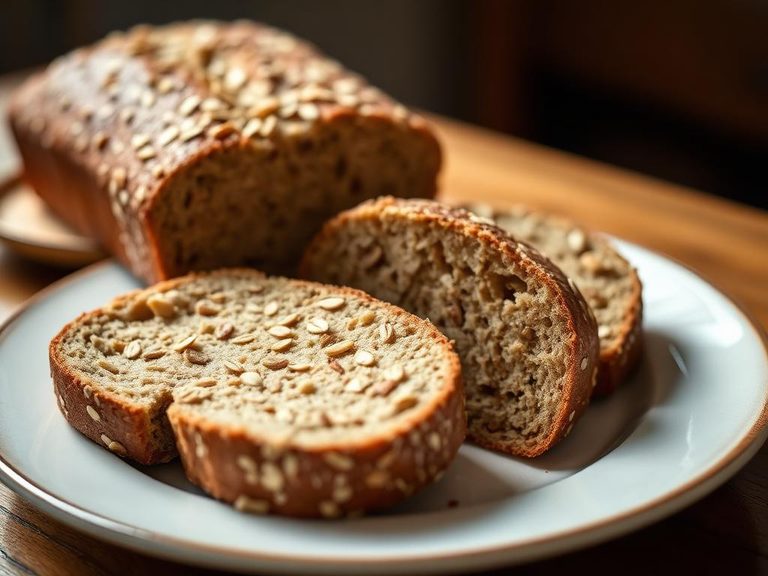
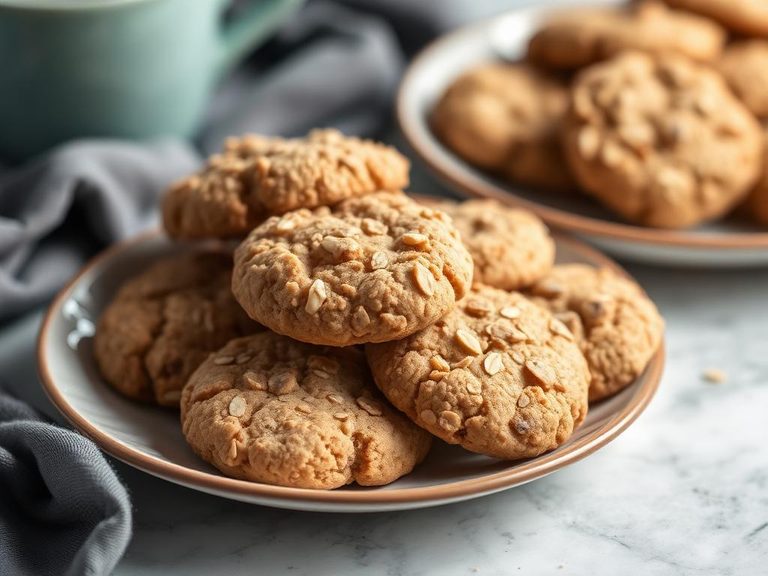
🌍 Where it's eaten
💡 Did you know?
Oat flour can be made at home simply by pulsing rolled oats in a blender, making it one of the easiest whole-grain flours to produce fresh.
Full nutrition (USDA data · scales with serving)
| Water | 8.9 g |
| Energy (Atwater General Factors) | 389 kcal |
| Energy (Atwater Specific Factors) | 386 kcal |
| Nitrogen | 2.1 g |
| Protein | 13.2 g |
| Total lipid (fat) | 6.3 g |
| Ash | 1.7 g |
| Carbohydrate, by difference | 69.9 g |
| Fiber, total dietary | 10.5 g |
| Total dietary fiber (AOAC 2011.25) | 12.9 g |
| High Molecular Weight Dietary Fiber (HMWDF) | 11.6 g |
| Low Molecular Weight Dietary Fiber (LMWDF) | 1.2 g |
| Beta-glucan | 4.2 g |
| Starch | 53.4 g |
| Calcium, Ca | 42.8 mg |
| Iron, Fe | 4.0 mg |
| Magnesium, Mg | 125 mg |
| Phosphorus, P | 372 mg |
| Potassium, K | 373 mg |
| Sodium, Na | 3.6 mg |
| Zinc, Zn | 2.8 mg |
| Copper, Cu | 0.44 mg |
| Manganese, Mn | 3.3 mg |
| Selenium, Se | 38.2 ug |
| Molybdenum, Mo | 125 ug |
| Thiamin | 0.39 mg |
| Riboflavin | 0.16 mg |
| Niacin | 1.9 mg |
| Vitamin B-6 | 0.15 mg |
| Biotin | 20.1 ug |
| Folate, total | 34.7 ug |
Fat & fatty acid profile (per 100g)
Estimated from Pasta, gluten-free, corn flour and quinoa flour, cooked, ANCIENT HARVEST — USDA does not publish this profile for Flour.
| Fatty acids, total saturated | 0.15 g |
| SFA 4:0 | 0.00 g |
| SFA 6:0 | 0.00 g |
| SFA 8:0 | 0.00 g |
| SFA 10:0 | 0.00 g |
| SFA 12:0 | 0.00 g |
| SFA 14:0 | 0.01 g |
| SFA 15:0 | 0.00 g |
| SFA 16:0 | 0.09 g |
| SFA 17:0 | 0.00 g |
| SFA 18:0 | 0.04 g |
| SFA 20:0 | 0.01 g |
| SFA 22:0 | 0.00 g |
| SFA 24:0 | 0.00 g |
| Fatty acids, total monounsaturated | 0.66 g |
| MUFA 14:1 | 0.00 g |
| MUFA 15:1 | 0.17 g |
| MUFA 16:1 | 0.00 g |
| MUFA 16:1 c | 0.00 g |
| MUFA 17:1 | 0.00 g |
| MUFA 18:1 | 0.48 g |
| MUFA 18:1 c | 0.47 g |
| MUFA 20:1 | 0.01 g |
| MUFA 22:1 | 0.00 g |
| MUFA 22:1 c | 0.00 g |
| MUFA 24:1 c | 0.00 g |
| Fatty acids, total polyunsaturated | 0.95 g |
| PUFA 18:2 | 0.91 g |
| PUFA 18:2 n-6 c,c | 0.91 g |
| PUFA 18:2 CLAs | 0.00 g |
| PUFA 18:3 | 0.03 g |
| PUFA 18:3 n-3 c,c,c (ALA) | 0.03 g |
| PUFA 18:3 n-6 c,c,c | 0.00 g |
| PUFA 18:3i | 0.00 g |
| PUFA 18:4 | 0.00 g |
| PUFA 20:2 n-6 c,c | 0.00 g |
| PUFA 20:3 | 0.00 g |
| PUFA 20:3 n-3 | 0.00 g |
| PUFA 20:3 n-6 | 0.00 g |
| PUFA 20:4 | 0.00 g |
| PUFA 20:5 n-3 (EPA) | 0.00 g |
| PUFA 22:4 | 0.00 g |
| PUFA 22:5 n-3 (DPA) | 0.00 g |
| PUFA 22:6 n-3 (DHA) | 0.00 g |
| Fatty acids, total trans | 0.01 g |
| Fatty acids, total trans-monoenoic | 0.00 g |
| TFA 16:1 t | 0.00 g |
| TFA 18:1 t | 0.00 g |
| TFA 22:1 t | 0.00 g |
| TFA 18:2 t not further defined | 0.00 g |
| Fatty acids, total trans-polyenoic | 0.00 g |
| Cholesterol | 0.00 mg |
Amino acid profile (per 100g)
Estimated from Pasta, gluten-free, corn flour and quinoa flour, cooked, ANCIENT HARVEST — USDA does not publish this profile for Flour.
| Tryptophan | 0.02 g |
| Threonine | 0.10 g |
| Isoleucine | 0.09 g |
| Leucine | 0.35 g |
| Lysine | 0.16 g |
| Methionine | 0.06 g |
| Cystine | 0.07 g |
| Phenylalanine | 0.15 g |
| Tyrosine | 0.12 g |
| Valine | 0.11 g |
| Arginine | 0.18 g |
| Histidine | 0.09 g |
| Alanine | 0.21 g |
| Aspartic acid | 0.19 g |
| Glutamic acid | 0.46 g |
| Glycine | 0.12 g |
| Proline | 0.29 g |
| Serine | 0.15 g |
| Hydroxyproline | 0.00 g |
FAQ
Is oat flour the same as ground oats?
Yes, oat flour is simply whole oats ground into a fine powder. You can make it at home by blending rolled or steel-cut oats until smooth.
Can I substitute oat flour for all-purpose flour 1:1?
Not directly. Oat flour absorbs more moisture and lacks gluten, so recipes often need adjustments—like adding a binder (e.g., xanthan gum) or increasing liquids—to maintain structure and texture.
Is oat flour gluten-free?
Pure oats are naturally gluten-free, but they are often processed in facilities that handle wheat, leading to cross-contamination. Always look for a 'certified gluten-free' label if avoiding gluten is critical.
Nutrient density (calculated · NRF9.3)
Nutrient Rich Foods index: beneficial nutrients (protein, fiber, vitamins, minerals) minus saturated fat, added sugar & sodium, per 100 kcal.
NRF9.3 index — Fulgoni, Keast & Drewnowski, 2009. Computed from USDA nutrients.
Weight-loss friendliness (composite index)
Energy density 3.89 kcal/g · 14% calories from protein · 10.5 g fiber · 0.0 g sugar per 100 g.
Composite of energy density (Rolls et al., 1999), protein & fiber satiety, minus sugar. A calculated heuristic — ranks satiety-per-calorie, not a clinical measure.
Dietary load (calculated from USDA values)
Potential renal acid load. Positive = acid-forming, negative = alkaline-forming.
Sodium-to-potassium ratio: 0.01 (lower is better — aim for ≤ 1)
Sodium:potassium per WHO potassium guidance. Computed from USDA nutrients.