Thickening for stews and gravies
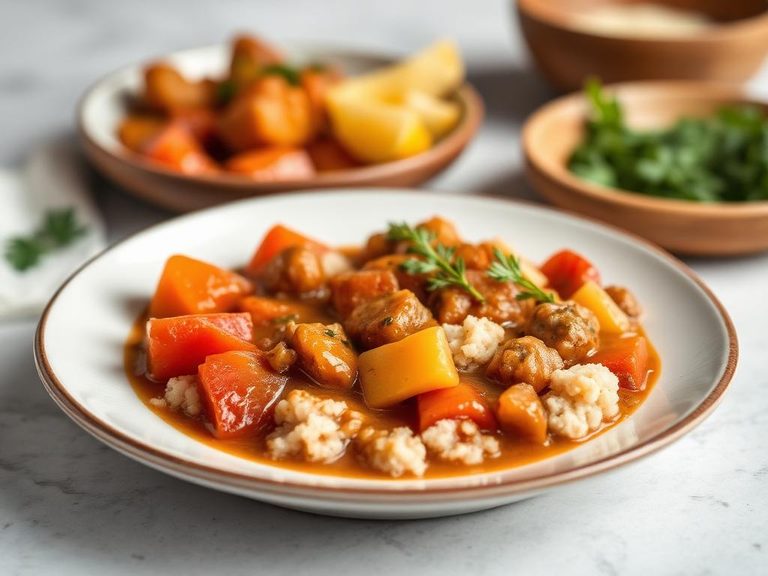
Thickening for stews and gravies is a foundational cooking technique, not a standalone dish, used to create rich, velvety sauces and hearty stews. It typically involves a mixture of fat (like butter or oil) and a starch (such as flour or cornstarch) cooked together, often as a roux, and then combined with liquid like broth or stock. This method is a cornerstone of culinary traditions worldwide, from French and Italian to American Southern and British cooking.
🍽️ Nutrition at a glance
A basic roux-based thickener is primarily a source of carbohydrates and fat, with minimal protein. A typical serving provides a modest calorie boost to the final dish, roughly 50-100 kcal per 1/4 cup, and contributes small amounts of iron and B vitamins from the flour.
Nutrition breakdown
| Calories | 75 kcal |
| Protein | 1.5 g |
| Carbs | 8 g |
| Fat | 4 g |
| Fiber | 0.5 g |
| Sugar | 0 g |
| Sodium | 10 mg |
| Iron | 0.8 mg |
| Thiamin (B1) | 0.1 mg |
| Niacin (B3) | 1.0 mg |
| Folate | 15 µg |
| Manganese | 0.1 mg |
| Selenium | 3.5 µg |
Per 1/4 cup (60 g) · estimated, varies by recipe
💡 What's interesting
The cultural significance lies in its transformative power—turning thin liquids into luxurious sauces that define classic dishes like beef bourguignon, gumbo, or Sunday gravy. Nutritionally, it's a key example of how cooking technique alters food texture and mouthfeel without adding significant new nutrients.
🍽️ Related dishes
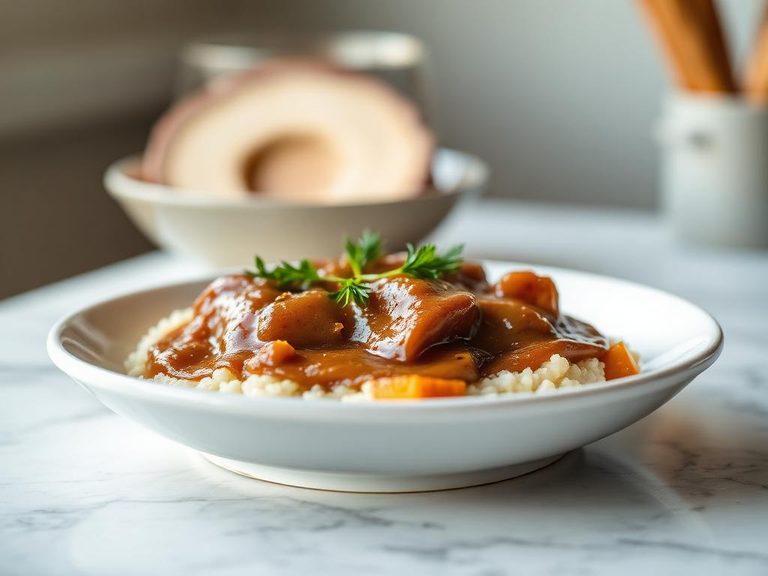 Thickening agent for gravies and sauces
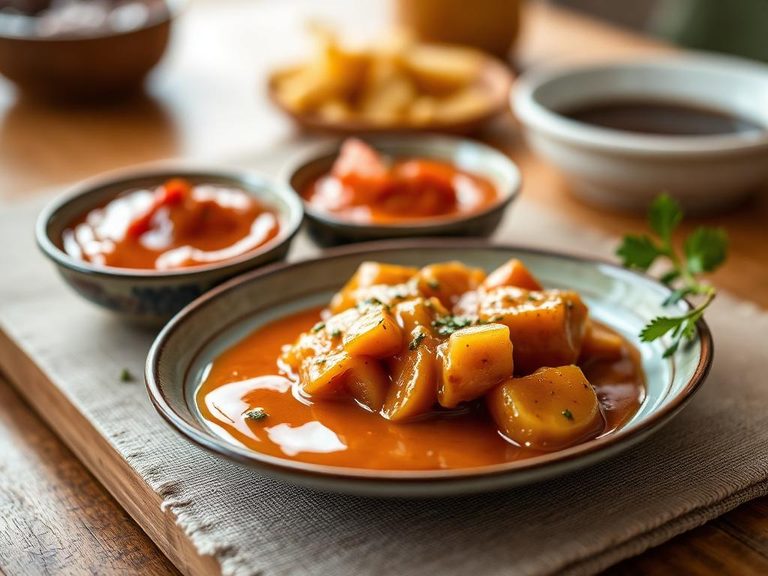 Thickening agent for sauces and gravies
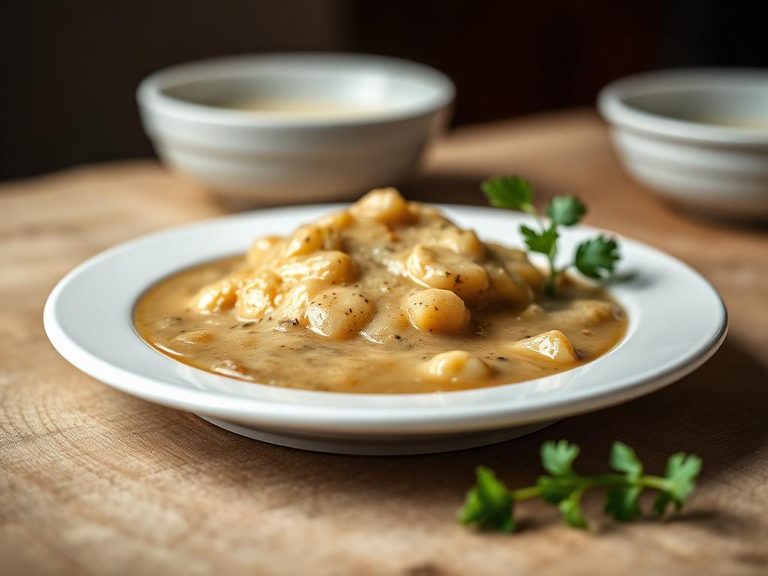 Thickener for soups, stews, and gravies
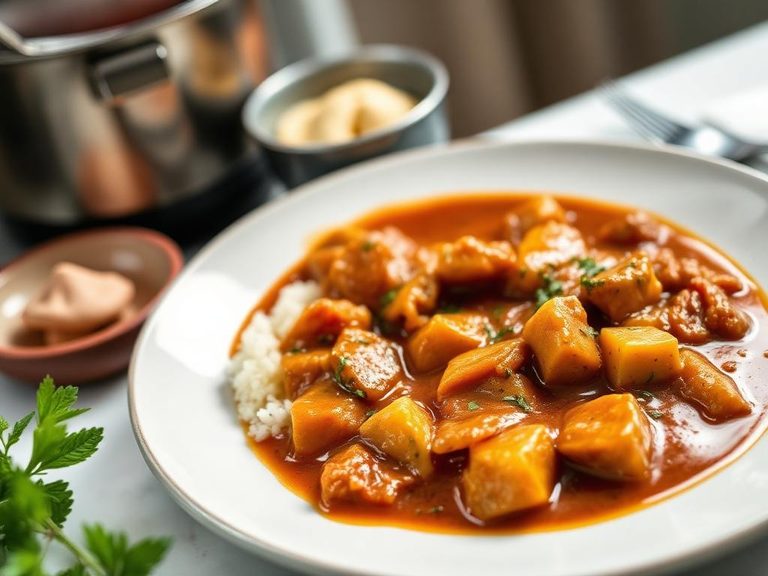 Thickened stews and gravies
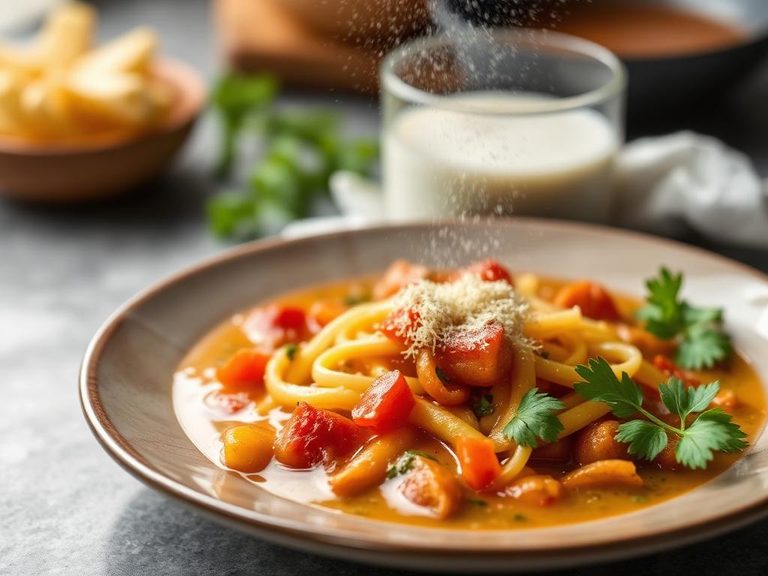 Thickening agent for soups and stews
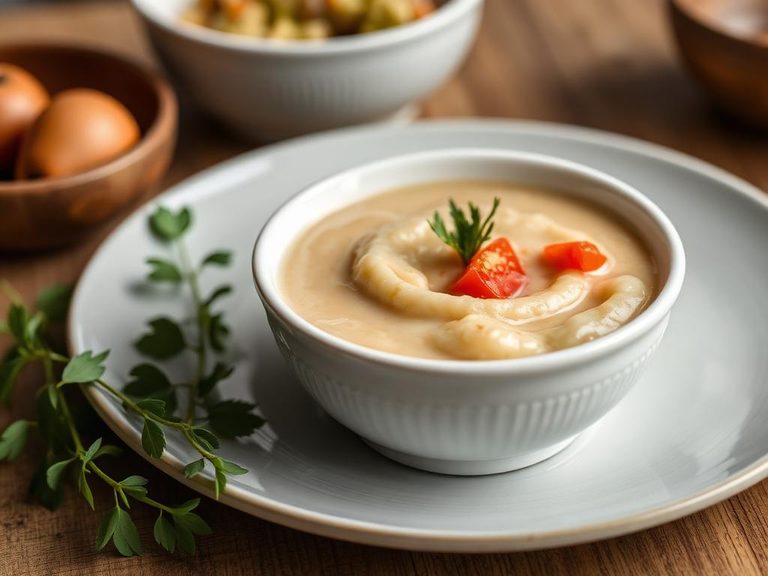 Thickening agent for soups or stews
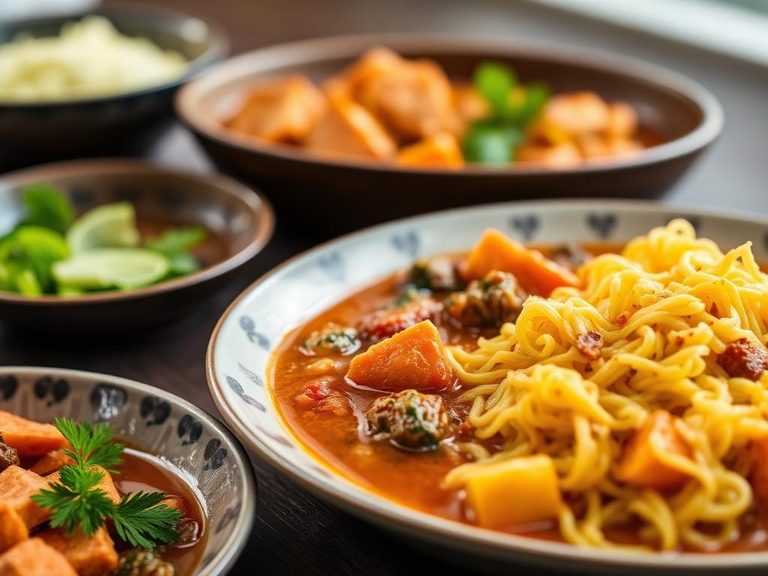 Added to stews or curries for thickening and sweetness
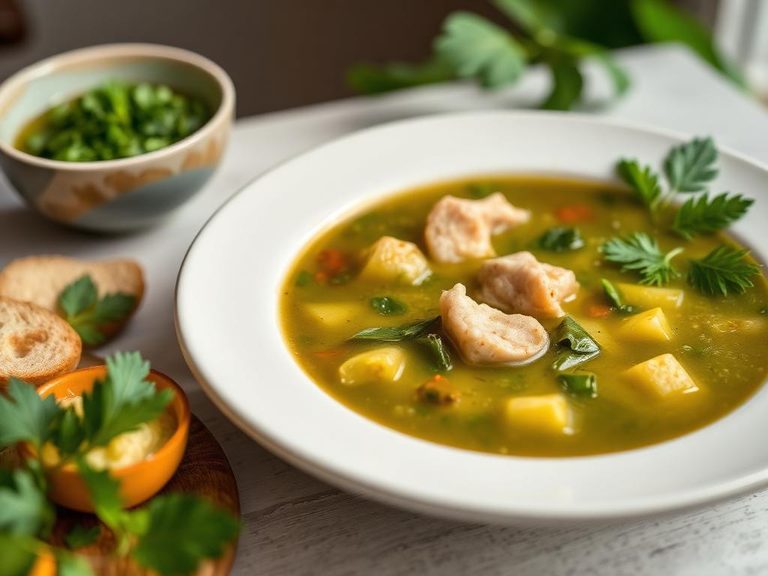 In soups and stews as a thickening green