

Cornstarch
Whole food · Cereal Grains and Pasta
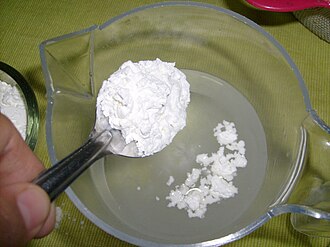
Photo: Wikipedia
Cornstarch is a fine, silky powder derived from the endosperm of corn kernels, prized for its exceptional thickening power. When heated in liquid, it transforms into a glossy, translucent gel that gives sauces, soups, and puddings a luxuriously smooth, velvety texture. Nutritionally, it is a concentrated source of pure carbohydrate, providing quick energy with virtually no protein, fat, or fiber.
Calorie split: 0% protein · 100% carbs · 0% fat
↓ Full nutrition💚 Why it's loved
People love cornstarch for its magical ability to instantly transform thin liquids into perfectly smooth, glossy sauces without altering the primary flavor. Its neutral taste and incredible versatility make it a foundational staple in kitchens worldwide, from stir-fries to holiday pies.
⚠️ Watch-outs & how to enjoy it better
As a refined starch with a very high glycemic index, it can cause rapid blood-sugar spikes, making it a concern for those managing diabetes or insulin resistance. To mitigate this, always pair cornstarch-thickened dishes with protein (like chicken or tofu) and fiber (like vegetables) to slow digestion. Also, using it in moderation is key, as over-thickening can lead to a gummy, unpleasant texture.
Key benefits
- Excellent gluten-free thickening agent for sauces, gravies, and soups.
- Creates a light, crisp coating for fried foods.
- Essential for achieving the smooth texture in custards and puddings.
- Provides a quick source of energy from its high carbohydrate content.
- Helps give baked goods like cakes a tender, fine crumb.
🍽️ Popular dishes
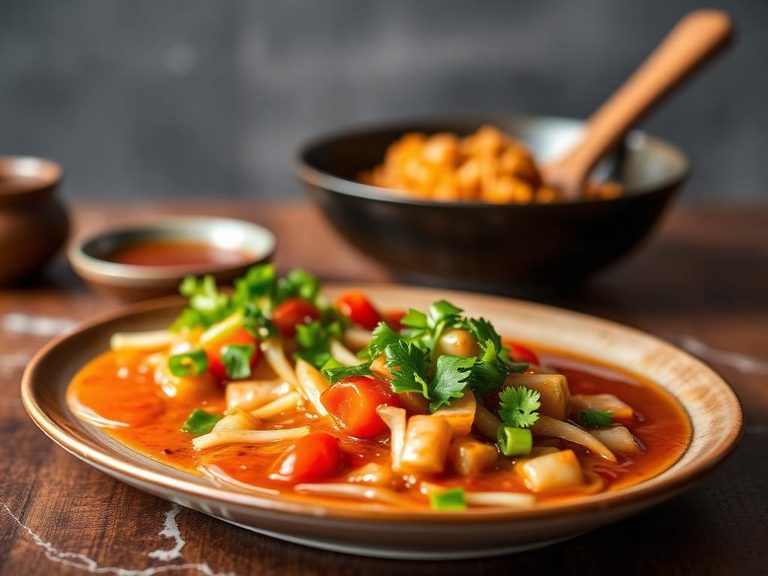

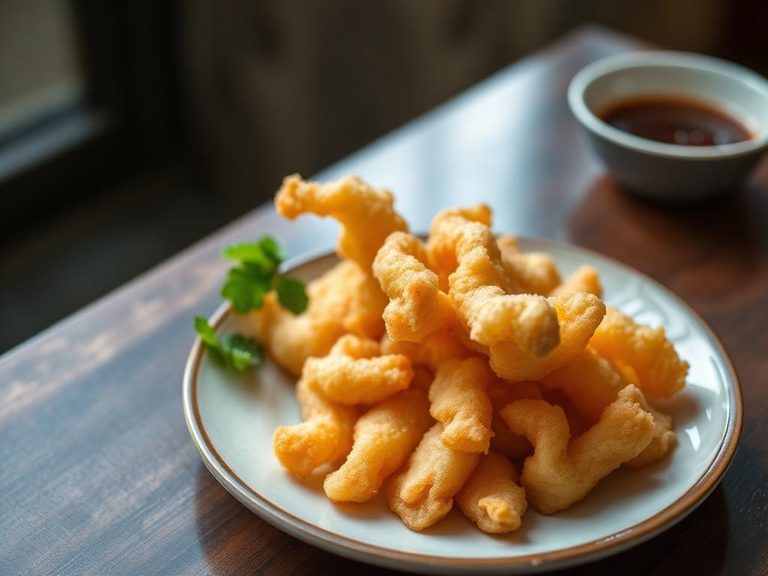
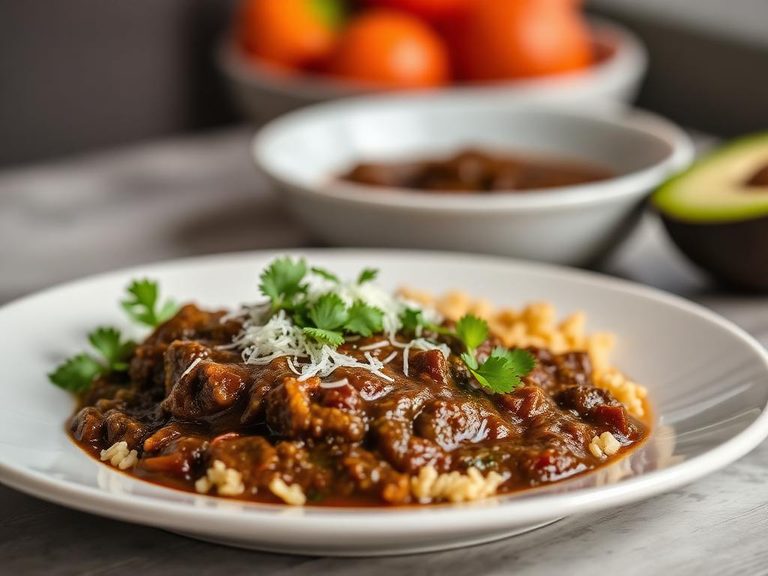
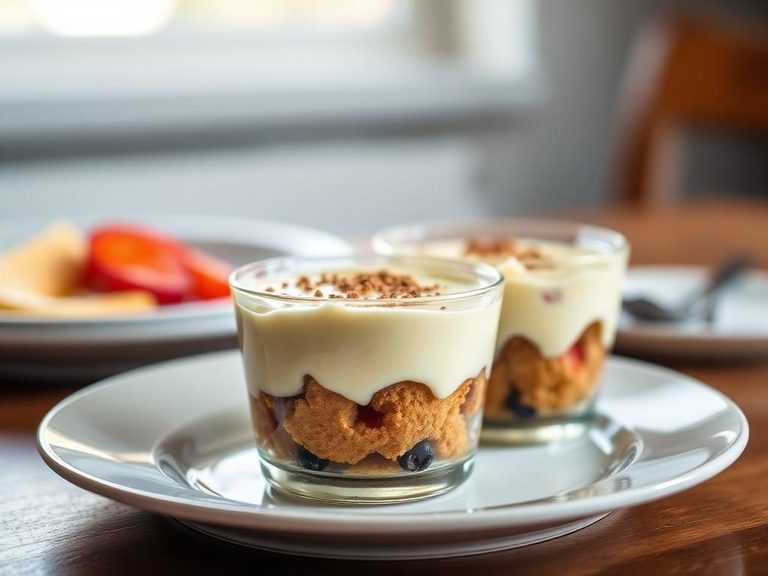

🌍 Where it's eaten
💡 Did you know?
Cornstarch is so fine and dry that a cloud of it suspended in air can be highly flammable and even explosive under the right conditions, a principle sometimes used in industrial dust explosions.
Full nutrition (USDA data · scales with serving)
| Water | 8.3 g |
| Energy | 381 kcal |
| Energy | 1594 kj |
| Protein | 0.26 g |
| Total lipid (fat) | 0.05 g |
| Ash | 0.09 g |
| Carbohydrate, by difference | 91.3 g |
| Fiber, total dietary | 0.90 g |
| Total Sugars | 0.00 g |
| Calcium, Ca | 2.0 mg |
| Iron, Fe | 0.47 mg |
| Magnesium, Mg | 3.0 mg |
| Phosphorus, P | 13.0 mg |
| Potassium, K | 3.0 mg |
| Sodium, Na | 9.0 mg |
| Zinc, Zn | 0.06 mg |
| Copper, Cu | 0.05 mg |
| Manganese, Mn | 0.05 mg |
| Selenium, Se | 2.8 ug |
| Vitamin C, total ascorbic acid | 0.00 mg |
| Thiamin | 0.00 mg |
| Riboflavin | 0.00 mg |
| Niacin | 0.00 mg |
| Pantothenic acid | 0.00 mg |
| Vitamin B-6 | 0.00 mg |
| Folate, total | 0.00 ug |
| Folic acid | 0.00 ug |
| Folate, food | 0.00 ug |
| Folate, DFE | 0.00 ug |
| Choline, total | 0.40 mg |
| Vitamin B-12 | 0.00 ug |
| Vitamin B-12, added | 0.00 ug |
| Vitamin A, RAE | 0.00 ug |
| Retinol | 0.00 ug |
| Carotene, beta | 0.00 ug |
| Carotene, alpha | 0.00 ug |
| Cryptoxanthin, beta | 0.00 ug |
| Vitamin A, IU | 0.00 iu |
| Lycopene | 0.00 ug |
| Lutein + zeaxanthin | 0.00 ug |
| Vitamin E (alpha-tocopherol) | 0.00 mg |
| Vitamin E, added | 0.00 mg |
| Tocopherol, beta | 0.00 mg |
| Tocopherol, gamma | 0.00 mg |
| Tocopherol, delta | 0.00 mg |
| Tocotrienol, alpha | 0.00 mg |
| Tocotrienol, beta | 0.00 mg |
| Tocotrienol, gamma | 0.00 mg |
| Tocotrienol, delta | 0.00 mg |
| Vitamin D (D2 + D3), International Units | 0.00 iu |
| Vitamin D (D2 + D3) | 0.00 ug |
| Vitamin K (phylloquinone) | 0.00 ug |
| Alcohol, ethyl | 0.00 g |
| Caffeine | 0.00 mg |
| Theobromine | 0.00 mg |
Fat & fatty acid profile (per 100g)
| Fatty acids, total saturated | 0.01 g |
| SFA 4:0 | 0.00 g |
| SFA 6:0 | 0.00 g |
| SFA 8:0 | 0.00 g |
| SFA 10:0 | 0.00 g |
| SFA 12:0 | 0.00 g |
| SFA 14:0 | 0.00 g |
| SFA 16:0 | 0.01 g |
| SFA 18:0 | 0.00 g |
| Fatty acids, total monounsaturated | 0.02 g |
| MUFA 16:1 | 0.00 g |
| MUFA 18:1 | 0.02 g |
| MUFA 20:1 | 0.00 g |
| MUFA 22:1 | 0.00 g |
| Fatty acids, total polyunsaturated | 0.03 g |
| PUFA 18:2 | 0.03 g |
| PUFA 18:3 | 0.00 g |
| PUFA 18:4 | 0.00 g |
| PUFA 20:4 | 0.00 g |
| PUFA 20:5 n-3 (EPA) | 0.00 g |
| PUFA 22:5 n-3 (DPA) | 0.00 g |
| PUFA 22:6 n-3 (DHA) | 0.00 g |
| Cholesterol | 0.00 mg |
Amino acid profile (per 100g)
| Tryptophan | 0.00 g |
| Threonine | 0.01 g |
| Isoleucine | 0.01 g |
| Leucine | 0.04 g |
| Lysine | 0.01 g |
| Methionine | 0.01 g |
| Cystine | 0.01 g |
| Phenylalanine | 0.01 g |
| Tyrosine | 0.01 g |
| Valine | 0.01 g |
| Arginine | 0.01 g |
| Histidine | 0.01 g |
| Alanine | 0.02 g |
| Aspartic acid | 0.02 g |
| Glutamic acid | 0.05 g |
| Glycine | 0.01 g |
| Proline | 0.02 g |
| Serine | 0.01 g |
FAQ
What's the difference between cornstarch and cornflour?
In the US and many countries, 'cornstarch' is the pure starch used for thickening. In the UK and some other regions, 'cornflour' is the term for the same product. In the US, 'cornmeal' or 'corn flour' refers to ground whole corn kernels, which is different.
How do I prevent lumps when using cornstarch?
Always make a 'slurry' first: mix the cornstarch with a small amount of cold liquid (water, broth, or milk) to form a smooth paste before slowly whisking it into the hot dish you want to thicken.
Can I use cornstarch as a substitute for flour in baking?
Not directly in a 1:1 ratio. Cornstarch has no gluten and behaves differently. However, it can be mixed with all-purpose flour (e.g., replacing 1/4 cup flour with 1/4 cup cornstarch) to create a 'cake flour' substitute for a lighter, more tender texture in cakes.
Nutrient density (calculated · NRF9.3)
Nutrient Rich Foods index: beneficial nutrients (protein, fiber, vitamins, minerals) minus saturated fat, added sugar & sodium, per 100 kcal.
NRF9.3 index — Fulgoni, Keast & Drewnowski, 2009. Computed from USDA nutrients.
Weight-loss friendliness (composite index)
Energy density 3.81 kcal/g · 0% calories from protein · 0.9 g fiber · 0.0 g sugar per 100 g.
Composite of energy density (Rolls et al., 1999), protein & fiber satiety, minus sugar. A calculated heuristic — ranks satiety-per-calorie, not a clinical measure.
Dietary load (calculated from USDA values)
Potential renal acid load. Positive = acid-forming, negative = alkaline-forming.
Sodium-to-potassium ratio: 3.00 (lower is better — aim for ≤ 1)
Sodium:potassium per WHO potassium guidance. Computed from USDA nutrients.