

Corn, sweet, yellow, frozen, kernels cut off cob, unprepared (Includes foods for USDA's Food Distribution Program)
Whole food · Vegetables and Vegetable Products
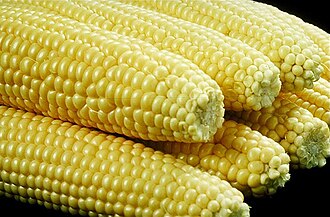
Photo: Wikipedia
These are bright yellow, individually quick-frozen sweet corn kernels, harvested at peak ripeness and flash-frozen to lock in their crisp, juicy texture and sunny sweetness. Nutritionally, they are a standout source of fiber and a good provider of plant-based protein for a vegetable, all for under 90 calories per 100g. They offer a convenient, year-round taste of summer with a satisfying pop in every bite.
Calorie split: 12% protein · 81% carbs · 7% fat
↓ Full nutrition💚 Why it's loved
People adore frozen sweet corn for its reliable, burst-of-sunshine sweetness and incredible versatility—it elevates everything from simple sides to complex casseroles with minimal prep. It's a nostalgic comfort food that bridges cuisines, from American barbecues to Indian curries.
⚠️ Watch-outs & how to enjoy it better
As a starchy vegetable, it can cause blood sugar spikes if eaten in large quantities alone, so pairing it with protein or healthy fats (like in a salad with beans or a stir-fry with tofu) helps moderate the glycemic response. Some individuals may experience digestive gas due to its fiber content; starting with smaller portions and ensuring thorough chewing can help.
Key benefits
- Excellent source of dietary fiber for digestive health.
- Good plant-based protein source for a vegetable.
- Rich in antioxidants like lutein and zeaxanthin.
- Naturally low in fat and sodium.
- Provides sustained energy from complex carbohydrates.
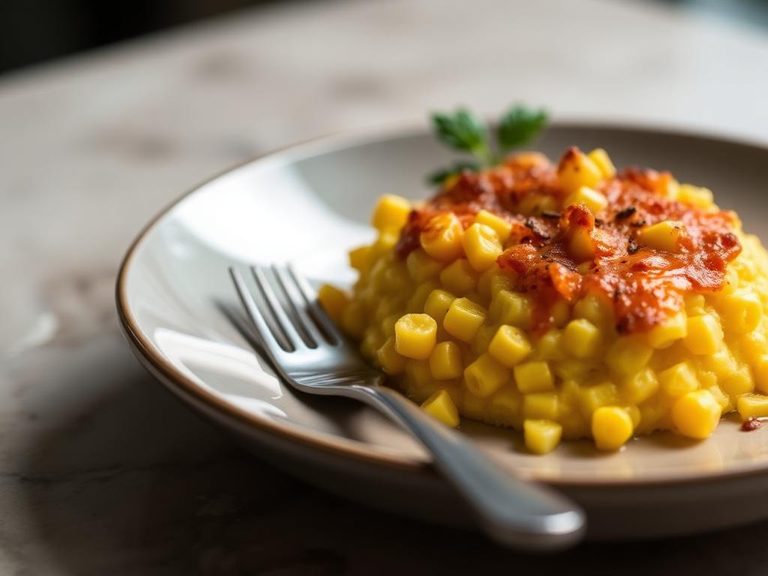
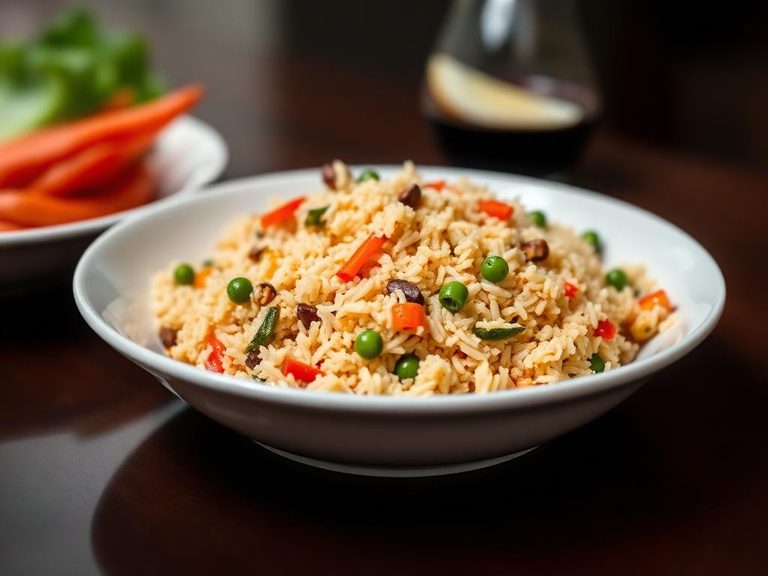
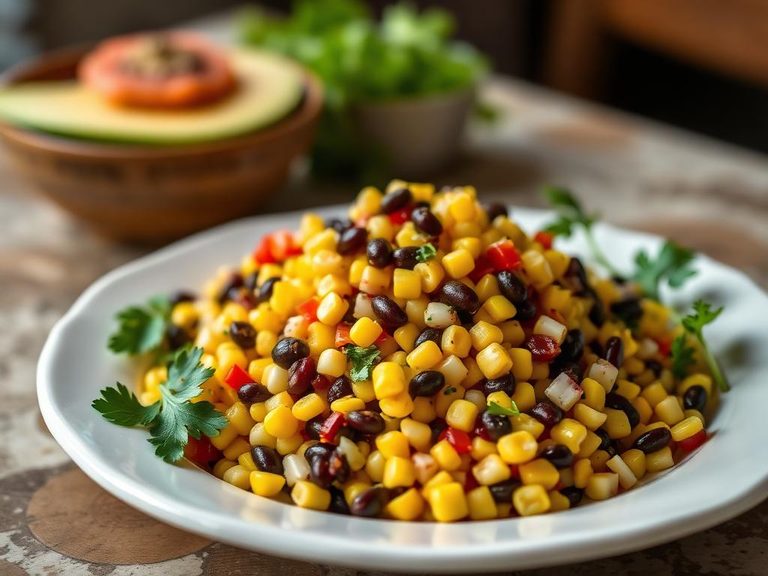
🍽️ Popular dishes
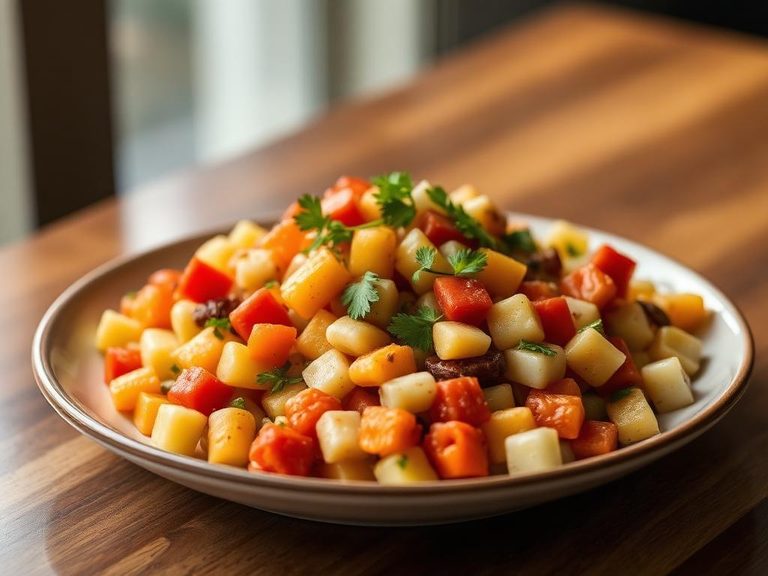
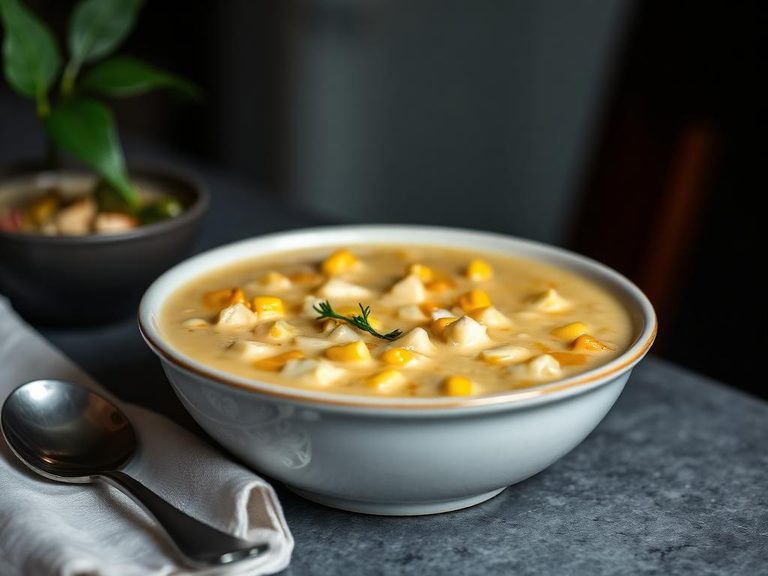
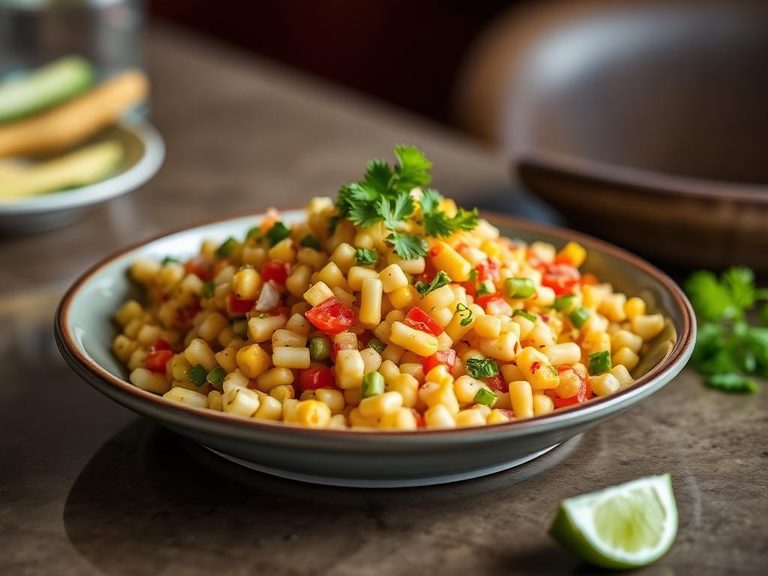
🌍 Where it's eaten
💡 Did you know?
The sweetness in modern sweet corn is due to a genetic mutation that slows the conversion of sugars to starch after harvest, which is why flash-freezing within hours of picking is crucial to preserve that peak sweetness.
Full nutrition (USDA data · scales with serving)
| Water | 75.0 g |
| Energy | 88.0 kcal |
| Energy | 368 kj |
| Protein | 3.0 g |
| Total lipid (fat) | 0.78 g |
| Ash | 0.48 g |
| Carbohydrate, by difference | 20.7 g |
| Fiber, total dietary | 2.1 g |
| Total Sugars | 2.5 g |
| Sucrose | 1.6 g |
| Glucose | 0.38 g |
| Fructose | 0.30 g |
| Lactose | 0.00 g |
| Maltose | 0.17 g |
| Galactose | 0.00 g |
| Starch | 15.1 g |
| Calcium, Ca | 4.0 mg |
| Iron, Fe | 0.42 mg |
| Magnesium, Mg | 18.0 mg |
| Phosphorus, P | 70.0 mg |
| Potassium, K | 213 mg |
| Sodium, Na | 3.0 mg |
| Zinc, Zn | 0.38 mg |
| Copper, Cu | 0.04 mg |
| Manganese, Mn | 0.12 mg |
| Selenium, Se | 0.70 ug |
| Fluoride, F | 14.6 ug |
| Vitamin C, total ascorbic acid | 6.4 mg |
| Thiamin | 0.08 mg |
| Riboflavin | 0.07 mg |
| Niacin | 1.7 mg |
| Pantothenic acid | 0.36 mg |
| Vitamin B-6 | 0.17 mg |
| Folate, total | 36.0 ug |
| Folic acid | 0.00 ug |
| Folate, food | 36.0 ug |
| Folate, DFE | 36.0 ug |
| Choline, total | 24.0 mg |
| Vitamin B-12 | 0.00 ug |
| Vitamin B-12, added | 0.00 ug |
| Vitamin A, RAE | 10.0 ug |
| Retinol | 0.00 ug |
| Carotene, beta | 49.0 ug |
| Carotene, alpha | 17.0 ug |
| Cryptoxanthin, beta | 120 ug |
| Vitamin A, IU | 195 iu |
| Lycopene | 0.00 ug |
| Lutein + zeaxanthin | 672 ug |
| Vitamin E (alpha-tocopherol) | 0.08 mg |
| Vitamin E, added | 0.00 mg |
| Tocopherol, beta | 0.00 mg |
| Tocopherol, gamma | 0.15 mg |
| Tocopherol, delta | 0.00 mg |
| Vitamin D (D2 + D3), International Units | 0.00 iu |
| Vitamin D (D2 + D3) | 0.00 ug |
| Vitamin K (phylloquinone) | 0.30 ug |
| Alcohol, ethyl | 0.00 g |
| Caffeine | 0.00 mg |
| Theobromine | 0.00 mg |
Fat & fatty acid profile (per 100g)
| Fatty acids, total saturated | 0.12 g |
| SFA 4:0 | 0.00 g |
| SFA 6:0 | 0.00 g |
| SFA 8:0 | 0.00 g |
| SFA 10:0 | 0.00 g |
| SFA 12:0 | 0.00 g |
| SFA 14:0 | 0.00 g |
| SFA 16:0 | 0.11 g |
| SFA 18:0 | 0.01 g |
| Fatty acids, total monounsaturated | 0.23 g |
| MUFA 16:1 | 0.00 g |
| MUFA 18:1 | 0.23 g |
| MUFA 20:1 | 0.00 g |
| MUFA 22:1 | 0.00 g |
| Fatty acids, total polyunsaturated | 0.37 g |
| PUFA 18:2 | 0.35 g |
| PUFA 18:3 | 0.01 g |
| PUFA 18:4 | 0.00 g |
| PUFA 20:4 | 0.00 g |
| PUFA 20:5 n-3 (EPA) | 0.00 g |
| PUFA 22:5 n-3 (DPA) | 0.00 g |
| PUFA 22:6 n-3 (DHA) | 0.00 g |
| Fatty acids, total trans | 0.00 g |
| Cholesterol | 0.00 mg |
Amino acid profile (per 100g)
| Tryptophan | 0.03 g |
| Threonine | 0.09 g |
| Isoleucine | 0.09 g |
| Leucine | 0.36 g |
| Lysine | 0.27 g |
| Methionine | 0.07 g |
| Cystine | 0.04 g |
| Phenylalanine | 0.14 g |
| Tyrosine | 0.11 g |
| Valine | 0.14 g |
| Arginine | 0.12 g |
| Histidine | 0.08 g |
| Alanine | 0.24 g |
| Aspartic acid | 0.20 g |
| Glutamic acid | 0.58 g |
| Glycine | 0.11 g |
| Proline | 0.37 g |
| Serine | 0.16 g |
FAQ
Is frozen corn as nutritious as fresh?
Yes, often more so. Frozen corn is typically flash-frozen at peak ripeness, which locks in nutrients like vitamin C and antioxidants that can degrade in fresh corn during transport and storage.
Do I need to thaw frozen corn before cooking?
Not necessarily. For most applications like sautéing, boiling, or adding to soups and casseroles, you can cook it directly from frozen. For salads or quick defrosting, you can rinse under cold water or microwave briefly.
What's the best way to cook frozen corn for a simple side?
For a quick, flavorful side, sauté the frozen kernels in a little butter or oil over medium-high heat for 5-7 minutes until heated through and slightly caramelized. Season with salt, pepper, and a pinch of smoked paprika or herbs.
Nutrient density (calculated · NRF9.3)
Nutrient Rich Foods index: beneficial nutrients (protein, fiber, vitamins, minerals) minus saturated fat, added sugar & sodium, per 100 kcal.
NRF9.3 index — Fulgoni, Keast & Drewnowski, 2009. Computed from USDA nutrients.
Weight-loss friendliness (composite index)
Energy density 0.88 kcal/g · 14% calories from protein · 2.1 g fiber · 2.5 g sugar per 100 g.
Composite of energy density (Rolls et al., 1999), protein & fiber satiety, minus sugar. A calculated heuristic — ranks satiety-per-calorie, not a clinical measure.
Dietary load (calculated from USDA values)
Potential renal acid load. Positive = acid-forming, negative = alkaline-forming.
Sodium-to-potassium ratio: 0.01 (lower is better — aim for ≤ 1)
Sodium:potassium per WHO potassium guidance. Computed from USDA nutrients.