

Cereals ready-to-eat, RALSTON TASTEEOS
Whole food · Breakfast Cereals

Photo: Wikipedia
Ralston Tasteeos is a classic, crunchy, oat-based breakfast cereal known for its distinct O-shaped pieces and lightly sweet, toasted grain flavor. It offers a satisfying, hearty texture that softens just enough in milk while retaining a pleasant bite. Nutritionally, it stands out for its high fiber content and substantial protein, making it more filling than many sugary alternatives.
Calorie split: 11% protein · 77% carbs · 12% fat
↓ Full nutrition💚 Why it's loved
People love Tasteeos for its nostalgic, comforting toasted oat taste and versatile crunch that works equally well in a bowl of milk, as a dry snack, or layered in parfaits. It's a staple of American breakfast culture, often associated with a quick, reliable, and wholesome start to the day.
⚠️ Watch-outs & how to enjoy it better
Despite its fiber, its high carbohydrate density (75.96g per 100g) can cause blood-sugar spikes if eaten alone, especially for those with insulin sensitivity. To counteract this, always pair it with a source of protein or healthy fat—like Greek yogurt, nuts, or seeds—to slow digestion. Also, check the label for added sodium and common allergens like wheat if you have sensitivities.
Key benefits
- Excellent source of dietary fiber (10.7g per 100g)
- Good plant-based protein content (10.71g per 100g)
- Low in fat (5.36g per 100g)
- Provides complex carbohydrates for sustained energy
- Fortified with essential vitamins and minerals
🍽️ Popular dishes
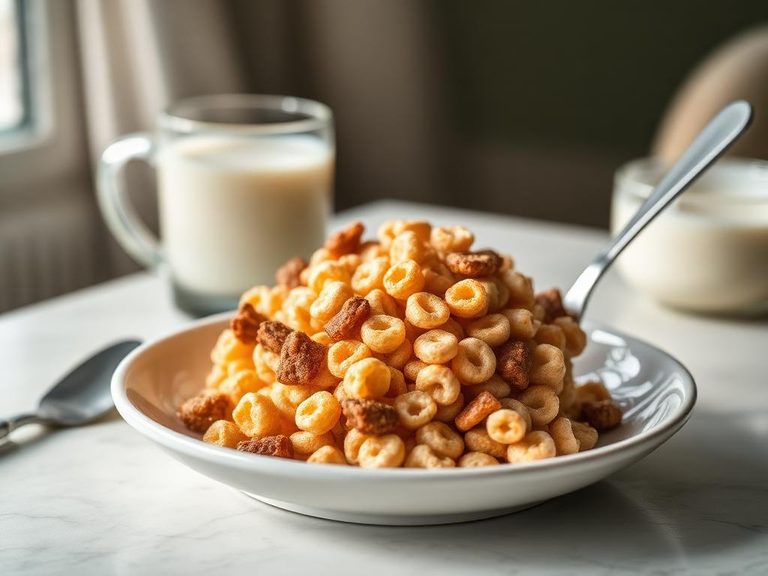
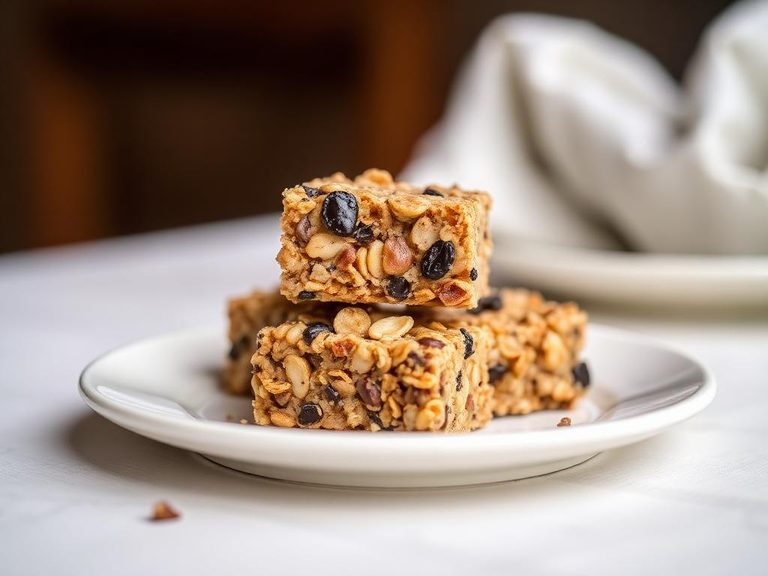
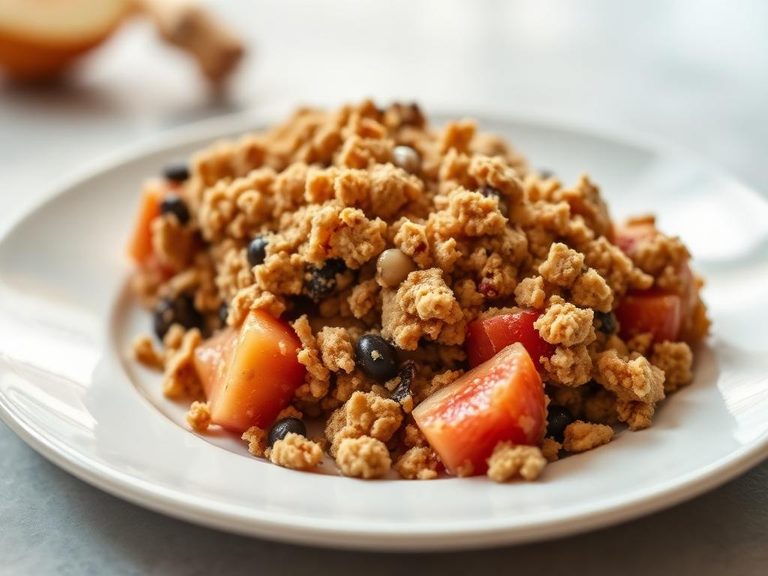

🌍 Where it's eaten
💡 Did you know?
The 'O' shape of cereals like Tasteeos was originally designed in the early 20th century not for fun, but to prevent the cereal from packing together in the box and breaking during shipping.
Full nutrition (USDA data · scales with serving)
| Water | 3.7 g |
| Energy | 395 kcal |
| Energy | 1653 kj |
| Protein | 10.7 g |
| Total lipid (fat) | 5.4 g |
| Ash | 4.3 g |
| Carbohydrate, by difference | 76.0 g |
| Fiber, total dietary | 10.7 g |
| Total Sugars | 3.6 g |
| Calcium, Ca | 357 mg |
| Iron, Fe | 32.1 mg |
| Magnesium, Mg | 143 mg |
| Phosphorus, P | 536 mg |
| Potassium, K | 607 mg |
| Sodium, Na | 571 mg |
| Zinc, Zn | 13.4 mg |
| Copper, Cu | 0.43 mg |
| Manganese, Mn | 2.7 mg |
| Selenium, Se | 47.0 ug |
| Vitamin C, total ascorbic acid | 21.4 mg |
| Thiamin | 1.3 mg |
| Riboflavin | 1.5 mg |
| Niacin | 17.9 mg |
| Pantothenic acid | 0.39 mg |
| Vitamin B-6 | 1.8 mg |
| Folate, total | 714 ug |
| Folic acid | 696 ug |
| Folate, food | 18.0 ug |
| Folate, DFE | 1201 ug |
| Choline, total | 14.9 mg |
| Betaine | 20.4 mg |
| Vitamin B-12 | 5.4 ug |
| Vitamin B-12, added | 5.4 ug |
| Vitamin A, RAE | 1071 ug |
| Retinol | 1071 ug |
| Carotene, beta | 0.00 ug |
| Carotene, alpha | 0.00 ug |
| Cryptoxanthin, beta | 0.00 ug |
| Vitamin A, IU | 3571 iu |
| Lycopene | 0.00 ug |
| Lutein + zeaxanthin | 132 ug |
| Vitamin E (alpha-tocopherol) | 0.43 mg |
| Vitamin E, added | 0.00 mg |
| Vitamin D (D2 + D3), International Units | 286 iu |
| Vitamin D (D2 + D3) | 7.1 ug |
| Vitamin D3 (cholecalciferol) | 7.1 ug |
| Vitamin K (phylloquinone) | 1.3 ug |
| Alcohol, ethyl | 0.00 g |
| Caffeine | 0.00 mg |
| Theobromine | 0.00 mg |
Fat & fatty acid profile (per 100g)
| Fatty acids, total saturated | 0.93 g |
| SFA 4:0 | 0.00 g |
| SFA 6:0 | 0.00 g |
| SFA 8:0 | 0.00 g |
| SFA 10:0 | 0.00 g |
| SFA 12:0 | 0.00 g |
| SFA 14:0 | 0.01 g |
| SFA 15:0 | 0.00 g |
| SFA 16:0 | 0.84 g |
| SFA 17:0 | 0.00 g |
| SFA 18:0 | 0.07 g |
| SFA 20:0 | 0.00 g |
| SFA 22:0 | 0.00 g |
| SFA 24:0 | 0.00 g |
| Fatty acids, total monounsaturated | 1.8 g |
| MUFA 14:1 | 0.00 g |
| MUFA 15:1 | 0.00 g |
| MUFA 16:1 | 0.00 g |
| MUFA 17:1 | 0.00 g |
| MUFA 18:1 | 1.7 g |
| MUFA 20:1 | 0.04 g |
| MUFA 22:1 | 0.03 g |
| MUFA 24:1 c | 0.00 g |
| Fatty acids, total polyunsaturated | 1.8 g |
| PUFA 18:2 | 1.7 g |
| PUFA 18:3 | 0.06 g |
| PUFA 18:4 | 0.00 g |
| PUFA 20:2 n-6 c,c | 0.00 g |
| PUFA 20:3 | 0.00 g |
| PUFA 20:4 | 0.00 g |
| PUFA 20:5 n-3 (EPA) | 0.01 g |
| PUFA 21:5 | 0.00 g |
| PUFA 22:4 | 0.00 g |
| PUFA 22:5 n-3 (DPA) | 0.00 g |
| PUFA 22:6 n-3 (DHA) | 0.00 g |
| Fatty acids, total trans | 0.00 g |
| Cholesterol | 0.00 mg |
Amino acid profile (per 100g)
| Tryptophan | 0.15 g |
| Threonine | 0.41 g |
| Isoleucine | 0.44 g |
| Leucine | 0.85 g |
| Lysine | 0.37 g |
| Methionine | 0.15 g |
| Cystine | 0.26 g |
| Phenylalanine | 0.65 g |
| Tyrosine | 0.27 g |
| Valine | 0.60 g |
| Arginine | 0.69 g |
| Histidine | 0.23 g |
| Alanine | 0.57 g |
| Aspartic acid | 1.5 g |
| Glutamic acid | 2.4 g |
| Glycine | 0.55 g |
| Proline | 0.76 g |
| Serine | 0.54 g |
FAQ
Is Ralston Tasteeos a healthy cereal choice?
Compared to many sugary children's cereals, it is a more nutritious option due to its high fiber and protein content. However, it is still a processed grain product with added sugars, so it's best enjoyed as part of a balanced meal that includes protein and fat.
Can I eat this cereal if I'm trying to lose weight?
Its high fiber can aid in satiety, which may help with weight management. The key is portion control (stick to about 1 cup dry) and pairing it with protein (like milk or yogurt) to keep you full longer and avoid overeating later.
Is this cereal gluten-free?
Most ready-to-eat oat cereals, including Tasteeos, are not certified gluten-free unless specified on the package. Oats are often processed in facilities that also handle wheat, posing a cross-contamination risk. Always check the label for a gluten-free certification if you have celiac disease or gluten sensitivity.
Nutrient density (calculated · NRF9.3)
Nutrient Rich Foods index: beneficial nutrients (protein, fiber, vitamins, minerals) minus saturated fat, added sugar & sodium, per 100 kcal.
NRF9.3 index — Fulgoni, Keast & Drewnowski, 2009. Computed from USDA nutrients.
Weight-loss friendliness (composite index)
Energy density 3.95 kcal/g · 11% calories from protein · 10.7 g fiber · 3.6 g sugar per 100 g.
Composite of energy density (Rolls et al., 1999), protein & fiber satiety, minus sugar. A calculated heuristic — ranks satiety-per-calorie, not a clinical measure.
Dietary load (calculated from USDA values)
Potential renal acid load. Positive = acid-forming, negative = alkaline-forming.
Sodium-to-potassium ratio: 0.94 (lower is better — aim for ≤ 1)
Sodium:potassium per WHO potassium guidance. Computed from USDA nutrients.