

Blueberries, wild, raw (Alaska Native)
Whole food · American Indian/Alaska Native Foods

Photo: Wikipedia
Wild Alaska blueberries are tiny, intensely flavored gems, often smaller and more tart than their cultivated cousins, with a deep, almost wine-like sweetness and a burst of juicy texture. Their dark blue-purple skin is packed with anthocyanins, giving them a powerful antioxidant punch. Nutritionally, they are a low-calorie, high-fiber snack that delivers a notable amount of natural sugars for quick energy.
Calorie split: 8% protein · 81% carbs · 11% fat
↓ Full nutrition💚 Why it's loved
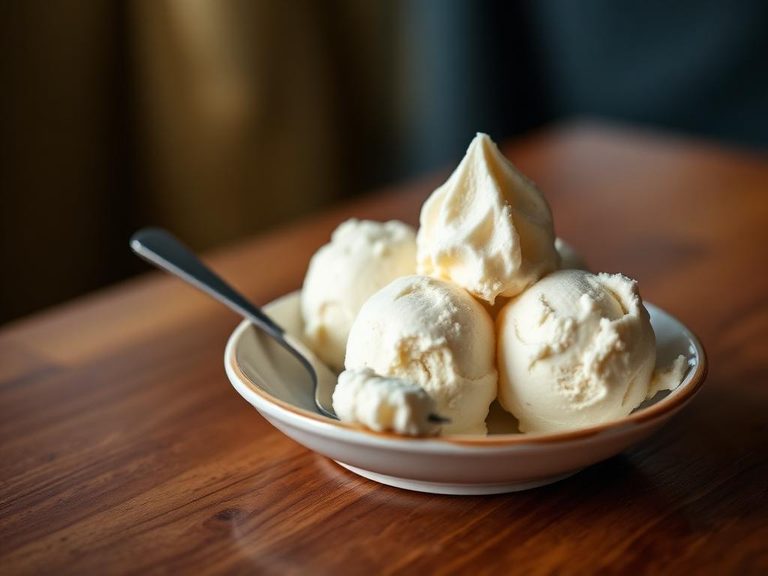
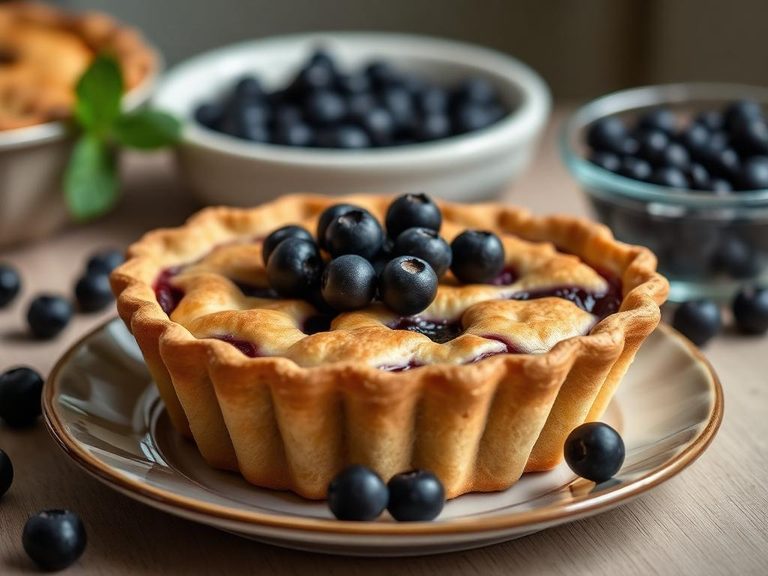
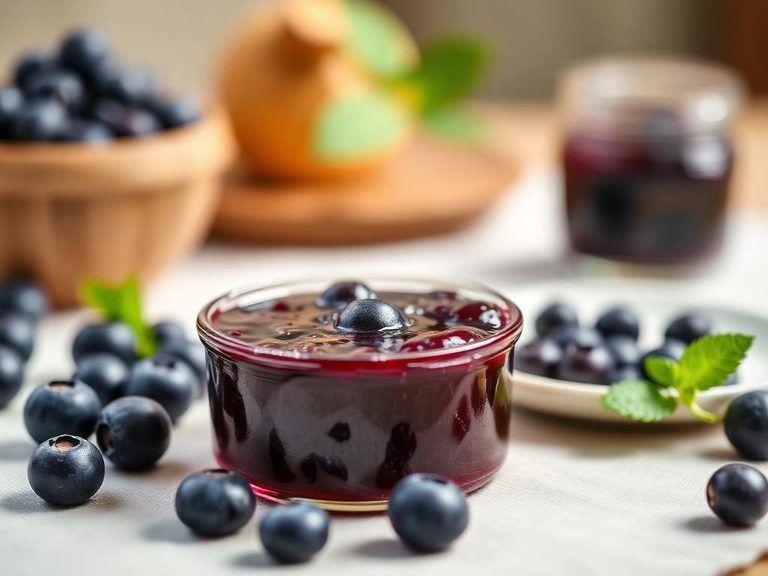
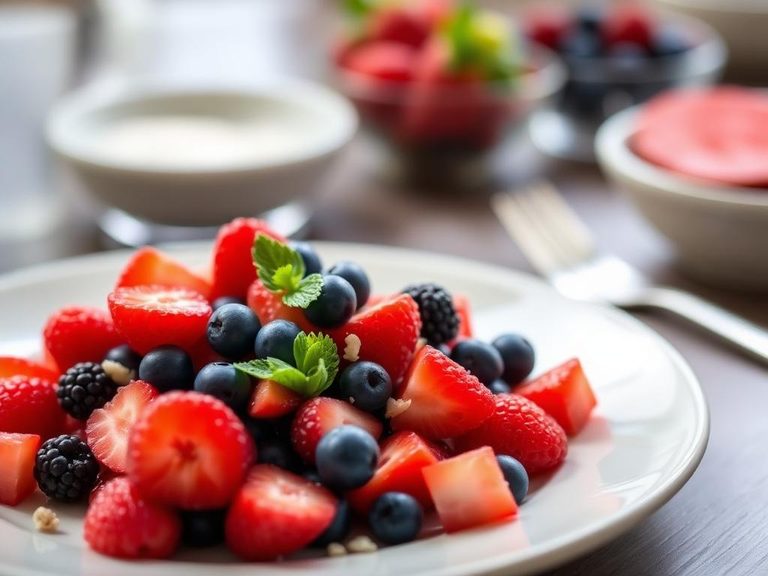
People adore wild blueberries for their explosive, complex flavor that is both sweet and tart, far more intense than many cultivated berries. They are cherished in Indigenous Alaskan cultures and are incredibly versatile, shining in everything from fresh snacking to baked goods and sauces.
⚠️ Watch-outs & how to enjoy it better
Their high natural sugar content (6.46g per 100g) can contribute to blood sugar spikes if consumed in large quantities without other macronutrients. To counteract this, pair them with a source of protein or healthy fat, like yogurt, nuts, or cheese, to slow sugar absorption. Their small size and intense flavor also mean it's easy to eat a large portion quickly.
Key benefits
- Rich in anthocyanin antioxidants
- High in dietary fiber for digestive health
- Low in calories and fat
- Contains vitamin C and manganese
- Provides a natural source of quick energy from carbs
🍽️ Popular dishes

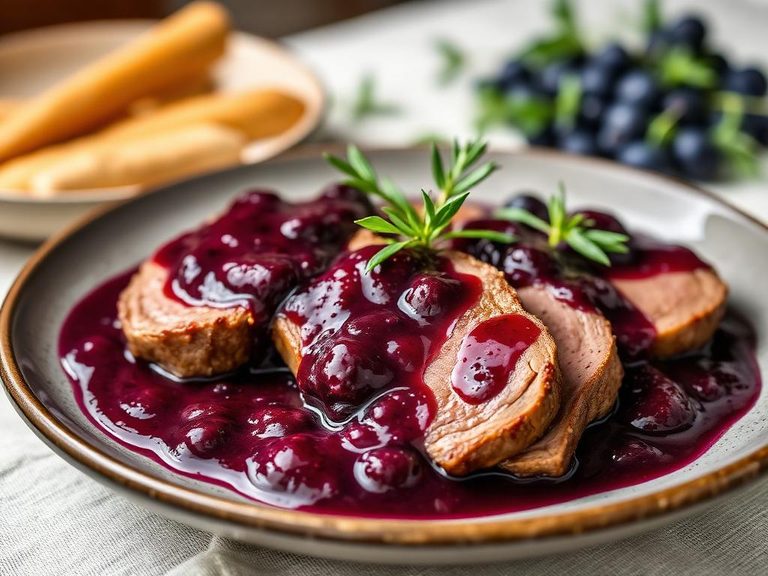
🌍 Where it's eaten
💡 Did you know?
Wild blueberries are not planted; they grow naturally and spread via underground rhizomes, creating genetically unique clones called 'clumps,' which is why their flavor and color can vary so dramatically from handful to handful.
Full nutrition (USDA data · scales with serving)
| Water | 85.5 g |
| Energy | 61.0 kcal |
| Energy | 255 kj |
| Protein | 1.2 g |
| Total lipid (fat) | 0.76 g |
| Ash | 0.23 g |
| Carbohydrate, by difference | 12.3 g |
| Fiber, total dietary | 2.6 g |
| Total Sugars | 6.5 g |
| Sucrose | 0.01 g |
| Glucose | 3.1 g |
| Fructose | 3.4 g |
| Lactose | 0.00 g |
| Maltose | 0.00 g |
| Galactose | 0.00 g |
| Starch | 0.00 g |
| Calcium, Ca | 13.0 mg |
| Iron, Fe | 0.37 mg |
| Magnesium, Mg | 7.0 mg |
| Phosphorus, P | 29.0 mg |
| Potassium, K | 75.0 mg |
| Sodium, Na | 6.0 mg |
| Zinc, Zn | 0.20 mg |
| Copper, Cu | 0.03 mg |
| Manganese, Mn | 2.0 mg |
| Vitamin C, total ascorbic acid | 18.3 mg |
| Thiamin | 0.07 mg |
| Riboflavin | 0.41 mg |
| Niacin | 0.60 mg |
| Pantothenic acid | 0.27 mg |
| Vitamin B-6 | 0.03 mg |
| Folate, total | 33.0 ug |
| Folic acid | 0.00 ug |
| Folate, food | 33.0 ug |
| Folate, DFE | 33.0 ug |
| Vitamin B-12 | 0.00 ug |
| Vitamin A, RAE | 6.0 ug |
| Retinol | 0.00 ug |
| Carotene, beta | 69.0 ug |
| Carotene, alpha | 0.00 ug |
| Cryptoxanthin, beta | 0.00 ug |
| Vitamin A, IU | 115 iu |
| Lycopene | 0.00 ug |
| Vitamin E (alpha-tocopherol) | 1.7 mg |
| Vitamin E, added | 0.00 mg |
| Tocopherol, beta | 0.01 mg |
| Tocopherol, gamma | 0.19 mg |
| Tocopherol, delta | 0.01 mg |
| Tocotrienol, alpha | 0.04 mg |
| Tocotrienol, beta | 0.00 mg |
| Tocotrienol, gamma | 0.46 mg |
| Tocotrienol, delta | 0.00 mg |
| Vitamin D (D2 + D3), International Units | 0.00 iu |
| Vitamin D (D2 + D3) | 0.00 ug |
| Vitamin K (phylloquinone) | 17.2 ug |
| Vitamin K (Dihydrophylloquinone) | 0.00 ug |
| Vitamin K (Menaquinone-4) | 0.00 ug |
| Alcohol, ethyl | 0.00 g |
| Caffeine | 0.00 mg |
Fat & fatty acid profile (per 100g)
Estimated from Blueberries, raw — USDA does not publish this profile for Blueberries.
| Fatty acids, total saturated | 0.03 g |
| SFA 4:0 | 0.00 g |
| SFA 6:0 | 0.00 g |
| SFA 8:0 | 0.00 g |
| SFA 10:0 | 0.00 g |
| SFA 12:0 | 0.00 g |
| SFA 14:0 | 0.00 g |
| SFA 16:0 | 0.02 g |
| SFA 18:0 | 0.01 g |
| Fatty acids, total monounsaturated | 0.05 g |
| MUFA 16:1 | 0.00 g |
| MUFA 18:1 | 0.05 g |
| MUFA 20:1 | 0.00 g |
| MUFA 22:1 | 0.00 g |
| Fatty acids, total polyunsaturated | 0.15 g |
| PUFA 18:2 | 0.09 g |
| PUFA 18:3 | 0.06 g |
| PUFA 18:4 | 0.00 g |
| PUFA 20:4 | 0.00 g |
| PUFA 20:5 n-3 (EPA) | 0.00 g |
| PUFA 22:5 n-3 (DPA) | 0.00 g |
| PUFA 22:6 n-3 (DHA) | 0.00 g |
| Fatty acids, total trans | 0.00 g |
| Cholesterol | 0.00 mg |
Amino acid profile (per 100g)
Estimated from Blueberries, raw — USDA does not publish this profile for Blueberries.
| Tryptophan | 0.00 g |
| Threonine | 0.02 g |
| Isoleucine | 0.02 g |
| Leucine | 0.04 g |
| Lysine | 0.01 g |
| Methionine | 0.01 g |
| Cystine | 0.01 g |
| Phenylalanine | 0.03 g |
| Tyrosine | 0.01 g |
| Valine | 0.03 g |
| Arginine | 0.04 g |
| Histidine | 0.01 g |
| Alanine | 0.03 g |
| Aspartic acid | 0.06 g |
| Glutamic acid | 0.09 g |
| Glycine | 0.03 g |
| Proline | 0.03 g |
| Serine | 0.02 g |
FAQ
How do wild blueberries differ from cultivated ones?
Wild blueberries are typically smaller, have a more intense, tart-sweet flavor, higher antioxidant levels, and grow in natural, undisturbed areas rather than on farms.
Can I eat the skin of wild blueberries?
Yes, the skin is edible and is where many of the beneficial antioxidants and fiber are concentrated.
What is the best way to store fresh wild blueberries?
Store them unwashed in a single layer on a paper towel-lined container in the refrigerator for up to 10 days, or freeze them for long-term use.
Nutrient density (calculated · NRF9.3)
Nutrient Rich Foods index: beneficial nutrients (protein, fiber, vitamins, minerals) minus saturated fat, added sugar & sodium, per 100 kcal.
NRF9.3 index — Fulgoni, Keast & Drewnowski, 2009. Computed from USDA nutrients.
Weight-loss friendliness (composite index)
Energy density 0.61 kcal/g · 8% calories from protein · 2.6 g fiber · 6.5 g sugar per 100 g.
Composite of energy density (Rolls et al., 1999), protein & fiber satiety, minus sugar. A calculated heuristic — ranks satiety-per-calorie, not a clinical measure.
Dietary load (calculated from USDA values)
Potential renal acid load. Positive = acid-forming, negative = alkaline-forming.
Sodium-to-potassium ratio: 0.08 (lower is better — aim for ≤ 1)
Sodium:potassium per WHO potassium guidance. Computed from USDA nutrients.