

Beef, top loin petite roast/filet, boneless, separable lean only, trimmed to 1/8" fat, select, raw
Whole food · Beef Products

Photo: Wikipedia
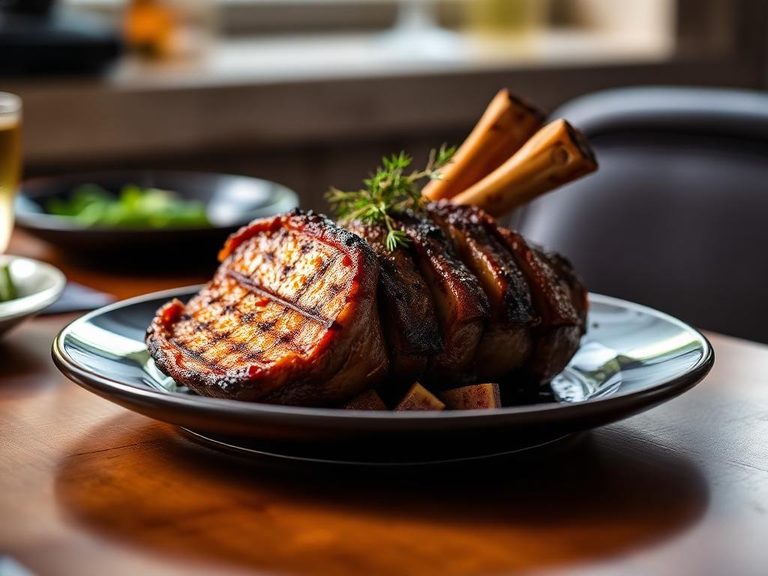
This is a premium, boneless cut from the top loin, trimmed to a lean 1/8 inch of fat for a clean, beefy flavor. It offers a tender, fine-grained texture with a mild, buttery richness that makes it ideal for quick, high-heat cooking. Nutritionally, it's a powerhouse of high-quality protein with minimal fat and zero carbohydrates.
Calorie split: 67% protein · 0% carbs · 33% fat
↓ Full nutrition💚 Why it's loved
People love it for its buttery tenderness and clean, beefy flavor that shines with simple seasoning. It's prized in steakhouses and home kitchens for its versatility in quick-cooking methods like grilling, pan-searing, or broiling.
⚠️ Watch-outs & how to enjoy it better
As a lean cut, it can dry out quickly if overcooked, leading to a tough texture. To counteract this, use a meat thermometer to pull it off the heat at 130-135°F (medium-rare) and let it rest before slicing. Pairing it with a flavorful sauce or compound butter can also add moisture and richness.
Key benefits
- Excellent source of complete, high-quality protein
- Very low in carbohydrates and sugars
- Provides essential minerals like zinc and iron
- Lean cut with controlled fat content
- Supports muscle maintenance and satiety
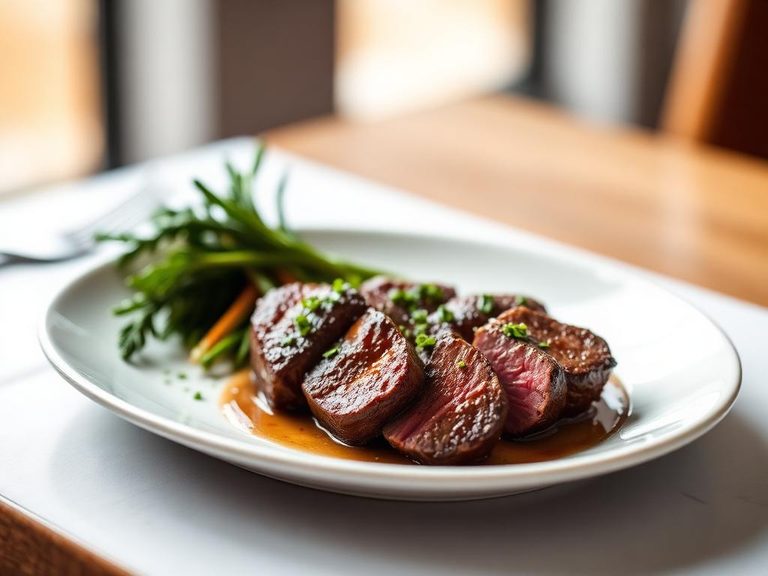
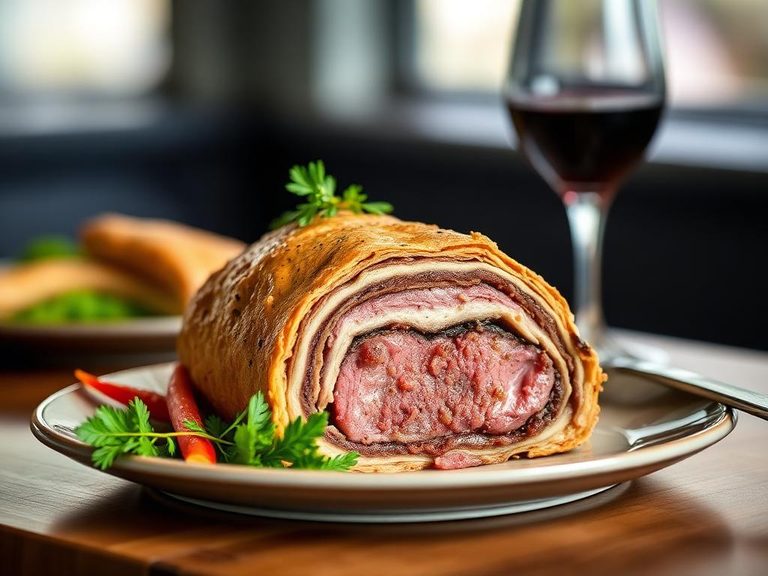
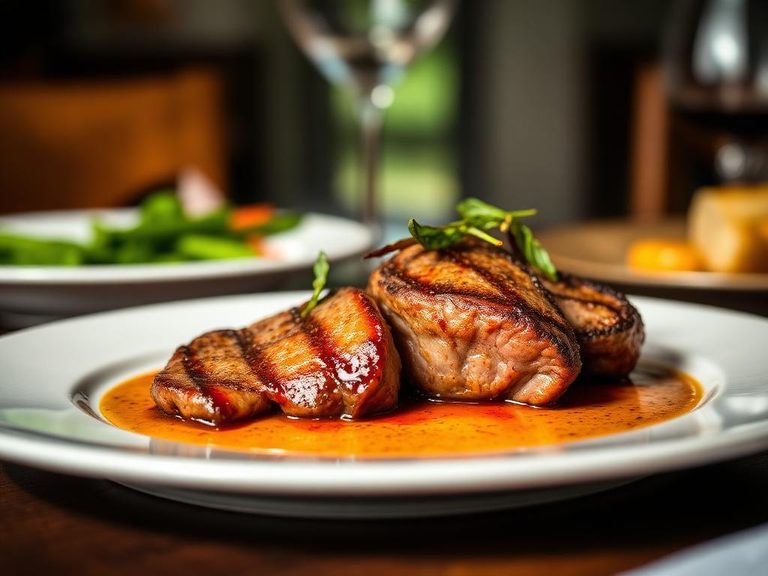
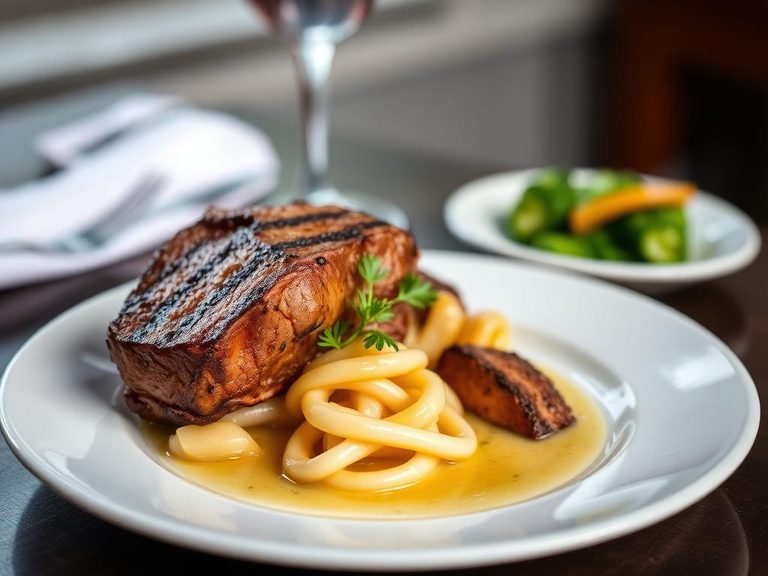
🍽️ Popular dishes
🌍 Where it's eaten
💡 Did you know?
The 'petite roast' or 'filet' designation often comes from the smaller, more tender center of the larger top loin muscle, making it a prized portion for individual servings.
Full nutrition (USDA data · scales with serving)
| Water | 71.8 g |
| Energy | 135 kcal |
| Energy | 565 kj |
| Protein | 22.8 g |
| Total lipid (fat) | 4.9 g |
| Ash | 1.0 g |
| Carbohydrate, by difference | 0.00 g |
| Fiber, total dietary | 0.00 g |
| Total Sugars | 0.00 g |
| Calcium, Ca | 5.0 mg |
| Iron, Fe | 2.4 mg |
| Magnesium, Mg | 25.0 mg |
| Phosphorus, P | 220 mg |
| Potassium, K | 387 mg |
| Sodium, Na | 57.0 mg |
| Zinc, Zn | 5.8 mg |
| Copper, Cu | 0.10 mg |
| Selenium, Se | 23.6 ug |
| Vitamin C, total ascorbic acid | 0.00 mg |
| Thiamin | 0.08 mg |
| Riboflavin | 0.21 mg |
| Niacin | 6.0 mg |
| Vitamin B-6 | 0.65 mg |
| Folate, total | 4.0 ug |
| Folic acid | 0.00 ug |
| Folate, food | 4.0 ug |
| Folate, DFE | 4.0 ug |
| Vitamin B-12 | 2.8 ug |
| Vitamin B-12, added | 0.00 ug |
| Vitamin A, RAE | 2.0 ug |
| Retinol | 2.0 ug |
| Carotene, beta | 0.00 ug |
| Carotene, alpha | 0.00 ug |
| Cryptoxanthin, beta | 0.00 ug |
| Vitamin A, IU | 8.0 iu |
| Lycopene | 0.00 ug |
| Lutein + zeaxanthin | 0.00 ug |
| Vitamin D (D2 + D3), International Units | 3.0 iu |
| Vitamin D (D2 + D3) | 0.10 ug |
| Vitamin D3 (cholecalciferol) | 0.10 ug |
| Vitamin K (phylloquinone) | 1.5 ug |
| Alcohol, ethyl | 0.00 g |
| Caffeine | 0.00 mg |
| Theobromine | 0.00 mg |
Fat & fatty acid profile (per 100g)
| Fatty acids, total saturated | 1.6 g |
| SFA 4:0 | 0.00 g |
| SFA 6:0 | 0.00 g |
| SFA 8:0 | 0.00 g |
| SFA 10:0 | 0.00 g |
| SFA 12:0 | 0.00 g |
| SFA 14:0 | 0.10 g |
| SFA 16:0 | 0.89 g |
| SFA 17:0 | 0.04 g |
| SFA 18:0 | 0.59 g |
| SFA 20:0 | 0.00 g |
| SFA 24:0 | 0.01 g |
| Fatty acids, total monounsaturated | 2.1 g |
| MUFA 14:1 | 0.03 g |
| MUFA 16:1 | 0.12 g |
| MUFA 17:1 | 0.03 g |
| MUFA 18:1 | 1.9 g |
| MUFA 18:1 c | 1.7 g |
| MUFA 20:1 | 0.01 g |
| MUFA 22:1 | 0.00 g |
| Fatty acids, total polyunsaturated | 0.13 g |
| PUFA 18:2 | 0.10 g |
| PUFA 18:2 n-6 c,c | 0.09 g |
| PUFA 18:2 CLAs | 0.01 g |
| PUFA 18:3 | 0.01 g |
| PUFA 18:3 n-6 c,c,c | 0.01 g |
| PUFA 18:4 | 0.00 g |
| PUFA 20:2 n-6 c,c | 0.00 g |
| PUFA 20:4 | 0.02 g |
| PUFA 20:5 n-3 (EPA) | 0.00 g |
| PUFA 22:5 n-3 (DPA) | 0.01 g |
| PUFA 22:6 n-3 (DHA) | 0.00 g |
| Fatty acids, total trans | 0.15 g |
| Fatty acids, total trans-monoenoic | 0.15 g |
| TFA 18:1 t | 0.15 g |
| Cholesterol | 76.0 mg |
Amino acid profile (per 100g)
| Tryptophan | 0.30 g |
| Threonine | 1.3 g |
| Isoleucine | 1.3 g |
| Leucine | 2.3 g |
| Lysine | 2.6 g |
| Methionine | 0.72 g |
| Cystine | 0.27 g |
| Phenylalanine | 1.1 g |
| Tyrosine | 1.0 g |
| Valine | 1.3 g |
| Arginine | 1.8 g |
| Histidine | 1.0 g |
| Alanine | 1.6 g |
| Aspartic acid | 2.6 g |
| Glutamic acid | 4.4 g |
| Glycine | 1.2 g |
| Proline | 1.2 g |
| Serine | 1.1 g |
| Hydroxyproline | 0.12 g |
FAQ
What's the difference between top loin petite roast and a tenderloin filet?
The top loin petite roast comes from the strip loin (New York strip area), while a tenderloin filet comes from the psoas muscle. The top loin has a slightly firmer texture and more pronounced beef flavor, while the tenderloin is softer and milder.
How should I cook this cut to keep it tender?
Use high-heat methods like grilling, pan-searing, or broiling for a quick cook. Aim for medium-rare (130-135°F internal temperature) to prevent drying out. Always let the meat rest for 5-10 minutes after cooking before slicing.
Is this a good cut for people watching their fat intake?
Yes, it's an excellent lean protein choice with only 4.88g of fat per 100g. Trimming to 1/8 inch fat further reduces the fat content while maintaining flavor and juiciness.
Nutrient density (calculated · NRF9.3)
Nutrient Rich Foods index: beneficial nutrients (protein, fiber, vitamins, minerals) minus saturated fat, added sugar & sodium, per 100 kcal.
NRF9.3 index — Fulgoni, Keast & Drewnowski, 2009. Computed from USDA nutrients.
Weight-loss friendliness (composite index)
Energy density 1.35 kcal/g · 67% calories from protein · 0.0 g fiber · 0.0 g sugar per 100 g.
Composite of energy density (Rolls et al., 1999), protein & fiber satiety, minus sugar. A calculated heuristic — ranks satiety-per-calorie, not a clinical measure.
Dietary load (calculated from USDA values)
Potential renal acid load. Positive = acid-forming, negative = alkaline-forming.
Sodium-to-potassium ratio: 0.15 (lower is better — aim for ≤ 1)
Sodium:potassium per WHO potassium guidance. Computed from USDA nutrients.