

Beef, top loin petite roast, boneless, separable lean only, trimmed to 1/8" fat, all grades, cooked, roasted
Whole food · Beef Products

Photo: Wikipedia
This is a lean, boneless cut from the top loin (strip loin) of beef, trimmed to a precise 1/8-inch fat cap for a balance of flavor and leanness. When roasted, it develops a savory, beefy crust while the interior remains tender, juicy, and finely marbled with a clean, beef-forward taste. Nutritionally, it's a powerhouse of high-quality protein with a moderate calorie count and very low carbohydrate content.
Calorie split: 58% protein · 2% carbs · 40% fat
↓ Full nutrition💚 Why it's loved
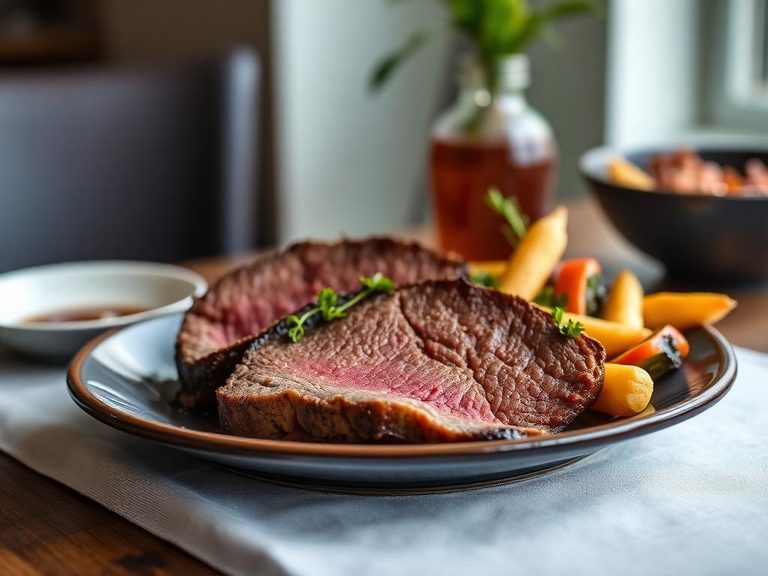
People prize this cut for its reliable tenderness and rich, classic beef flavor that isn't overly gamey. Its uniform shape and lean profile make it incredibly versatile for everything from elegant roasts to quick-seared steaks, embodying the comforting essence of a traditional Sunday roast.
⚠️ Watch-outs & how to enjoy it better
The primary caution is its high saturated fat content, which should be considered in moderation for heart-health. To mitigate this, practice portion control (4-6 oz servings) and pair it with fiber-rich sides like roasted vegetables or a hearty salad to slow digestion and enhance satiety.
Key benefits
- Excellent source of complete protein for muscle maintenance and repair.
- Provides essential minerals like zinc and iron in highly bioavailable heme form.
- Naturally very low in carbohydrates and sugars.
- Contains B vitamins, particularly B12, crucial for nerve function and energy production.
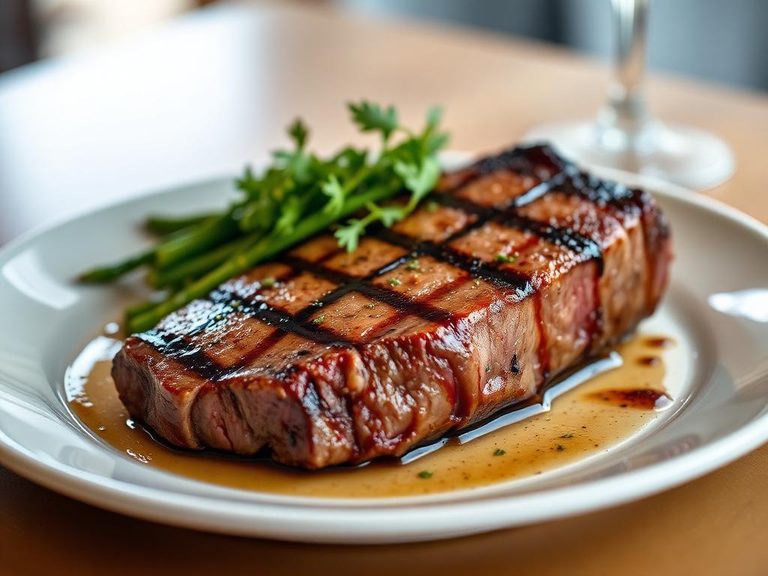
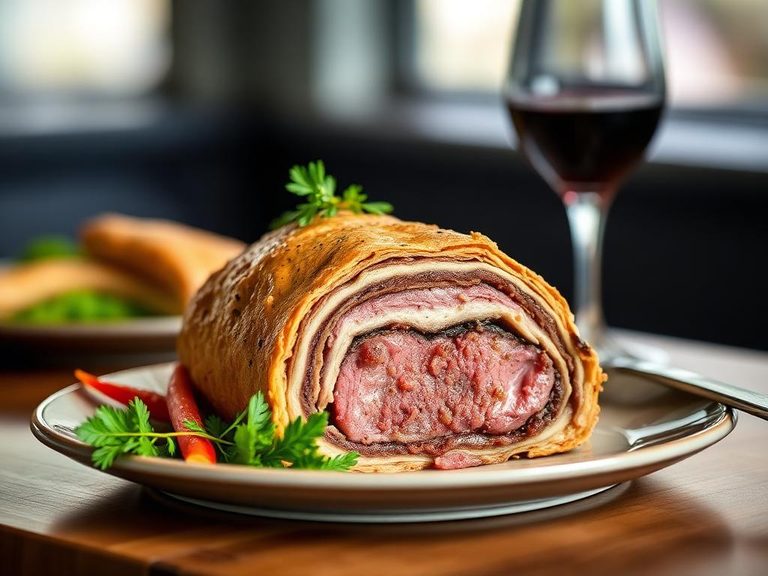
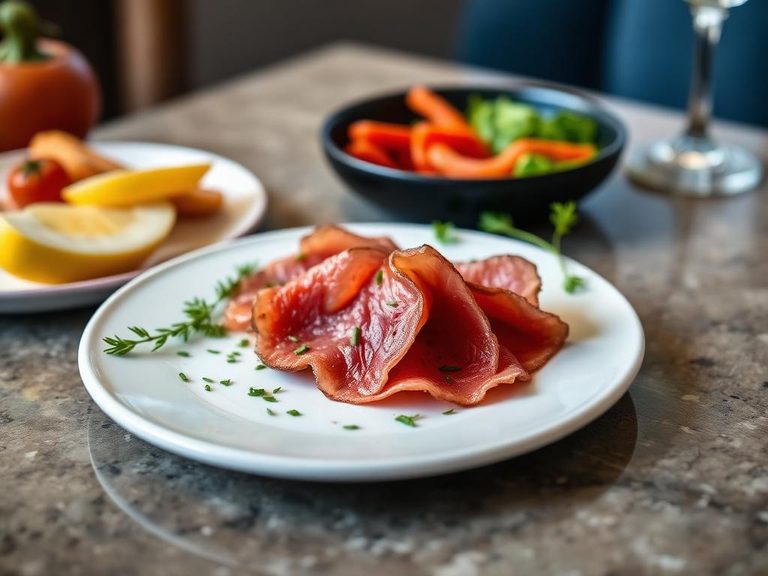
🍽️ Popular dishes

🌍 Where it's eaten
💡 Did you know?
The 'top loin' is the same muscle that, when left on the bone, becomes the iconic Porterhouse or T-bone steak, with the strip portion being the larger side.
Full nutrition (USDA data · scales with serving)
| Water | 60.9 g |
| Energy | 195 kcal |
| Energy | 818 kj |
| Protein | 28.3 g |
| Total lipid (fat) | 8.8 g |
| Ash | 1.2 g |
| Carbohydrate, by difference | 0.82 g |
| Fiber, total dietary | 0.00 g |
| Total Sugars | 0.00 g |
| Calcium, Ca | 17.0 mg |
| Iron, Fe | 2.0 mg |
| Magnesium, Mg | 25.0 mg |
| Phosphorus, P | 232 mg |
| Potassium, K | 371 mg |
| Sodium, Na | 62.0 mg |
| Zinc, Zn | 5.6 mg |
| Copper, Cu | 0.09 mg |
| Selenium, Se | 34.2 ug |
| Vitamin C, total ascorbic acid | 0.00 mg |
| Thiamin | 0.07 mg |
| Riboflavin | 0.14 mg |
| Niacin | 8.4 mg |
| Vitamin B-6 | 0.59 mg |
| Folate, total | 7.0 ug |
| Folic acid | 0.00 ug |
| Folate, food | 7.0 ug |
| Folate, DFE | 7.0 ug |
| Vitamin B-12 | 4.1 ug |
| Vitamin B-12, added | 0.00 ug |
| Vitamin A, RAE | 2.0 ug |
| Retinol | 2.0 ug |
| Carotene, beta | 0.00 ug |
| Carotene, alpha | 0.00 ug |
| Cryptoxanthin, beta | 0.00 ug |
| Vitamin A, IU | 6.0 iu |
| Lycopene | 0.00 ug |
| Lutein + zeaxanthin | 0.00 ug |
| Vitamin D (D2 + D3), International Units | 4.0 iu |
| Vitamin D (D2 + D3) | 0.10 ug |
| Vitamin D3 (cholecalciferol) | 0.10 ug |
| Vitamin K (phylloquinone) | 1.6 ug |
| Alcohol, ethyl | 0.00 g |
| Caffeine | 0.00 mg |
| Theobromine | 0.00 mg |
Fat & fatty acid profile (per 100g)
| Fatty acids, total saturated | 3.0 g |
| SFA 4:0 | 0.00 g |
| SFA 6:0 | 0.00 g |
| SFA 8:0 | 0.00 g |
| SFA 10:0 | 0.00 g |
| SFA 12:0 | 0.01 g |
| SFA 14:0 | 0.19 g |
| SFA 16:0 | 1.7 g |
| SFA 17:0 | 0.10 g |
| SFA 18:0 | 0.98 g |
| SFA 20:0 | 0.00 g |
| SFA 24:0 | 0.01 g |
| Fatty acids, total monounsaturated | 3.9 g |
| MUFA 14:1 | 0.03 g |
| MUFA 16:1 | 0.24 g |
| MUFA 17:1 | 0.06 g |
| MUFA 18:1 | 3.5 g |
| MUFA 18:1 c | 3.1 g |
| MUFA 20:1 | 0.01 g |
| MUFA 22:1 | 0.00 g |
| Fatty acids, total polyunsaturated | 0.35 g |
| PUFA 18:2 | 0.29 g |
| PUFA 18:2 n-6 c,c | 0.26 g |
| PUFA 18:2 CLAs | 0.02 g |
| PUFA 18:3 | 0.01 g |
| PUFA 18:3 n-6 c,c,c | 0.01 g |
| PUFA 18:4 | 0.00 g |
| PUFA 20:2 n-6 c,c | 0.00 g |
| PUFA 20:4 | 0.06 g |
| PUFA 20:5 n-3 (EPA) | 0.00 g |
| PUFA 22:5 n-3 (DPA) | 0.01 g |
| PUFA 22:6 n-3 (DHA) | 0.00 g |
| Fatty acids, total trans | 0.44 g |
| Fatty acids, total trans-monoenoic | 0.44 g |
| TFA 18:1 t | 0.44 g |
| Cholesterol | 81.0 mg |
Amino acid profile (per 100g)
| Tryptophan | 0.35 g |
| Threonine | 1.5 g |
| Isoleucine | 1.4 g |
| Leucine | 2.7 g |
| Lysine | 3.0 g |
| Methionine | 0.82 g |
| Cystine | 0.31 g |
| Phenylalanine | 1.2 g |
| Tyrosine | 1.2 g |
| Valine | 1.5 g |
| Arginine | 2.1 g |
| Histidine | 1.1 g |
| Alanine | 1.8 g |
| Aspartic acid | 3.0 g |
| Glutamic acid | 5.1 g |
| Glycine | 1.3 g |
| Proline | 1.3 g |
| Serine | 1.3 g |
| Hydroxyproline | 0.14 g |
FAQ
What is the difference between a top loin roast and a ribeye roast?
A top loin (strip) roast is leaner with a distinct fat cap on one side, offering a cleaner beef flavor. A ribeye roast has more extensive intramuscular marbling (fat within the meat), making it richer and often more tender, but with a higher fat content.
How do I prevent it from drying out when roasting?
Use a meat thermometer to pull it from the oven at your desired doneness (130-135°F for medium-rare), and let it rest for 10-15 minutes before slicing. This allows the juices to redistribute throughout the meat.
Is this a good cut for grilling?
Yes, when cut into steaks (like New York strip). The trimmed fat cap bastes the meat as it cooks. For best results, use high, direct heat for a good sear and cook to medium-rare or medium to avoid toughness.
Nutrient density (calculated · NRF9.3)
Nutrient Rich Foods index: beneficial nutrients (protein, fiber, vitamins, minerals) minus saturated fat, added sugar & sodium, per 100 kcal.
NRF9.3 index — Fulgoni, Keast & Drewnowski, 2009. Computed from USDA nutrients.
Weight-loss friendliness (composite index)
Energy density 1.95 kcal/g · 58% calories from protein · 0.0 g fiber · 0.0 g sugar per 100 g.
Composite of energy density (Rolls et al., 1999), protein & fiber satiety, minus sugar. A calculated heuristic — ranks satiety-per-calorie, not a clinical measure.
Dietary load (calculated from USDA values)
Potential renal acid load. Positive = acid-forming, negative = alkaline-forming.
Sodium-to-potassium ratio: 0.17 (lower is better — aim for ≤ 1)
Sodium:potassium per WHO potassium guidance. Computed from USDA nutrients.