

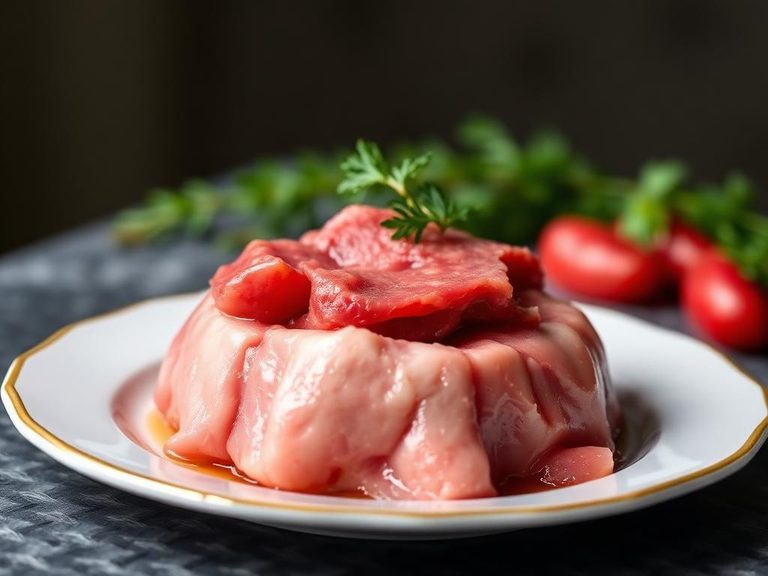
Beef, New Zealand, imported, intermuscular fat, cooked
Whole food · Beef Products

Photo: Wikipedia
This is a premium cut of New Zealand beef, specifically the intermuscular fat that renders into a rich, buttery, and deeply savory component when cooked. It has a luxurious, melt-in-your-mouth texture and a robust beefy flavor that is prized for adding depth and succulence to dishes. Nutritionally, it is an exceptionally high-fat, energy-dense food, providing over half its calories from fat per 100g.
Calorie split: 6% protein · 2% carbs · 92% fat
↓ Full nutrition💚 Why it's loved
People love it for its unparalleled ability to deliver intense, savory beef flavor and a luxurious, silky texture that transforms simple dishes. It's the secret behind the succulence of many classic roasts and stews, valued for its culinary versatility and cultural significance in hearty, comfort-food traditions.
⚠️ Watch-outs & how to enjoy it better
Its very high fat and calorie content (57g fat per 100g) makes it unsuitable for low-fat diets and requires strict portion control for balanced nutrition. To counteract this, use it sparingly as a flavor enhancer rather than a main protein, and pair it with large portions of fiber-rich vegetables or whole grains to create a more balanced meal.
Key benefits
- Excellent source of dietary fat for energy and satiety
- Provides essential fatty acids and fat-soluble vitamins like A, D, E, and K
- Enhances the flavor and mouthfeel of leaner dishes
- A staple in traditional, high-fat cuisines for calorie-dense meals
- Can be rendered into high-smoke-point tallow for cooking
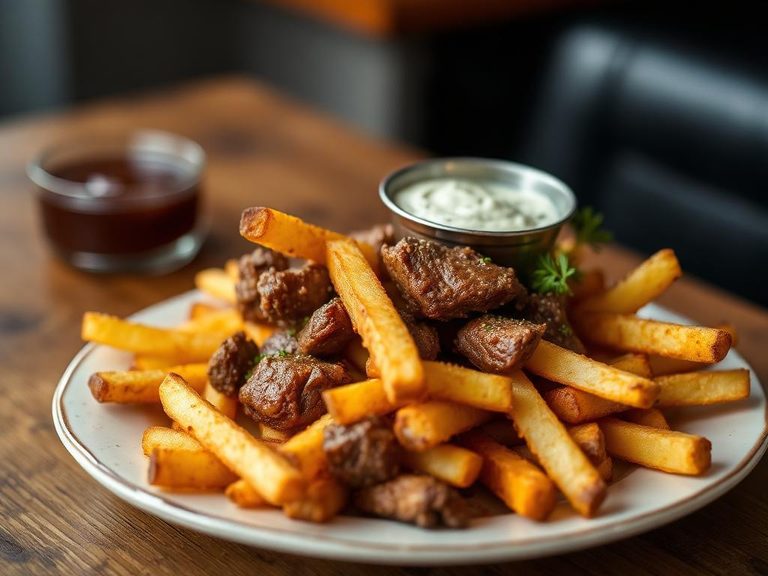
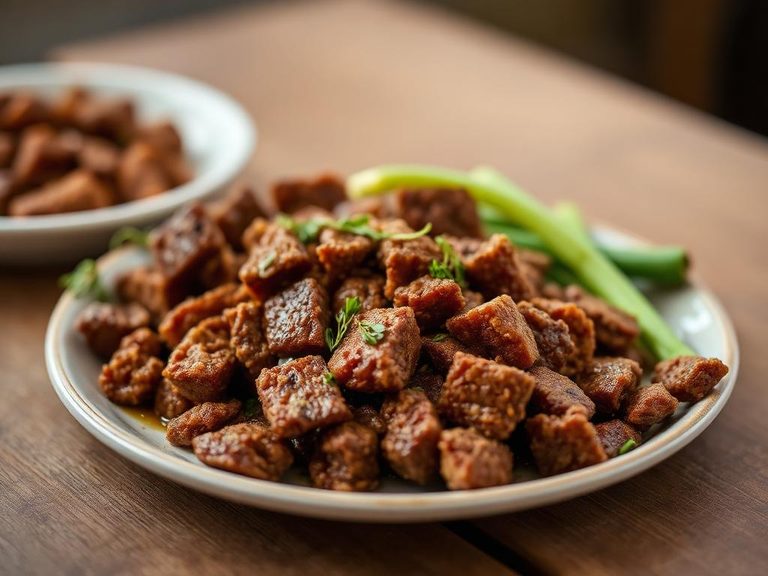
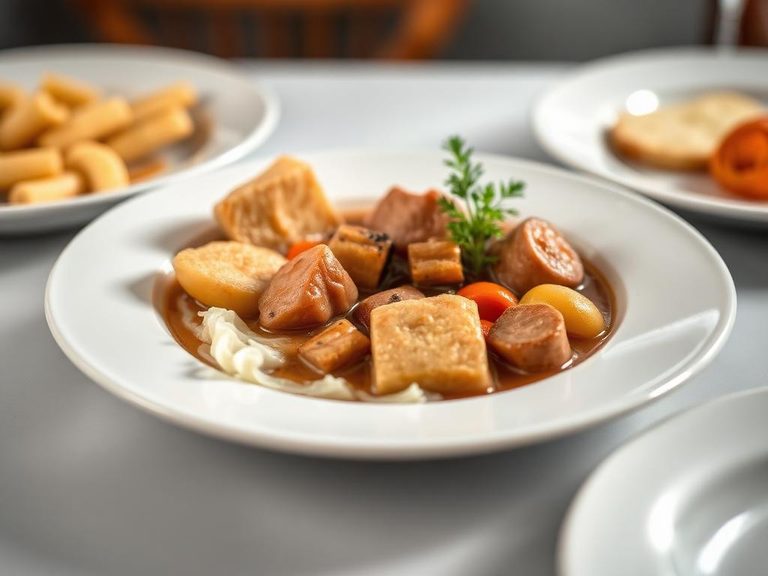
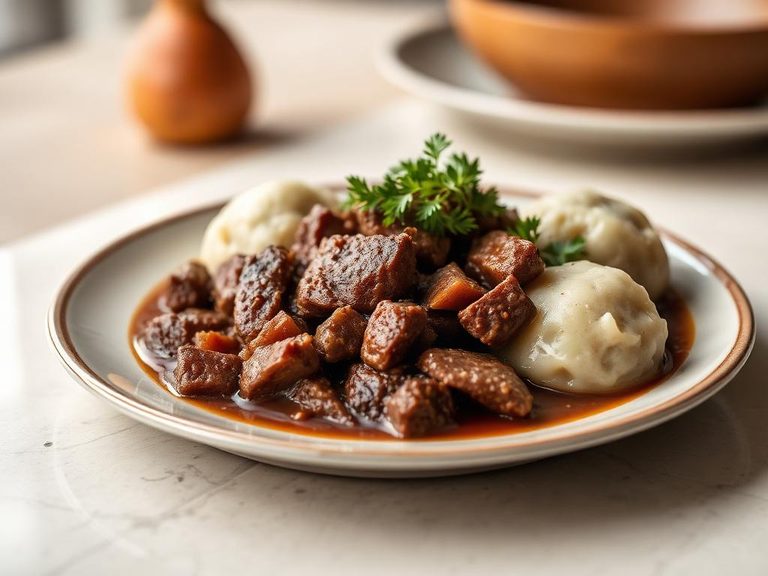
🍽️ Popular dishes
🌍 Where it's eaten
💡 Did you know?
The fat from New Zealand grass-fed beef is often more yellow in color than grain-fed beef due to higher levels of beta-carotene from the pasture, which the animal converts into vitamin A.
Full nutrition (USDA data · scales with serving)
| Water | 31.2 g |
| Energy | 560 kcal |
| Energy | 2344 kj |
| Protein | 7.9 g |
| Total lipid (fat) | 57.2 g |
| Ash | 0.33 g |
| Carbohydrate, by difference | 3.4 g |
| Fiber, total dietary | 0.00 g |
| Total Sugars | 0.00 g |
| Calcium, Ca | 16.0 mg |
| Iron, Fe | 1.2 mg |
| Magnesium, Mg | 9.0 mg |
| Phosphorus, P | 75.0 mg |
| Potassium, K | 125 mg |
| Sodium, Na | 25.0 mg |
| Zinc, Zn | 1.9 mg |
| Copper, Cu | 0.03 mg |
| Manganese, Mn | 0.01 mg |
| Selenium, Se | 4.0 ug |
| Vitamin C, total ascorbic acid | 0.00 mg |
| Thiamin | 0.05 mg |
| Riboflavin | 0.06 mg |
| Niacin | 1.1 mg |
| Pantothenic acid | 0.21 mg |
| Vitamin B-6 | 0.08 mg |
| Vitamin B-12 | 0.40 ug |
| Vitamin B-12, added | 0.00 ug |
| Carotene, beta | 0.00 ug |
| Carotene, alpha | 0.00 ug |
| Cryptoxanthin, beta | 0.00 ug |
| Lycopene | 0.00 ug |
| Lutein + zeaxanthin | 0.00 ug |
| Vitamin D (D2 + D3), International Units | 15.0 iu |
| Vitamin D (D2 + D3) | 0.40 ug |
| Vitamin D3 (cholecalciferol) | 0.40 ug |
| Alcohol, ethyl | 0.00 g |
| Caffeine | 0.00 mg |
| Theobromine | 0.00 mg |
Fat & fatty acid profile (per 100g)
| Fatty acids, total saturated | 25.3 g |
| SFA 4:0 | 0.00 g |
| SFA 6:0 | 0.00 g |
| SFA 8:0 | 0.00 g |
| SFA 10:0 | 0.03 g |
| SFA 12:0 | 0.04 g |
| SFA 14:0 | 1.3 g |
| SFA 16:0 | 11.1 g |
| SFA 17:0 | 0.92 g |
| SFA 18:0 | 11.7 g |
| SFA 20:0 | 0.08 g |
| SFA 22:0 | 0.05 g |
| SFA 24:0 | 0.00 g |
| Fatty acids, total monounsaturated | 17.9 g |
| MUFA 14:1 | 0.21 g |
| MUFA 15:1 | 0.00 g |
| MUFA 16:1 | 1.1 g |
| MUFA 16:1 c | 1.0 g |
| MUFA 17:1 | 0.00 g |
| MUFA 18:1 | 16.5 g |
| MUFA 18:1 c | 14.6 g |
| MUFA 20:1 | 0.05 g |
| MUFA 22:1 | 0.00 g |
| MUFA 22:1 c | 0.00 g |
| MUFA 24:1 c | 0.00 g |
| Fatty acids, total polyunsaturated | 1.3 g |
| PUFA 18:2 | 0.81 g |
| PUFA 18:2 n-6 c,c | 0.38 g |
| PUFA 18:2 CLAs | 0.40 g |
| PUFA 18:3 | 0.39 g |
| PUFA 18:3 n-3 c,c,c (ALA) | 0.39 g |
| PUFA 18:3 n-6 c,c,c | 0.00 g |
| PUFA 18:4 | 0.00 g |
| PUFA 20:2 n-6 c,c | 0.00 g |
| PUFA 20:3 | 0.00 g |
| PUFA 20:3 n-3 | 0.00 g |
| PUFA 20:3 n-6 | 0.00 g |
| PUFA 20:4 | 0.00 g |
| PUFA 20:4 n-6 | 0.00 g |
| PUFA 20:5 n-3 (EPA) | 0.00 g |
| PUFA 22:5 n-3 (DPA) | 0.07 g |
| PUFA 22:6 n-3 (DHA) | 0.00 g |
| Fatty acids, total trans | 2.1 g |
| Fatty acids, total trans-monoenoic | 2.0 g |
| TFA 16:1 t | 0.05 g |
| TFA 18:1 t | 2.0 g |
| TFA 18:2 t,t | 0.03 g |
| Fatty acids, total trans-polyenoic | 0.03 g |
| Cholesterol | 87.0 mg |
Amino acid profile (per 100g)
| Tryptophan | 0.08 g |
| Threonine | 0.29 g |
| Isoleucine | 0.33 g |
| Leucine | 0.60 g |
| Lysine | 0.63 g |
| Methionine | 0.26 g |
| Phenylalanine | 0.31 g |
| Tyrosine | 0.27 g |
| Valine | 0.35 g |
| Arginine | 0.52 g |
| Histidine | 0.28 g |
| Alanine | 0.41 g |
| Glutamic acid | 1.1 g |
| Glycine | 0.43 g |
| Proline | 0.25 g |
| Serine | 0.28 g |
FAQ
Is this the same as beef tallow?
Not exactly. This is the raw intermuscular fat from the carcass. Beef tallow is the rendered, purified form of beef fat (suet or other fat) that has been cooked down to remove impurities and water.
How is New Zealand beef different?
New Zealand cattle are predominantly grass-fed year-round on open pasture, which can result in a different fatty acid profile (often higher in omega-3s and CLA) and a more yellowish fat color compared to grain-fed beef from feedlots.
Can I cook with this fat directly?
Yes, but it's best rendered first. Cut it into small pieces, melt it slowly over low heat, strain out the solid bits (cracklings), and use the clear liquid tallow for frying or roasting. This improves its smoke point and shelf life.
Nutrient density (calculated · NRF9.3)
Nutrient Rich Foods index: beneficial nutrients (protein, fiber, vitamins, minerals) minus saturated fat, added sugar & sodium, per 100 kcal.
NRF9.3 index — Fulgoni, Keast & Drewnowski, 2009. Computed from USDA nutrients.
Weight-loss friendliness (composite index)
Energy density 5.60 kcal/g · 6% calories from protein · 0.0 g fiber · 0.0 g sugar per 100 g.
Composite of energy density (Rolls et al., 1999), protein & fiber satiety, minus sugar. A calculated heuristic — ranks satiety-per-calorie, not a clinical measure.
Dietary load (calculated from USDA values)
Potential renal acid load. Positive = acid-forming, negative = alkaline-forming.
Sodium-to-potassium ratio: 0.20 (lower is better — aim for ≤ 1)
Sodium:potassium per WHO potassium guidance. Computed from USDA nutrients.