

Beef, loin, top sirloin petite roast, boneless, separable lean only, trimmed to 0" fat, all grades, cooked, roasted
Whole food · Beef Products

Photo: Wikipedia
This is a lean, boneless cut from the top of the sirloin, roasted to a tender, juicy finish with a robust, beefy flavor and a fine, compact texture. Nutritionally, it's a powerhouse of high-quality protein with minimal fat, making it a staple for muscle-building and low-carb diets. Its clean, straightforward taste allows the natural quality of the beef to shine.
Calorie split: 69% protein · 0% carbs · 31% fat
↓ Full nutrition💚 Why it's loved
People love it for its perfect balance of tenderness and hearty beef flavor, offering a satisfying, steak-like experience without excessive richness. Its versatility makes it ideal for everything from a simple weeknight roast to an elegant dinner centerpiece.
⚠️ Watch-outs & how to enjoy it better
Being a very lean cut, it can become dry and tough if overcooked, which is a common pitfall. To counteract this, use a meat thermometer to pull it from the oven at 130-135°F (54-57°C) for medium-rare, and let it rest for 10 minutes before slicing to retain juices. Pairing it with a flavorful sauce or a side of vegetables can also add moisture and balance.
Key benefits
- Excellent source of complete protein (29g per 100g)
- Very low in fat and carbohydrates
- Rich in essential minerals like iron, zinc, and selenium
- Supports muscle maintenance and satiety
- Naturally gluten-free and sugar-free
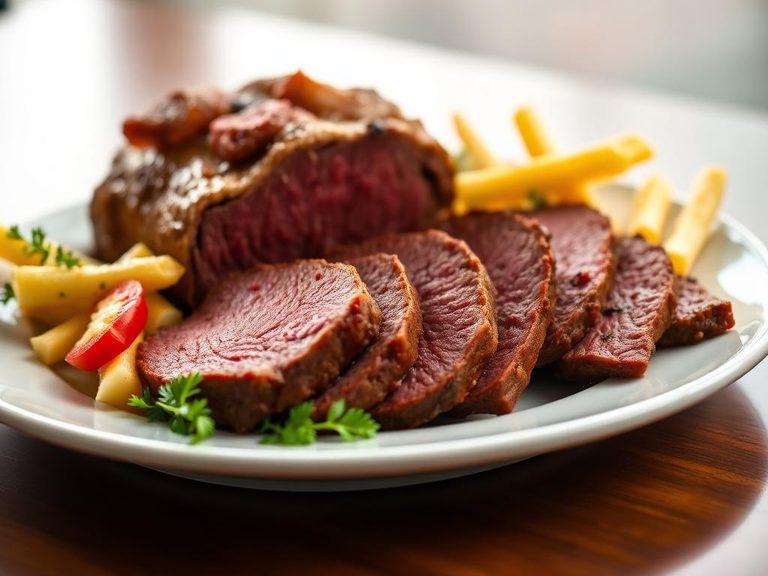
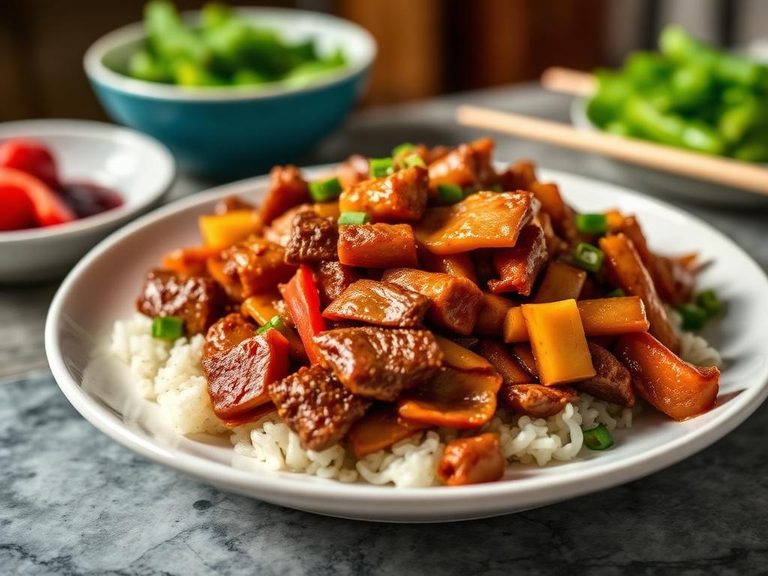
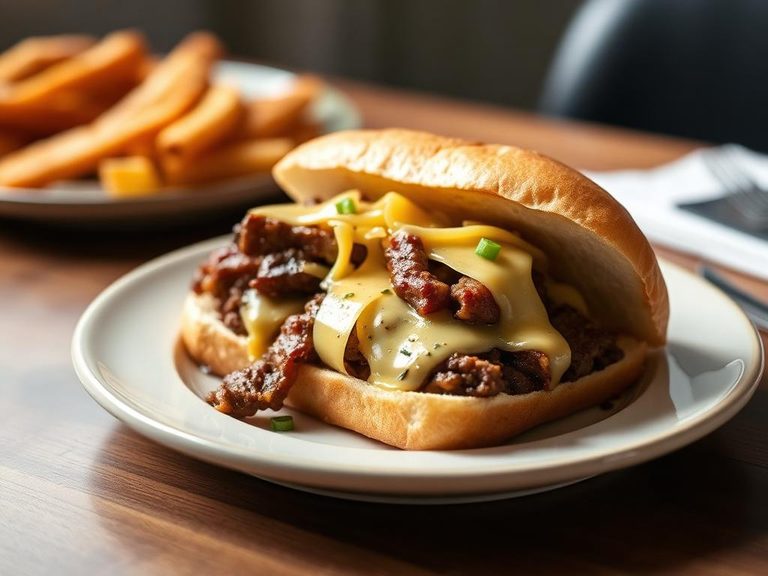
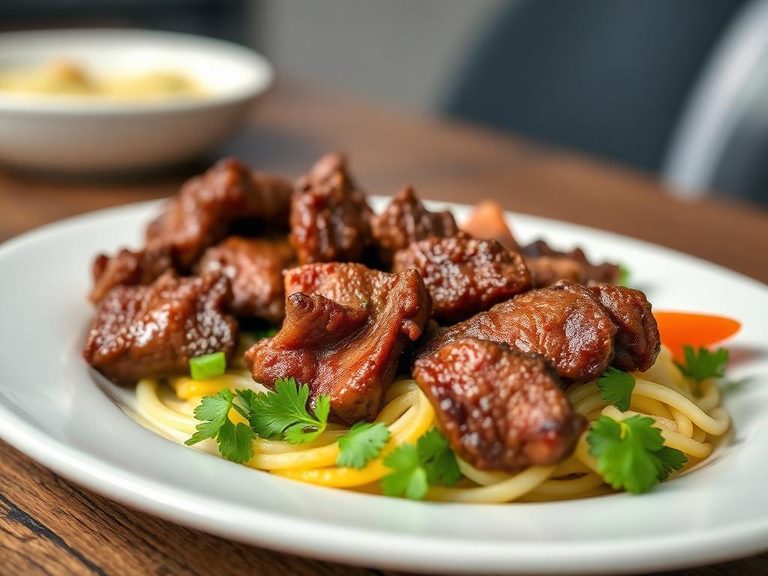
🍽️ Popular dishes
🌍 Where it's eaten
💡 Did you know?
The 'top sirloin' is actually a misnomer; this cut comes from the upper portion of the sirloin primal, but it's not adjacent to the tenderloin as the name might imply—it's separated by the hip bone.
Full nutrition (USDA data · scales with serving)
| Water | 63.9 g |
| Energy | 170 kcal |
| Energy | 710 kj |
| Protein | 29.1 g |
| Total lipid (fat) | 5.9 g |
| Ash | 1.1 g |
| Carbohydrate, by difference | 0.00 g |
| Fiber, total dietary | 0.00 g |
| Total Sugars | 0.00 g |
| Calcium, Ca | 5.0 mg |
| Iron, Fe | 2.8 mg |
| Magnesium, Mg | 27.0 mg |
| Phosphorus, P | 243 mg |
| Potassium, K | 377 mg |
| Sodium, Na | 57.0 mg |
| Zinc, Zn | 7.1 mg |
| Copper, Cu | 0.10 mg |
| Selenium, Se | 34.8 ug |
| Vitamin C, total ascorbic acid | 0.00 mg |
| Thiamin | 0.07 mg |
| Riboflavin | 0.19 mg |
| Niacin | 5.9 mg |
| Vitamin B-6 | 0.58 mg |
| Folate, total | 7.0 ug |
| Folic acid | 0.00 ug |
| Folate, food | 7.0 ug |
| Folate, DFE | 7.0 ug |
| Vitamin B-12 | 3.8 ug |
| Vitamin B-12, added | 0.00 ug |
| Vitamin A, RAE | 2.0 ug |
| Retinol | 2.0 ug |
| Carotene, beta | 0.00 ug |
| Carotene, alpha | 0.00 ug |
| Cryptoxanthin, beta | 0.00 ug |
| Vitamin A, IU | 5.0 iu |
| Lycopene | 0.00 ug |
| Lutein + zeaxanthin | 0.00 ug |
| Vitamin D (D2 + D3), International Units | 4.0 iu |
| Vitamin D (D2 + D3) | 0.10 ug |
| Vitamin D3 (cholecalciferol) | 0.10 ug |
| Vitamin K (phylloquinone) | 1.6 ug |
| Alcohol, ethyl | 0.00 g |
| Caffeine | 0.00 mg |
| Theobromine | 0.00 mg |
Fat & fatty acid profile (per 100g)
| Fatty acids, total saturated | 1.7 g |
| SFA 4:0 | 0.00 g |
| SFA 6:0 | 0.00 g |
| SFA 8:0 | 0.00 g |
| SFA 10:0 | 0.00 g |
| SFA 12:0 | 0.00 g |
| SFA 14:0 | 0.12 g |
| SFA 16:0 | 1.0 g |
| SFA 17:0 | 0.05 g |
| SFA 18:0 | 0.55 g |
| SFA 20:0 | 0.00 g |
| SFA 24:0 | 0.01 g |
| Fatty acids, total monounsaturated | 2.3 g |
| MUFA 14:1 | 0.02 g |
| MUFA 16:1 | 0.18 g |
| MUFA 17:1 | 0.05 g |
| MUFA 18:1 | 2.1 g |
| MUFA 18:1 c | 1.8 g |
| MUFA 20:1 | 0.01 g |
| MUFA 22:1 | 0.00 g |
| Fatty acids, total polyunsaturated | 0.20 g |
| PUFA 18:2 | 0.15 g |
| PUFA 18:2 n-6 c,c | 0.14 g |
| PUFA 18:2 CLAs | 0.02 g |
| PUFA 18:3 | 0.01 g |
| PUFA 18:3 n-6 c,c,c | 0.01 g |
| PUFA 18:4 | 0.00 g |
| PUFA 20:2 n-6 c,c | 0.00 g |
| PUFA 20:4 | 0.03 g |
| PUFA 20:5 n-3 (EPA) | 0.00 g |
| PUFA 22:5 n-3 (DPA) | 0.01 g |
| PUFA 22:6 n-3 (DHA) | 0.00 g |
| Fatty acids, total trans | 0.28 g |
| Fatty acids, total trans-monoenoic | 0.28 g |
| TFA 18:1 t | 0.28 g |
| Cholesterol | 86.0 mg |
Amino acid profile (per 100g)
| Tryptophan | 0.36 g |
| Threonine | 1.5 g |
| Isoleucine | 1.5 g |
| Leucine | 2.7 g |
| Lysine | 3.1 g |
| Methionine | 0.85 g |
| Cystine | 0.32 g |
| Phenylalanine | 1.3 g |
| Tyrosine | 1.2 g |
| Valine | 1.6 g |
| Arginine | 2.1 g |
| Histidine | 1.2 g |
| Alanine | 1.9 g |
| Aspartic acid | 3.1 g |
| Glutamic acid | 5.2 g |
| Glycine | 1.4 g |
| Proline | 1.3 g |
| Serine | 1.3 g |
| Hydroxyproline | 0.15 g |
FAQ
What's the best way to cook this lean roast to prevent dryness?
Roast at a high temperature (425°F/220°C) for 15 minutes to sear, then lower to 325°F (165°C) until it reaches your desired doneness. A meat thermometer is crucial—pull it out at 130°F (54°C) for medium-rare and let it rest.
Can I use this cut for grilling?
Yes, but it's best when sliced into steaks or kebabs first. Marinate it briefly in an acidic mixture (like citrus or vinegar) to help tenderize, and grill quickly over high heat to avoid overcooking.
How does this differ from other sirloin cuts?
This is the 'petite roast' or 'top sirloin cap'—it's leaner and more uniform than the bottom sirloin, with a finer grain. It's often sold as a small, neat roast perfect for 2-4 people, unlike the larger, fattier sirloin flaps.
Nutrient density (calculated · NRF9.3)
Nutrient Rich Foods index: beneficial nutrients (protein, fiber, vitamins, minerals) minus saturated fat, added sugar & sodium, per 100 kcal.
NRF9.3 index — Fulgoni, Keast & Drewnowski, 2009. Computed from USDA nutrients.
Weight-loss friendliness (composite index)
Energy density 1.70 kcal/g · 69% calories from protein · 0.0 g fiber · 0.0 g sugar per 100 g.
Composite of energy density (Rolls et al., 1999), protein & fiber satiety, minus sugar. A calculated heuristic — ranks satiety-per-calorie, not a clinical measure.
Dietary load (calculated from USDA values)
Potential renal acid load. Positive = acid-forming, negative = alkaline-forming.
Sodium-to-potassium ratio: 0.15 (lower is better — aim for ≤ 1)
Sodium:potassium per WHO potassium guidance. Computed from USDA nutrients.