

Beef, loin, top sirloin filet, boneless, separable lean only, trimmed to 0" fat, select, cooked, grilled
Whole food · Beef Products

Photo: Wikipedia
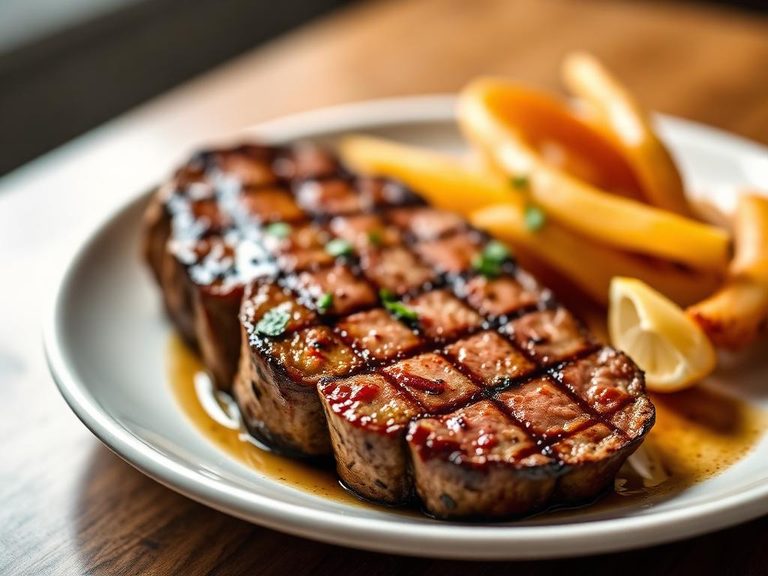
This is the lean, boneless top sirloin filet, a premium cut prized for its robust beefy flavor and tender, fine-grained texture when grilled. With virtually no fat, it delivers a clean, meaty taste that's both satisfying and incredibly lean. It's a protein powerhouse, packing over 30 grams of high-quality protein per 100g with minimal calories.
Calorie split: 75% protein · 0% carbs · 25% fat
↓ Full nutrition💚 Why it's loved
People love it for its pure, concentrated beef flavor that shines with simple seasoning, and its versatility—it can be the star of a quick weeknight grill or a refined dinner. It's a go-to for health-conscious cooks and steak purists alike.
⚠️ Watch-outs & how to enjoy it better
Its extreme leanness means it can dry out quickly if overcooked, leading to a tough, chewy texture. To counteract this, use a meat thermometer to pull it at 130-135°F (medium-rare), let it rest fully, and consider a quick marinade or a finishing sauce like a chimichurri to add moisture and flavor.
Key benefits
- Exceptionally high in complete protein for muscle maintenance and satiety.
- Very low in fat and calories, making it ideal for lean protein goals.
- Rich in essential nutrients like iron, zinc, and B vitamins (especially B12).
- Zero carbohydrates, fitting perfectly into low-carb and ketogenic diets.
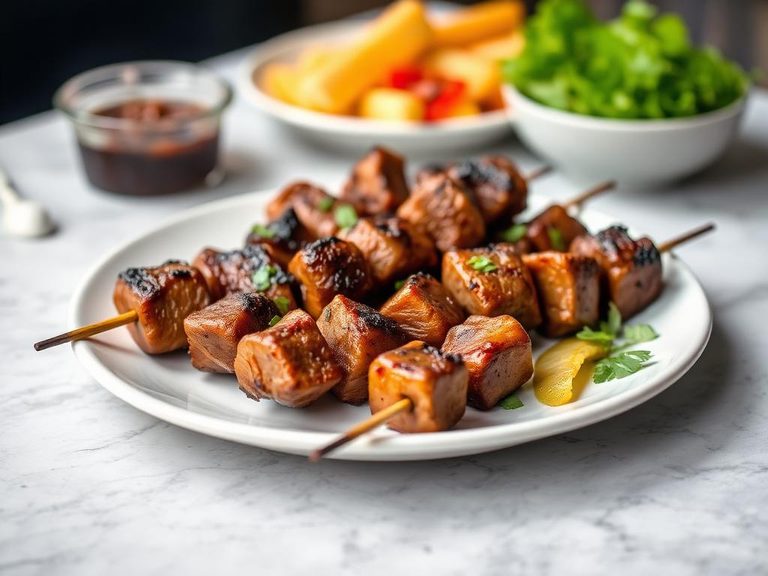
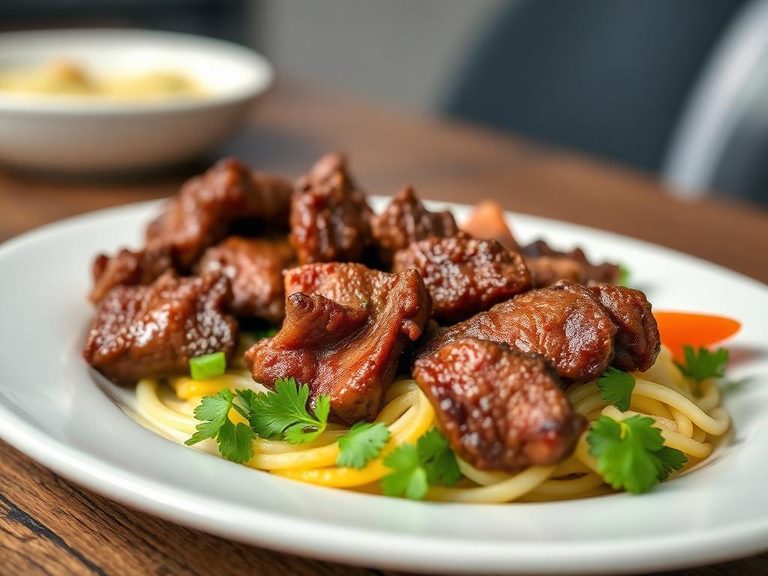
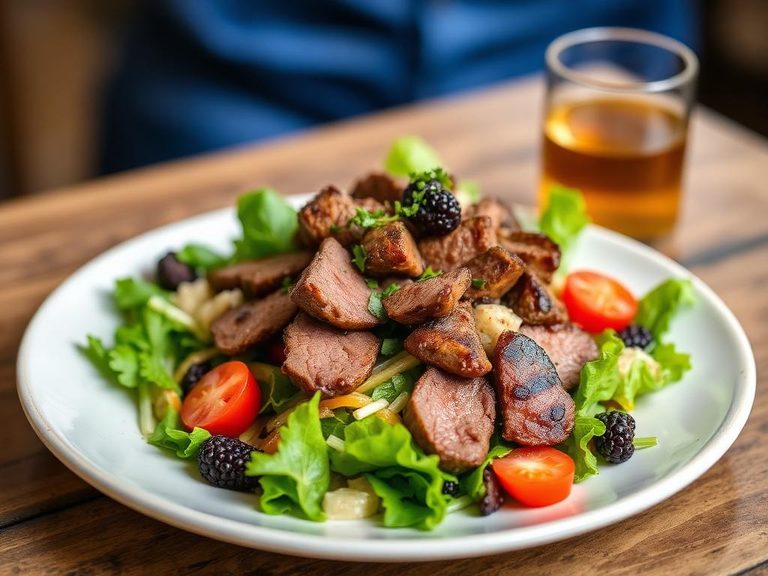
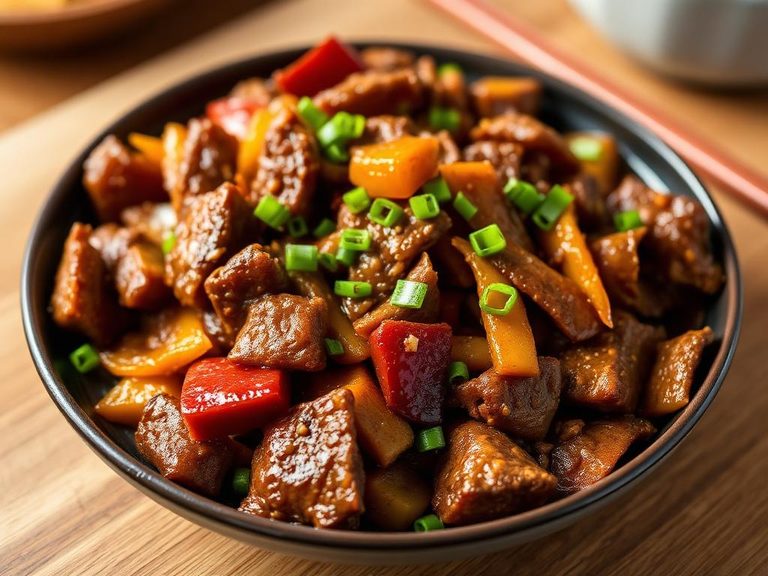
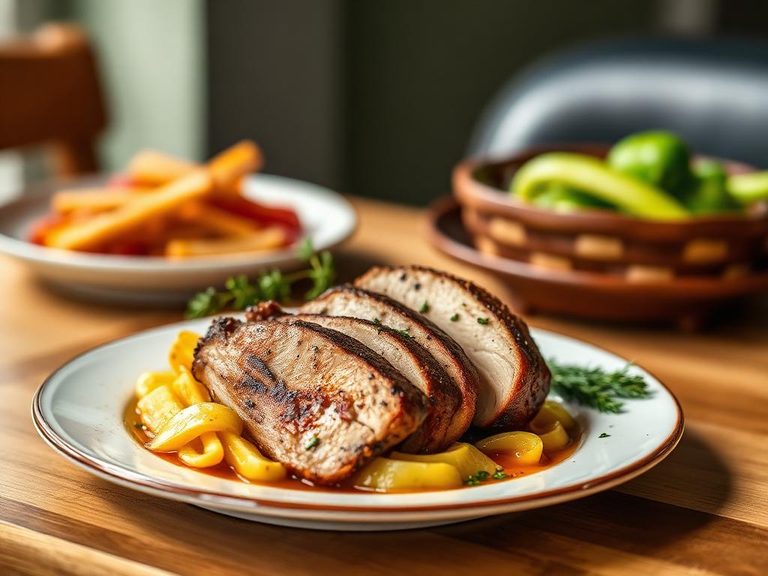
🍽️ Popular dishes
🌍 Where it's eaten
💡 Did you know?
The 'top sirloin' is actually located above the tenderloin in the primal cut, but it's a separate muscle that doesn't get the same 'filet mignon' fame, despite offering similar leanness and excellent flavor at a more accessible price.
Full nutrition (USDA data · scales with serving)
| Water | 63.4 g |
| Energy | 165 kcal |
| Energy | 692 kj |
| Protein | 30.8 g |
| Total lipid (fat) | 4.7 g |
| Ash | 1.3 g |
| Carbohydrate, by difference | 0.00 g |
| Fiber, total dietary | 0.00 g |
| Total Sugars | 0.00 g |
| Calcium, Ca | 6.0 mg |
| Iron, Fe | 3.2 mg |
| Magnesium, Mg | 28.0 mg |
| Phosphorus, P | 262 mg |
| Potassium, K | 390 mg |
| Sodium, Na | 56.0 mg |
| Zinc, Zn | 8.6 mg |
| Copper, Cu | 0.15 mg |
| Selenium, Se | 31.3 ug |
| Vitamin C, total ascorbic acid | 0.00 mg |
| Thiamin | 0.07 mg |
| Riboflavin | 0.22 mg |
| Niacin | 6.3 mg |
| Vitamin B-6 | 0.55 mg |
| Folate, total | 7.0 ug |
| Folic acid | 0.00 ug |
| Folate, food | 7.0 ug |
| Folate, DFE | 7.0 ug |
| Vitamin B-12 | 3.4 ug |
| Vitamin B-12, added | 0.00 ug |
| Vitamin A, RAE | 2.0 ug |
| Retinol | 2.0 ug |
| Carotene, beta | 0.00 ug |
| Carotene, alpha | 0.00 ug |
| Cryptoxanthin, beta | 0.00 ug |
| Vitamin A, IU | 7.0 iu |
| Lycopene | 0.00 ug |
| Lutein + zeaxanthin | 0.00 ug |
| Vitamin D (D2 + D3), International Units | 3.0 iu |
| Vitamin D (D2 + D3) | 0.10 ug |
| Vitamin D3 (cholecalciferol) | 0.10 ug |
| Vitamin K (phylloquinone) | 1.6 ug |
| Alcohol, ethyl | 0.00 g |
| Caffeine | 0.00 mg |
| Theobromine | 0.00 mg |
Fat & fatty acid profile (per 100g)
| Fatty acids, total saturated | 1.5 g |
| SFA 4:0 | 0.00 g |
| SFA 6:0 | 0.00 g |
| SFA 8:0 | 0.00 g |
| SFA 10:0 | 0.00 g |
| SFA 12:0 | 0.00 g |
| SFA 14:0 | 0.11 g |
| SFA 16:0 | 0.95 g |
| SFA 17:0 | 0.04 g |
| SFA 18:0 | 0.44 g |
| SFA 20:0 | 0.00 g |
| SFA 24:0 | 0.01 g |
| Fatty acids, total monounsaturated | 2.2 g |
| MUFA 14:1 | 0.02 g |
| MUFA 16:1 | 0.13 g |
| MUFA 17:1 | 0.03 g |
| MUFA 18:1 | 2.0 g |
| MUFA 18:1 c | 1.7 g |
| MUFA 20:1 | 0.01 g |
| MUFA 22:1 | 0.00 g |
| Fatty acids, total polyunsaturated | 0.16 g |
| PUFA 18:2 | 0.13 g |
| PUFA 18:2 n-6 c,c | 0.12 g |
| PUFA 18:2 CLAs | 0.01 g |
| PUFA 18:3 | 0.01 g |
| PUFA 18:3 n-6 c,c,c | 0.01 g |
| PUFA 18:4 | 0.00 g |
| PUFA 20:2 n-6 c,c | 0.00 g |
| PUFA 20:4 | 0.02 g |
| PUFA 20:5 n-3 (EPA) | 0.00 g |
| PUFA 22:5 n-3 (DPA) | 0.01 g |
| PUFA 22:6 n-3 (DHA) | 0.00 g |
| Fatty acids, total trans | 0.27 g |
| Fatty acids, total trans-monoenoic | 0.27 g |
| TFA 18:1 t | 0.27 g |
| Cholesterol | 74.0 mg |
Amino acid profile (per 100g)
| Tryptophan | 0.40 g |
| Threonine | 1.7 g |
| Isoleucine | 1.7 g |
| Leucine | 3.2 g |
| Lysine | 3.6 g |
| Methionine | 0.97 g |
| Cystine | 0.37 g |
| Phenylalanine | 1.5 g |
| Tyrosine | 1.4 g |
| Valine | 1.8 g |
| Arginine | 2.5 g |
| Histidine | 1.4 g |
| Alanine | 2.2 g |
| Aspartic acid | 3.6 g |
| Glutamic acid | 6.0 g |
| Glycine | 1.6 g |
| Proline | 1.6 g |
| Serine | 1.5 g |
| Hydroxyproline | 0.15 g |
FAQ
How is top sirloin filet different from a regular sirloin steak?
The 'filet' designation indicates it's a specific, more tender muscle (the gluteus medius) from within the sirloin primal, trimmed of all external fat and silver skin for a more uniform, leaner, and tender cut compared to a standard sirloin steak which may have more connective tissue.
What's the best way to cook it to prevent dryness?
High-heat, quick cooking methods are best: grill, broil, or pan-sear. Aim for medium-rare (130-135°F internal temp), and let it rest for 5-10 minutes after cooking to allow juices to redistribute. Avoid well-done temperatures.
Is this a good cut for marinating?
Yes, but briefly. A marinade for 30 minutes to 2 hours can add flavor and help with moisture, but because it's so lean, it won't need long to tenderize. Acidic marinades (like with citrus or vinegar) should be used sparingly to avoid a mushy texture.
Nutrient density (calculated · NRF9.3)
Nutrient Rich Foods index: beneficial nutrients (protein, fiber, vitamins, minerals) minus saturated fat, added sugar & sodium, per 100 kcal.
NRF9.3 index — Fulgoni, Keast & Drewnowski, 2009. Computed from USDA nutrients.
Weight-loss friendliness (composite index)
Energy density 1.65 kcal/g · 75% calories from protein · 0.0 g fiber · 0.0 g sugar per 100 g.
Composite of energy density (Rolls et al., 1999), protein & fiber satiety, minus sugar. A calculated heuristic — ranks satiety-per-calorie, not a clinical measure.
Dietary load (calculated from USDA values)
Potential renal acid load. Positive = acid-forming, negative = alkaline-forming.
Sodium-to-potassium ratio: 0.14 (lower is better — aim for ≤ 1)
Sodium:potassium per WHO potassium guidance. Computed from USDA nutrients.