

Beef, loin, top sirloin cap steak, boneless, separable lean only, trimmed to 1/8" fat, all grades, raw
Whole food · Beef Products

Photo: Wikipedia
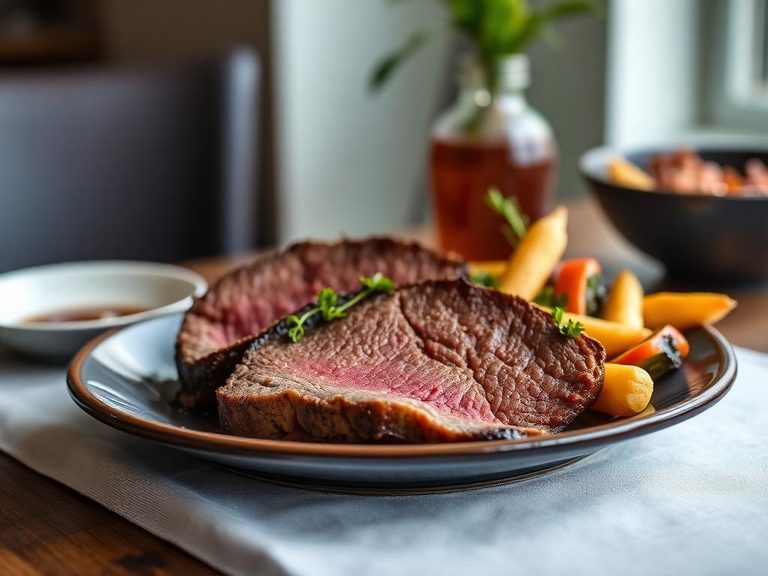
The top sirloin cap, also known as the picanha, is a prized cut from the upper loin of the cow, celebrated for its rich, beefy flavor and a distinct layer of fat that bastes the meat as it cooks. When trimmed to a lean 1/8" fat cap, it offers a tender, slightly chewy texture that is ideal for high-heat cooking. It is a nutritional powerhouse, delivering over 21 grams of high-quality protein per 100 grams with minimal fat and zero carbohydrates.
Calorie split: 64% protein · 0% carbs · 36% fat
↓ Full nutrition💚 Why it's loved
People love the top sirloin cap for its bold, concentrated beef flavor and the way the fat cap renders to create a juicy, succulent bite. Its versatility makes it a star in both simple grilled steaks and elaborate slow-cooked dishes, appealing to a wide range of culinary traditions.
⚠️ Watch-outs & how to enjoy it better
While lean, the cut can be tough if overcooked or not sliced against the grain, which may disappoint those expecting a melt-in-your-mouth texture. To counteract this, use a meat thermometer to avoid overcooking, and always slice thinly against the grain to maximize tenderness. Pairing it with a small amount of healthy fat, like olive oil or avocado, can also enhance the absorption of fat-soluble vitamins.
Key benefits
- Excellent source of complete protein for muscle maintenance
- Very low in carbohydrates, suitable for keto and low-carb diets
- Rich in essential minerals like iron and zinc
- Provides B vitamins, particularly B12 and niacin
- Lean cut with a favorable protein-to-fat ratio
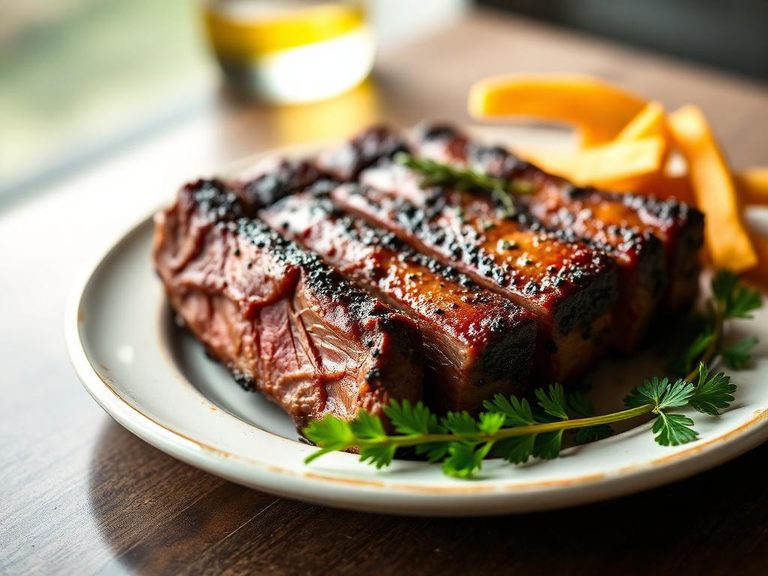
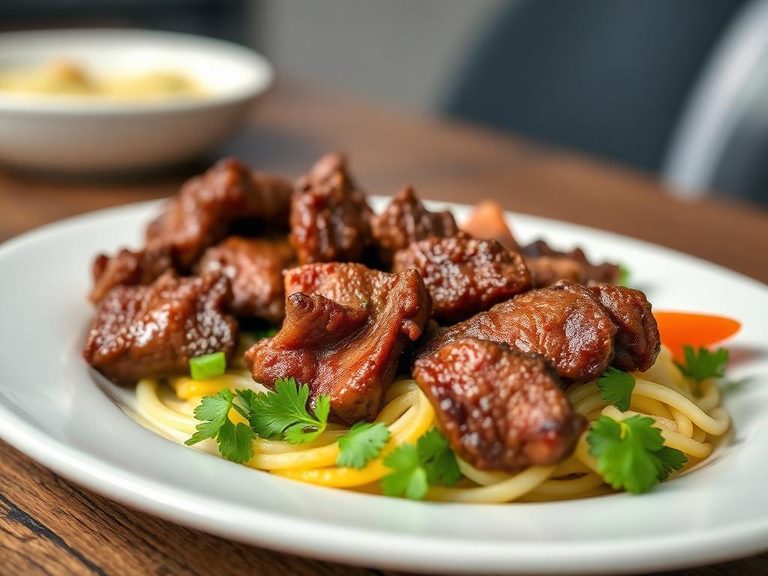
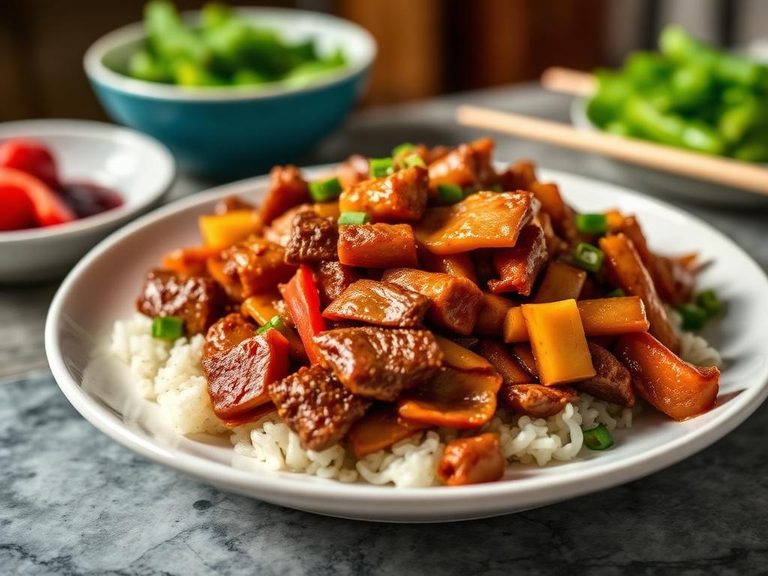
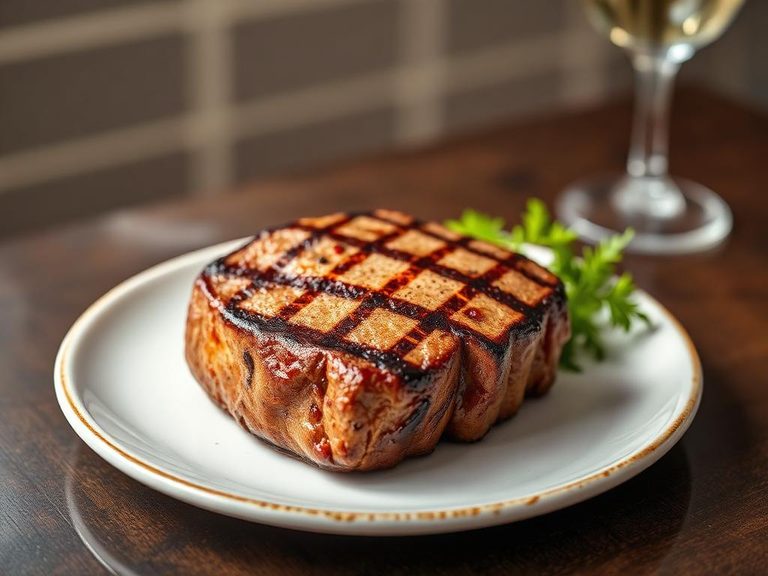
🍽️ Popular dishes
🌍 Where it's eaten
💡 Did you know?
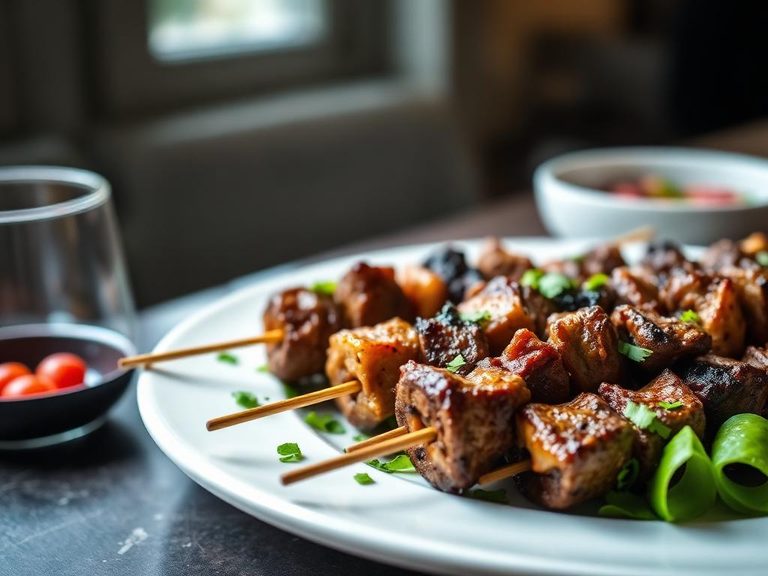
The top sirloin cap is the same cut known as 'picanha' in Brazil, where it is considered the national steak and is traditionally skewered in a distinctive C-shape and grilled over open flame.
Full nutrition (USDA data · scales with serving)
| Water | 72.9 g |
| Energy | 134 kcal |
| Energy | 560 kj |
| Protein | 21.4 g |
| Total lipid (fat) | 5.4 g |
| Ash | 0.98 g |
| Carbohydrate, by difference | 0.00 g |
| Fiber, total dietary | 0.00 g |
| Total Sugars | 0.00 g |
| Calcium, Ca | 5.0 mg |
| Iron, Fe | 2.0 mg |
| Magnesium, Mg | 25.0 mg |
| Phosphorus, P | 220 mg |
| Potassium, K | 375 mg |
| Sodium, Na | 55.0 mg |
| Zinc, Zn | 5.3 mg |
| Copper, Cu | 0.08 mg |
| Selenium, Se | 27.9 ug |
| Vitamin C, total ascorbic acid | 0.00 mg |
| Thiamin | 0.07 mg |
| Riboflavin | 0.18 mg |
| Niacin | 5.0 mg |
| Vitamin B-6 | 0.54 mg |
| Folate, total | 3.0 ug |
| Folic acid | 0.00 ug |
| Folate, food | 3.0 ug |
| Folate, DFE | 3.0 ug |
| Vitamin B-12 | 2.7 ug |
| Vitamin B-12, added | 0.00 ug |
| Vitamin A, RAE | 2.0 ug |
| Retinol | 2.0 ug |
| Carotene, beta | 0.00 ug |
| Carotene, alpha | 0.00 ug |
| Cryptoxanthin, beta | 0.00 ug |
| Vitamin A, IU | 6.0 iu |
| Lycopene | 0.00 ug |
| Lutein + zeaxanthin | 0.00 ug |
| Vitamin D (D2 + D3), International Units | 3.0 iu |
| Vitamin D (D2 + D3) | 0.10 ug |
| Vitamin D3 (cholecalciferol) | 0.10 ug |
| Vitamin K (phylloquinone) | 1.5 ug |
| Alcohol, ethyl | 0.00 g |
| Caffeine | 0.00 mg |
| Theobromine | 0.00 mg |
Fat & fatty acid profile (per 100g)
| Fatty acids, total saturated | 1.9 g |
| SFA 4:0 | 0.00 g |
| SFA 6:0 | 0.00 g |
| SFA 8:0 | 0.00 g |
| SFA 10:0 | 0.00 g |
| SFA 12:0 | 0.00 g |
| SFA 14:0 | 0.12 g |
| SFA 16:0 | 1.1 g |
| SFA 17:0 | 0.06 g |
| SFA 18:0 | 0.61 g |
| SFA 20:0 | 0.00 g |
| SFA 24:0 | 0.01 g |
| Fatty acids, total monounsaturated | 2.4 g |
| MUFA 14:1 | 0.02 g |
| MUFA 16:1 | 0.14 g |
| MUFA 17:1 | 0.03 g |
| MUFA 18:1 | 2.2 g |
| MUFA 18:1 c | 1.9 g |
| MUFA 20:1 | 0.01 g |
| MUFA 22:1 | 0.00 g |
| Fatty acids, total polyunsaturated | 0.19 g |
| PUFA 18:2 | 0.15 g |
| PUFA 18:2 n-6 c,c | 0.14 g |
| PUFA 18:2 CLAs | 0.01 g |
| PUFA 18:3 | 0.01 g |
| PUFA 18:3 n-6 c,c,c | 0.01 g |
| PUFA 18:4 | 0.00 g |
| PUFA 20:2 n-6 c,c | 0.00 g |
| PUFA 20:4 | 0.03 g |
| PUFA 20:5 n-3 (EPA) | 0.00 g |
| PUFA 22:5 n-3 (DPA) | 0.01 g |
| PUFA 22:6 n-3 (DHA) | 0.00 g |
| Fatty acids, total trans | 0.25 g |
| Fatty acids, total trans-monoenoic | 0.25 g |
| TFA 18:1 t | 0.25 g |
| Cholesterol | 67.0 mg |
Amino acid profile (per 100g)
| Tryptophan | 0.26 g |
| Threonine | 1.1 g |
| Isoleucine | 1.1 g |
| Leucine | 2.0 g |
| Lysine | 2.2 g |
| Methionine | 0.62 g |
| Cystine | 0.23 g |
| Phenylalanine | 0.93 g |
| Tyrosine | 0.87 g |
| Valine | 1.2 g |
| Arginine | 1.6 g |
| Histidine | 0.87 g |
| Alanine | 1.4 g |
| Aspartic acid | 2.3 g |
| Glutamic acid | 3.8 g |
| Glycine | 1.0 g |
| Proline | 0.98 g |
| Serine | 0.95 g |
| Hydroxyproline | 0.11 g |
FAQ
What is the difference between top sirloin cap and regular sirloin?
The top sirloin cap (picanha) is the triangular muscle that sits on top of the sirloin, known for its fat cap and rich flavor. Regular sirloin is a leaner, more uniform cut from the same general area but without the distinct cap.
How should I cook top sirloin cap to keep it tender?
For best results, grill or pan-sear it to medium-rare (135°F internal temperature), then let it rest for 5-10 minutes before slicing thinly against the grain. This method preserves juiciness and tenderness.
Is top sirloin cap a good cut for meal prep?
Yes, its lean profile and robust flavor make it excellent for meal prep. Cook it to medium-rare, slice, and store in airtight containers for up to 4 days. It reheats well in a skillet or microwave without drying out.
Nutrient density (calculated · NRF9.3)
Nutrient Rich Foods index: beneficial nutrients (protein, fiber, vitamins, minerals) minus saturated fat, added sugar & sodium, per 100 kcal.
NRF9.3 index — Fulgoni, Keast & Drewnowski, 2009. Computed from USDA nutrients.
Weight-loss friendliness (composite index)
Energy density 1.34 kcal/g · 64% calories from protein · 0.0 g fiber · 0.0 g sugar per 100 g.
Composite of energy density (Rolls et al., 1999), protein & fiber satiety, minus sugar. A calculated heuristic — ranks satiety-per-calorie, not a clinical measure.
Dietary load (calculated from USDA values)
Potential renal acid load. Positive = acid-forming, negative = alkaline-forming.
Sodium-to-potassium ratio: 0.15 (lower is better — aim for ≤ 1)
Sodium:potassium per WHO potassium guidance. Computed from USDA nutrients.