

Bagels, multigrain
Whole food · Baked Products

Photo: Wikipedia
A multigrain bagel is a dense, chewy ring of bread made from a blend of whole grains like wheat, oats, rye, and barley, giving it a nutty, earthy flavor and a satisfyingly hearty texture. Nutritionally, it stands out for its high fiber content (6.2g per 100g) and solid protein (9.9g per 100g), making it a more substantial and nutrient-dense choice than a plain white bagel.
Calorie split: 16% protein · 79% carbs · 5% fat
↓ Full nutrition💚 Why it's loved
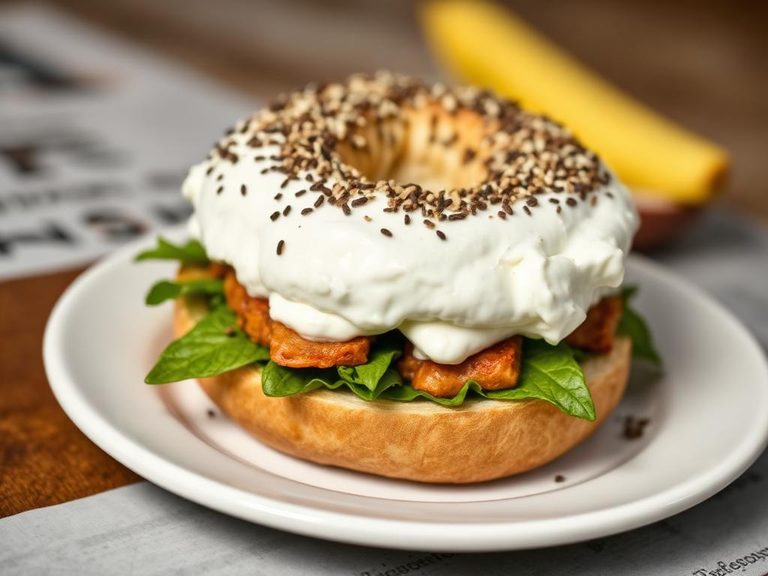
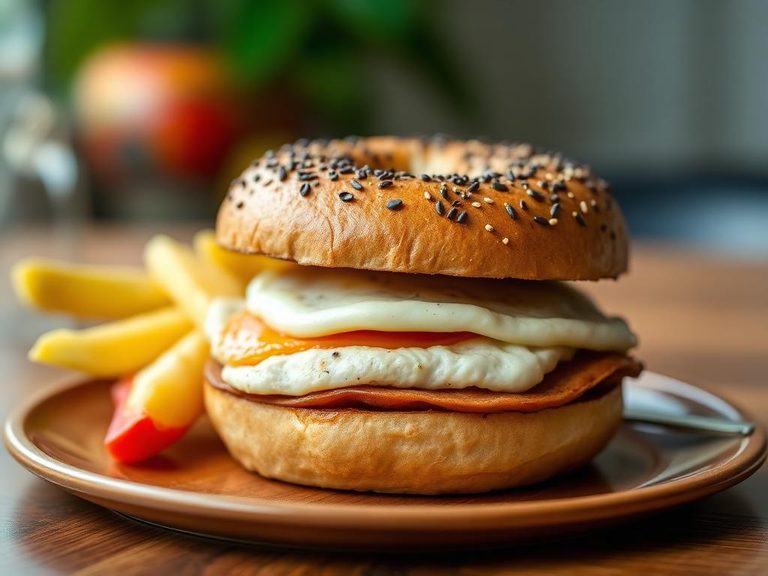
People love it for its robust, nutty flavor and dense, chewy texture that holds up well to toppings. Its versatility makes it a beloved canvas for everything from classic schmears to hearty breakfast sandwiches.
⚠️ Watch-outs & how to enjoy it better
Its dense carbohydrate load can cause blood sugar spikes, especially when eaten alone. To counteract this, always pair it with protein (like eggs or smoked salmon) and healthy fat (like avocado or cream cheese) to slow digestion and stabilize energy. Those watching sodium intake should be mindful, as bagels can be surprisingly high in salt.
Key benefits
- High in dietary fiber for digestive health and satiety.
- Good source of plant-based protein for muscle maintenance.
- Complex carbohydrates from whole grains provide sustained energy.
- Contains micronutrients like iron, magnesium, and B vitamins from the grain blend.
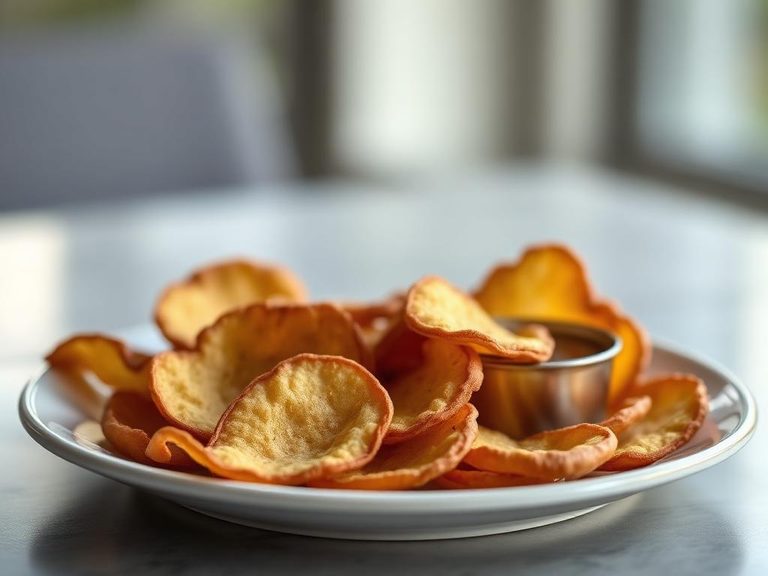
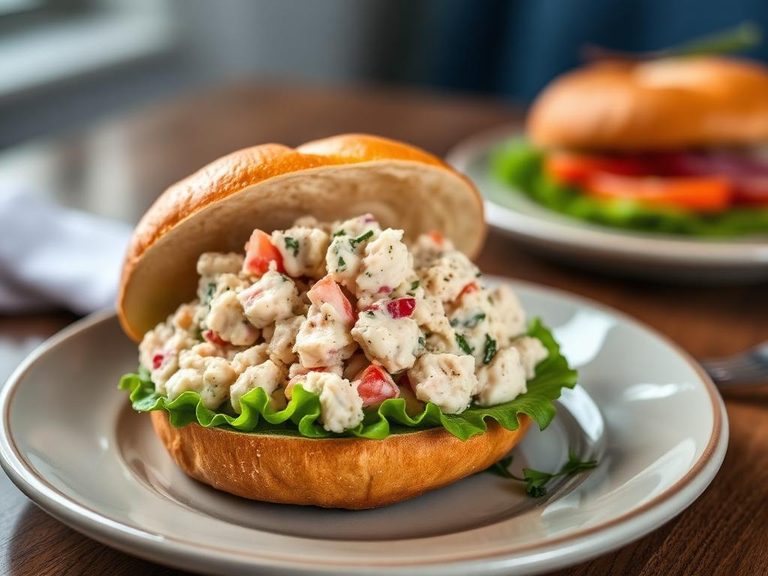
🍽️ Popular dishes


🌍 Where it's eaten
💡 Did you know?
The hole in the center of a bagel isn't just for looks; it was traditionally created to ensure even cooking and to make it easier to transport them by stringing them on poles in Polish bakeries.
Full nutrition (USDA data · scales with serving)
| Water | 39.4 g |
| Energy | 241 kcal |
| Energy | 1007 kj |
| Protein | 9.9 g |
| Total lipid (fat) | 1.2 g |
| Ash | 2.0 g |
| Carbohydrate, by difference | 47.5 g |
| Fiber, total dietary | 6.2 g |
| Total Sugars | 8.7 g |
| Calcium, Ca | 124 mg |
| Iron, Fe | 2.2 mg |
| Magnesium, Mg | 85.0 mg |
| Phosphorus, P | 188 mg |
| Potassium, K | 204 mg |
| Sodium, Na | 359 mg |
| Zinc, Zn | 1.5 mg |
| Copper, Cu | 0.24 mg |
| Manganese, Mn | 1.8 mg |
| Selenium, Se | 26.9 ug |
| Vitamin C, total ascorbic acid | 0.00 mg |
| Thiamin | 0.42 mg |
| Riboflavin | 0.25 mg |
| Niacin | 4.3 mg |
| Pantothenic acid | 0.52 mg |
| Vitamin B-6 | 0.18 mg |
| Folate, total | 81.0 ug |
| Folic acid | 48.0 ug |
| Folate, food | 33.0 ug |
| Folate, DFE | 114 ug |
| Choline, total | 16.1 mg |
| Vitamin B-12 | 0.00 ug |
| Vitamin B-12, added | 0.00 ug |
| Vitamin A, RAE | 0.00 ug |
| Retinol | 0.00 ug |
| Carotene, beta | 1.0 ug |
| Carotene, alpha | 0.00 ug |
| Cryptoxanthin, beta | 0.00 ug |
| Vitamin A, IU | 2.0 iu |
| Lycopene | 0.00 ug |
| Lutein + zeaxanthin | 80.0 ug |
| Vitamin E (alpha-tocopherol) | 0.66 mg |
| Vitamin E, added | 0.00 mg |
| Vitamin D (D2 + D3), International Units | 0.00 iu |
| Vitamin D (D2 + D3) | 0.00 ug |
| Vitamin K (phylloquinone) | 0.60 ug |
| Alcohol, ethyl | 0.00 g |
| Caffeine | 0.00 mg |
| Theobromine | 0.00 mg |
Fat & fatty acid profile (per 100g)
| Fatty acids, total saturated | 0.00 g |
| SFA 4:0 | 0.00 g |
| SFA 6:0 | 0.00 g |
| SFA 8:0 | 0.00 g |
| SFA 10:0 | 0.00 g |
| SFA 12:0 | 0.00 g |
| SFA 14:0 | 0.00 g |
| SFA 15:0 | 0.00 g |
| SFA 16:0 | 0.00 g |
| SFA 17:0 | 0.00 g |
| SFA 18:0 | 0.00 g |
| SFA 20:0 | 0.00 g |
| SFA 22:0 | 0.00 g |
| SFA 24:0 | 0.00 g |
| Fatty acids, total monounsaturated | 0.31 g |
| MUFA 14:1 | 0.00 g |
| MUFA 15:1 | 0.00 g |
| MUFA 16:1 | 0.01 g |
| MUFA 17:1 | 0.00 g |
| MUFA 18:1 | 0.31 g |
| MUFA 20:1 | 0.00 g |
| MUFA 22:1 | 0.00 g |
| MUFA 24:1 c | 0.00 g |
| Fatty acids, total polyunsaturated | 0.70 g |
| PUFA 18:2 | 0.55 g |
| PUFA 18:3 | 0.15 g |
| PUFA 18:4 | 0.00 g |
| PUFA 20:2 n-6 c,c | 0.00 g |
| PUFA 20:3 | 0.00 g |
| PUFA 20:4 | 0.00 g |
| PUFA 20:5 n-3 (EPA) | 0.00 g |
| PUFA 21:5 | 0.00 g |
| PUFA 22:4 | 0.00 g |
| PUFA 22:5 n-3 (DPA) | 0.00 g |
| PUFA 22:6 n-3 (DHA) | 0.00 g |
| Fatty acids, total trans | 0.00 g |
| Cholesterol | 6.0 mg |
Amino acid profile (per 100g)
Estimated from Bagels, cinnamon-raisin — USDA does not publish this profile for Bagels.
| Tryptophan | 0.11 g |
| Threonine | 0.28 g |
| Isoleucine | 0.37 g |
| Leucine | 0.67 g |
| Lysine | 0.24 g |
| Methionine | 0.18 g |
| Cystine | 0.21 g |
| Phenylalanine | 0.47 g |
| Tyrosine | 0.27 g |
| Valine | 0.42 g |
| Arginine | 0.38 g |
| Histidine | 0.22 g |
| Alanine | 0.33 g |
| Aspartic acid | 0.48 g |
| Glutamic acid | 3.2 g |
| Glycine | 0.34 g |
| Proline | 1.1 g |
| Serine | 0.48 g |
FAQ
Is a multigrain bagel healthier than a plain bagel?
Generally, yes. Multigrain bagels typically offer more fiber, protein, and micronutrients from the diverse grain blend compared to a refined white flour bagel, which can help with fullness and nutrient intake.
How should I store multigrain bagels to keep them fresh?
For short-term (2-3 days), store at room temperature in a paper bag. For longer storage, slice and freeze in an airtight bag; toast directly from frozen for the best texture.
Why are bagels so chewy?
The signature chew comes from the high-gluten flour used and the unique cooking method: the dough is briefly boiled in water (often with malt or honey) before baking, which sets the crust and creates the dense interior.
Nutrient density (calculated · NRF9.3)
Nutrient Rich Foods index: beneficial nutrients (protein, fiber, vitamins, minerals) minus saturated fat, added sugar & sodium, per 100 kcal.
NRF9.3 index — Fulgoni, Keast & Drewnowski, 2009. Computed from USDA nutrients.
Weight-loss friendliness (composite index)
Energy density 2.41 kcal/g · 16% calories from protein · 6.2 g fiber · 8.7 g sugar per 100 g.
Composite of energy density (Rolls et al., 1999), protein & fiber satiety, minus sugar. A calculated heuristic — ranks satiety-per-calorie, not a clinical measure.
Dietary load (calculated from USDA values)
Potential renal acid load. Positive = acid-forming, negative = alkaline-forming.
Sodium-to-potassium ratio: 1.76 (lower is better — aim for ≤ 1)
Sodium:potassium per WHO potassium guidance. Computed from USDA nutrients.