Pancakes, plain, dry mix, complete (includes buttermilk)
Whole food · Baked Products

Photo: Wikipedia
This is a pre-mixed, shelf-stable powder designed to create classic American-style pancakes with minimal effort—just add water or milk. The cooked result is typically light, fluffy, and tender with a mild, slightly sweet, and comforting flavor. Nutritionally, it's a dense source of quick-release energy, providing over 73 grams of carbohydrates per 100g of dry mix.
💚 Why it's loved
People love the nostalgic, comforting taste and the ritual of a weekend breakfast. The mix's versatility allows for endless customization with toppings like maple syrup, fresh fruit, or chocolate chips.
⚠️ Watch-outs & how to enjoy it better
The high carbohydrate and sugar content can lead to rapid blood-sugar spikes, especially when eaten alone. Many commercial mixes are also surprisingly high in sodium. To counteract this, pair your pancakes with a source of protein (like eggs, Greek yogurt, or nuts) and healthy fat (like a smear of nut butter) to slow digestion and promote satiance. Opt for a smaller portion and load up on fiber-rich toppings.
Key benefits
- Extremely convenient and fast to prepare
- Consistent results for home cooks
- Good source of quick energy from carbohydrates
- Fortified with common vitamins and minerals in many brands
- Long shelf life reduces food waste
🍽️ Popular dishes
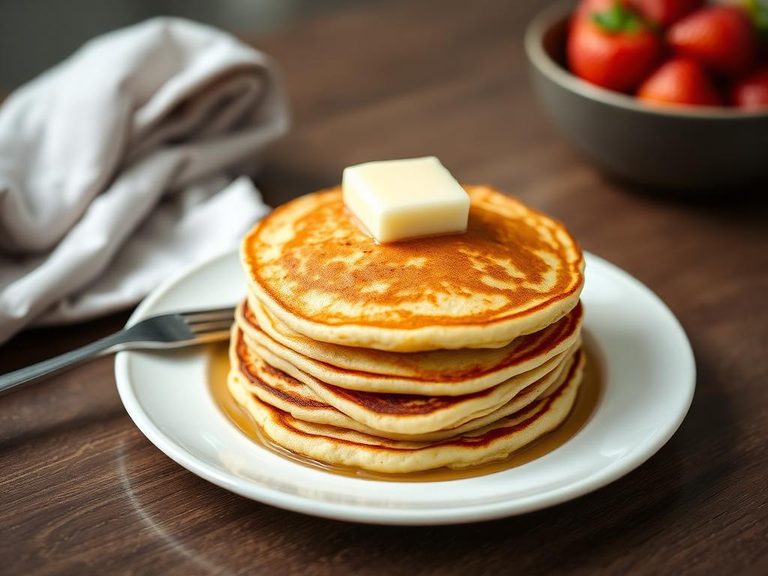
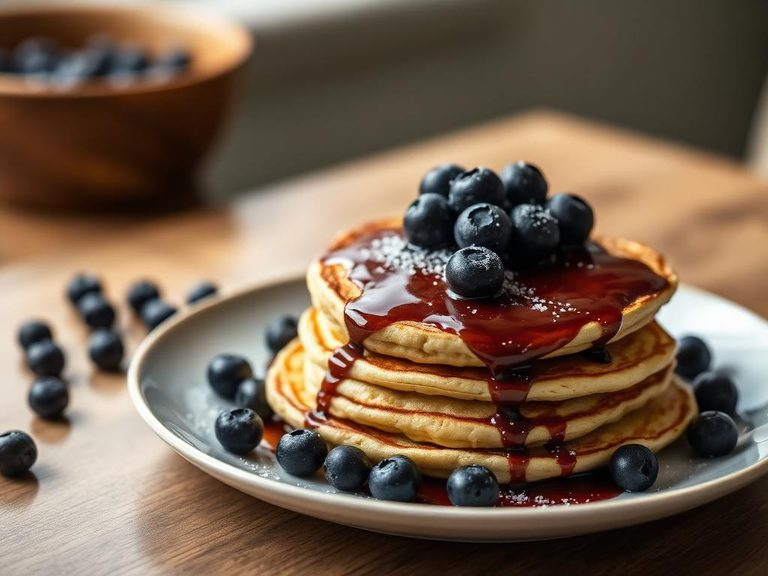


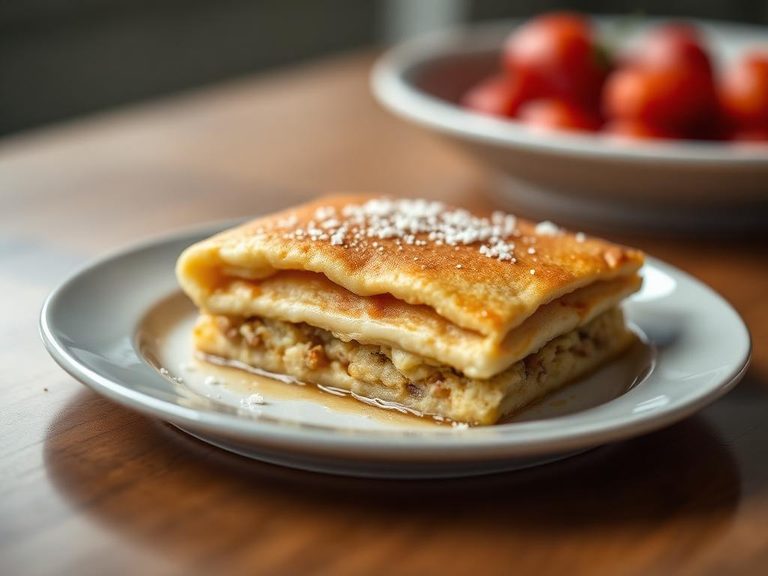
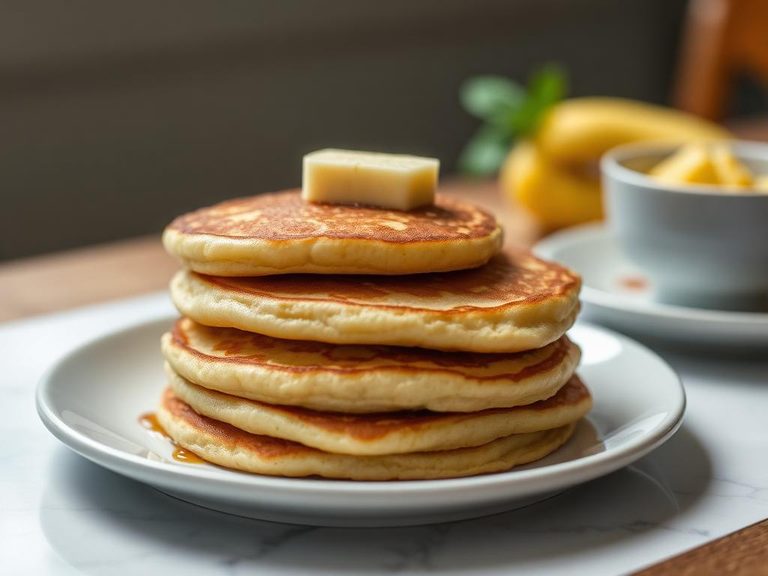
🌍 Where it's eaten
💡 Did you know?
The 'just-add-water' pancake mix was popularized in the 1930s, with Aunt Jemima (now Pearl Milling Company) being a pioneering brand that helped standardize the American breakfast.
Full nutrition (scales with serving)
| Water | 9.1 g |
| Energy | 368 kcal |
| Energy | 1541 kj |
| Protein | 9.8 g |
| Total lipid (fat) | 3.1 g |
| Ash | 4.4 g |
| Carbohydrate, by difference | 73.7 g |
| Fiber, total dietary | 2.9 g |
| Total Sugars | 16.0 g |
| Sucrose | 10.0 g |
| Glucose | 2.7 g |
| Fructose | 0.00 g |
| Lactose | 0.86 g |
| Maltose | 2.5 g |
| Galactose | 0.00 g |
| Starch | 56.2 g |
| Calcium, Ca | 344 mg |
| Iron, Fe | 3.6 mg |
| Magnesium, Mg | 28.0 mg |
| Phosphorus, P | 600 mg |
| Potassium, K | 191 mg |
| Sodium, Na | 1082 mg |
| Zinc, Zn | 0.72 mg |
| Copper, Cu | 0.13 mg |
| Manganese, Mn | 0.69 mg |
| Selenium, Se | 21.6 ug |
| Thiamin | 0.45 mg |
| Riboflavin | 0.27 mg |
| Niacin | 4.4 mg |
| Pantothenic acid | 0.63 mg |
| Vitamin B-6 | 0.17 mg |
| Choline, total | 18.2 mg |
| Betaine | 45.6 mg |
| Vitamin B-12 | 0.32 ug |
Fat & fatty acid profile (per 100g)
| Fatty acids, total saturated | 0.82 g |
| SFA 4:0 | 0.00 g |
| SFA 6:0 | 0.00 g |
| SFA 8:0 | 0.00 g |
| SFA 10:0 | 0.00 g |
| SFA 12:0 | 0.00 g |
| SFA 14:0 | 0.01 g |
| SFA 15:0 | 0.00 g |
| SFA 16:0 | 0.55 g |
| SFA 17:0 | 0.00 g |
| SFA 18:0 | 0.23 g |
| SFA 20:0 | 0.01 g |
| SFA 22:0 | 0.01 g |
| SFA 24:0 | 0.01 g |
| Fatty acids, total monounsaturated | 1.3 g |
| MUFA 14:1 | 0.00 g |
| MUFA 15:1 | 0.00 g |
| MUFA 16:1 | 0.00 g |
| MUFA 16:1 c | 0.00 g |
| MUFA 17:1 | 0.00 g |
| MUFA 18:1 | 1.2 g |
| MUFA 18:1 c | 0.84 g |
| MUFA 20:1 | 0.06 g |
| MUFA 22:1 | 0.00 g |
| MUFA 22:1 c | 0.00 g |
| MUFA 24:1 c | 0.01 g |
| Fatty acids, total polyunsaturated | 0.93 g |
| PUFA 18:2 | 0.91 g |
| PUFA 18:2 n-6 c,c | 0.87 g |
| PUFA 18:2 CLAs | 0.01 g |
| PUFA 18:3 | 0.01 g |
| PUFA 18:3 n-3 c,c,c (ALA) | 0.00 g |
| PUFA 18:3 n-6 c,c,c | 0.00 g |
| PUFA 18:4 | 0.00 g |
| PUFA 20:2 n-6 c,c | 0.00 g |
| PUFA 20:3 | 0.00 g |
| PUFA 20:3 n-3 | 0.00 g |
| PUFA 20:3 n-6 | 0.00 g |
| PUFA 20:4 | 0.00 g |
| PUFA 20:5 n-3 (EPA) | 0.00 g |
| PUFA 22:4 | 0.01 g |
| PUFA 22:5 n-3 (DPA) | 0.00 g |
| PUFA 22:6 n-3 (DHA) | 0.00 g |
| Fatty acids, total trans | 0.38 g |
| Fatty acids, total trans-monoenoic | 0.35 g |
| TFA 16:1 t | 0.00 g |
| TFA 18:1 t | 0.35 g |
| TFA 22:1 t | 0.00 g |
| TFA 18:2 t not further defined | 0.03 g |
| Fatty acids, total trans-polyenoic | 0.03 g |
| Cholesterol | 2.0 mg |
Amino acid profile (per 100g)
| Tryptophan | 0.11 g |
| Threonine | 0.36 g |
| Isoleucine | 0.42 g |
| Leucine | 0.86 g |
| Lysine | 0.41 g |
| Methionine | 0.20 g |
| Cystine | 0.19 g |
| Phenylalanine | 0.49 g |
| Tyrosine | 0.35 g |
| Valine | 0.50 g |
| Arginine | 0.43 g |
| Histidine | 0.24 g |
| Alanine | 0.43 g |
| Aspartic acid | 0.61 g |
| Glutamic acid | 2.6 g |
| Glycine | 0.33 g |
| Proline | 0.98 g |
| Serine | 0.52 g |
FAQ
What's the difference between 'complete' mix and regular mix?
'Complete' mixes contain dried buttermilk and leavening agents, so you only need to add water. Regular mixes typically require you to add milk, eggs, and sometimes oil or melted butter.
Can I make this mix healthier?
Yes. You can substitute water with milk or a plant-based milk, add a mashed banana or applesauce for natural sweetness and moisture, and fold in protein powder or oats. Serving with protein-rich sides is key.
Why are my pancakes tough or rubbery?
Over-mixing the batter develops gluten, leading to toughness. Mix just until the dry ingredients are moistened; lumps are perfectly fine. Also, ensure your pan or griddle is at the proper medium heat.