Melons, cantaloupe, raw
Whole food · Fruits and Fruit Juices

Photo: Wikipedia
The cantaloupe is a netted, golden-fleshed melon prized for its intensely sweet, floral aroma and juicy, tender texture. With only 34 calories per 100g, it's a hydrating, low-energy-density fruit that delivers a significant hit of beta-carotene (vitamin A precursor) and vitamin C.
💚 Why it's loved
People adore cantaloupe for its uniquely fragrant sweetness and refreshing, melt-in-your-mouth texture, making it a quintessential summer treat. Its versatility shines in everything from simple fruit salads to savory prosciutto wraps and chilled soups.
⚠️ Watch-outs & how to enjoy it better
Its high natural sugar content (7.86g per 100g) can cause blood sugar spikes if eaten in large quantities alone. To counteract this, pair it with a source of protein or fat (like Greek yogurt or cheese) to slow sugar absorption. The netted rind can harbor bacteria, so it should be thoroughly scrubbed under running water before cutting.
Key benefits
- Excellent source of vitamin A (beta-carotene) for vision and immune health.
- Good source of vitamin C, an antioxidant that supports skin and tissue repair.
- High water content (about 90%) aids in hydration.
- Very low in calories and fat, suitable for weight management.
- Provides dietary fiber for digestive health.
🍽️ Popular dishes
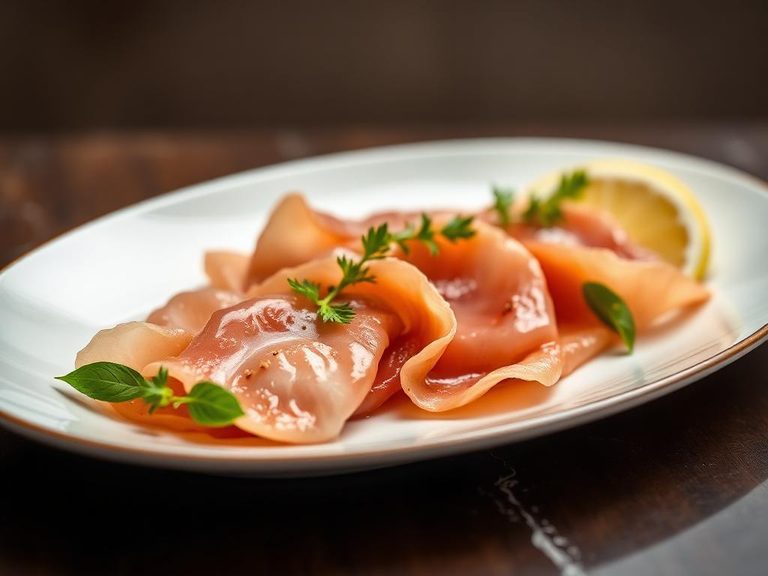
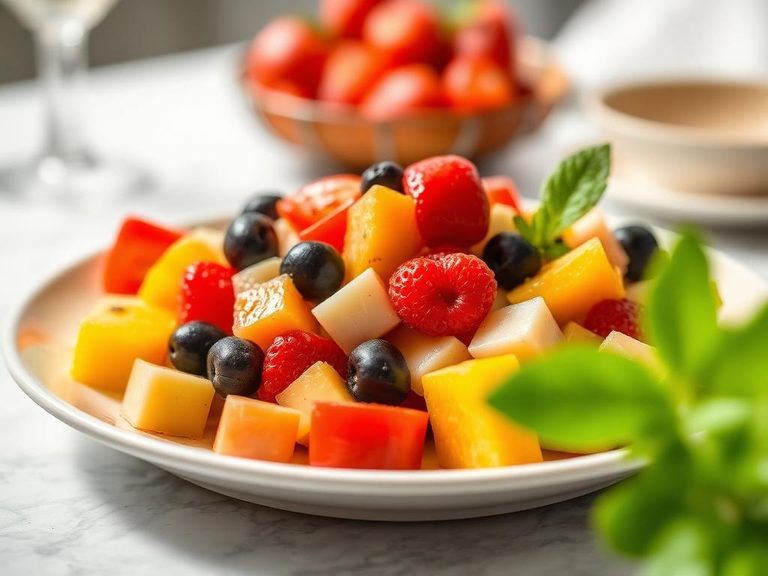
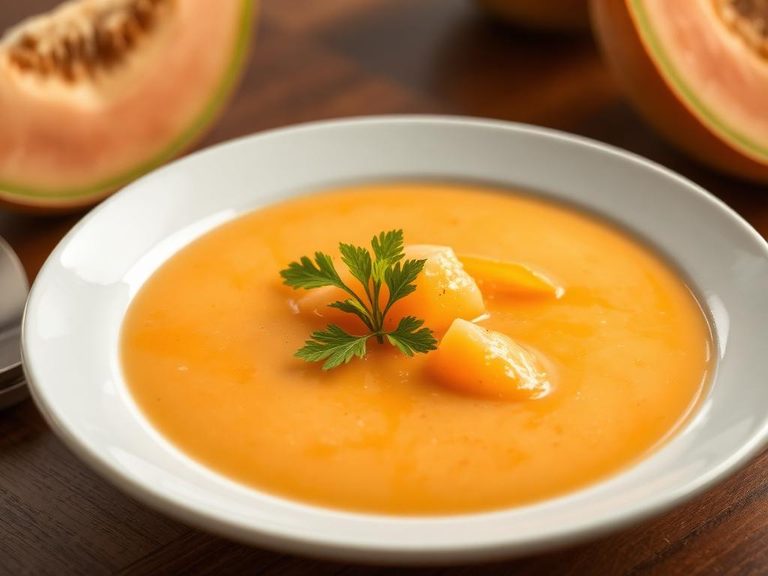

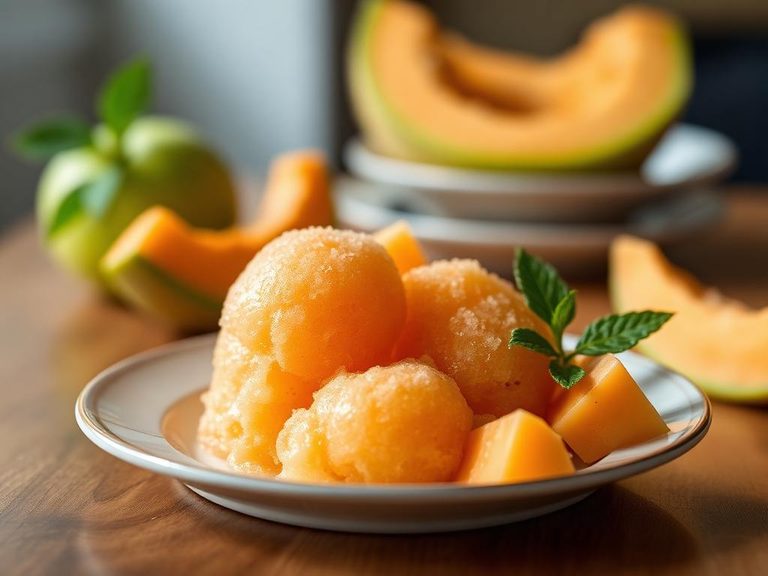
🌍 Where it's eaten
💡 Did you know?
The characteristic 'netting' on the rind of a cantaloupe is actually a type of scar tissue formed as the fruit expands rapidly during growth.
Full nutrition (scales with serving)
| Water | 90.2 g |
| Energy | 34.0 kcal |
| Energy | 141 kj |
| Protein | 0.84 g |
| Total lipid (fat) | 0.19 g |
| Ash | 0.65 g |
| Carbohydrate, by difference | 8.2 g |
| Fiber, total dietary | 0.90 g |
| Total Sugars | 7.9 g |
| Sucrose | 4.3 g |
| Glucose | 1.5 g |
| Fructose | 1.9 g |
| Lactose | 0.00 g |
| Maltose | 0.04 g |
| Galactose | 0.06 g |
| Starch | 0.03 g |
| Calcium, Ca | 9.0 mg |
| Iron, Fe | 0.21 mg |
| Magnesium, Mg | 12.0 mg |
| Phosphorus, P | 15.0 mg |
| Potassium, K | 267 mg |
| Sodium, Na | 16.0 mg |
| Zinc, Zn | 0.18 mg |
| Copper, Cu | 0.04 mg |
| Manganese, Mn | 0.04 mg |
| Selenium, Se | 0.40 ug |
| Fluoride, F | 1.0 ug |
| Vitamin C, total ascorbic acid | 36.7 mg |
| Thiamin | 0.04 mg |
| Riboflavin | 0.02 mg |
| Niacin | 0.73 mg |
| Pantothenic acid | 0.10 mg |
| Vitamin B-6 | 0.07 mg |
| Folate, total | 21.0 ug |
| Folic acid | 0.00 ug |
| Folate, food | 21.0 ug |
| Folate, DFE | 21.0 ug |
| Choline, total | 7.6 mg |
| Betaine | 0.10 mg |
| Vitamin B-12 | 0.00 ug |
| Vitamin B-12, added | 0.00 ug |
| Vitamin A, RAE | 169 ug |
| Retinol | 0.00 ug |
| Carotene, beta | 2020 ug |
| Carotene, alpha | 16.0 ug |
| Cryptoxanthin, beta | 1.0 ug |
| Vitamin A, IU | 3382 iu |
| Lycopene | 0.00 ug |
| Lutein + zeaxanthin | 26.0 ug |
| Vitamin E (alpha-tocopherol) | 0.05 mg |
| Vitamin E, added | 0.00 mg |
| Tocopherol, beta | 0.00 mg |
| Tocopherol, gamma | 0.11 mg |
| Tocopherol, delta | 0.00 mg |
| Tocotrienol, alpha | 0.00 mg |
| Tocotrienol, beta | 0.00 mg |
| Tocotrienol, gamma | 0.00 mg |
| Tocotrienol, delta | 0.00 mg |
| Vitamin D (D2 + D3), International Units | 0.00 iu |
| Vitamin D (D2 + D3) | 0.00 ug |
| Vitamin K (phylloquinone) | 2.5 ug |
| Vitamin K (Dihydrophylloquinone) | 0.00 ug |
| Alcohol, ethyl | 0.00 g |
| Caffeine | 0.00 mg |
| Theobromine | 0.00 mg |
Fat & fatty acid profile (per 100g)
| Fatty acids, total saturated | 0.05 g |
| SFA 4:0 | 0.00 g |
| SFA 6:0 | 0.00 g |
| SFA 8:0 | 0.00 g |
| SFA 10:0 | 0.00 g |
| SFA 12:0 | 0.00 g |
| SFA 14:0 | 0.00 g |
| SFA 16:0 | 0.04 g |
| SFA 18:0 | 0.01 g |
| Fatty acids, total monounsaturated | 0.00 g |
| MUFA 16:1 | 0.00 g |
| MUFA 18:1 | 0.00 g |
| MUFA 20:1 | 0.00 g |
| MUFA 22:1 | 0.00 g |
| Fatty acids, total polyunsaturated | 0.08 g |
| PUFA 18:2 | 0.04 g |
| PUFA 18:3 | 0.05 g |
| PUFA 18:4 | 0.00 g |
| PUFA 20:4 | 0.00 g |
| PUFA 20:5 n-3 (EPA) | 0.00 g |
| PUFA 22:5 n-3 (DPA) | 0.00 g |
| PUFA 22:6 n-3 (DHA) | 0.00 g |
| Fatty acids, total trans | 0.00 g |
| Cholesterol | 0.00 mg |
| Phytosterols | 10.0 mg |
Amino acid profile (per 100g)
| Tryptophan | 0.00 g |
| Threonine | 0.02 g |
| Isoleucine | 0.02 g |
| Leucine | 0.03 g |
| Lysine | 0.03 g |
| Methionine | 0.01 g |
| Cystine | 0.00 g |
| Phenylalanine | 0.02 g |
| Tyrosine | 0.01 g |
| Valine | 0.03 g |
| Arginine | 0.03 g |
| Histidine | 0.01 g |
| Alanine | 0.10 g |
| Aspartic acid | 0.14 g |
| Glutamic acid | 0.21 g |
| Glycine | 0.03 g |
| Proline | 0.02 g |
| Serine | 0.04 g |
FAQ
How do I pick a ripe cantaloupe?
Look for a creamy, pale yellow (not green) field spot where it sat on the ground. It should have a sweet, musky fragrance at the stem end and feel heavy for its size with a slightly soft, yielding blossom end.
Is the netting on the outside safe to eat?
While the netting itself is edible, the rind is tough and often not eaten. More importantly, the rough texture can trap bacteria, so it's crucial to wash the whole melon thoroughly under running water before cutting to prevent contamination of the flesh.
Why is my cantaloupe sometimes bitter?
Bitterness can be caused by growing conditions or stress on the plant, leading to the production of cucurbitacins (naturally occurring compounds). It's a rare occurrence in commercial cantaloupes but is a sign the melon should not be eaten.